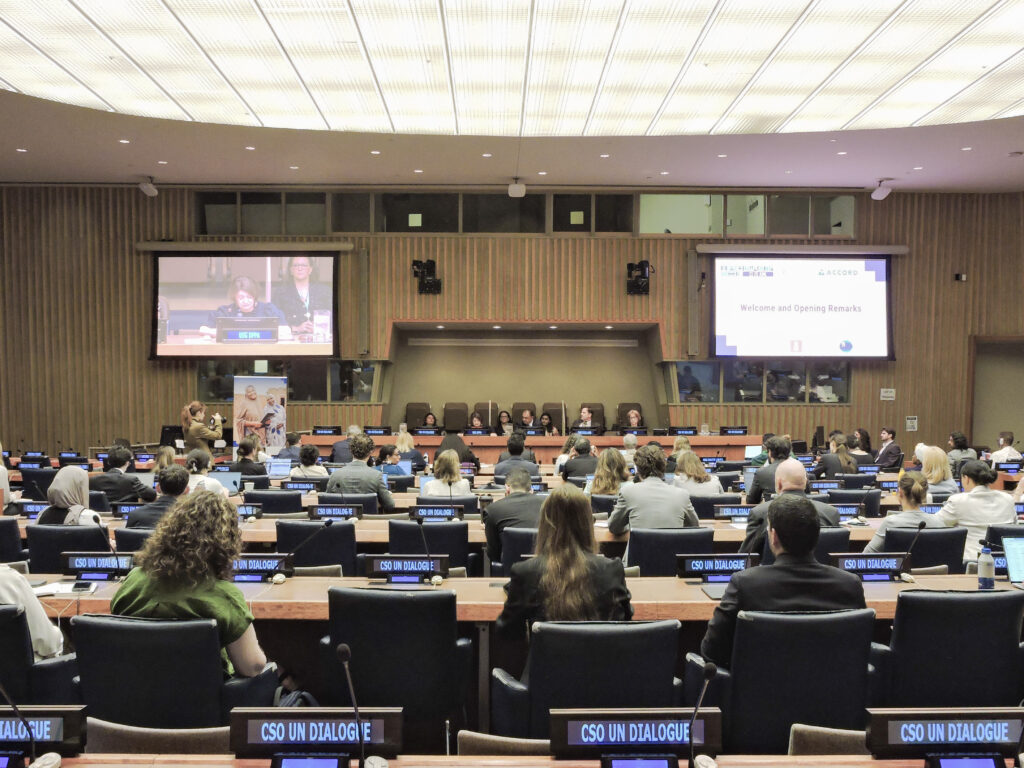
In June this year CMI attended the UN’s first Peacebuilding Week in New York. But why was CMI invited and how does attendance support the organisation’s goals? We spoke to Natalia Martinez Cutillas of CMI’s Multilateral Affairs and Peacemaking Policy team to find out more.
To someone not familiar with UN Peacebuilding Week, can you explain in short what it’s about?
Natalia Martinez Cutillas: When the UN Peacebuilding Architecture was established in 2005, Member States agreed that it should be reviewed every five years to ensure it remained fit for purpose. This process, known as the UN Peacebuilding Architecture Review (PBAR), most recently took place in 2025. As part of the outcome of that review, Member States mandated that an annual UN Peacebuilding Week should be organised.
The idea behind the week was to shine a spotlight on the UN’s peacebuilding work, build political support for peacebuilding efforts, create space for inclusive dialogue and showcase good practices from around the world.
The inaugural UN Peacebuilding Week took place in New York on 22-26 June, and CMI had the pleasure of being part of it. During the week, a series of events showcased accumulated expertise and evidence of “what works” in peacebuilding, while exploring how new partnerships – including with the private sector, digital technology, and young people – can strengthen pathways to lasting peace.
From what we experienced in New York, it was clear that UN Peacebuilding Week generated significant interest across the UN system, Member States, civil society, the private sector and other stakeholders.
I hope future editions build on this strong start and put civil society even more at the centre of conversations, recognising the essential role people play in advancing sustainable peace.
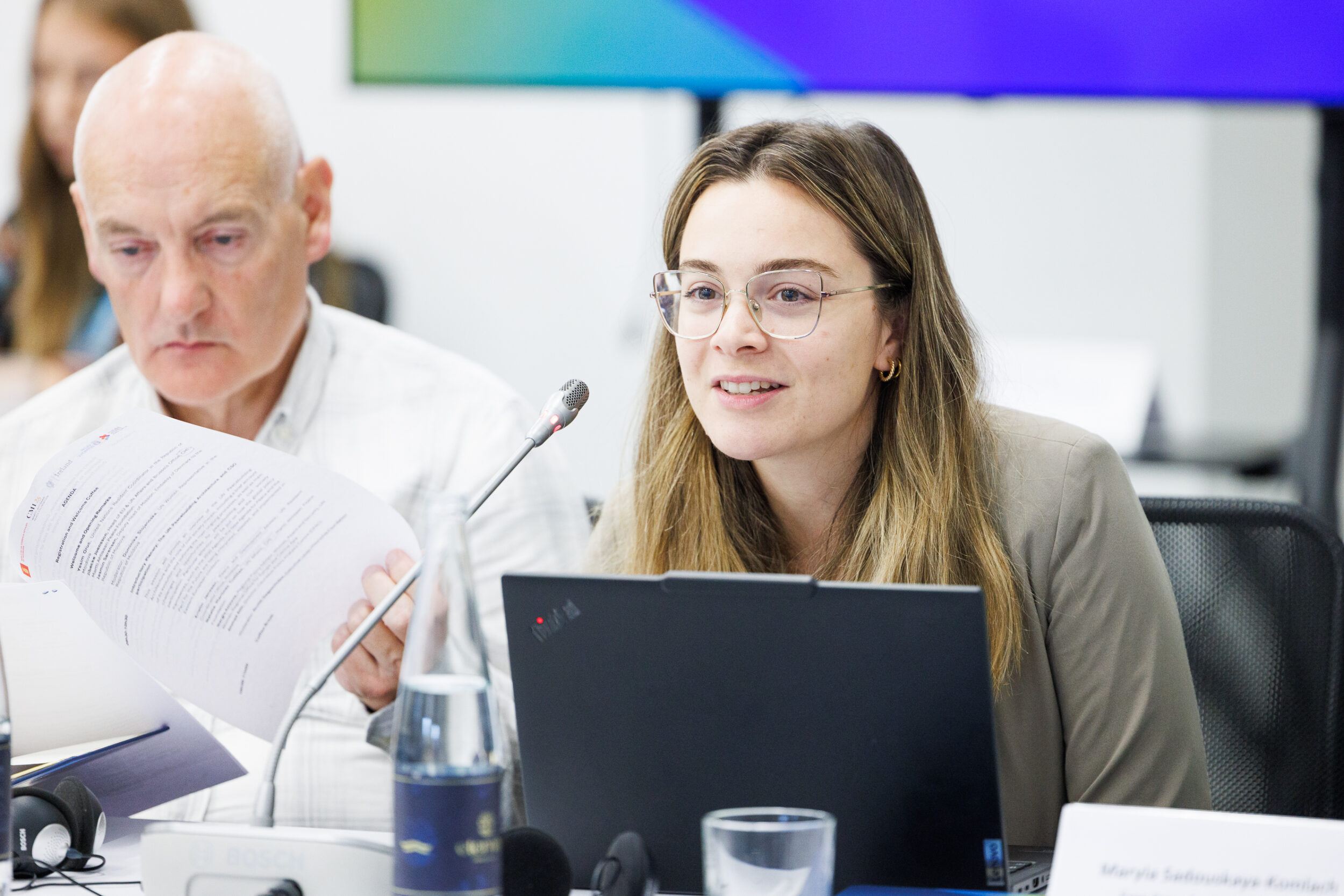
Natalia Martinez Cutillas of CMI’s Multilateral Affairs and Peacemaking Policy team speaks at the first Eastern Europe Sub-Regional CSO-UN Dialogue in Chisinau, Moldova in September 2025. Photo: Dumitru Goncear/UN Women Moldova.
You talk about ‘UN Peacebuilding Architecture’ but for people not familiar with that language, what does this mean?
When we talk about UN Peacebuilding Architecture (UN PBA) we’re actually referring to three different but closely connected structures: the Peacebuilding Commission (PBC), the Peacebuilding Fund (PBF), and the Peacebuilding and Peace Support Office (PBPSO).
The Peacebuilding Commission is where 31 Member States come together to discuss peacebuilding challenges and identify ways to improve their support to countries affected by conflict. It advises the UN General Assembly and Security Council on peacebuilding priorities, and fosters coordinated action among relevant actors inside and outside the United Nations in support of sustaining peace.
One of the things I find most interesting about the Peacebuilding Commission is that countries decide whether to place themselves on its agenda. While this has both advantages and disadvantages, the discussions that take place tend to be more constructive and ensure greater ownership, as they focus on peacebuilding challenges that countries themselves have chosen to bring before the Commission.
The Peacebuilding Fund is the UN’s primary financial instrument to support post-conflict peacebuilding, prevention, and stabilisation efforts worldwide. Funded entirely through voluntary contributions, it is often described as a ‘catalytic’ instrument, and it is designed to provide timely and flexible funding where it is needed most, helping launch new initiatives, responding to emerging opportunities, and attracting additional support from other donors.
What I find particularly interesting about the PBF is that, unlike many other donor funds, its allocations are not driven by donor preferences, but by the peacebuilding priorities identified by the country itself. Fun fact – Germany has been PBF’s largest donor since 2020!
“I hope future editions build on this strong start and put civil society even more at the centre of conversations, recognising the essential role people play in advancing sustainable peace.”
Lastly, the Peacebuilding and Peace Support Office is the part of the UN Secretariat that helps keep the UN Peacebuilding Architecture running. It administers the Peacebuilding Fund, supports the work of the Peacebuilding Commission and helps coordinate peacebuilding efforts across the UN system. A mainstay of its role is also building and maintaining partnerships with a wide range of stakeholders in support of peacebuilding efforts, including civil society or international financial institutions.
Together, these structures aim to strengthen the international community’s ability to support effective peacebuilding efforts and sustain peace in countries affected by conflict. However, this does not mean that they are the only parts of the UN working on peacebuilding. Many other UN entities also contribute to peace through their own mandates, which is why recent Peacebuilding Architecture Reviews have placed growing emphasis on better integrating the UN Peacebuilding Architecture with the rest of the UN system.
What were some of the reasons CMI was invited to have such a full role in UN Peacebuilding Week?
CMI had a very active role in UN Peacebuilding Week, co-organising and contributing to various anchor and side events. However, the main reason we were invited by the UN was to participate in the first ever gathering of the Core Group of the CSO–UN Dialogue on Peacebuilding.
As you may know, CMI and PBPSO co-chaired the 2025 edition of the CSO–UN Dialogue on Peacebuilding and CMI has been part of the Dialogue’s Core Group since its inception. Over the past few years, we have had the privilege of helping shape the Initiative alongside a fantastic group of civil society organisations and UN colleagues.
As the Dialogue enters its fourth year, it felt like the right moment to pause and ask ourselves some bigger questions given that the world has changed considerably since it was launched. Pressure on multilateral cooperation has increased and civic space is increasingly constrained worldwide.
Against this backdrop, PBPSO invited current and former Core Group members to New York to reflect on what we have achieved so far and the lessons that have been learned. We held an honest conversation about where the Dialogue should go from here.
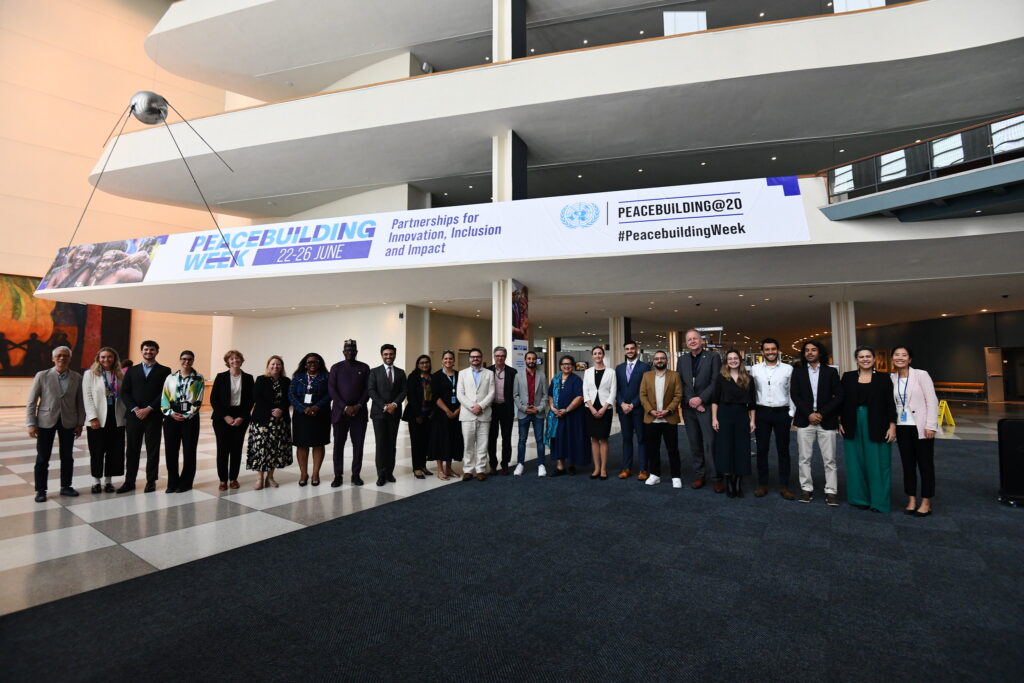
The CSO–UN Dialogue Group during Peacebuilding Week. Photo credit: United Nations Peacebuilding and Peace Support Office.
Can you open up for us this CSO–UN Dialogue on Peacebuilding on which CMI and PBPSO have been cooperating?
I have been working on the CSO–UN Dialogue on Peacebuilding since I joined CMI almost two years ago. It is an Initiative that has really shaped me, both professionally and personally.
Through it, I have had the privilege of meeting many inspiring peacebuilders from around the world, hearing firsthand the challenges they face and the incredible work they do every day. Those conversations have given me a much deeper appreciation of the indispensable role civil society plays in preventing conflict and sustaining peace.
The genesis of the CSO–UN Dialogue on Peacebuilding is the premise that there are very few opportunities for civil society to engage regularly and meaningfully with the UN Peacebuilding Architecture, especially as strategic partners in shaping peacebuilding policy and practice.
The CSO–UN Dialogue on Peacebuilding seeks to bridge that gap by creating a structured platform for institutionalised engagement between civil society, the UN, and Member States, fostering stronger partnerships for peace.
In your view what have been some of the achievements of the Dialogue on Peacebuilding thus far?
I could probably write a whole article on the achievements of the Dialogue so far, but looking back, it is remarkable to see how what began as a fairly small annual meeting of around 70 participants with limited UN engagement is evolving into a much more ambitious and continuous process.
One of the strongest messages conveyed by Dialogue participants from the outset was that meaningful engagement requires more than a two-day annual meeting. Participants consistently called for Regional Dialogues that would keep the conversation going throughout the year. Meaningful two-way communication between the regional and global levels, they said, would strengthen local ownership and ensure that local perspectives shaped global peacebuilding discussions.
“One of the strongest messages conveyed by Dialogue participants from the outset was that meaningful engagement requires more than a two-day annual meeting.”
During CMI’s co-chairmanship, one of our main objectives was to establish Regional Dialogues as a core component of the Initiative. We are particularly proud to have led the drafting of a Regional Dialogues Guidance Framework and to have seen the first seven Regional Dialogues take place across different regions. Recommendations from the regional level fed directly into the Global Dialogue and strengthened the inclusive approach that has always been at the heart of the Initiative.
How do you see the future of the CSO–UN Dialogue on Peacebuilding after your discussions in New York?
Following the discussions in New York, I think it is clear that the next challenge is to build on the progress already made by ensuring that commitments are more consistently translated into concrete action.
That will require political will, leadership, and a willingness to take risks, particularly at a time when civic space is being squeezed and multilateral cooperation is under increasing pressure. Protecting a space like the CSO–UN Dialogue is therefore more important than ever.
At the same time, I believe the Initiative must continue doing what has made it successful so far: listening, adapting, and innovating. That means keeping co-creation and genuine two-way dialogue at its core, challenging established ways of working, and remaining open to new approaches that make the Dialogue more inclusive and responsive to the realities on the ground.
The current context shows that the way forward will not be easy, but I remain optimistic. Having worked with so many wonderful and committed colleagues who genuinely believe in this Initiative, I have every confidence that the road ahead is one of increased trust, better partnerships and more effective and inclusive peacebuilding.