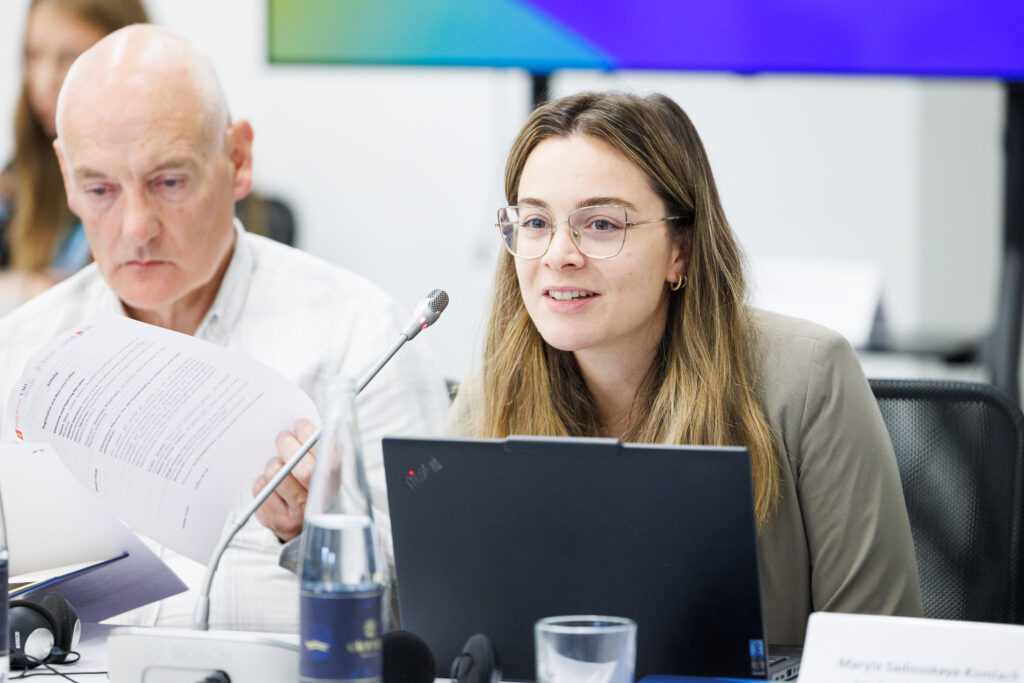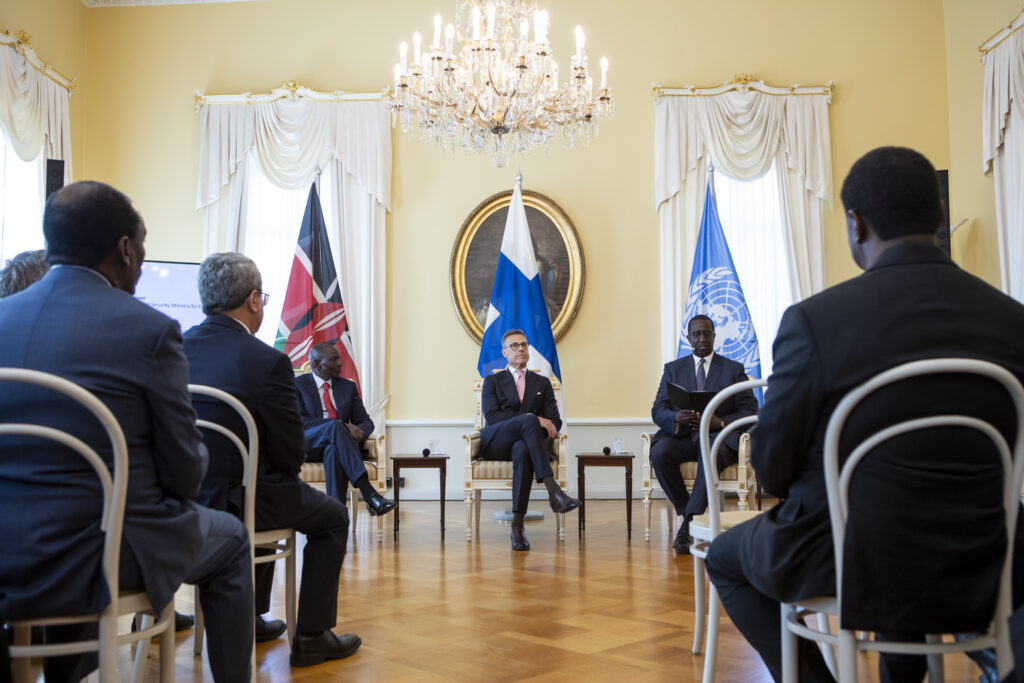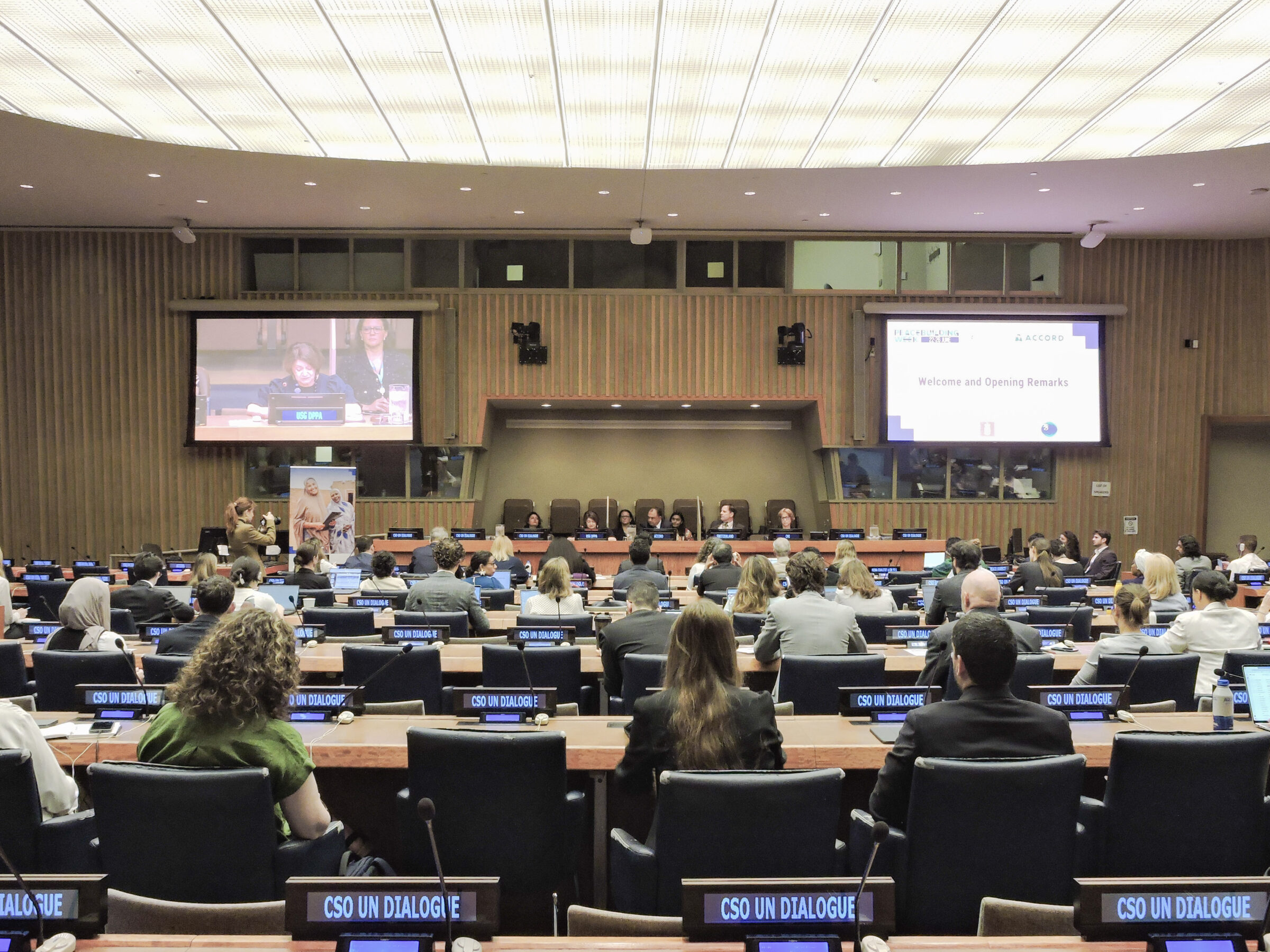
Multilateralism is under increasing strain, armed conflicts are multiplying and attention is shifting from peacebuilding to traditional defence. With the political and civic space for inclusive peacebuilding shrinking, opportunities for dialogue between policy-shapers and those building peace on the ground are in decline.
Against this backdrop, strengthening international cooperation for sustainable peace is critical. This pursuit is at the heart of CMI’s mission, with multilateral cooperation long a central part of the organisation’s work. These principles guided President Martti Ahtisaari when he founded CMI and they continue to drive CMI’s engagement in 2026.
In June, CMI participated in the inaugural UN Peacebuilding Week in New York, organised by the UN Peacebuilding and Peace Support Office (PBPSO) under the theme UN Peacebuilding @20 – Partnerships for Innovation, Inclusion and Impact.
The week marked the 20th anniversary of the UN Peacebuilding Architecture and provided an important opportunity to reflect on progress made over the past two decades, including how peacebuilding must adapt to an increasingly fragmented geopolitical environment.
As the first edition of its kind, there was some uncertainty about what a dedicated UN Peacebuilding Week would look like in practice. Yet one theme consistently emerged: today’s geopolitical environment presents unprecedented challenges for multilateral peacebuilding, but it also prompts renewed reflection on how partnerships, inclusion and collaboration must evolve if the multilateral system and its peacebuilding efforts are to be effective.
Across Peacebuilding Week, CMI’s engagement was guided by three interconnected priorities that underpin its multilateral work: 1) strengthening inclusive partnerships; 2) enhancing the meaningful participation of civil society in peacebuilding; and 3) fostering more connected and effective multilateral cooperation.
Strengthening inclusive partnerships
Effective peacebuilding requires partnerships that connect multilateral institutions with the actors working closest to conflicts, ensuring that international policymaking is informed by local knowledge and experience.
This is even more important as multilateralism is under increasing strain, which is why CMI has been working with UN PBPSO and peers to set up the CSO–UN Dialogue on Peacebuilding, an initiative that aims to create a structured space for civil society, the United Nations and Member States to engage in strategic dialogue on peacebuilding priorities. CMI is a founding member of this initiative and co-chaired the 2025 iteration.
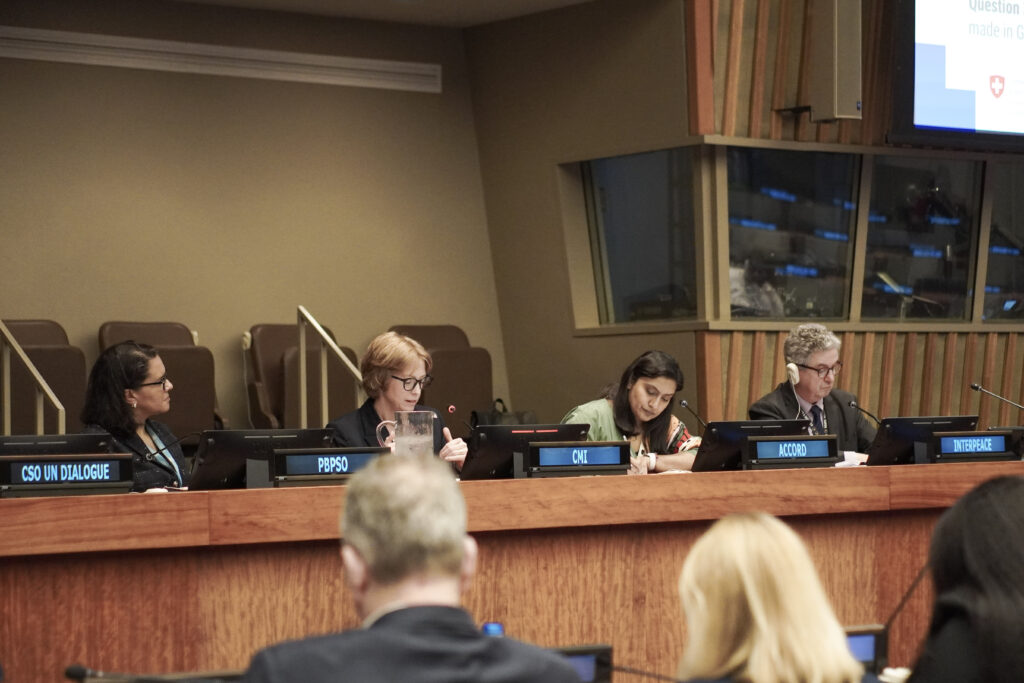
Dr. Jibecke Joensson (speaking, 2nd left) is Head of Multilateral Affairs and Peacemaking Policy at CMI and heads CMI’s Brussels Office.
During Peacebuilding Week, CMI participated in the first-ever CSO–UN Dialogue on Peacebuilding Core Group Retreat, where Core Group members discussed the next phase of the initiative.
As the Dialogue looks towards the future, discussions focused on how to make it a more institutionalised platform for engagement. The hope was that this could strengthen meaningful participation, shared ownership and locally grounded peacebuilding.
These reflections continued during the CMI-moderated event at UN headquarters, From Geneva to New York: Taking Stock of the CSO–UN Dialogue on Peacebuilding, which brought together civil society, the UN and Member State representatives to reflect on the Dialogue’s evolution across its first three editions and the way forward.
The discussion highlighted what makes the initiative unique: its emphasis on mutual learning, genuine two-way dialogue and co-creation, In other words, how the initiative is not just consultation, but a partnership wherein civil society helps shape peacebuilding policy and practice. Participants also stressed that protecting and investing in these civic spaces for dialogue is critical.
Enhancing the meaningful participation of civil society in peacebuilding
During UN Peacebuilding Week, CMI emphasised that national ownership must extend beyond state institutions to meaningfully include civil society. A core CMI message is that the inclusion of civil society is fundamental to more impactful peacebuilding.
This was particularly evident during the event, Partnerships in Action: Operationalizing Peacebuilding Efforts for Impact, co-organised by CMI together with the Delegation of the European Union to the United Nations in New York; the Joint UNDP-DPPA Programme on Building National Capacities for Conflict Prevention; the Permanent Missions of Croatia, Kenya and Syria; and the International Peace Institute.
Drawing on its work, CMI presented concrete examples of how “meaningful” partnerships with civil society have generated greater peacebuilding impact. The examples stressed the importance of the UN championing dialogue, coordination and convening.
In Sudan, for example, CMI’s support to the Quintet demonstrates how linking formal mediation efforts with broader civilian constituencies and local peacebuilding programming can help ensure that dialogue, de-escalation, inclusion and confidence-building efforts reinforce each other.
“CMI emphasised that national ownership must extend beyond state institutions to meaningfully include civil society. A core CMI message is that the inclusion of civil society is fundamental to more impactful peacebuilding.”
Building on these examples, CMI also presented recommendations for the incoming UN Secretary-General, calling for strategic partnerships with civil society built on dialogue and co-creation; coordination mechanisms that better connect high-level peacebuilding and mediation efforts with local constituencies; and stronger support for the peacebuilding agency of civil society actors across societies and regions.
The ongoing selection of the next UN Secretary-General was a recurring theme throughout the discussions, in particular the need for leadership, courage and a willingness to take risks to ensure more meaningful participation in peace processes.
Fostering more connected and effective multilateral cooperation
As peacebuilding actors become more diverse, a strategic priority has emerged: connect them better. This was the focus of the event, Strengthening Inclusive Dialogue and Partnerships across Peacebuilding Hubs, where CMI reflected on how peacebuilding actors clustered in multilateral hubs such as Brussels, Geneva and New York can work more strategically together.
Co-organised by the Permanent Mission of Switzerland to the United Nations, the Geneva Peacebuilding Platform, the International Peace Institute and Interpeace, the discussion explored how better connecting these different ecosystems can strengthen collective peacebuilding efforts. A key message from the discussion was that improved connection among existing multilateral dialogue processes represents an untapped opportunity to strengthen peacebuilding.
While the European Union has developed systematic channels for engaging civil society on peacebuilding throughout the year, including through initiatives such as the EPLO Civil Society Dialogue Network, these processes remain largely separate from emerging UN-led mechanisms, including the CSO–UN Dialogue on Peacebuilding. Better connecting these ecosystems would create new opportunities for mutual learning and would support more coherent approaches to multilateral peacebuilding.
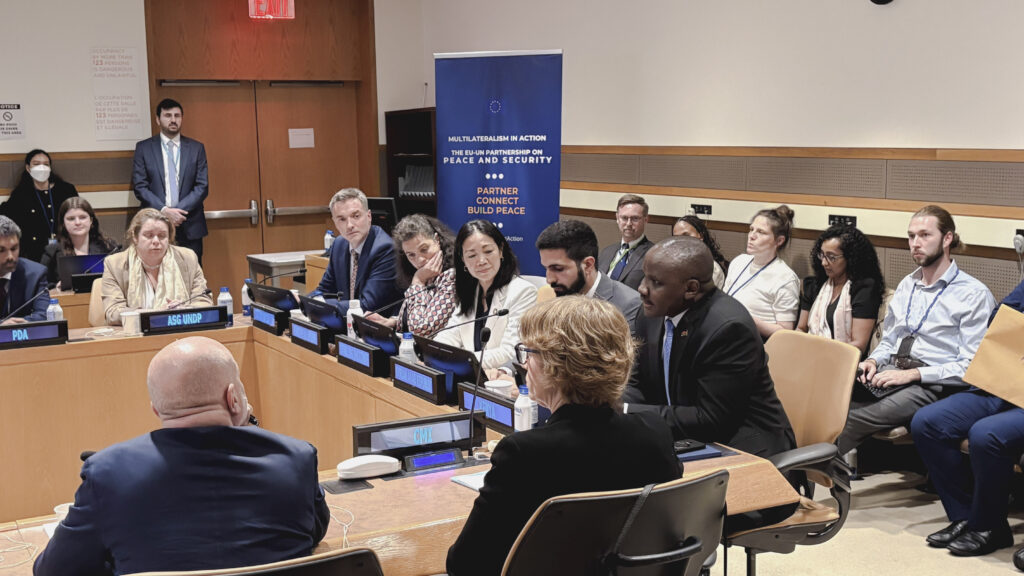
CMI’s Jibecke Joensson (back to camera, 2nd left) speaks in New York.
As the first UN Peacebuilding Week came to a close, one impression stood out: despite the inevitable uncertainty surrounding a first edition, the week succeeded in creating a meeting point for the global peacebuilding community to reflect on the way forward for peacebuilding efforts in today’s world.
Across dozens of events organised by the United Nations, Member States, civil society and other partners, there was a shared recognition that peacebuilding deserves greater political visibility and stronger multilateral cooperation.
At the same time, the week also highlighted opportunities for future editions. While civil society was visible throughout the programme, including through events organised in partnership with Member States and UN entities, there is still scope to place civil society more firmly at the heart of UN Peacebuilding Week.
Ensuring that those building peace on the ground are not only represented but actively shape the agenda and conversations would reinforce the very principles of inclusion, partnership and localisation that the week sought to advance.
Building on the legacy of President Martti Ahtisaari, CMI remains committed to working with the United Nations, Member States and civil society partners to strengthen multilateralism and peacemaking. By fostering inclusive partnerships, advancing meaningful participation and connecting peacebuilding actors, CMI will continue contributing to more effective and sustainable peacebuilding in an increasingly complex world.