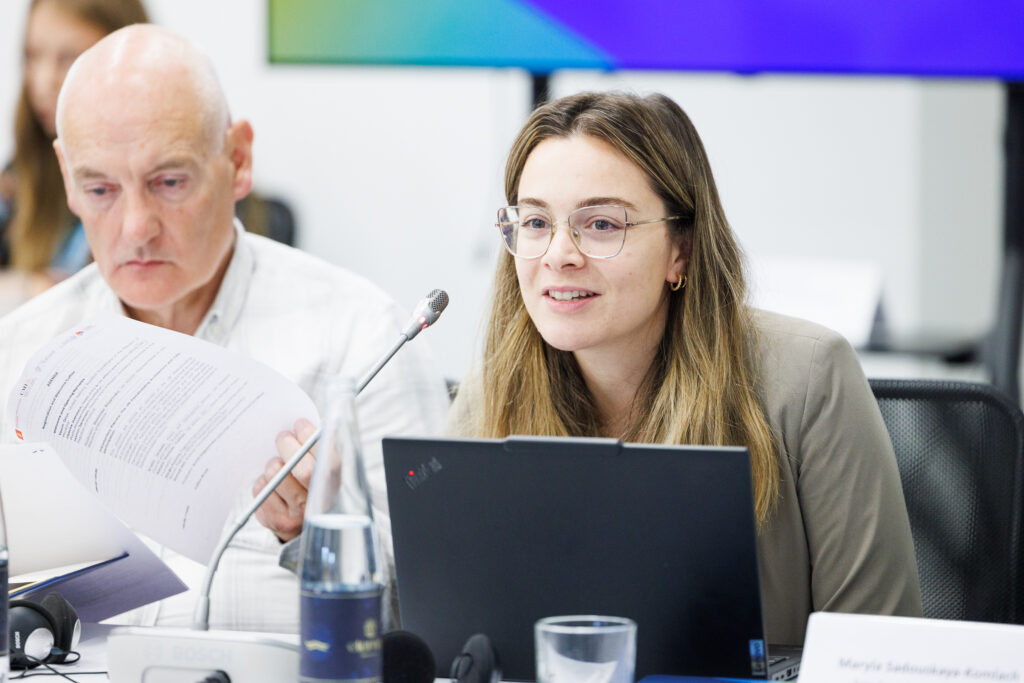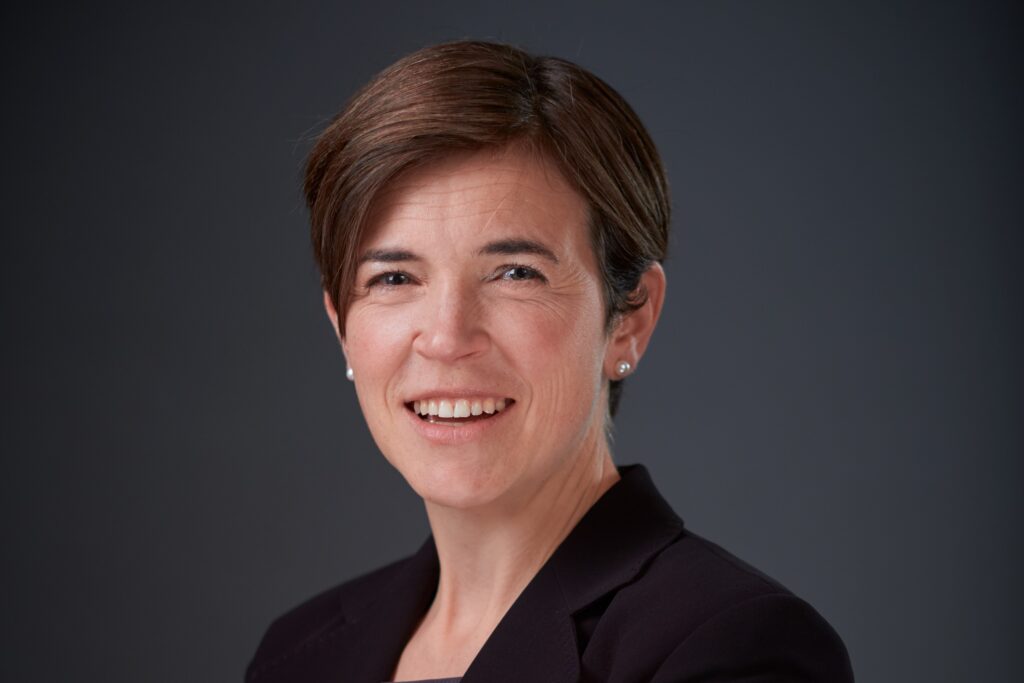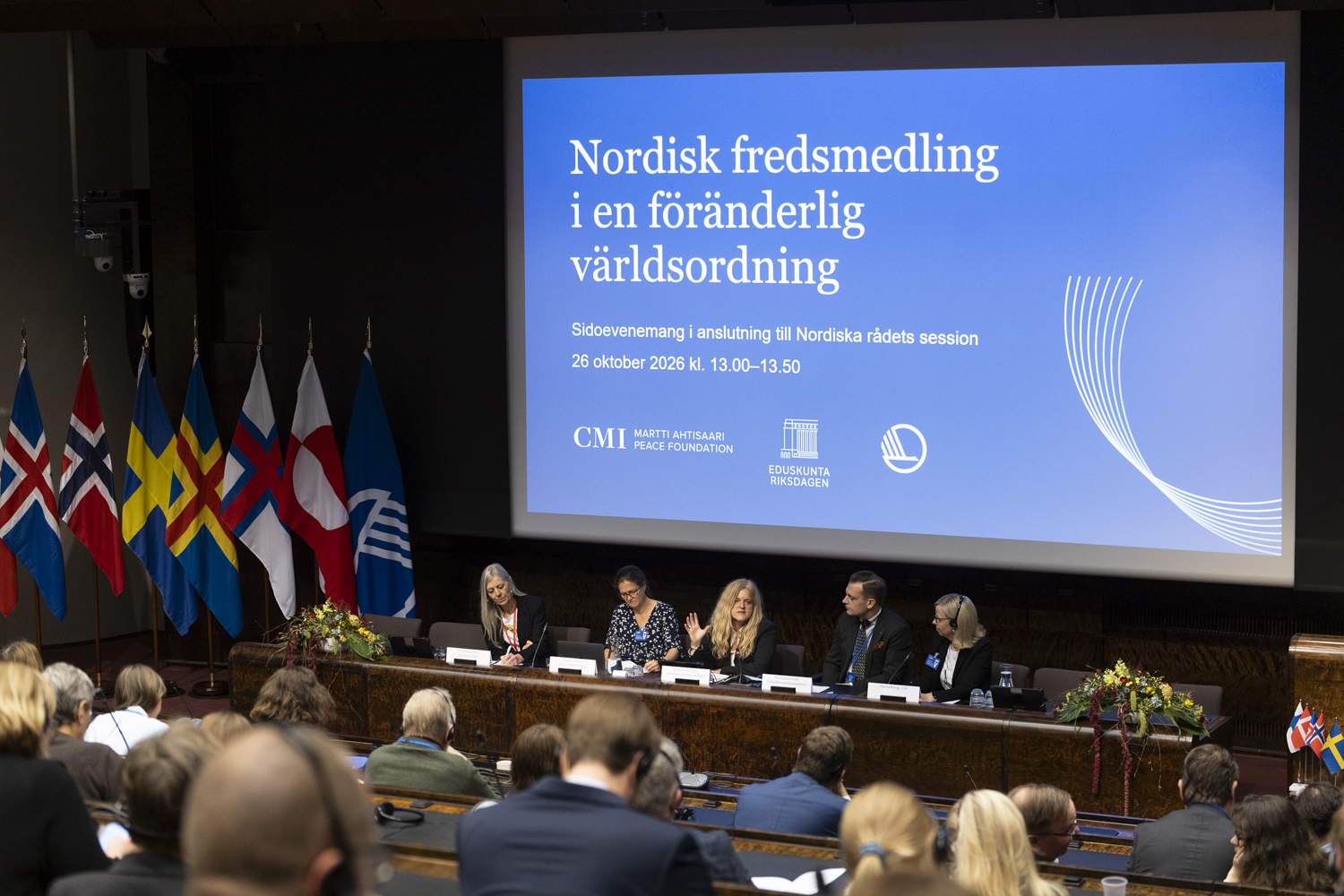
Deeper cooperation among the Nordic countries could bring distinct added value to the international peacemaking ecosystem and strengthen peacemaking globally, speakers said at a high-level discussion organised by CMI – Martti Ahtisaari Peace Foundation and the Finnish delegation to the Nordic Council in Helsinki on 26 October.
Nordic peace mediation in a changing world order brought together Nordic parliamentarians, political actors and peacemaking experts during the 78th Session of the Nordic Council at the Parliament of Finland. Speakers asserted the importance of stronger political commitment and sustained investment in diplomacy and mediation, alongside more effective use of the Nordic countries’ diverse and complementary expertise in peacemaking.
Monday’s event comes at a time of evolving geopolitical competition and realignment, with multilateral institutions under strain and international conflicts continuing to grow. While the Nordic countries have deepened cooperation in defence and security, speakers examined how they could better use their complementary strengths in support of sustainable peacemaking.
The discussion, moderated by CMI’s Acting CEO Hanna Klinge asked how we could make even better use of the Nordics’ strengths in today’s world; where can closer Nordic cooperation bring the greatest added value; and what kind of political choices and leadership it would require.
For decades, the Nordic countries have invested in mediation, conflict prevention and multilateral diplomacy. In his video message, United Nations Secretary-General António Guterres called for continued Nordic leadership in international peace efforts. He said the region’s longstanding contributions to mediation were exemplary, including support for peace processes, mediation expertise and the participation of women, young people and civil society.
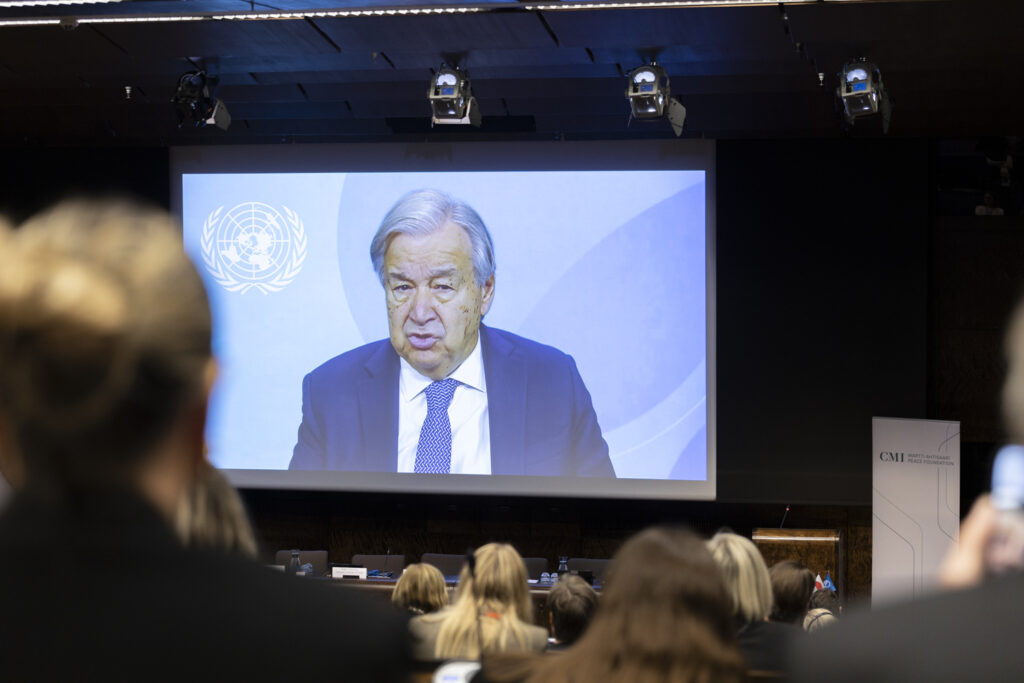
António Guterres called for continued Nordic leadership in international peace efforts. Image: Maria Hossain Santto/CMI
Secretary-General Guterres also highlighted growing challenges to peace and security including widening inequality, climate change and rapidly developing technologies requiring urgent international cooperation.
Conflict prevention and peacemaking: part of Nordic foreign and security policies
Ville Väyrynen, President of the Nordic Council, framed peace mediation as a part of comprehensive security, noting that lasting security depends not only on preparedness and cooperation, but also on peace and trust. The Åland settlement, noted Väyrynen, demonstrated how difficult conflicts can be resolved through dialogue and negotiation.
Director-General of Sweden’s Folke Bernadotte Academy, Per Olsson Fridh, argued that Finland and Sweden’s NATO membership had created new opportunities for Nordic security cooperation. However, stronger deterrence alone could not resolve conflicts or ensure that peace agreements endure, he said. The Nordic countries also needed to improve their ability to influence the conflicts and political relationships that threaten their security, he added.
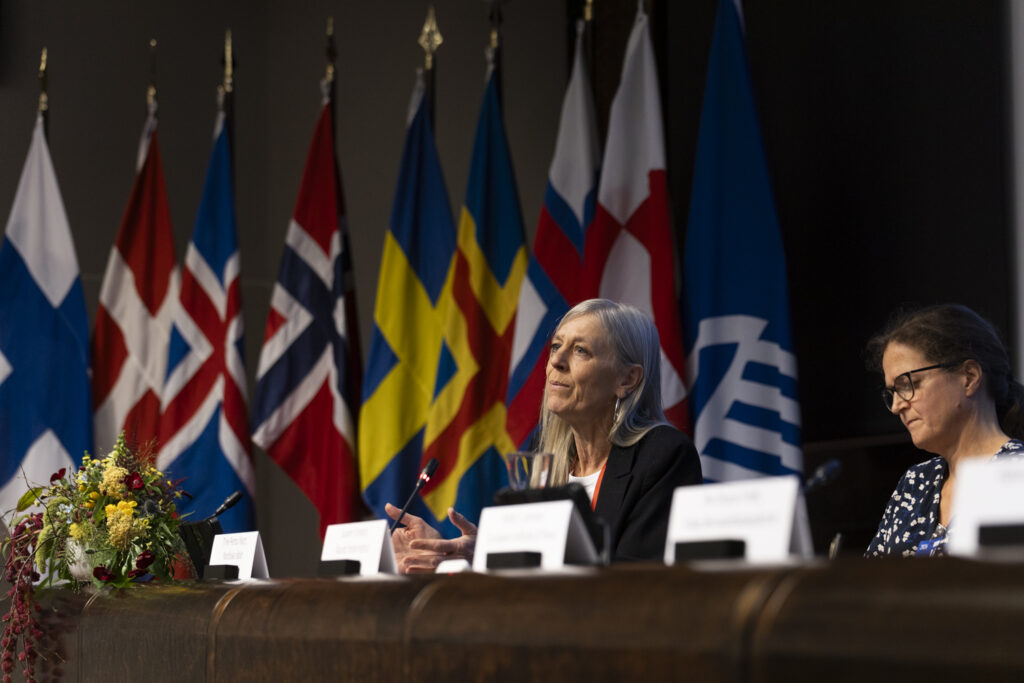
Trine Pertou Mach (l), a member of the Danish Parliament and the Nordic Council. She said that Nordic countries should give conflict prevention and peace work a more systematic place in security policy. Image: Maria Hossain Santto/CMI
Trine Pertou Mach, a member of the Danish Parliament and the Nordic Council said that while Nordic governments were committing substantial resources to defence, they should give conflict prevention and peace work a more systematic place in security policy. She suggested earmarking a fixed share of defence and security expenditure for diplomacy, conflict prevention, and peacebuilding.
Both speakers were at pains to point out that peace mediation should not be seen simply as an international contribution, but as a means of strengthening the Nordic countries’ own security and political influence. Globally, peace mediation is increasingly becoming a strategic means of exercising geopolitical influence, noted Hanna Klinge, and an integral part of foreign and security policy, particularly for great and middle powers.
The added value of Nordic mediation
Speakers also made the point that closer cooperation would inevitably mean making better use of the region’s existing mediation expertise.
Hilde F. Johnson, Senior Advisor at the European Institute of Peace, pointed to the meeting on October 20 where Prime Minister Jonas Gahr Støre, Finnish President Alexander Stubb, Ukrainian President Volodymyr Zelenskyy and US Special Envoy Steve Witkoff met to discuss the path to peace in Ukraine.
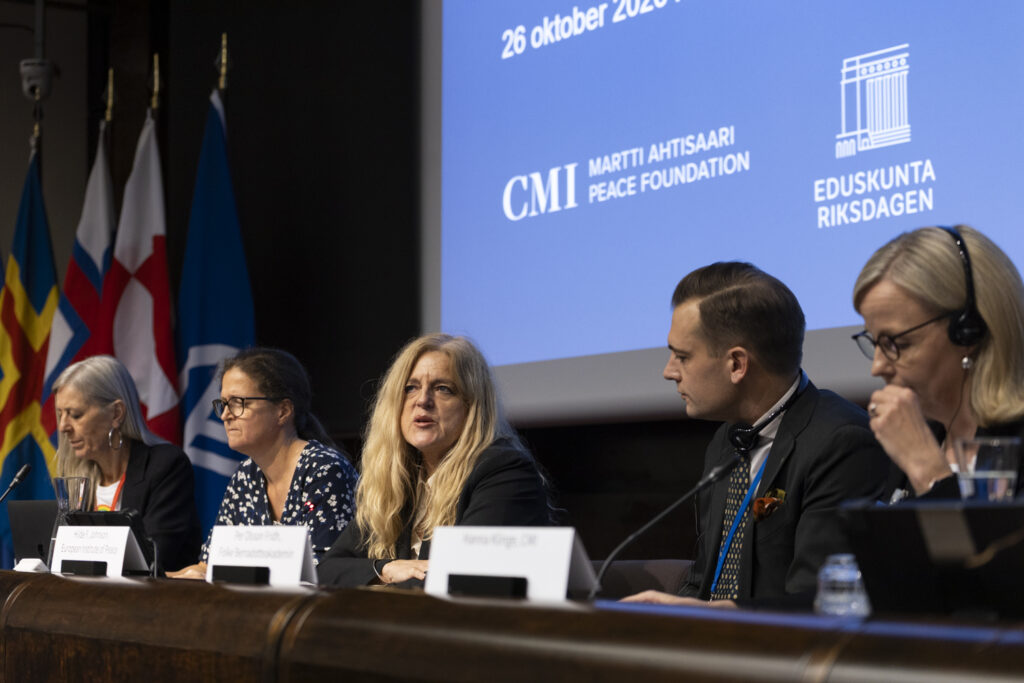
Hilde F. Johnson (centre), Senior Advisor at the European Institute of Peace said that closer security policy cooperation has created a new level of Nordic coordination that can now be applied to mediation. Image: Maria Hossain Santto/CMI
According to Johnson, closer security policy cooperation, has created a new level of Nordic coordination that can now be applied to mediation, and the Nordic countries should seek similar opportunities in other conflicts, drawing on their different roles, partnerships and added value.
For Olsson Fridh, the Nordic countries’ particular strength lies in combining political engagement, mediation expertise and practical support for implementing peace agreements. Nordic governments, agencies, research institutes and organisations already cooperate in many conflict settings, he said, but their resources and complementary roles could be used more strategically.
He highlighted Nordic–Gulf cooperation, involving organisations including the Folke Bernadotte Academy and CMI, as an example. Nordic actors contribute experience in inclusive peace processes and mediation support, he explained, while Gulf actors bring regional relationships, access to conflict parties and political influence. Combining these different strengths can help open and sustain dialogue.
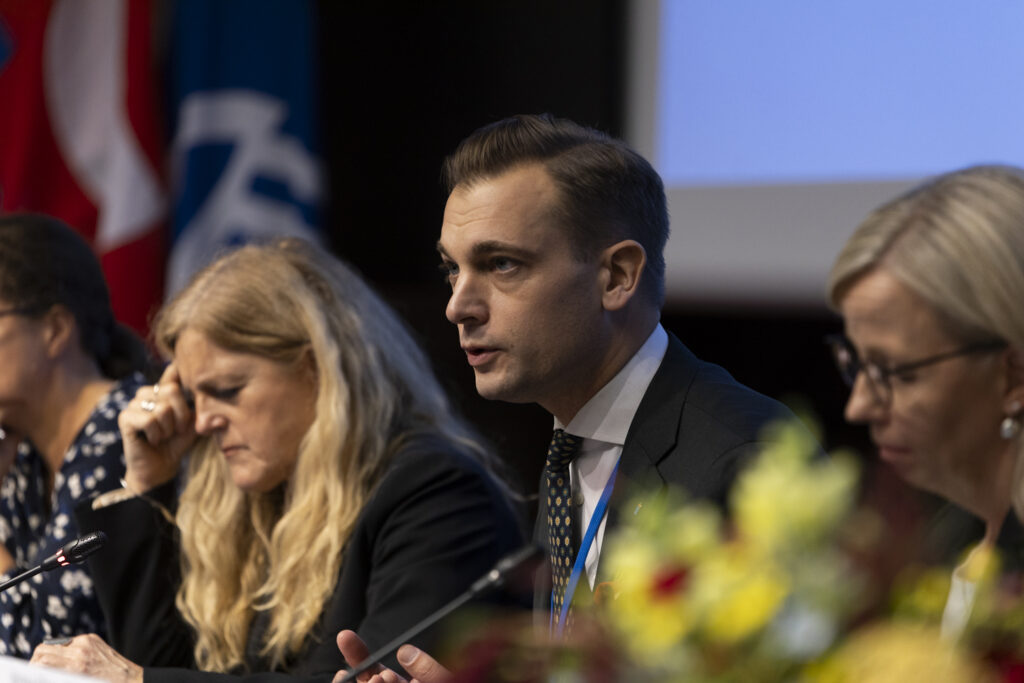
Director-General of Sweden’s Folke Bernadotte Academy, Per Olsson Fridh, stressed that mediation organisations require clear mandates and predictable resources to effectively support peacemaking. Image: Maria Hossain Santto/CMI
Johnson also recognised the importance of engaging with other mediation actors, including Gulf countries. However, she warned that international peace diplomacy was increasingly characterised by approaches focused on securing agreements driven by immediate political or strategic interests.
She contrasted these approaches with established principles of Nordic peace diplomacy: building trust over time, addressing the underlying causes of conflict, respecting international law, ensuring inclusive participation, and maintaining dialogue with all relevant parties.
Johnson also expressed concern about reductions in funding for peace and humanitarian work. She argued that withdrawing resources would weaken the Nordic countries’ ability to influence international peace efforts at a time when other actors were becoming more active.
Johnson’s point about the need to sustain engagement was echoed by Olsson Fridh, who stressed that mediation organisations require clear mandates and predictable resources to effectively support peacemaking. Relationships and access take time to develop, often long before parties are ready to negotiate, he said. Political support is therefore essential to maintaining the capacity to act when opportunities arise.
Another point of consensus concerned the limitations of peace processes focused primarily on agreements between political leaders.
Olsson Fridh emphasised that peace depends on more than negotiations between elites. Civil society and grassroots organisations are essential because people affected by conflict must have a role in defining what peace and security mean in their communities, he said.
Johnson similarly underlined the importance of involving civil society alongside formal negotiations, warning against approaches that concentrate exclusively on high-level political deals.
Susann Simolin, Director of the Åland Islands Peace Institute, drew on the experience of the Åland settlement to illustrate the importance of what happens after an agreement is reached.
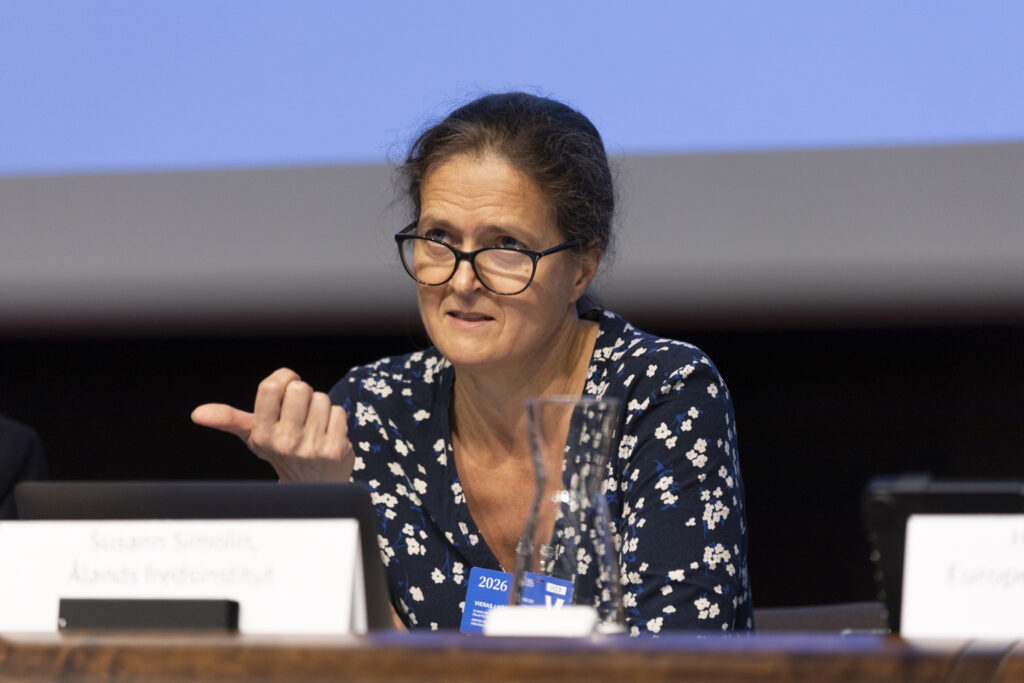
Susann Simolin, Director of the Åland Islands Peace Institute. Effective mediation requires an understanding of each conflict’s particular circumstances, she said. Image: Maria Hossain Santto/CMI
Simolin noted that the Åland example has informed discussions in several conflict settings, including Moldova, Bougainville and Aceh. However, she cautioned against treating any settlement as a “ready-made model” that can simply be transferred elsewhere. Effective mediation requires an understanding of each conflict’s particular circumstances, she added.
Simolin’s observations added weight to another point of broad agreement among the panellists: that lasting peace requires inclusive processes, functioning institutions and continued engagement long after formal agreements have been signed, highlighting the shared approach by Nordic actors.
Sustained political commitment needed to ensure results
The discussion also considered what Nordic parliamentarians could do to strengthen peace mediation. Trine Pertou Mach called for greater political commitment to international law, arms control, diplomacy and civil society participation. She emphasised that the Nordic Council, in particular, is an avenue for advancing peace and conflict prevention as part of a broader understanding of security.
Simolin proposed exploring an annual Nordic meeting place that would bring together politicians, researchers and mediation practitioners. Although the region already has numerous networks, she observed that cooperation remains partly fragmented between different professional communities.
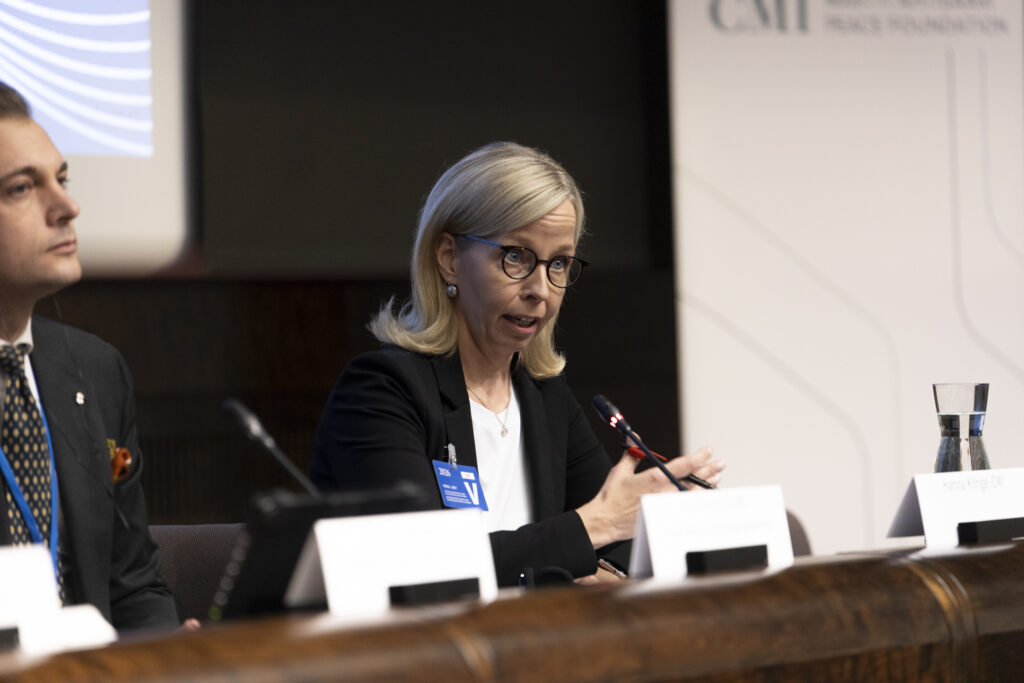
Globally, peace mediation is increasingly becoming a strategic means of exercising geopolitical influence, said Hanna Klinge, Acting CEO at CMI – Martti Ahtisaari Peace Foundation. Image: Maria Hossain Santto/CMI
The panellists also recognised that Nordic countries have limited influence in conflicts dominated by major powers. Nevertheless, Johnson and Olsson Fridh pointed to the important work that mediation organisations undertake away from the headlines, while Mach highlighted parliamentary diplomacy as a means of maintaining relationships across political and national boundaries.
In her closing summary, CMI’s Hanna Klinge observed that the speakers agreed the Nordic countries could strengthen their influence by working together, each drawing on its own strategic advantages to advance comprehensive peacemaking, even without the political weight of a major power.