South Caucasus
The South Caucasus region continues to navigate challenges in conflict resolution, which have influenced public trust in political leadership and the prospects for a stable future. Alongside long-standing conflicts, two transformative trends – growing connectivity and intensifying geopolitical competition – are shaping the trajectory of the region as a whole, as well as Armenia, Azerbaijan and Georgia as individual countries. As geopolitical rivalries sharpen, questions of political influence and territorial control are increasingly impacting regional stability and international relations.
In recent years, the region has also witnessed transformative shifts in approaches to the future. Key developments include the Armenian-Azerbaijani peace process emerging after the 44-day war in 2020, the renewed efforts to normalize relations between Armenia and Türkiye, and Georgia’s EU candidacy granted in 2023 following its 2022 application and the European Council’s endorsement.
Our work
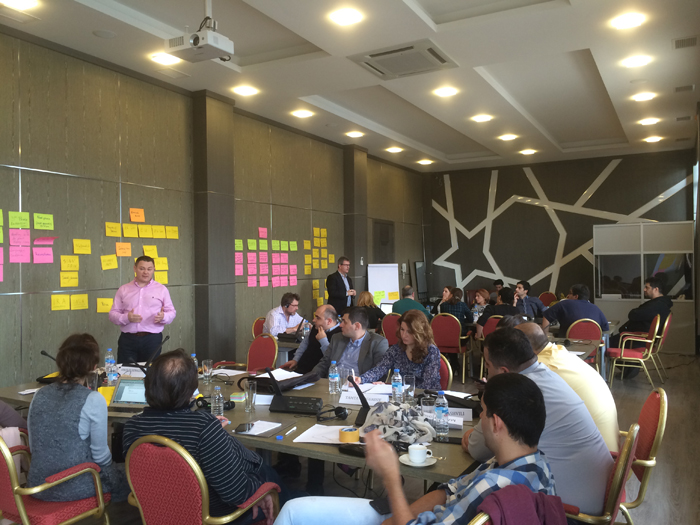
CMI has been active in the South Caucasus since 2006, supporting local dialogue and peacebuilding efforts. Working with government officials, political figures, think tanks and civil society in the region, CMI has focused on building the capacity of key actors to engage in dialogue, mediation and peace processes. Through in-country dialogues, CMI has convened diverse stakeholders, including media, youth and women’s organizations, and fostered discussions on conflict-related issues, promoting participation of civil society in policymaking. Beyond these efforts, CMI has since 2023 supported the Armenia-Azerbaijan peace process, including efforts to normalize relations between Yerevan and Baku as well as societies more broadly.
Throughout the years, working with the local youth has been a cornerstone of CMI’s approach in the region. This has brought forth new peacebuilding actors who are now actively involved in shaping the region’s future. Some of them have also become an integral part of CMI’s core team.
CMI’s work in the South Caucasus region is supported by the Finnish and German governments, along with the European Union. We also work closely with peer organizations, combining efforts to advance peace and stability in the region.
Key results
CMI’s capacity-building efforts in the South Caucasus have focused on training mid- and high-level officials in peace and conflict resolution, while also providing expertise and creating reflection spaces to enhance their roles in promoting peace and stability. To encourage in-country dialogue, CMI has established safe and inclusive spaces where political figures, civil society actors, government officials, and experts can engage in discussions about conflict-related issues. A key component of CMI’s approach has been empowering the next generation with the tools and vision necessary for effective peacebuilding. Throughout its work, CMI follows a ‘do no harm’ approach, ensuring that its processes are conflict-sensitive, locally driven, and designed to avoid exacerbating tensions.