Palestine
Palestinian politics and society remain divided despite several agreements between rival groups. Internal struggles have made it increasingly difficult for the wider Palestinian society to participate in the political process, hindering democratic development.. Internal division is also an obstacle to the resolution of Israeli-Palestinian conflict. Increasing escalation, culminating in the Hamas attack of October 2023 and the following war on Gaza have further highlighted the importance of advancing the broader Middle East Peace Process.
Our work
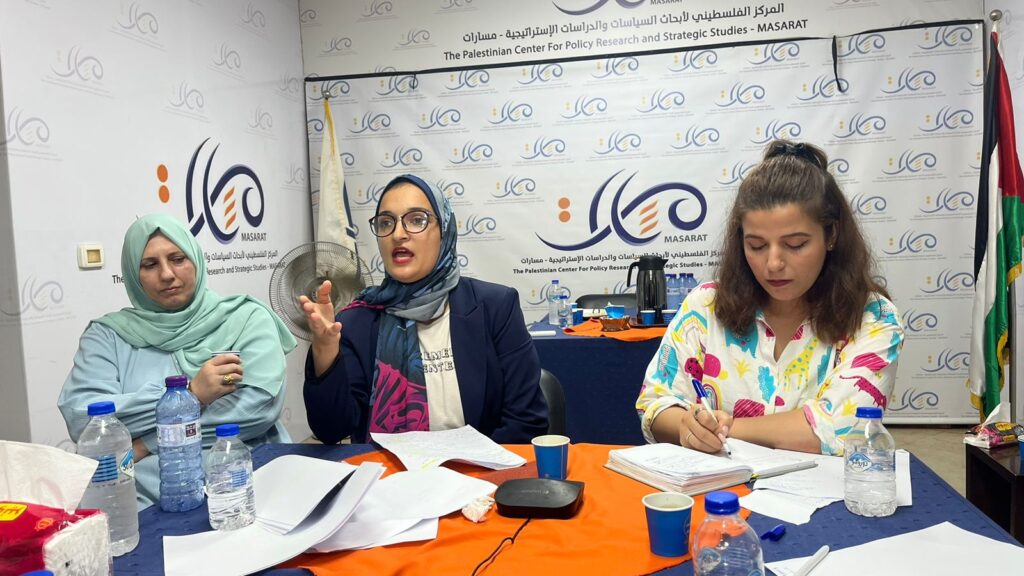
Since 2010, CMI and its local partner Masarat – the Palestinian Center for Policy Research & Strategic Studies have been supporting the Palestinian national reconciliation process. Through informal dialogues and different consultation mechanisms, a broad group of Palestinian actors from Gaza, the West Bank, the Palestinian community in Israel, and Palestinian diaspora are engaged in discussions on national political issues. At the regional level, since 2023, CMI has cooperated with the EU Special Representative (EUSR) for the Middle East Peace Process (MEPP). With the aim of supporting EU’s efforts to advance comprehensive regional peace, CMI has facilitated channels between different actors in the region and the EUSR. Inclusion of diverse expertise and perspectives of women has been a key element of the cooperation.
Key results
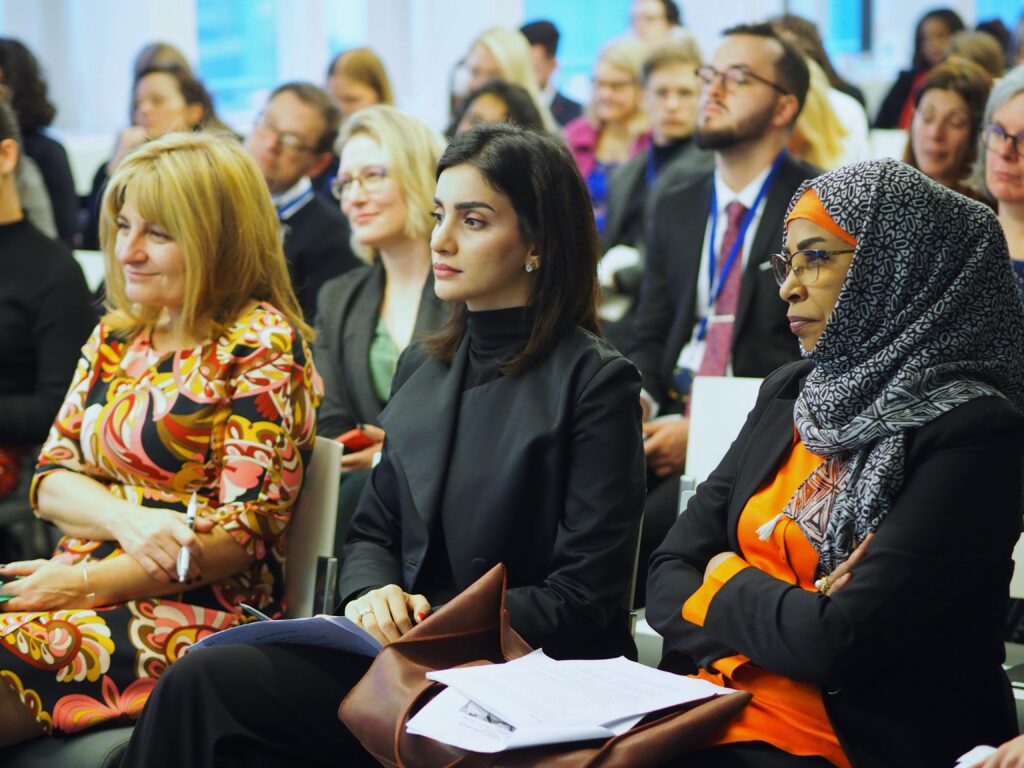
Our work has built mutual trust and resulted in broadly acceptable solutions being presented to national and international actors on fundamental challenges that had been overshadowed and left unresolved by internal discord and power struggles. Informal dialogue also has the advantage of allowing a wide network of actors to continue to meet and discuss, even when formal platforms are limited. Special efforts have also been made to ensure greater involvement of women by supporting a dialogue between a diverse range of women to discuss and develop recommendations on political issues at the national and international levels.