The authors of CMI’s latest Insight Paper argue that recognising the interconnected nature of the Maghreb and the Sahel is essential to developing more effective approaches to peace and stability across the region.
Many stakeholders and regional and international actors continue to approach the Sahelo-Saharan space through fragmented, disconnected frameworks, say the authors of CMI’s latest Insight Paper, The Maghreb-Sahel security complex: the necessity of a cross-regional approach to peacemaking.
The paper argues that the Maghreb and the Sahel should be understood as a single regional security complex, where political, security and socio-economic dynamics are deeply intertwined. Yet peacemaking efforts have largely treated the two regions separately, overlooking the connectivity that could instead serve as a catalyst for peace.
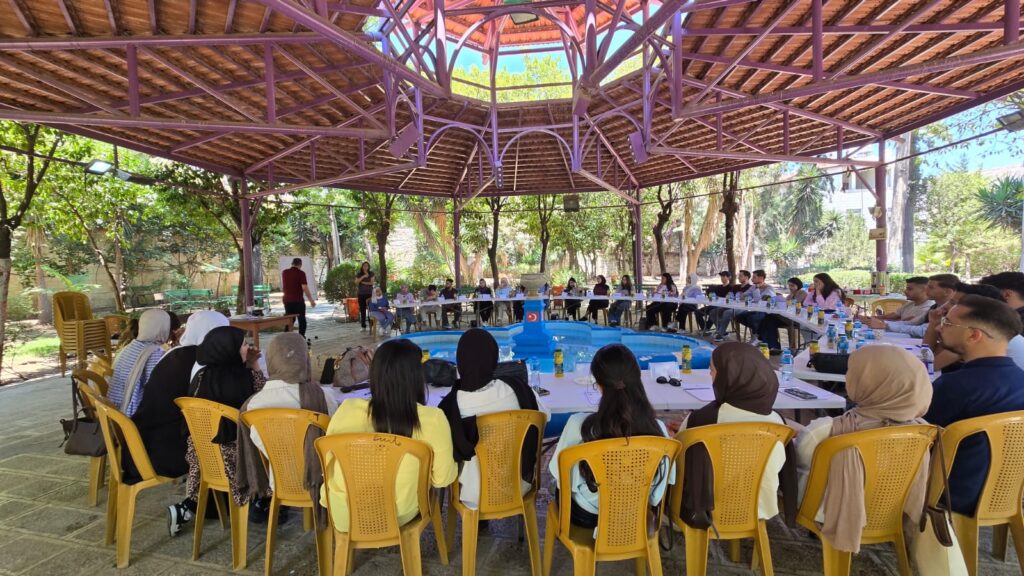
Since 2023, CMI has adopted a cross-regional approach to the Maghreb and the Sahel aimed at overcoming siloed approaches to peace and security. This has included bringing together senior experts and think tanks from across both regions to explore dialogue and cooperation in the Sahelo-Saharan space.
“CMI has adopted a cross-regional lens encompassing the two regions, with a view to overcoming siloed approaches to peace and security.”
The authors argue that decades of historical, economic, cultural and socio-political ties have created strong interdependence among states and societies across the region. However, colonial and post-colonial frameworks have often led policymakers and researchers to analyse the Maghreb and the Sahel regions in isolation rather than as part of a connected regional system.
The paper comes at a time of significant geopolitical change. Shifting regional alliances, evolving international partnerships and renewed competition among global powers are reshaping the conflict and peace landscape across North and West Africa. These developments, the authors argue, reinforce the need for new analytical frameworks that better reflect today’s realities.
“The lessons learnt from peacemaking efforts in the Sahelo-Saharan space over the past decade call for alternative approaches,” they write, arguing that compartmentalised approaches are rooted in “obsolete interpretive frameworks and divisive logics” that no longer reflect the realities of the wider region.
Conflict resolution and stabilisation initiatives have made only limited progress in addressing the crises in the Sahelo-Saharan space, they argue. Governance challenges have limited nationally led-efforts to address the root causes of conflict, while multiple externally-driven strategies for the Sahel have complicated coordination and weakened Sahelian-owned solutions.
“Peacemaking efforts have largely treated the two regions separately, overlooking the connectivity that could instead serve as a catalyst for peace.”
The authors also argue that a strong emphasis on hard security has not delivered sustainable solutions to the region’s crises. Existing strategies have often failed to account for the wider region’s evolving conflict dynamics or the extensive social, economic and cultural networks that connect the Maghreb and the Sahel.
Instead, they call for renewed approaches based on reviewing existing frameworks, improving understanding and, above all, engaging in dialogue.
“The limited effectiveness of peacemaking frameworks, along with lessons from years of mixed results in security-focused efforts, invites actors committed to the welfare of populations to review and reset, listen, engage in dialogue and explore overlooked levers and alternative pathways,” they write.
“In this regard, the connectivity between the Maghreb and the Sahel provides an avenue to engage in renewed analysis and dialogue.”
Despite the challenges, the authors also identify reasons for optimism. Existing cooperation in areas such as energy and academia, growing interest in Maghreb-Sahel relations among researchers and policymakers, and emerging forms of regional cooperation represent opportunities that could support more effective peacemaking.
They conclude that the longstanding ties between the Maghreb and the Sahel could underpin stronger regional cooperation, helping advance long-term stability and shared prosperity.
The paper recommends that support actors promote not only integration within the Maghreb and the Sahel, but also cooperation between the two regions. It also argues that greater attention should be given to endogenous and inclusive transborder initiatives, while cooperation with Europe should be based on genuine trilateral cooperation, equal footing and shared benefits.
The authors conclude that the multidimensional connectivity between the Maghreb and the Sahel presents significant challenges but also offers an important opportunity to rethink peacemaking across the wider Sahelo-Saharan space.
CMI in Maghreb-Sahel
The Maghreb-Sahel project is a framework for CMI’s work in the region, geared towards supporting national transitions and informal regional dialogue, with three components:
- Maghreb-Sahel: supporting cooperation and future-looking policymaking for stability in the Sahelo-Saharan space;
- Libya: supporting understanding and dialogue around the country’s economy;
- Central Sahel: exploring non-military approaches to address security challenges.