During an evening marked by vital dialogue, determination, and shared calls for the peaceful resolution of conflicts, the audience of over 750 was addressed by notable figures including President of Finland Alexander Stubb, HRH Prince El Hassan bin Talal and former Irish President Mary Robinson. This article presents their visions for the future of peacemaking.
The high-level event opened with a keynote exchange between President of Finland Alexander Stubb and moderator Katri Makkonen. The frank and timely one-on-one offered analysis on global affairs, including the peace plan for Ukraine, and laid the ground for insights from distinguished speakers with decades of experience in peacemaking, human rights, and multilateralism. Watch the opening exchange in its entirety here.
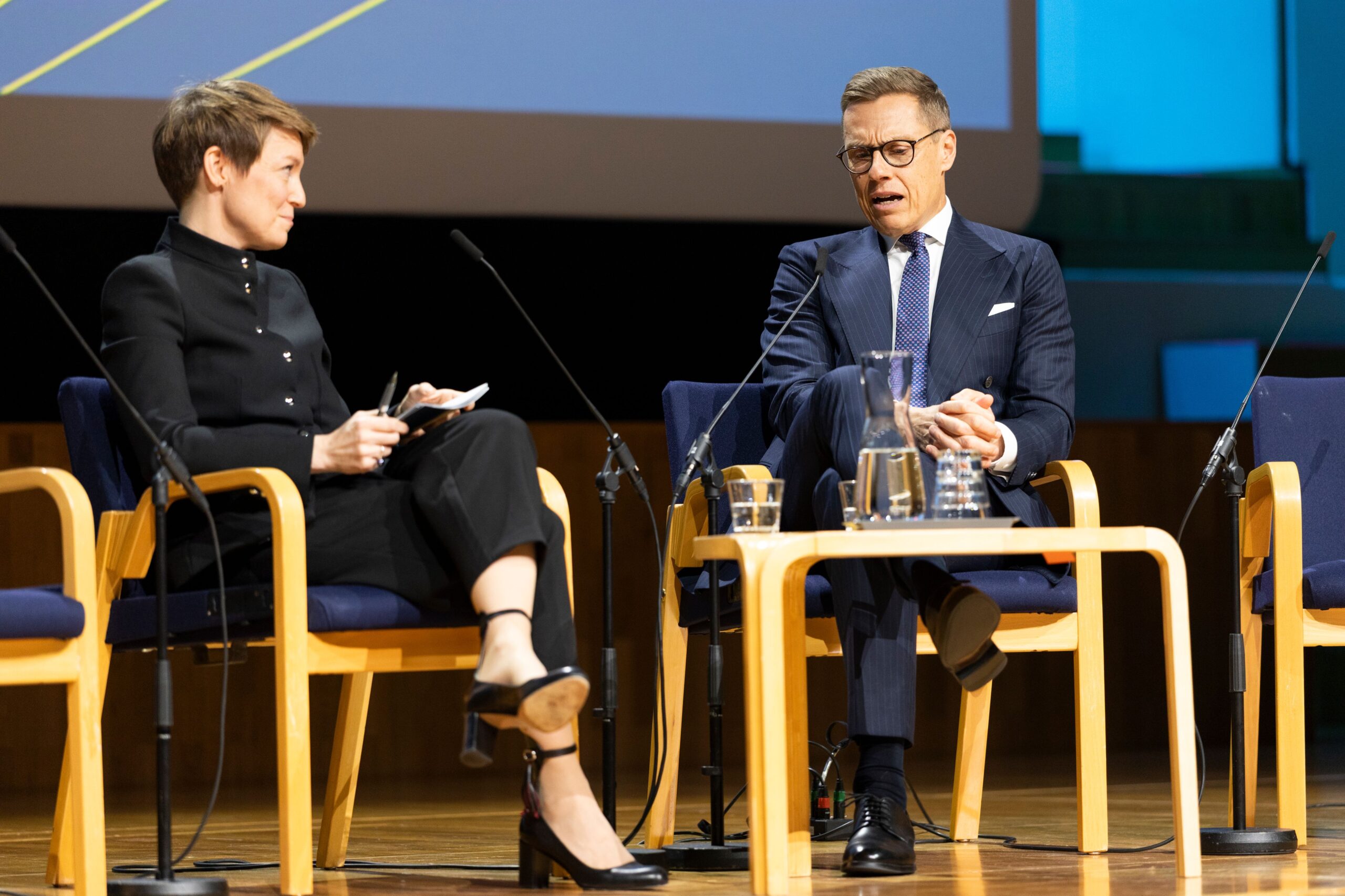
The event began with President Alexander Stubb and Katri Makkonen discussing the global order, Ukraine’s peace plan, and the legacy of Martti Ahtisaari. Photo: Maria Hossain Santto / CMI
Under the theme Rebooting Peace, CMI aimed to ignite discussion around two essential questions: what needs to change in peacemaking, and what core principles should be non-negotiable in the face of global uncertainty.
HRH Prince El Hassan bin Talal: “Peoples do not turn their backs on each other”
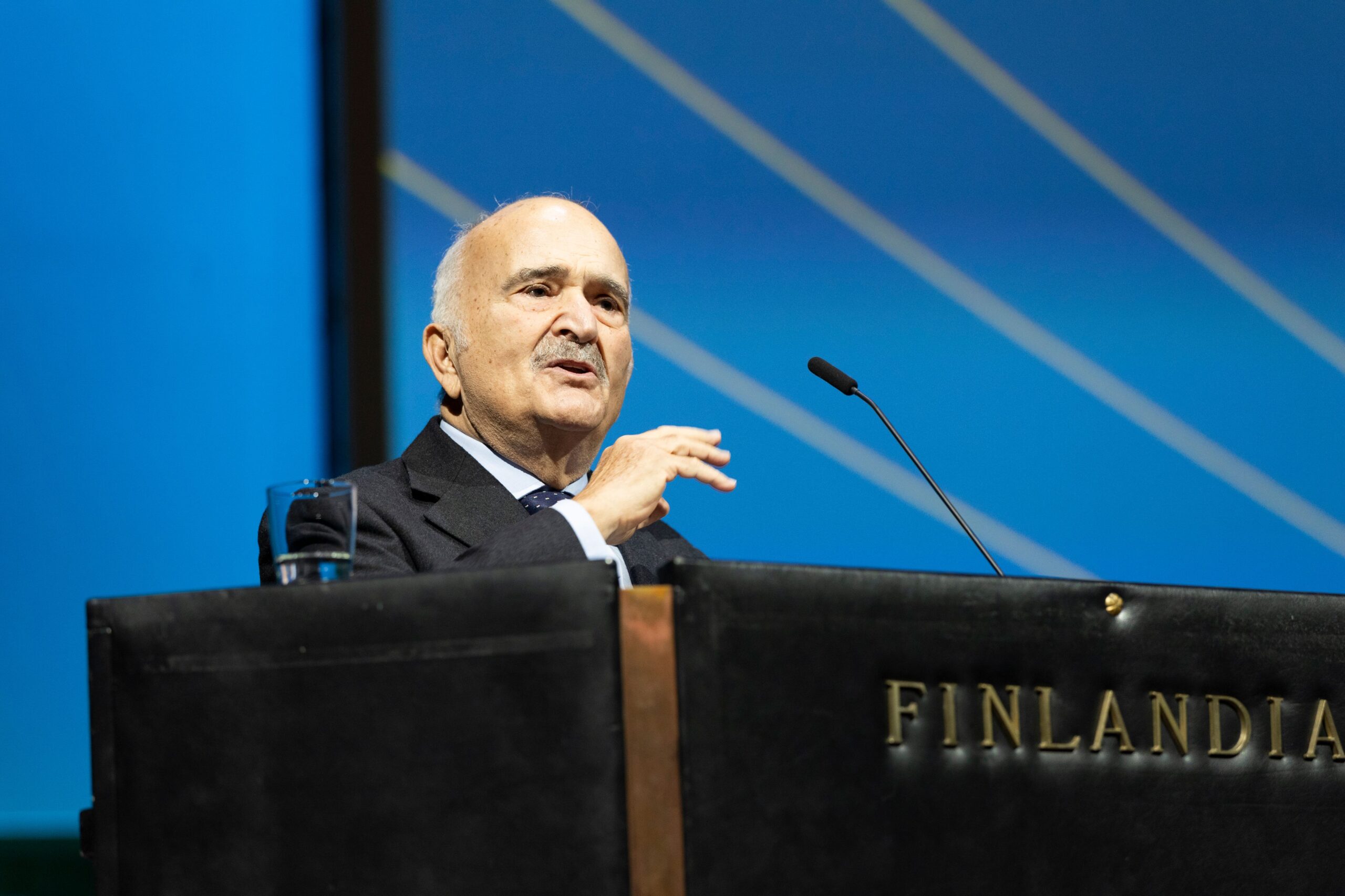
HRH Prince El Hassan bin Talal called for cross-border cooperation in water, energy and development in his region. Photo: Maria Hossain Santto / CMI
A peacemaker and statesman, HRH Prince El Hassan bin Talal of Jordan, has been an advocate of universal human dignity for decades. He continued on this path in Helsinki and delivered a strong keynote message: true progress is possible by enforcing alliances between people, not only governments.
“I believe in a United Peoples, not a United Nations. Because peoples do not turn their backs on each other. . . Governments turn their backs on each other.”
Referring to President Stubb’s earlier remarks, Prince El Hassan reaffirmed that recognising facts is the beginning of wisdom, especially when considering the future of his region. “We need incontrovertible facts, and we need that to find a value-based system. And without a comprehensive effort at reconstruction [. . .], our region in particular risks further fragmentation.”
Peace is not an event but a continuous process.
Prince El Hassan reiterated that peace “is not an event but a continuous process,” emphasising the importance of dialogue and the enablement and empowerment of citizens. He warned against the contraction of free expression and the growing blurring of fact and opinion in public discourse, which only deepens social polarisation.
Looking back to Ahtisaari’s role in the process leading to Kosovo’s independence, Prince El Hassan outlined the virtues that continue to define the legacy of late President Martti Ahtisaari and should not be forgotten in peace processes today.
“He facilitated; he enabled; he did not impose by diktat.”
Finally, Prince El Hassan outlined his vision for a less fragmented and more peaceful world. He called for renewed regional cooperation and a new “international humanitarian order” that places human dignity at the centre and ensures that humanitarian action is preventive rather than only a response to crisis.
“The Europeans started with their Coal and Steel Community. Why can we not start with water and energy?”
Mary Robinson: “Martti would not allow this sorrow to lapse into fatalism”
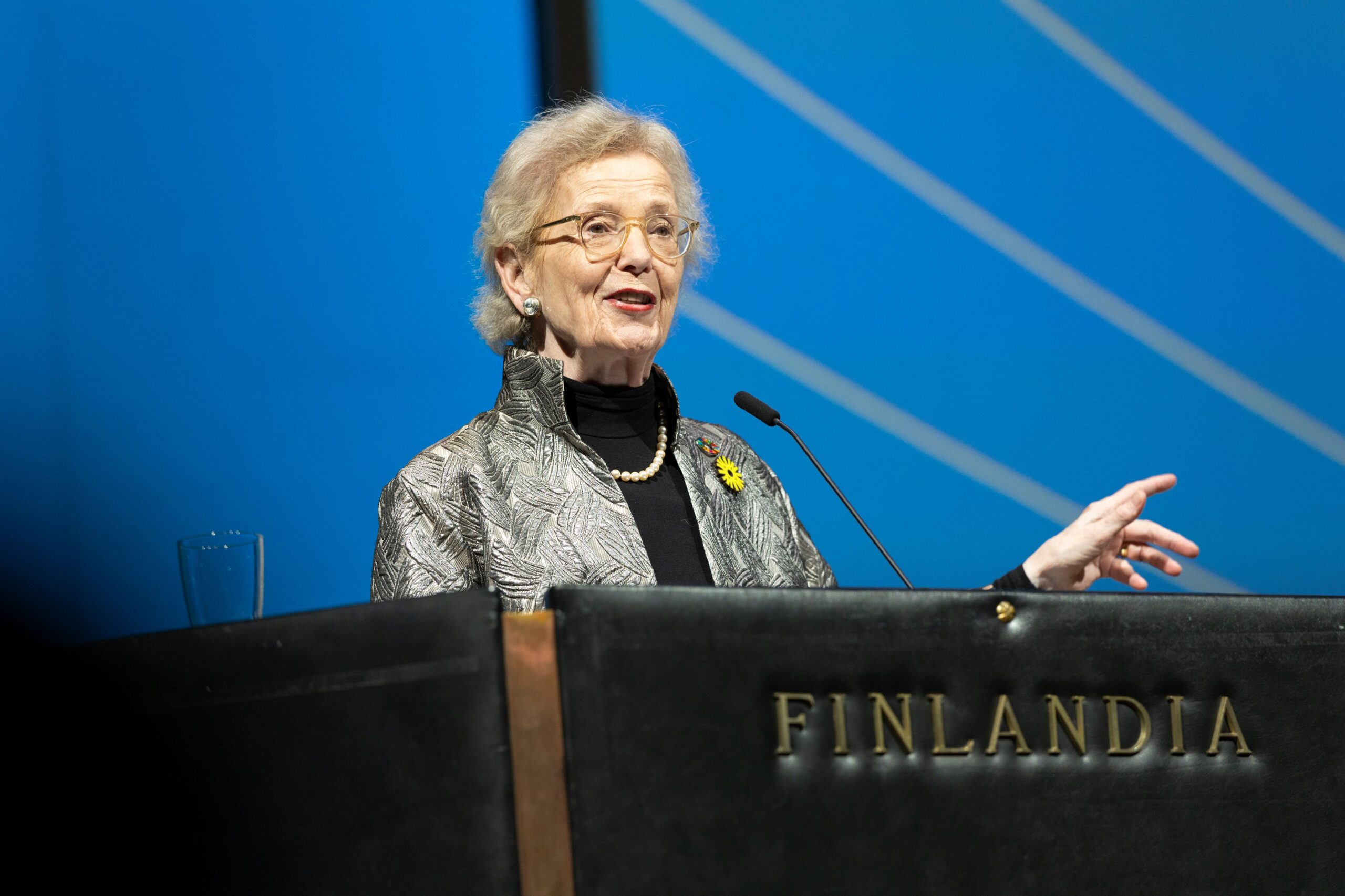
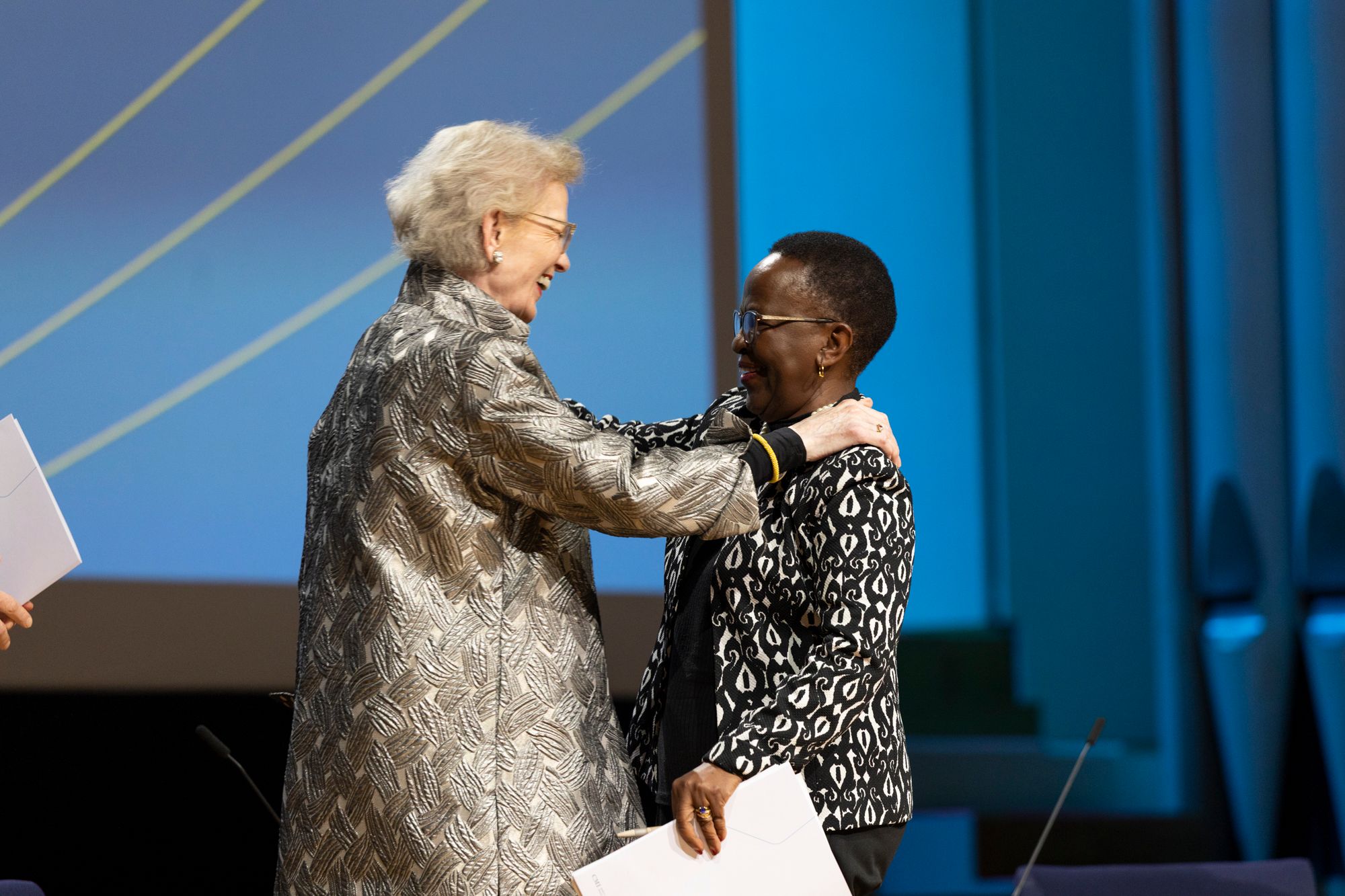
Mary Robinson, former President of Ireland, former UN High Commissioner for Human Rights, and currently a member of The Elders, opened the keynote exchange with remarks on working with Martti Ahtisaari. Photo: Maria Hossain Santto / CMI
Marking 35 years to the day since her inauguration as Ireland’s first female President, Mary Robinson reflected on the legacy of her fellow Elder President Martti Ahtisaari and reminded us of the need to not lose faith amid global injustices.
“[I] know that he would not allow this sorrow to lapse into fatalism, but rather insist that every conflict can be solved, provided there is the political will to do so.”
These words capture the principles that inspired Martti Ahtisaari throughout his life, shaped his approach to peacemaking, and they continue to guide the work of CMI.
“The principles underpinning CMI’s work are timeless: that lasting peace must be rooted in justice and human rights, and that the victims of conflict and atrocities must be at the heart of negotiations for a peaceful future.”
For the first time, people could be British, and Irish, and European.
When asked about the core principles behind the success of the Good Friday Agreement – signed in 1998, ending 30 years of violence known as the Troubles in Northern Ireland – Mary Robinson highlighted that the agreement was grounded not only in human rights but also in an “intense balance”.
“The balance between the parties in Northern Ireland; the balance of the two governments; the identities. . . For the first time, people could be British, and Irish, and European.”
What we must change: A more balanced world is needed; one that reflects the realities of 2026, not 1945, both politically within the UN and within economic institutions such as the WTO.
What we must preserve: Reinforcing the collective sense of global duty and working together in the common interest. The principles of Martti Ahtisaari.
Ambassador Liberata Mulamula: “We can’t wait for the world to fix the system”
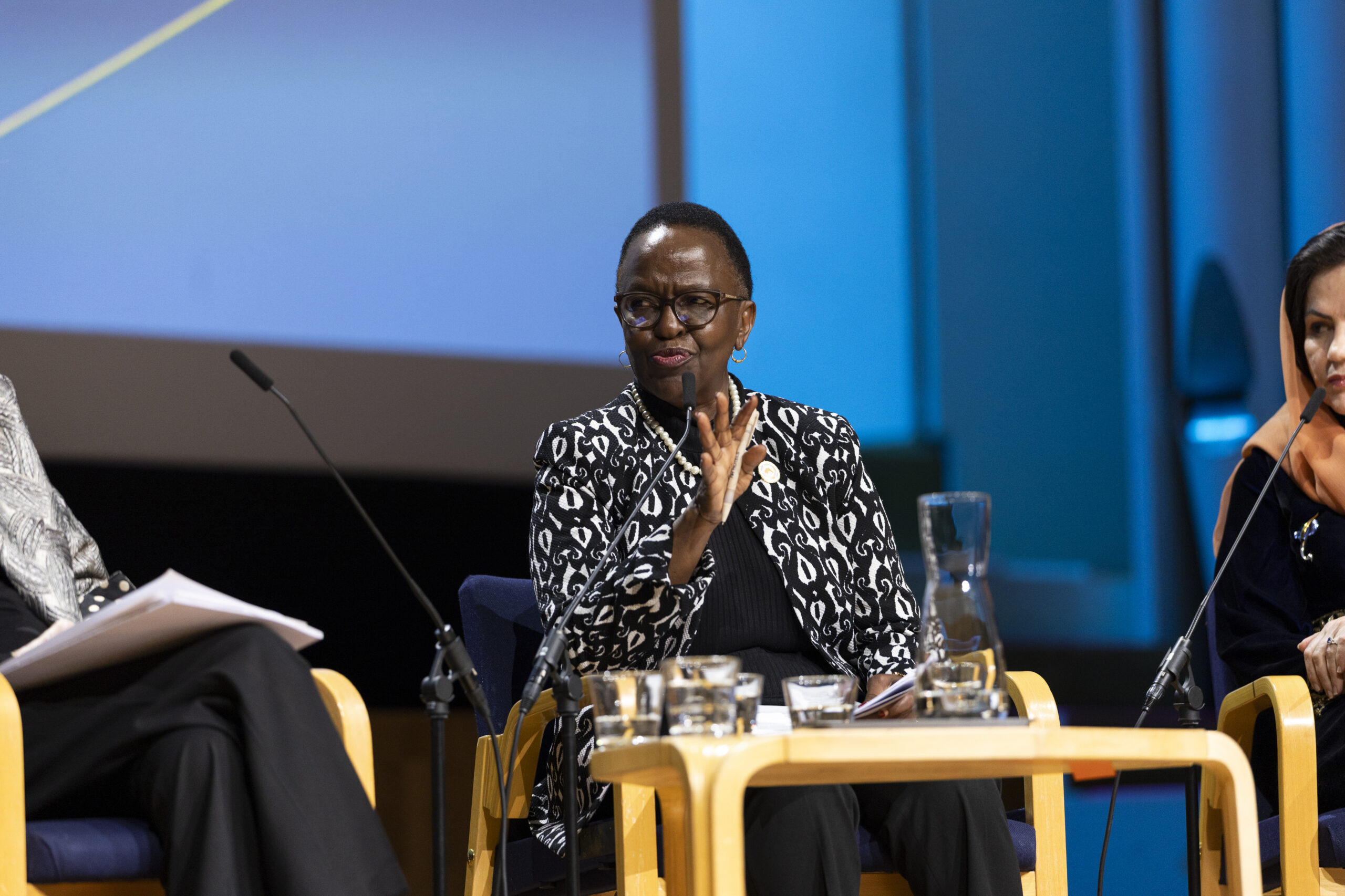
Ambassador Liberata Mulamula underlined the importance of local ownership in peace negotiations. Photo: Maria Hossain Santto / CMI
Ambassador Liberata Mulamula, a seasoned Tanzanian diplomat and the African Union’s (AU) Special Envoy for Women, Peace and Security, stressed that in peace processes, inclusivity is not a choice; it is a necessity. The AU has echoed this commitment through its Peace and Security Architecture, establishing inclusivity as a non-negotiable principle.
“This includes, of course, inclusivity of women, of the youth, and everyone. Here we heard that everyone is a shareholder; that peace is for all of us.”
Localising peace processes is important, the Ambassador said. It builds legitimacy and ownership and ensures a people-centred approach. Another key element is regionalisation: owning problems as a region and seeking regional solutions.
The question is how we change our mindset.
A fairer world requires, according to Ambassador Mulamula, strengthening multilateralism, no matter how fractured or fragmented it may be. Equally important is ensuring a seat for the 1.4 billion people of Africa at the tables where the global trajectory is determined.
“The African perspective is anchored in agency – we can’t wait for the world to fix the system.”
Above all, Ambassador Mulamula said that we can find solutions within ourselves – by changing our mindset.
“That is all we need. We know the what, we know the why, we know the when. Now the question is how we change our mindset and perspectives.”
What we must change: Our collective mindset. A seat for Africa in the UN Security Council and other global institutions.
What we must preserve: Inclusivity, local ownership in peace processes, and regional efforts towards peace.
Fawzia Koofi: “Peace cannot mean only the silence of guns”
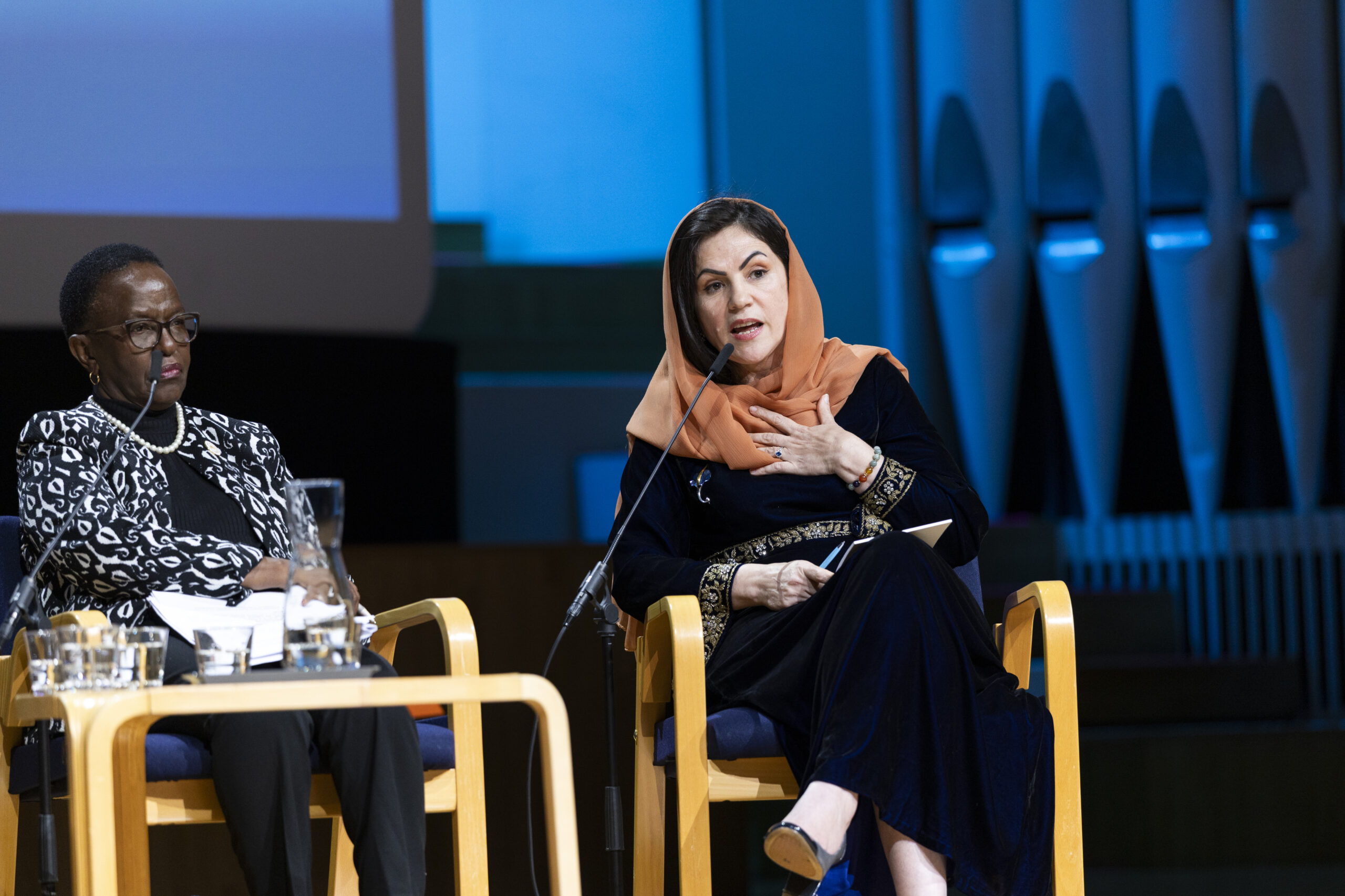
Former peace negotiator Fawzia Koofi urged us to redefine the concept of peace. Photo: Maria Hossain Santto / CMI
Fawzia Koofi, first woman Deputy Speaker of the Afghan Parliament and President of Women for Afghanistan, challenged the prevailing definitions of peace. For a nation shaped by five decades of conflict, peace cannot mean only the silence of guns, Koofi said.
“Peace means justice, peace means inclusivity, peace means sleeping in your bedroom without the fear of tomorrow being whipped by dictators and powers. . .”
True peace, she argued, must be rooted in equity; not only gender equality, but equitable access to education, opportunity, and resources. The world we currently live in is still defined by these stark disparities.
“In Afghanistan, a girl cannot have access to a pen and a paper. She is banned from her basic fundamental rights to education. . . In the Global North, people talk about customised AI for their students,” Koofi said and warned that this inequality could lead to further conflict.
Peace is about coexistence and acceptance.
The former parliamentarian placed this reflection within a broader concern for global order. She argued that multilateralism is under strain, while new actors and regional powers are redefining influence. In Afghanistan, diplomacy and multilateral mechanisms have failed, and the greatest price is paid by women and ordinary people.
“For as long as peace is only about political agreements and political signatories and ceremonies, the ordinary people, the ones who are affected, will continue to be the victim[s].”
Peace, she reminded us, is about coexistence and acceptance, about people learning to pardon and apologise, and about healing wounds caused by conflict.
What we must change: Truly include those who are directly affected by conflict, especially women who lose lives and opportunities.
What we must preserve: Accountability. Because favouring short-term political deals over accountability deepens conflicts.
Further content related to CMI25
- Recording of the event on 3 December
- HRH Prince El Hassan bin Talal interview on Helsingin Sanomat (Finnish)
- Fawzia Koofi’s interview on Maailman Kuvalehti (Finnish)