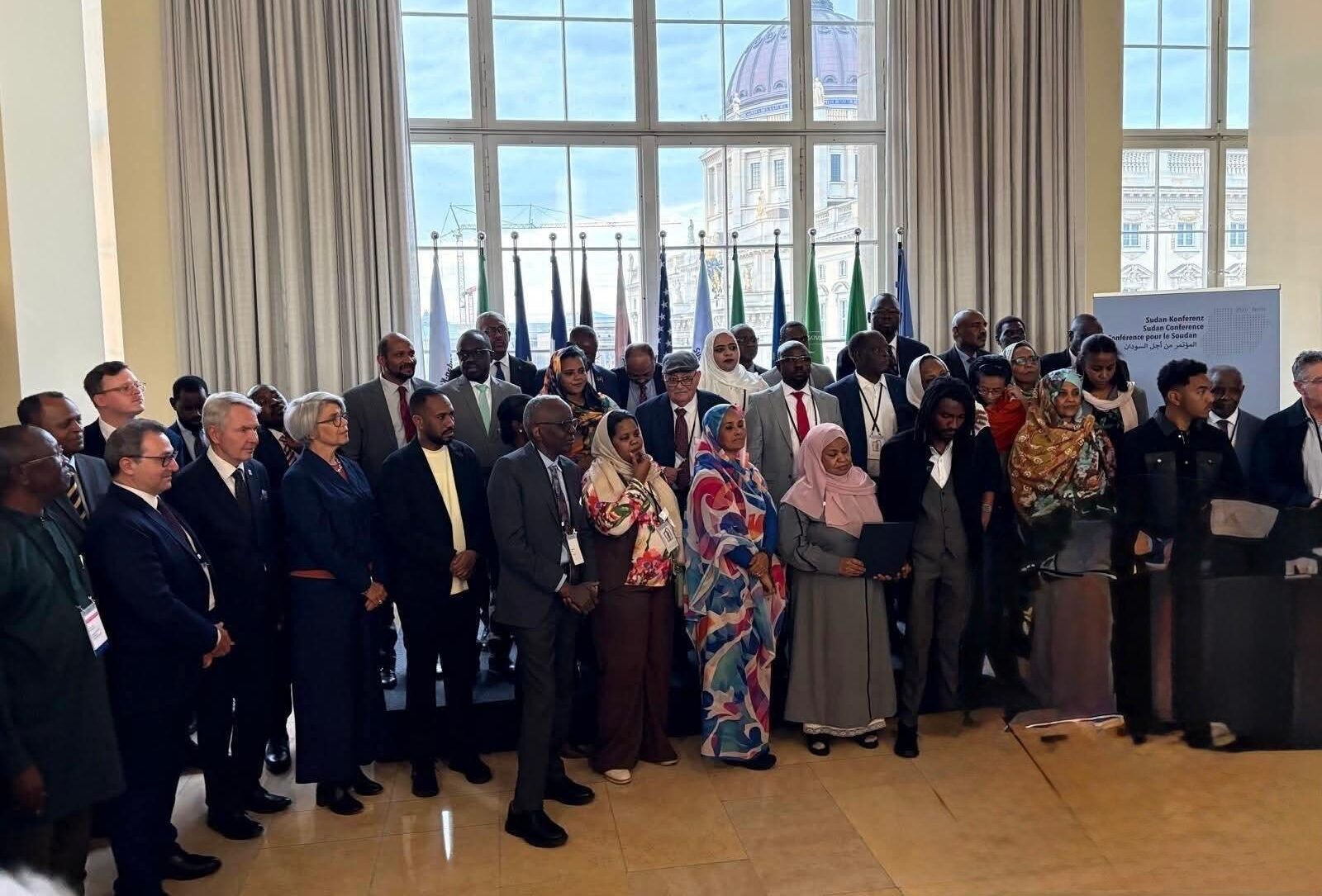
As the International Ministerial Conference on Sudan convenes in Berlin, Sudanese women and youth groups are sending an urgent message: the violence must stop, and a path back to dialogue must begin. Supported and coordinated by CMI, their demands have also informed a broader call for de-escalation agreed by political leaders convened at a civilian side meeting in Berlin.
The civil war in Sudan between the Sudan Armed Forces and the Rapid Support Forces broke out three years ago on 15 April 2023. The ongoing violence has taken a heavy toll on civilians, displaced millions of people, and a severe humanitarian crisis persists amid continued involvement of outside actors. All this has shrunk the space for civil society.
On Wednesday 15 April, foreign ministers, UN officials, civil society organisations and key Sudanese actors convene in Berlin, attempting to find solutions to de-escalate the crisis and support and fund humanitarian efforts.
CMI has supported two parallel initiatives calling for de-escalation. A joint appeal from women’s groups – signed by 55 organisations, networks, and leaders – calls for an immediate cessation of hostilities and meaningful inclusion of women in peace efforts.
In parallel, seven of Sudan’s leading youth networks have issued their own call for de-escalation, which highlights the critical role of young people in shaping the country’s future.
“On the third anniversary of the war in Sudan, Sudanese women and youth have issued a clear and urgent call: an immediate end to the escalating violence. Their demands have also informed the broader call for de-escalation, agreed by political leaders convened at a civilian seminar on the sidelines of the Berlin conference. These calls for de-escalation underscoring growing alignment around the need to halt the conflict and to re-centre a Sudanese-led political process,” says Amir Salim, Advisor, CMI.
CMI’s engagement in Sudan
CMI has been engaged in Sudan since 2020, supporting efforts toward resuming a political process that can lead to a democratic transition and a broader peace process. This work has focused on building consensus among key political and civilian groups on issues related to the future of Sudan, while advancing women’s political agency and meaningful participation in peace efforts.
A key priority has also been to strengthen capacities among political groups on critical issues related to a ceasefire and the resumption of a political process, in support of ongoing multilateral mediation efforts.
CMI has also provided Mental Health and Psycho-Social Support (MHPSS) to women leaders, particularly within the framework of leadership and peacemaking, recognising the importance of addressing trauma to be enable political mobilisation and leadership.
Read the joint call, based on the civilian side meeting in Berlin, here.