


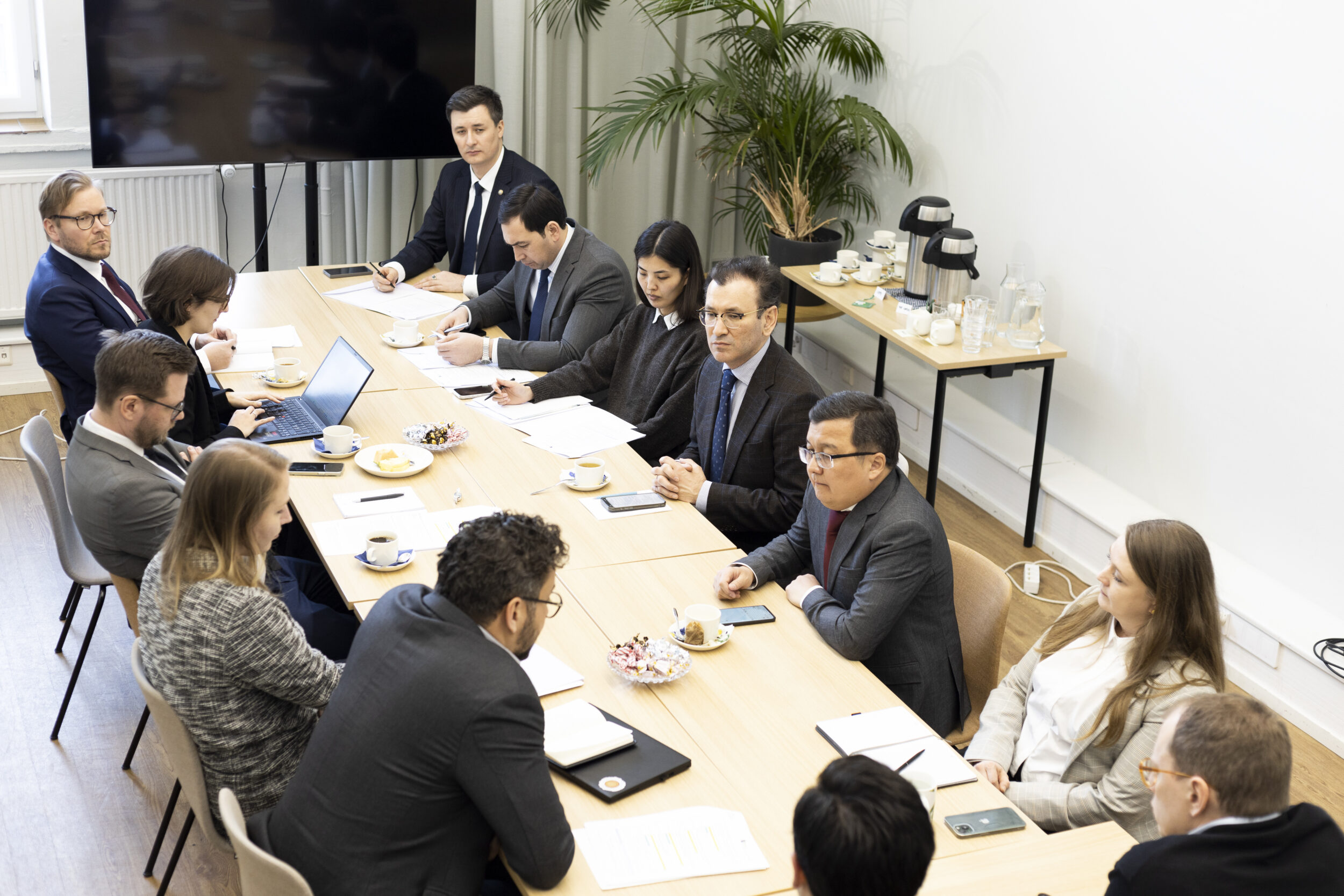
A group of experts from Central Asian countries visited Helsinki and Oslo in February. The delegation met and exchanged with a range of Nordic experts with the objective to deepen their understanding of Nordic cooperation in various areas of policy. At a time of growing multipolarity and global instability, the visit was part of CMI’s engagement in Central Asia and sought to foster the exchange of ideas and best practices across regions.
CMI has engaged in the broader region since 2022 and sees Central Asian countries finding themselves at the crossroads of great power politics, seeking to define a more common foreign policy identity and role within both the region and the emerging global order. They share many similarities with, for example, Finland, which has historically faced similar geopolitical pressures and had to navigate carefully to maintain the right balance among major powers.
“In an increasingly interconnected world, resilience and stability are not built in isolation but through partnerships. Open dialogue and the sharing of best practices and challenges allow countries to strengthen institutions and uncover common regional interests,” says Alex Virtanen, Head of Asia at CMI.
Virtanen notes that in recent years, countries in the region have made significant progress in resolving long-standing disputes, particularly regarding border delimitation and regional water management. “This has created a new sense of confidence and positive momentum in intra-regional cooperation offering globally applicable lessons.”
“This visit reflects CMI’s growing engagement in Central Asia. By engaging with policy actors across the region and building on existing regional networks, we aim to support sustainable platforms for dialogue that connect national perspectives with broader regional and global discussions,” says Oskari Eronen, Chief Programme Officer at CMI.
Examining cooperation across diverse policy areas
For seven days, participants from Kazakhstan, Kyrgyzstan and Uzbekistan met with Nordic officials, civil servants, politicians, and experts. The first four days were spent in Finland, hosted by CMI, and the latter three in Norway under the auspices of the Norwegian Centre for Conflict Resolution (NOREF).
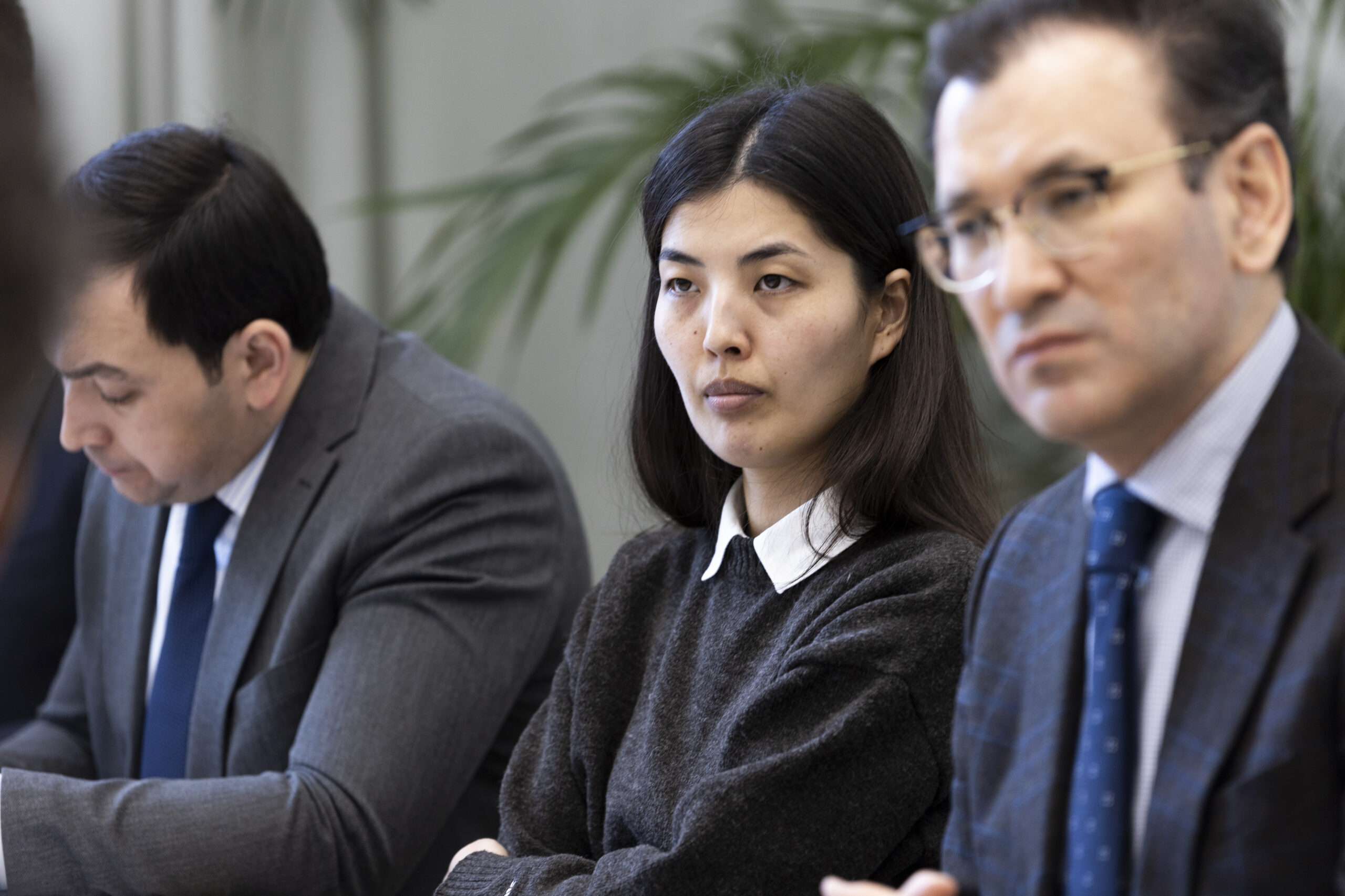
Photo: CMI/Maria Hossain Santto
The programme opened in Helsinki with discussions on the current state of regional cooperation in both the Nordic and Central Asian contexts. Participants outlined their expectations for the visit and named areas of potential mutual learning, which laid the foundation for meaningful dialogue and cross-regional comparison during the visit.
The delegation’s time in Helsinki included multiple exchanges with Nordic officials and civil servants. The participants explored the institutional framework underpinning Nordic cooperation, focusing especially on the roles of key regional institutions: the Nordic Council and the Nordic Council of Ministers. Another discussion examined business and economic cooperation and included insights from representatives from the Nordic Investment Bank and a regional trade union.
Under the lens was also regional cooperation in the areas of environment and climate with representatives from multiple Finnish ministries, as well as an exchange on the role of youth in Nordic cooperation and identity building. The delegation met, among others, with Anders Adlercreutz, Minister for Education of Finland, who is also responsible for the Nordic cooperation.
The Oslo segment of the study visit focused on Norway’s approaches to regional cooperation and knowledge exchange. The delegation met with representatives of Nordic embassies to discuss collaboration across diplomatic missions, highlighting practical mechanisms that strengthen regional cooperation.
Engagements with the representatives of employers and trade unions examined the impact of the Nordic cooperation model on private enterprise and labour rights. The programme also included discussions with experts from Norwegian think tanks and research institutes, focusing on climate and natural resource governance, as well as opportunities to expand academic and research collaboration between Norway and Central Asian states.

