A CMI-commissioned mapping supporting the African Union Commission’s Political Affairs, Peace and Security department identified civil society organisations across South Sudan. The mapping informed a strategic workshop designed to strengthen grassroots-led peacebuilding in what is a complex political transition.
Strategic workshop in Addis Ababa
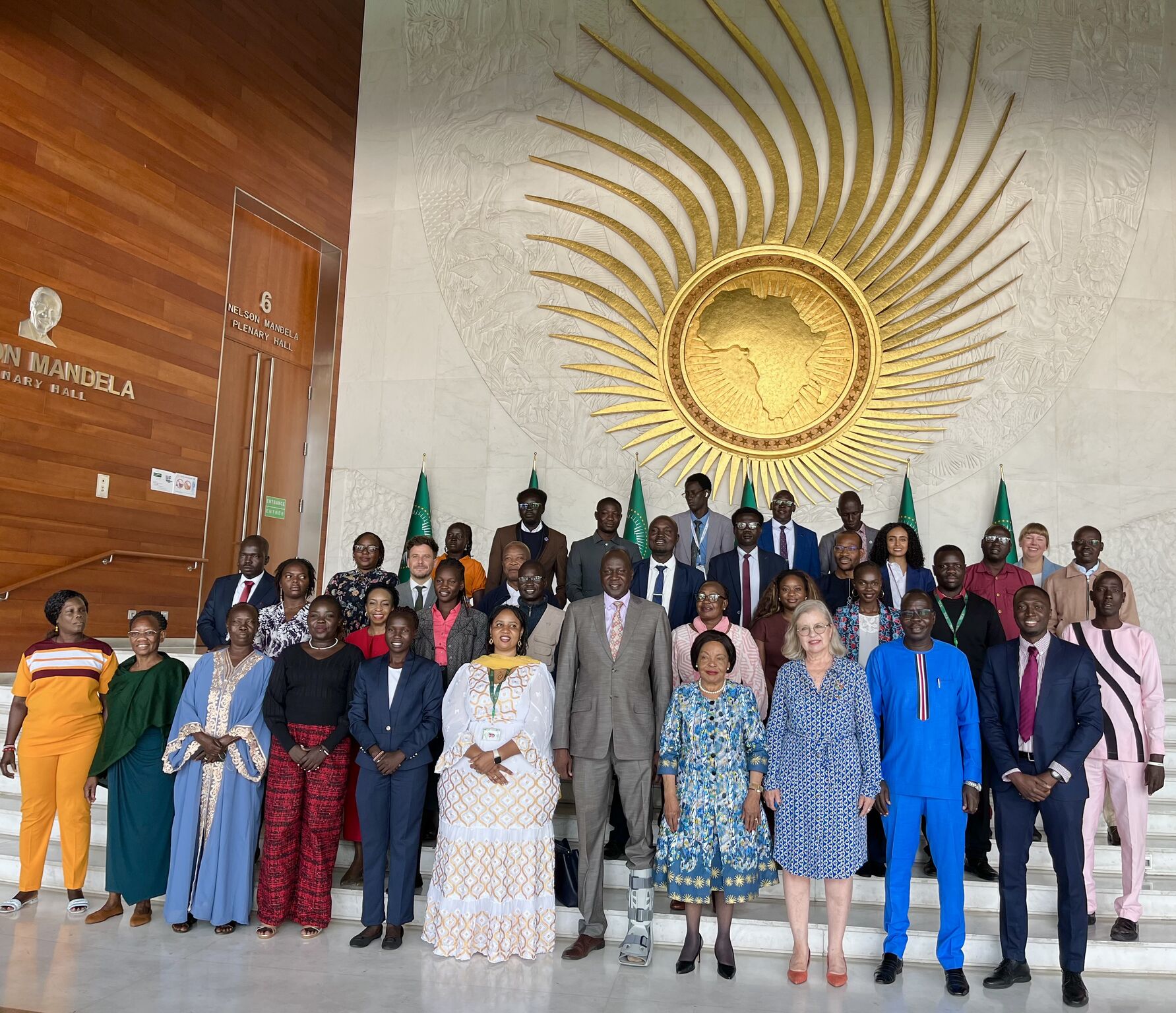
From 11 to 13 June 2025, civil society representatives, African Union (AU) officials, and representatives from CMI – Martti Ahtisaari Peace Foundation gathered in Addis Ababa for a strategic workshop focused on peacebuilding and mediation in South Sudan. The event was co-organised by the AU Commission’s Department of Political Affairs, Peace and Security (AUC PAPS) and CMI.
Participants represented 30 civil society organisations (CSOs) from South Sudan, including community-based groups, faith-based bodies and associations representing women and youth. The workshop aimed to deepen understanding between CSOs and the AU, build relationships, improve access to resources and identify how civil society can be more meaningfully included in peace processes.
“The mapping sought to identify the challenges the organisations faced, the best practices they advocated and opportunities they had identified”
The three-day gathering validated findings from a 2024 mapping of CSOs engaged in peacebuilding activities in South Sudan. Organisations shared additional insights on their experiences, best practices and operational challenges during the workshop. The mapping and workshop identified priority needs so that the AU and partners can better target their support. In addition, participants reflected on the national peace process and the broader regional context, including the war in Sudan.
During the workshop, the Panel of the Wise commended South Sudanese civil society for their active role in peacebuilding. The Chair of the Panel, Hon. Justice Effie Owuor, encouraged organisations to remain vigilant and engaged in supporting implementation of the peace agreement, noting that while external partners can assist, South Sudan’s future ultimately rests with its people.
What is the Panel of the Wise?
The Panel of the Wise (PoW), is one of the critical pillars of the Peace and Security Architecture of the African Union (APSA). Article 11 of the Protocol establishing the Peace and Security Council (PSC), sets up a five-person panel of “highly respected African personalities from various segments of society who have made outstanding contributions to the cause of peace, security and development on the continent”. Their task is “to support the efforts of the PSC and those of the Chairperson of the Commission, particularly in the area of conflict prevention.”
This activity forms part of CMI’s support for the AU’s conflict-prevention and mediation capacities under the AU–CMI partnership established in 2009. The current project (2023–2026), funded by the Ministry for Foreign Affairs of Finland, provides needs-based operational support to the AU Commission’s Department of Political Affairs, Peace and Security.
H.E. Sinikka Antila, Finland’s Ambassador to Ethiopia and Permanent Representative to the AU, who is also accredited to South Sudan, delivered opening remarks noting Finland’s long-standing support to AU-led peacebuilding and the value of sustained engagement with civil society as a foundation for sustainable peace.
“Bringing civil society actors together and strengthening their networks helps ensure that peacebuilding remains grounded in local realities”
A complex and changing context
Since April 2023, neighbouring Sudan has experienced escalating conflict between the Sudanese Armed Forces and the Rapid Support Forces. This has significantly affected South Sudan and the wider region, adding pressure to peace efforts and increasing humanitarian needs.
For the AU and CMI, bringing civil society actors together and strengthening their networks helps ensure that peacebuilding remains grounded in local realities and complements official processes during periods of limited progress.
CSOs in South Sudan have continued to engage in community-level peacebuilding, providing early warning and early response mechanisms, supporting internally displaced people, and promoting dialogue between conflict-affected communities. For instance, the Peace and Development Collaborative Organisation – represented at the workshop – works with youth groups to mediate between communities affected by repeated cycles of violence.
Mapping civil society actors in South Sudan
In support of the AU’s work and engagement with CSOs, CMI commissioned a mapping of civil society organisations, with particular attention to women-and youth-led groups. Conducted in late 2024, the mapping identified which organisations were doing what, where, and how.
The mapping also sought to identify the challenges the organisations faced, the best practices they advocated and opportunities they had identified. It focused on organisations engaged in conflict prevention, resolution, mediation, and peacebuilding.
Findings guided selection of participants for the June 2025 workshop and helped structure the discussions. The mapping is intended as a practical reference for the AU and partners to engage more systematically with civil society when supporting peace processes in South Sudan. In line with safeguarding and do-no-harm principles, sensitive identifiers or locations will not be published without consent and review of risk.
CMI mapping of civil society organisations
- 85 CSOs mapped across South Sudan
- Organisations from Greater Equatoria, Greater Upper Nile, and Greater Bahr El Ghazal
- 30 CSOs attended June 2025 Addis workshop
- Focus: mediation, dialogue, AU–civil society cooperation
Why civil society matters
A foundational value for both the AU and CMI is recognising the vital role civil society plays in peacebuilding. The AU’s people-centred approach and multi-track diplomacy emphasise partnerships with civil society. In South Sudan – where national-level processes have experienced periodic delays, and where trust in official actors can be limited in some areas – this approach remains highly relevant.
CSOs are often first responders to local tensions. They facilitate local peace dialogues, support survivors of violence, and create safe spaces for community voices. Women and youth-led groups have been especially active in leading community reconciliation and ensuring that marginalised groups are not left out of local decision-making.
At the June workshop, participants reflected on activities that contribute to the de-escalation of local disputes, such as community mediation and training in conflict resolution.
“Civil society should be engaged as partners, not just implementers”
Challenges faced by civil society
Despite their contributions, civil society organisations in South Sudan face significant constraints, including limited and short-term funding, restricted access to some areas, security risks, and gaps in institutional support. Many rely on project-based grants, which complicate long-term planning and staff retention.
Participants also underscored the need for stronger physical and legal protection measures, noting that civic actors can be targeted because of their advocacy roles. Women peacebuilders highlighted barriers to legitimacy and support from both community leaders and authorities, including the frequent overlooking of women with disabilities in national-level dialogue despite their frontline roles.
Looking ahead: What CSOs are asking for
Participants called for more regular engagement with the AU and Member States, including consultations before and during peace processes; capacity-building in mediation, advocacy, and documentation; and help to amplify local messages at regional and continental levels. There was clear interest in continued cooperation with CMI and the AU, and broad agreement that civil society should be engaged as partners, not just implementers.
Participants also explored establishing a standing platform or mechanism for more systematic AU–CSO engagement and requested periodic updates to the mapping so it would remain a practical tool rather than a one-off report.
A step towards improved coordination
The mapping and the workshop are part of a longer-term effort to build stronger, more coordinated peacebuilding strategies in South Sudan and beyond. By identifying key actors, clarifying roles, and bringing people together in structured dialogue, the AU – with the support of CMI – is helping lay the groundwork for more inclusive and sustainable peace initiatives.
As conflicts in the region evolve, the ability to respond flexibly and locally will be essential. Strengthening civil society is one part of that. So is building trust: between actors on the ground and those shaping policy at the top.