


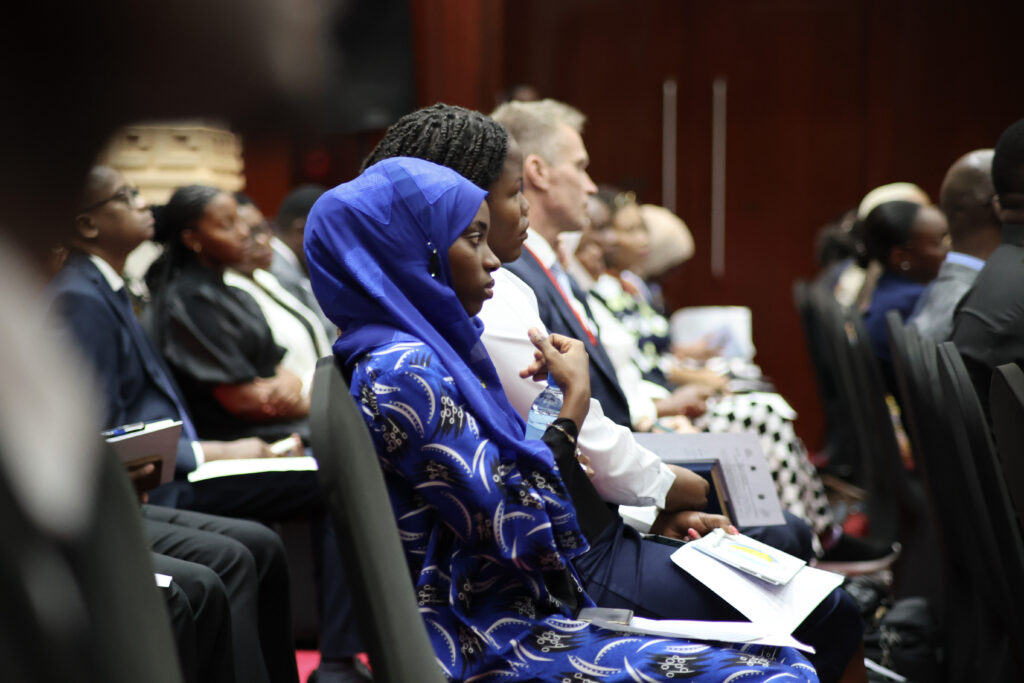
On 15 May 2025, the Julius Nyerere International Convention Centre in Dar es Salaam hosted the Martti Ahtisaari Legacy Seminar. Organised in cooperation with the Tanzanian Ministry of Foreign Affairs and East African Cooperation, Dr. Salim Ahmed Salim Centre for Foreign Relations and the Embassy of Finland in Tanzania, the event marked sixty years of diplomatic relations between Finland and Tanzania. It brought together leaders, diplomats, mediators and youth representatives to reflect on President Martti Ahtisaari’s legacy and examine how his principles can help address today’s peacebuilding challenges.
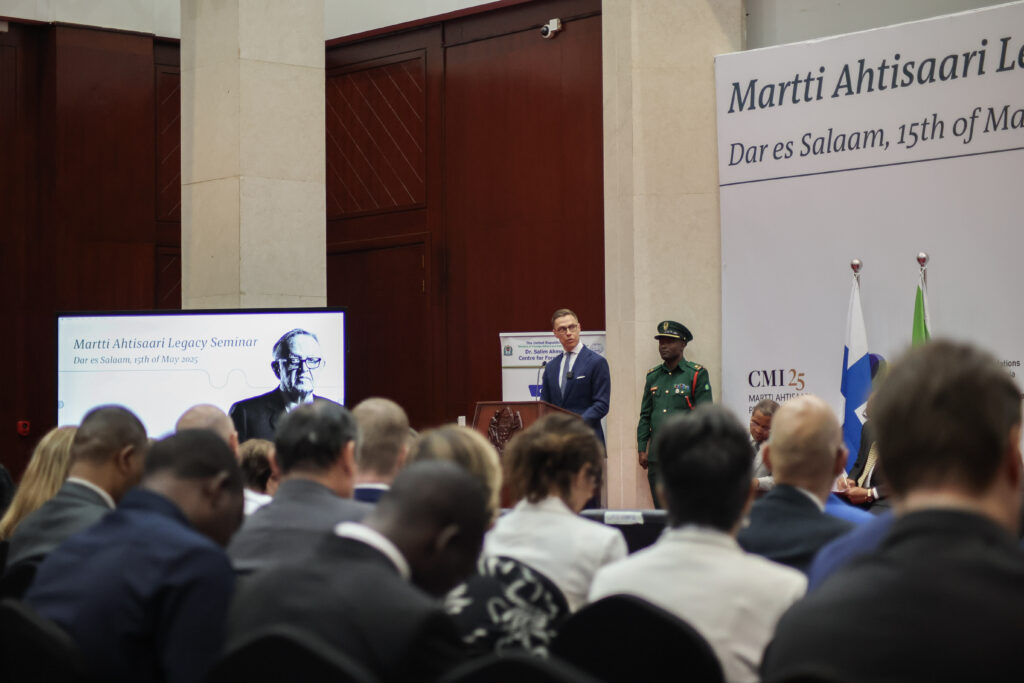
President of the Republic of Finland, Alexander Stubb, expressed concern about today’s declining faith in multilateralism. Photo: Peter Seenan/CMI
Opening the seminar, Marko Ahtisaari, Chair of the Board of CMI and son of the late president, offered a personal reflection on his family’s time in Tanzania during the 1970s. He recalled how his father’s appointment as Finland’s Ambassador to Tanzania laid the foundation for a lifelong commitment to international mediation. The deep trust Ahtisaari built with Tanzanian leaders such as Julius Nyerere and Benjamin Mkapa was later instrumental in the Namibian peace process. Marko Ahtisaari stressed that his father believed all conflicts could be resolved and that lasting peace requires collaboration – “You can’t do a damn thing alone.”
The opening was followed by remarks from H.E. Mahmoud Thabit Kombo, Minister of Foreign Affairs and East African Cooperation. He thanked Finland for its sustained support to Tanzanian institutions such as the Centre for Foreign Relations and the Uongozi Institute. Minister Kombo also highlighted Tanzania’s commitment to peace, noting the country’s leadership within both the East African Community and the Southern African Development Community. He emphasised the importance of preparing Tanzania’s youth – who make up over 70 per cent of the population – for roles in conflict prevention and peacebuilding.
Foreign Minister Kombo emphasised the importance of preparing Tanzania’s youth for roles in conflict prevention and peacebuilding. Photo: Peter Seenan/CMI
The keynote address was delivered by H.E. Alexander Stubb, President of the Republic of Finland. He reflected on Martti Ahtisaari’s mediation work in Namibia, Kosovo and Aceh, describing his approach as principled and pragmatic. Ahtisaari was known for being a credible and honest broker, unafraid to deliver difficult truths when necessary. According to Stubb, Ahtisaari’s strength lay in his ability to see clearly where a conflict needed to go and to help the parties involved get there. Stubb expressed concern about today’s declining faith in multilateralism and called for renewed investment in international cooperation. “We need more Marttis,” he said.
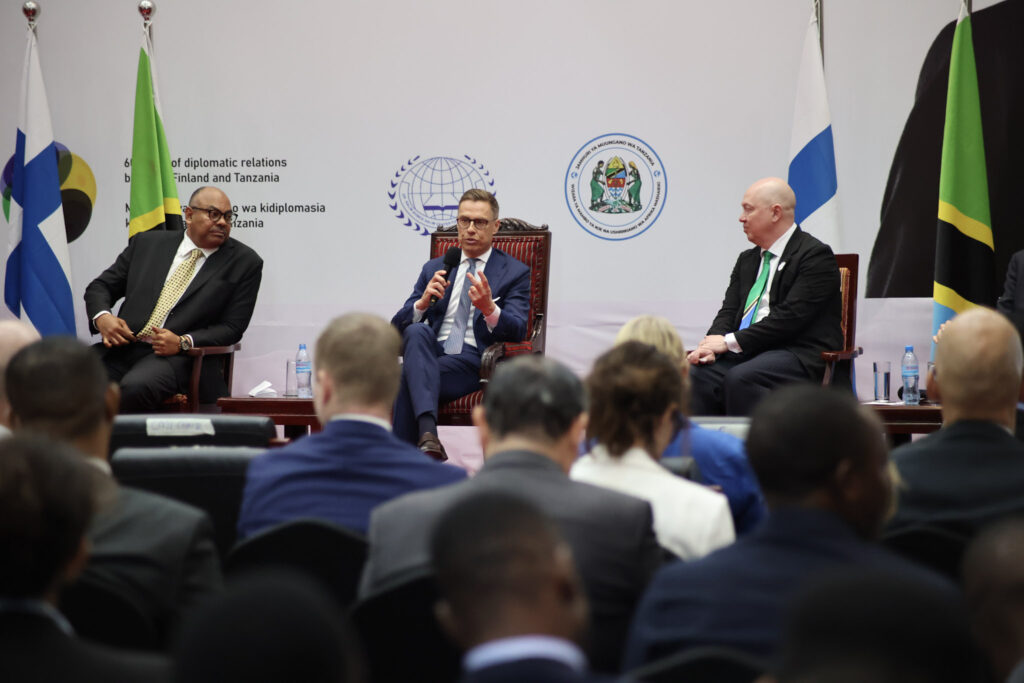
L to R: Mahmoud Thabit Kombo, Minister of Foreign Affairs and East African Cooperation; Alexander Stubb, President of the Republic of Finland; Marko Ahtisaari, Chair of the Board of CMI. Photo: Peter Seenan/CMI
The first panel of the seminar explored the ongoing relevance of Ahtisaari’s legacy in a time of global uncertainty. Moderated by Hanna Klinge, Deputy CEO of CMI, the discussion featured Minister Kombo and CMI CEO Janne Taalas. Both speakers underlined the enduring value of neutrality, humility and perseverance in mediation. Taalas spoke of CMI’s deep links with Tanzania and stressed the organisation’s focus on youth, women and digital engagement as key pillars of future peacebuilding.
The second panel – moderated by Tiina Kukkamaa-Bah, head of CMI’s programme in Sub-Saharan Africa – examined Tanzania’s contributions to regional peace and security. Former President Jakaya Mrisho Kikwete reflected on Tanzania’s history of hosting refugees and mediating conflicts across the Great Lakes region. He described moments of quiet diplomacy that had proven effective in resolving tensions. EAC Secretary General Veronica Nduva spoke of the importance of African-led processes and meaningful inclusion, especially of women. Joseph Brighton Malekela, a youth peacebuilder, called for stronger frameworks for youth engagement and digital responsibility in peacebuilding work.
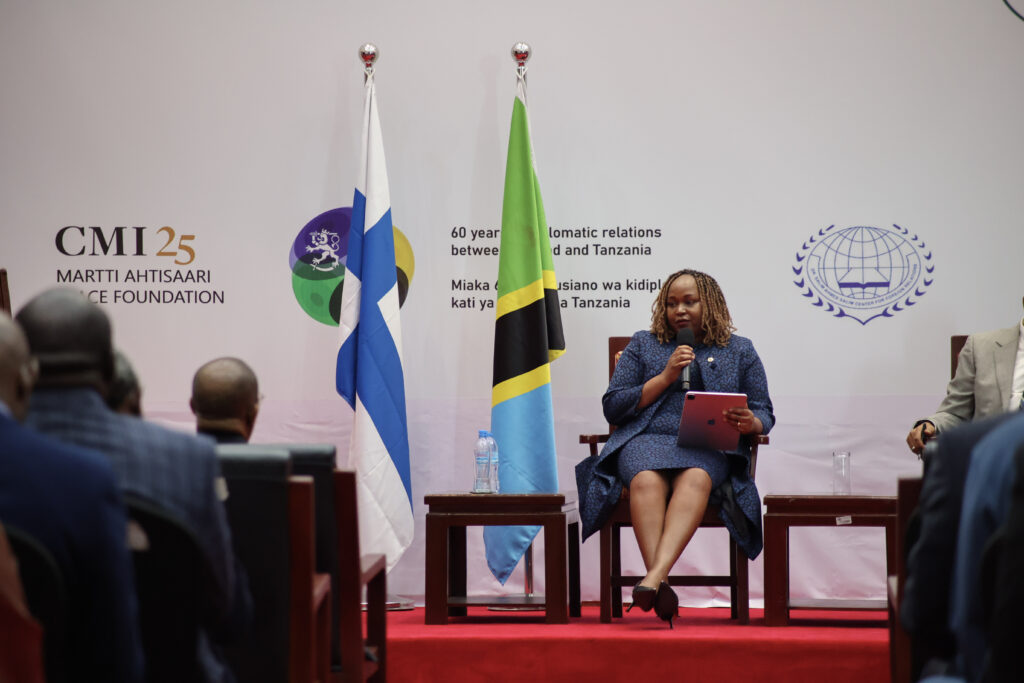
Veronica Nduva, EAC Secretary General, spoke of the importance of African-led processes and meaningful inclusion, especially of women. Photo: Peter Seenan/CMI
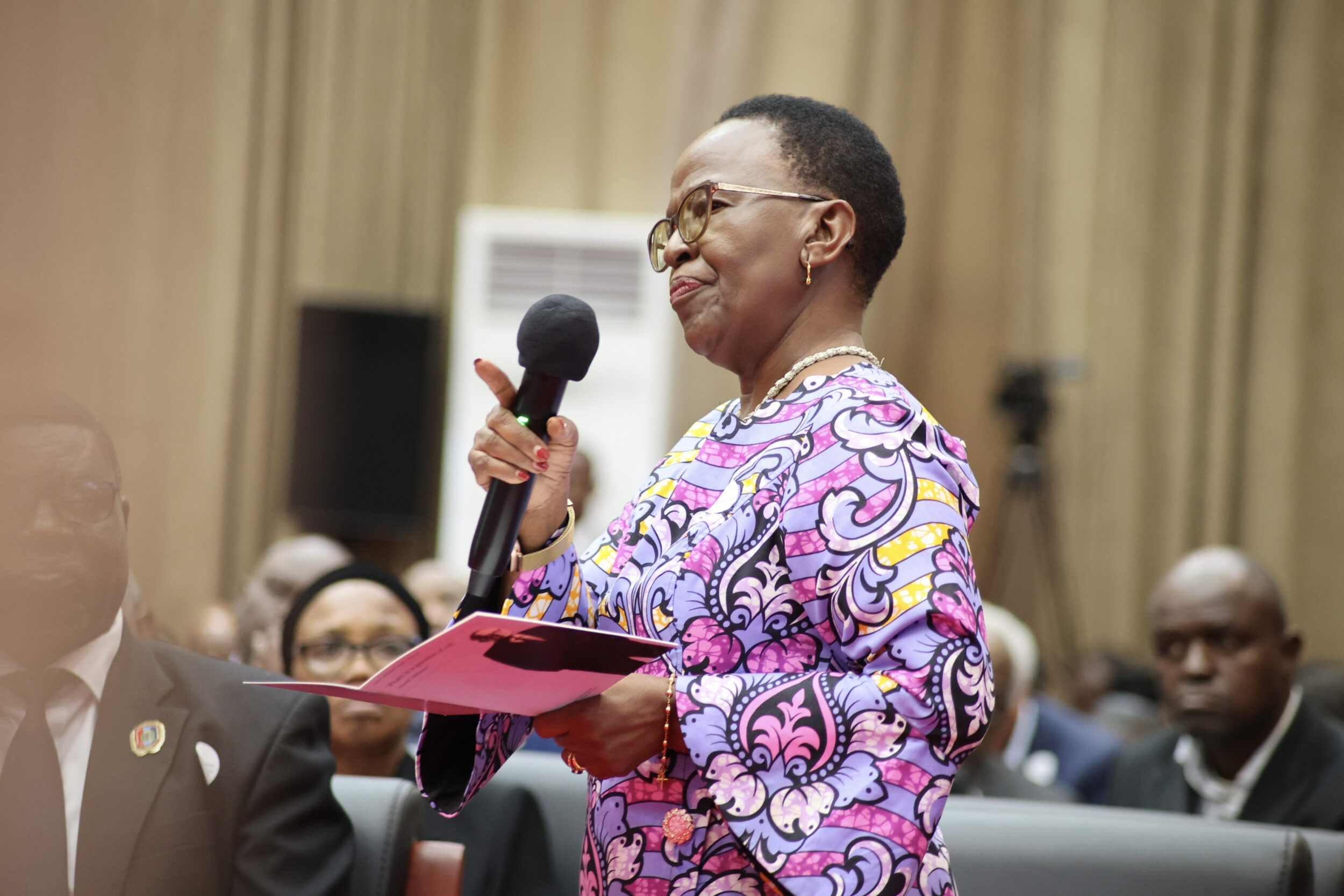
An open Q&A session added further perspectives. Former Foreign Minister Liberata Mulamula highlighted the need for genuine local ownership of peace processes. Participants from youth organisations and academia called for the development of frameworks to institutionalise the peacebuilding approaches of both Ahtisaari and Nyerere. Speakers emphasised the value of intergenerational dialogue and the need to bridge historical knowledge with current realities.

Tanzanian Ambassador Liberata Mulamula asks a question to the panel at the Martti Ahtisaari Legacy Seminar in Dar es Salaam. Photo: Peter Seenan/CMI
Closing the seminar, Marko Ahtisaari reflected on the personal significance of returning to Tanzania. He called for a renewed sense of shared future – a “longer now” – that would make space for hope, inclusion and practical collaboration. He stressed the importance of re-energising international institutions and referred to his father’s practice of building diverse mediation teams, often with a majority of women. In his closing words, he thanked the organisers and participants, reaffirming the role of dialogue in shaping a more peaceful world.
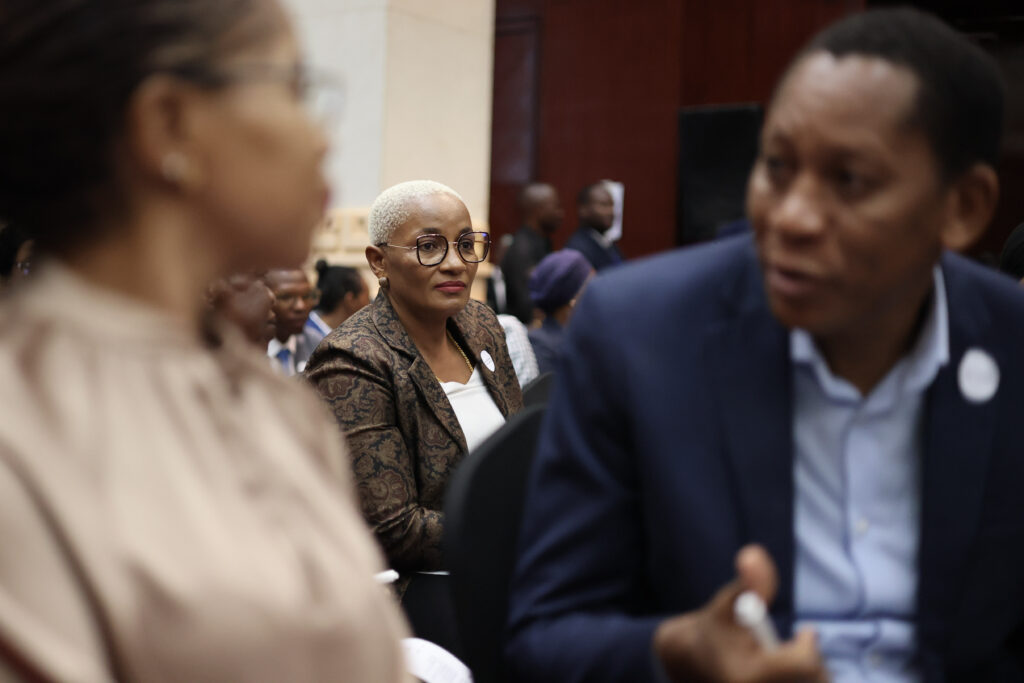
The seminar brought together leaders, diplomats, mediators and youth representatives. Photo: Peter Seenan/CMI
The Martti Ahtisaari Legacy Seminar served as both a tribute and a call to action, demonstrating how principled mediation, regional leadership and youth empowerment remain central to addressing today’s complex conflicts.

