


On 6 March 2025, the Martti Ahtisaari Legacy Seminar in South Africa aimed to echo a legacy of peace by honouring President Martti Ahtisaari, Finnish Anti-Apartheid Efforts in Southern Africa, and the Future of Mediation. As Yahya Sonko, Project Assistant for the African Union Mediation Support project at CMI, I had the privilege of not only attending but also serving as a rapporteur to the event. This experience offered me a unique perspective on the profound impact of President Ahtisaari’s legacy and the ongoing efforts to shape mediation in Africa and beyond.
The event took place at Freedom Park, a heritage site in Pretoria that stands as a tribute to South Africa’s struggle for freedom and democracy. Home to the Wall of Names, the park symbolises remembrance, unity, and resilience. Overlooking the city with breathtaking panoramic views, it offers a space for reflection, learning, and celebrating South Africa’s diverse history and cultural heritage. If President Martti Ahtisaari was alive today, I have no doubt he would have chosen no other place to host this event than Freedom Park—where the values of peace, justice, and reconciliation are deeply embedded in the land itself.
On 4 March 2025, I joined the others to witness the event preparations. The seamless collaboration between CMI, the Finnish Embassy in Pretoria, ACCORD, and Freedom Park was inspiring, with every idea carrying a clear purpose. Amid phone calls and multitasking, a shared vision brought everything together. Ms Alana Saul, Deputy Head of Mission at the Finnish Embassy in Pretoria, showed exceptional dedication and proactivity throughout the event. The calm determination of everyone involved reassured me that the event would be a success!
On 5 March 2025, a day before the event, I attended a series of productive meetings that the CMI team held separately with three stakeholders. We first met with the Diplomatic Academy of the Department of International Relations and Cooperation (DIRCO), followed by a meeting with the EU Delegation in Pretoria, and later, with the Thabo Mbeki Foundation in Johannesburg.
By the evening of the same day, the storm outside felt symbolic of the challenges in mediation and peacebuilding, unpredictable yet navigable with foresight and collaboration. Sure enough, by the time we set out for our return journey to Pretoria, the skies had opened into what Finns poetically call “sataa kaatamalla”—”raining buckets”—a phrase I had learned from my Finnish teacher just few months ago. As we drove through the downpour, I reflected on the day’s conversations, realizing that while storms, both literal and metaphorical, are inevitable, so too is the resilience that pushes us forward.
The next day, which was the actual day for the seminar, I dressed in my best clothes, what we call in Mandinka “kune duumo,” meaning the finest attire for an important occasion. Knowing I would be representing CMI during interviews and interactions, I wanted to be prepared!
Honouring a Legacy: Plaque Unveiling at Freedom Park
The event began with a solemn yet powerful plaque unveiling ceremony at Freedom Park, honouring seven Finnish individuals: President Martti Ahtisaari, Mikko Juva, Kari Karanko, Helena and Risto Kekkonen, Kalevi Sorsa, and Niilo Wälläri, for their immense contributions to the anti-apartheid movements. Former Foreign Minister and Chair of the AU Commission, Nkosazana Clarice Dlamini-Zuma, Finnish Ambassador to South Africa Pekka Metso, Freedom Park CEO Jane Mufamadi, and Chair of the CMI Board Marko Ahtisaari led the tribute, underscoring the lasting impact of their work. Marko Ahtisaari emphasized that his father’s involvement in the anti-apartheid movement stemmed from a deep-rooted belief in equality—the conviction that every individual deserves to be treated with dignity and respect, regardless of their background. Madam Nkosazana, also gave opening remarks, further highlighting the significance of the occasion.
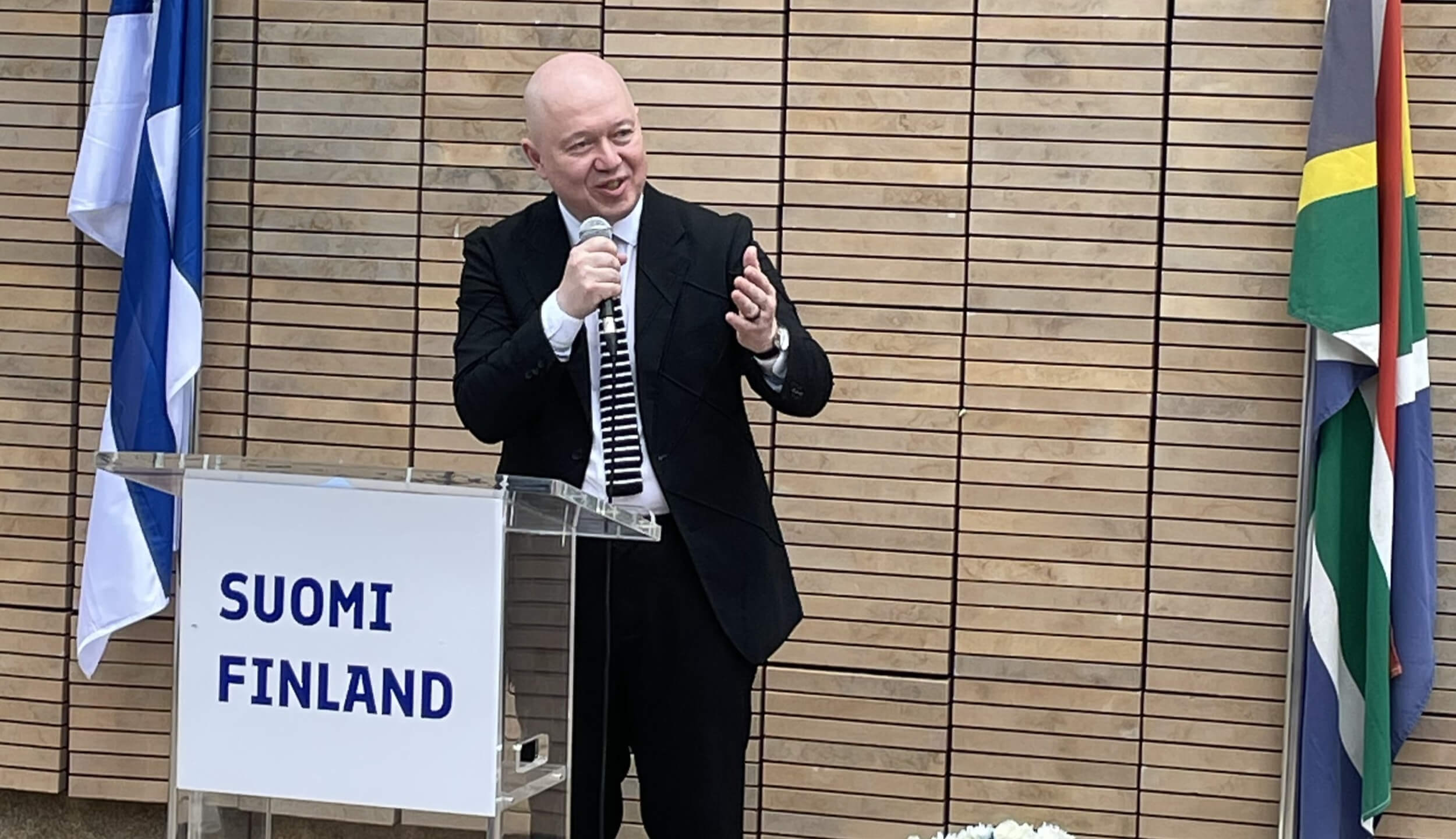
Marko Ahtisaari, Chair of the CMI Board, speaking at the plaque unveiling ceremony at Freedom Park in Pretoria on 6 March 2025. The ceremony honoured President Martti Ahtisaari and six other Finnish individuals for their significant contributions to the anti-apartheid movement. Photo by Yahya Sonko / CMI
Finland and South Africa share a long-standing relationship built on mutual respect and shared values. Both President Cyril Ramaphosa and former President Martti Ahtisaari have emphasized the importance of inclusion and equality—principles that form the foundation of both societies. For further insights, watch the interview with the Ambassador of Finland to South Africa and the Chair of the CMI Board on the South African National TV, SABC News here. Following the plaque unveiling ceremony, we moved on to the panel discussions.
The two panel discussions were moderated by Tiina Kukkamaa-Bah, Head of Sub-Saharan Africa of CMI and Dr Andrea Prah, Senior Researcher at African Centre for the Constructive Resolution of Disputes (ACCORD). The discussions were structured around three key themes: “The Role of Mediation in a Changing World,” “The Future of Peacebuilding: Challenges and Opportunities,” and “Peace, Development, and the Need for a New Narrative.”
The Role of Mediation in a Changing World
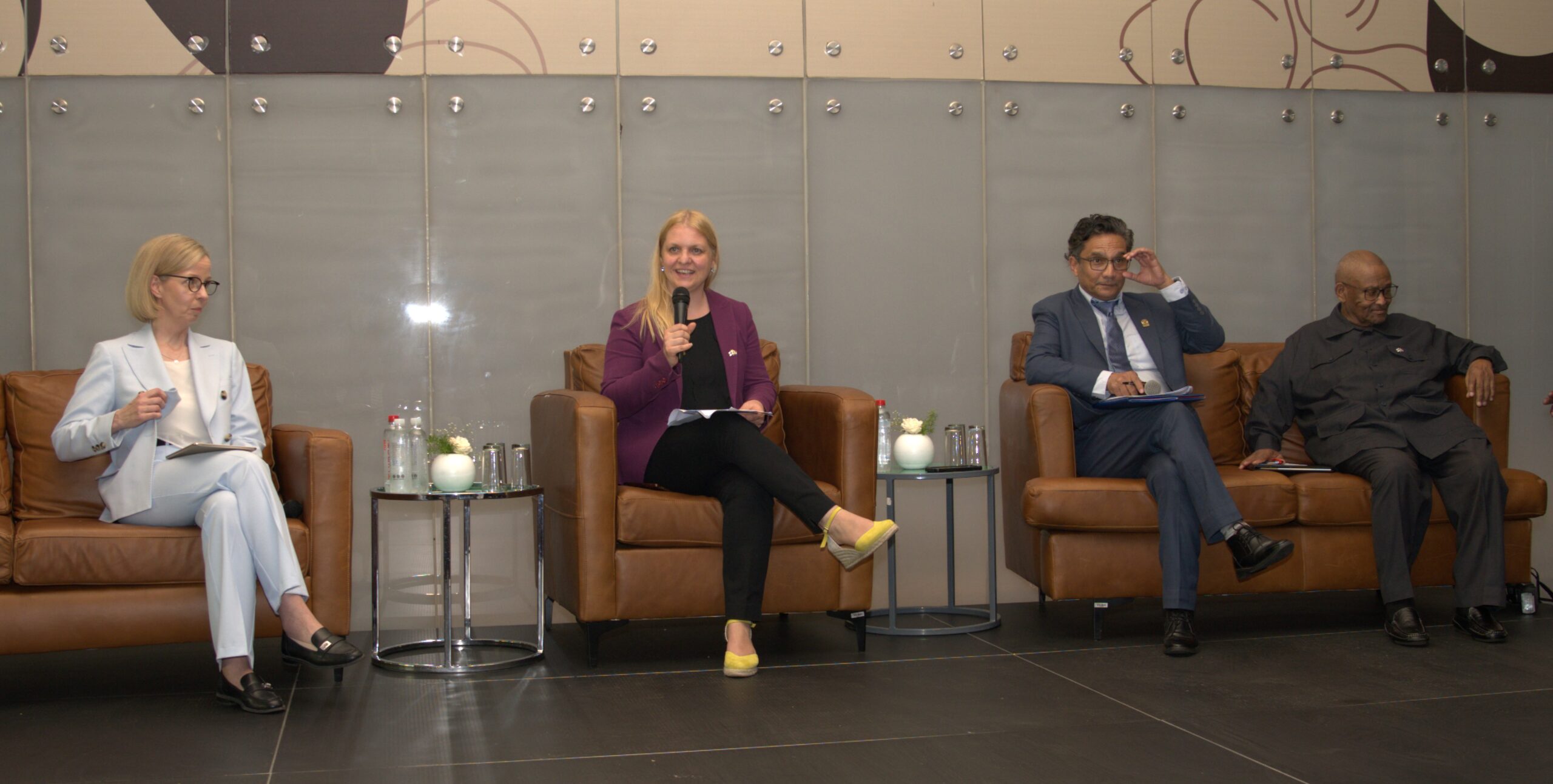
The Panel One Members (left to right): Hanna Klinge, Tiina Kukkamaa-Bah, DG Zane Dangor, and Ambassador Welile Nhlapo. Photo by Jadon Erasmus
The panel discussions examined the evolution of international cooperation in peace mediation, focusing on Finland and South Africa. Ambassador Nhlapo highlighted the complexity of engaging multiple stakeholders with conflicting interests, cautioning against the dominance of former colonial powers in shaping peace agreements. Drawing from Burundi’s experience, he stressed the importance of inclusive narratives and locally led solutions. Reflecting on South Africa’s peacebuilding journey, he emphasized that true peace is rooted in solidarity, continuous dialogue, and addressing lingering tensions from the past. DG Zane Dangor of the Department of International Relations and Cooperation (DIRCO) reinforced this point, emphasizing that true leadership in mediation means addressing root causes rather than merely achieving temporary conflict resolution. He underscored that peace must never come at the expense of justice, as unresolved grievances only lead to future instability. Hanna Klinge, Deputy CEO of CMI, reinforced the role of youth in mediation, emphasizing that the next generation is wiser and must be heard—not only on youth-related issues but across all areas of peacebuilding. Giving young people space to contribute fosters a culture of cooperation and strengthens long-term peace efforts.
The Future of Peacebuilding: Challenges and Opportunities
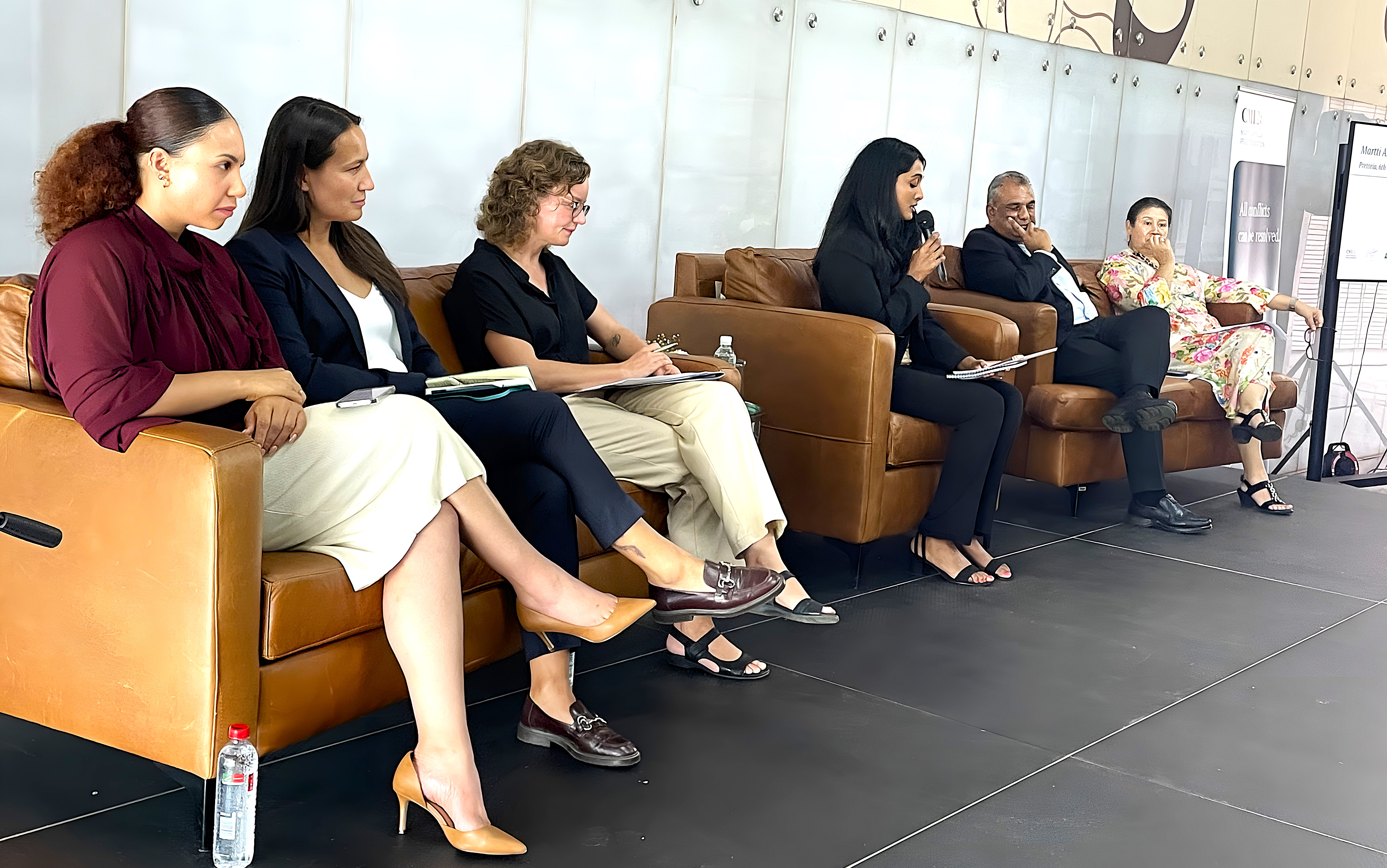
The Panel Two Members (left to right): Chelsea Cohen, Sylvia Thompson, Prof Cori Wielanga, Dr Andrea Prah, Vasu Gounden, Prof Cheryl Hendricks. Photo by Yahya Sonko
The founder and executive director of ACCORD, Vasu Gounden reflected on the “golden age of mediation” in the 1990s, where peace through dialogue was the dominant paradigm. However, today, resources are being redirected from diplomacy to defense, accelerating a shift towards peace through force. He cautioned that this new approach, fuelled by global competition, is a recipe for dystopia rather than stability.
Sylvia Thompson, Senior Manager at CMI noted that peacemaking is becoming increasingly transactional rather than value-based, though core principles remain unchanged. This shift creates space for unofficial actors like CMI and ACCORD, emphasizing a vertical, multi-track approach across national, regional, and international levels. She highlighted the need for alliances—including women’s networks and the private sector—to support early warning systems and reinforce the business case for peace in an evolving mediation landscape.
Professor Cheryl Hendricks, Executive Director of the Institute for Justice and Reconciliation (IJR) emphasized the need to break down silos in peace processes and ensure wider representation. She highlighted that while norms and structures were built over a decade, they have not led to lasting peace. In 2023, only a small fraction of peace agreements was comprehensive, and in the DRC, none of the 49 peace agreements included transitional justice. She stressed that true peace must incorporate accountability, relationships, and emotional justice to be truly inclusive and sustainable.
Professor Cori Wielanga from the Centre for Peace Mediation at the University of Pretoria highlighted the importance of grassroots engagement, noting that communities already possess local peace mechanisms. She argued that imposing external solutions often overlooks these organic structures. Similarly, Chelsea Cohen from the AU WiseYouth Network emphasized that youth have the agency to drive peace efforts but need meaningful engagement.
Peace, Development, and the Need for a New Narrative
The final discussions focused on the intersection of peace, economic justice, and social transformation. A recurring theme was that peace cannot be sustained without economic development. Audience members raised thought-provoking questions: Can true peace exist without economic equality? How can we ensure reconciliation efforts result in tangible benefits for communities? DIRCO’s DG Dangor responded by pointing to the structural role civil society played in the anti-apartheid movement—highlighting that peace efforts must be embedded in broader societal engagement.
The issue of climate change and technological shifts also surfaced. Vasu Gounden warned that Africa faces an uphill battle as it suffers the most from climate change while contributing the least to it. He urged a mindset shift, advocating for a Pan-African approach to self-reliance rather than dependency on external powers.
Amidst these constructive conversations, the seminar stood out for the profound impressions it left on participants. One of evidence that it was a very successful seminar was when I heard a Finnish Ambassador-Pekka Metso who has been in a diplomatic career for over 3 decades said in a closing remark that this was among the top five events in his career.
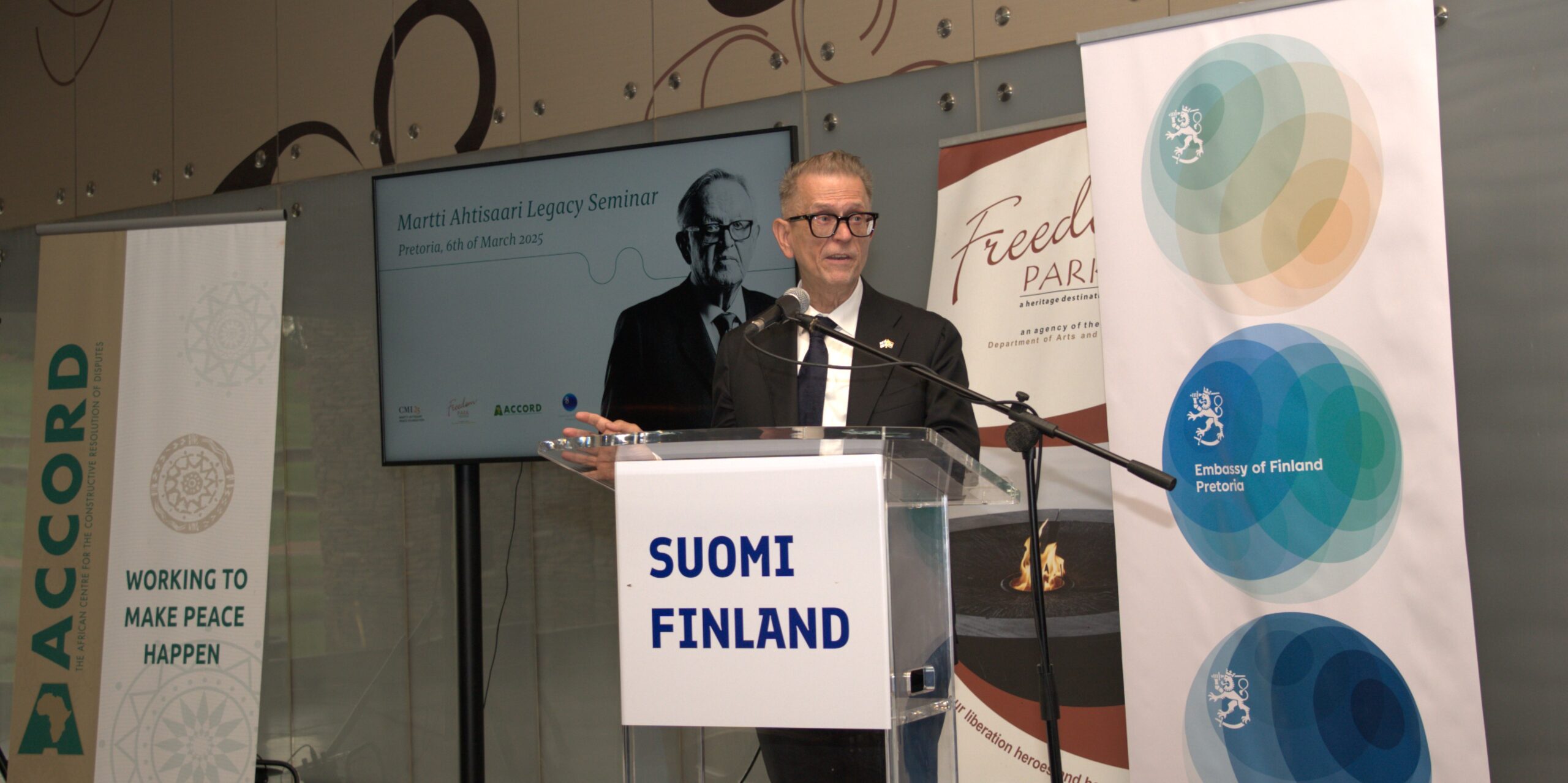
Pekka Metso – the Finnish Ambassador to South Africa giving a closing remark. Photo by Jadon Erasmus
Overall, these discussions reinforced a powerful truth: peace, justice, and development are not separate endeavours but deeply intertwined. Mediation must go beyond political settlements; it must transform societies and address inequalities. The discussion on whether true peace can exist without economic equality really resonated with me, especially when thinking about the deeply marginalized neighbourhoods surrounding Freedom Park itself.
Following the panel discussions, we gathered for a group photo to capture the spirit of collaboration and shared commitment to lasting peace and development. The photo brought together all the participants and organizers who contributed to these meaningful conversations. It also serves as a reminder of the collective effort needed to drive real change.
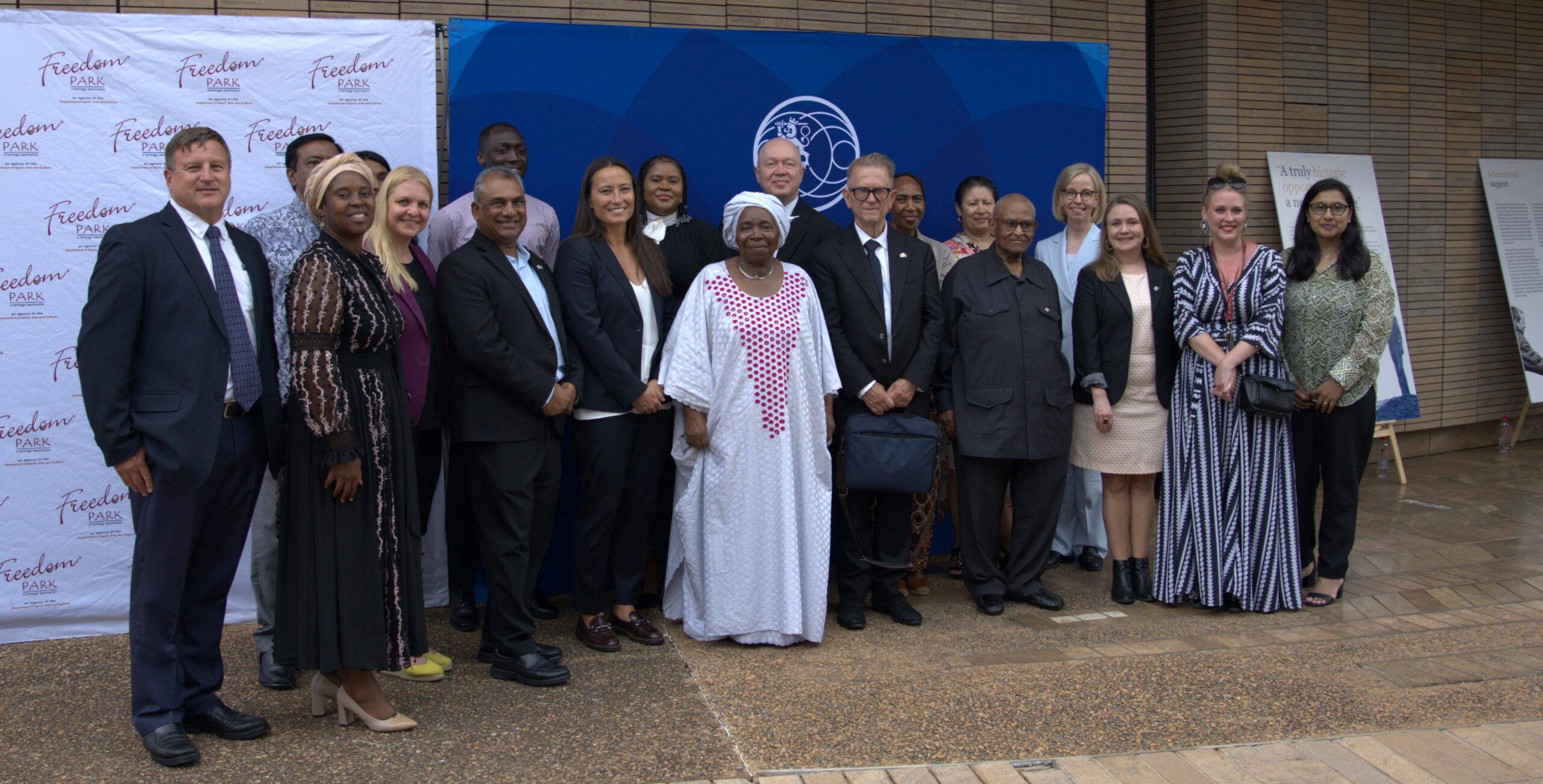
Group photo featuring speakers and organizers taken after the event. Photo by Jadon Erasmus
After the group photo, I engaged with young leaders from the University of Pretoria, the University of Johannesburg, and the WiseYouth Network of the African Union. Their passion, insight, and commitment to driving change were truly inspiring. They not only highlighted the challenges they face but also the innovative solutions they are leading. These conversations reinforced that creating meaningful spaces for youth in peace processes is not optional—it is essential. Their energy, creativity, and ability to bridge divides make them vital partners in mediation and conflict resolution. To build a just and peaceful world, we must prioritize and empower young changemakers.
The event concluded with a reception at the Residence of the Finnish Ambassador, where Mr Gounden recited a moving poem about President Ahtisaari, reminding us all why peace remains a cause worth fighting for. As the sun set on this remarkable event, again, I found myself reflecting on the depth of the discussions and the powerful legacy of President Ahtisaari. The conversations we had were not just about history but about the future—about ensuring that peacebuilding remains a dynamic, inclusive, and evolving process.
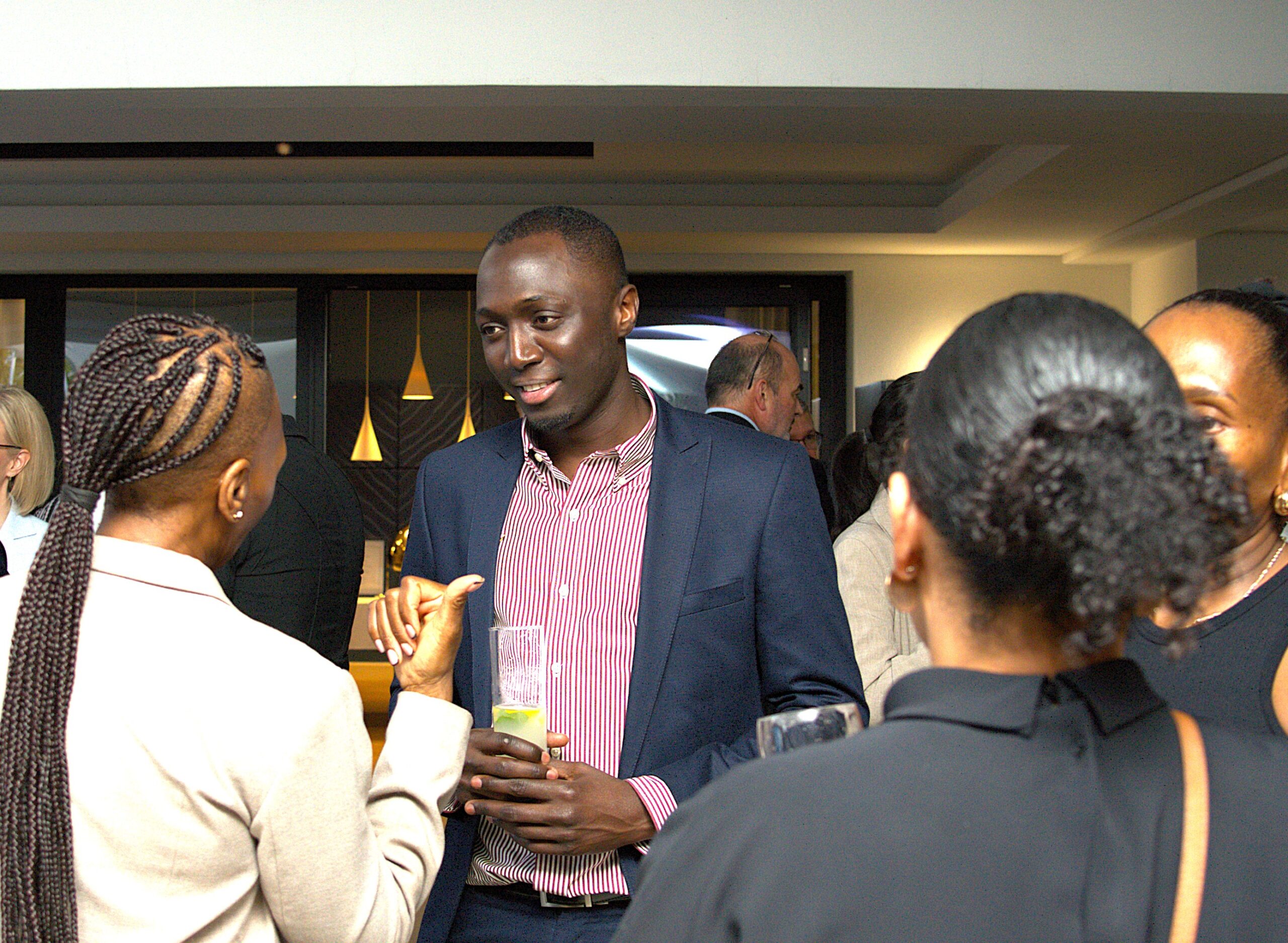
Yahya Sonko, Project Assistant for the African Union Mediation Support project at CMI
Article: Yahya Sonko, Project Assistant for the African Union Mediation Support project at CMI
Photos: Yahya Sonko and Jadon Erasmus

