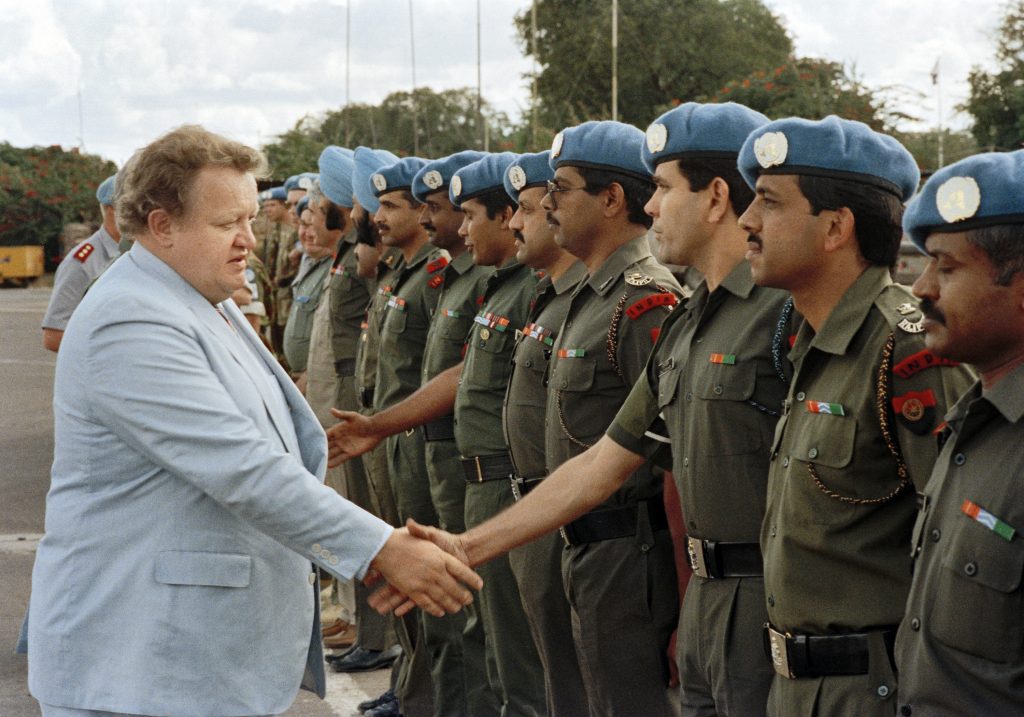
Martti Ahtisaari, Special Representative of the Secretary General for Namibia, inspects a contingent of United Nations Transition Assistance Group (UNTAG) police monitors from India at their base east of Rundu in the Caprivi Strip in April 1989. Photo: UN/Milton Grant
1989–1990: Independence of Namibia
As UN Commissioner for Namibia from 1977 to 1981 and later as the UN Secretary-General’s Special Representative for Namibia from 1989 to 1990, Martti Ahtisaari played a special role in Namibia’s independence from South Africa. Namibia was Ahtisaari’s first peace mediation mission. He was involved with Namibia for a total of 14 years. From 1987 to 1991, Ahtisaari was also the UN Under-Secretary-General in charge of administrative and economic affairs.
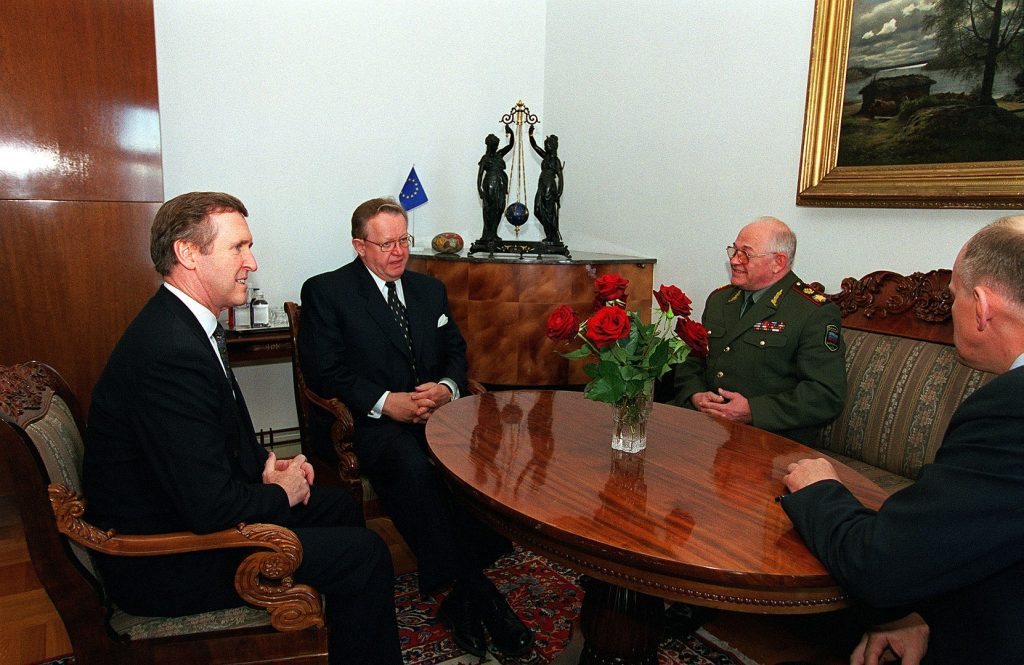
U.S. Secretary of Defense William S. Cohen (left), Finnish President Martti Ahtisaari (2nd from left), and Russian Minister of Defense Igor Sergeyev (2nd from right) meet in Helsinki, Finland, on June 17, 1999. The men are discussing Russia’s participation in the peacekeeping efforts in Kosovo. Photo: U.S. Department of Defense
1994–2000: President of Finland
Ahtisaari was the first President of Finland to be elected by direct popular vote. During his presidency, Finland joined the European Union and unemployment fell drastically from the high rate of the recession of the early 1990s.
In 1997, by Ahtisaari’s initiative, Finland hosted a summit between Russian President Boris Yeltsin and US President Bill Clinton.
At the end of his presidency in 1999, Ahtisaari, former Russian Prime Minister and Special Envoy Viktor Chernomyrdin, and US Deputy Secretary of State Strobe Talbott negotiated a peace agreement which led to the withdrawal of Serbian troops from Kosovo.
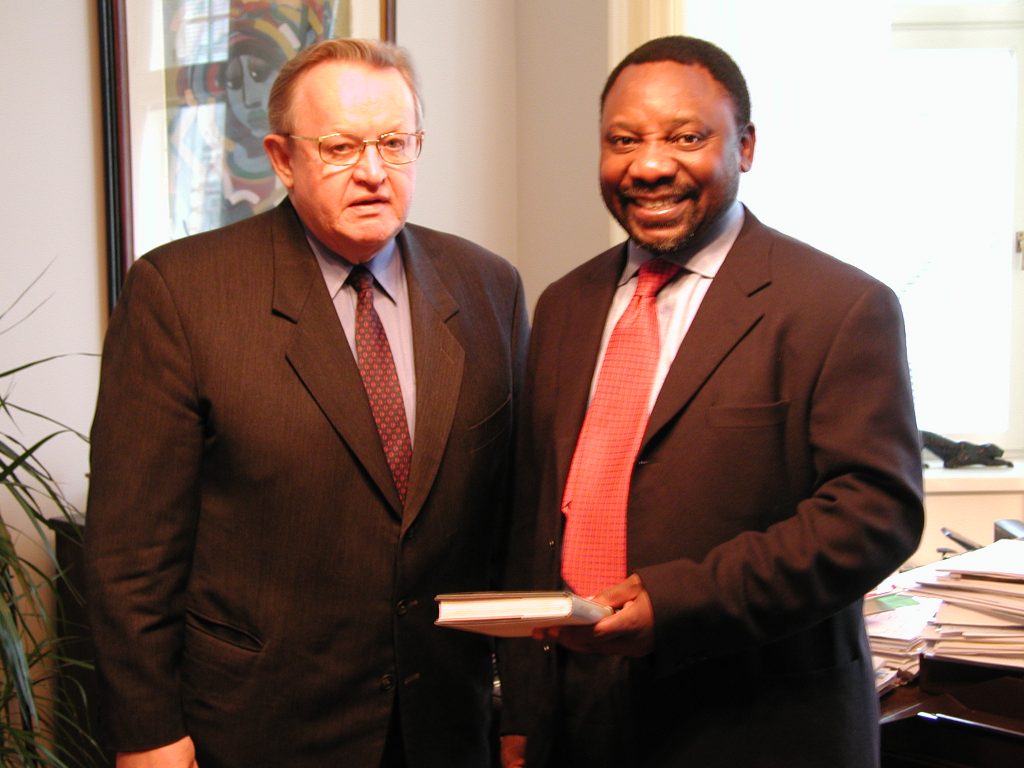
Martti Ahtisaari and Cyril Ramaphosa in Helsinki in 2000.
2000: Supporting the Northern Ireland peace process
At the request of the parties involved, Ahtisaari, together with South African statesman Cyril Ramaphosa, acted as weapons inspector concerning weapons caches of the Irish Republican Army. The inspectors played a central role in enabling the Northern Ireland peace process and were also an important part of Finland’s broader contribution to the resolution of the conflict.
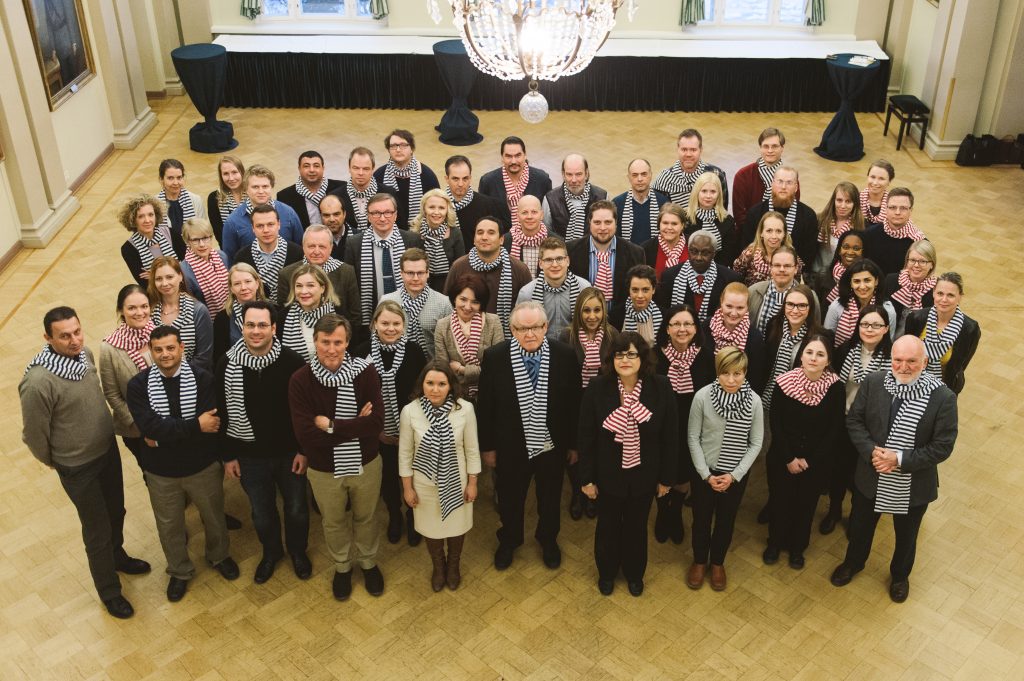
Martti Ahtisaari and CMI’s staff in 2014. Photo: Tomas Whitehouse.
2000: Establishment of conflict resolution organisation CMI
Following his term as President, Ahtisaari founded conflict resolution organisation Crisis Management Initiative (CMI). Ahtisaari wanted his legacy to be continued by an organisation able to address the root causes of conflicts as effectively as possible. CMI – Martti Ahtisaari Peace Foundation has been implementing Ahtisaari’s vision for more than 20 years now and has become one of the world’s leading mediation organisations.
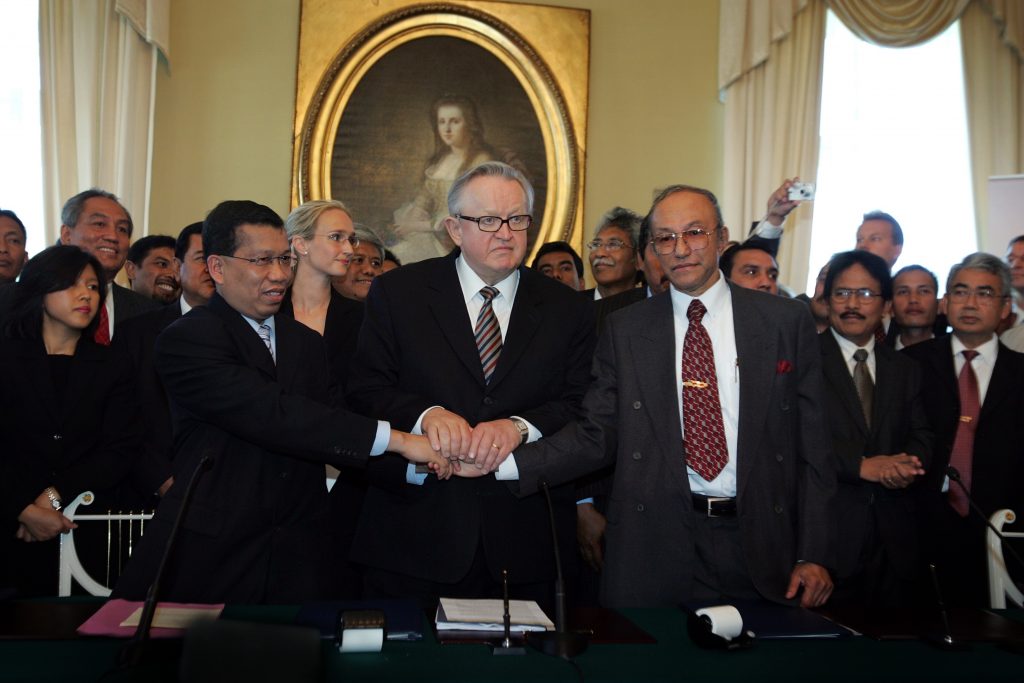
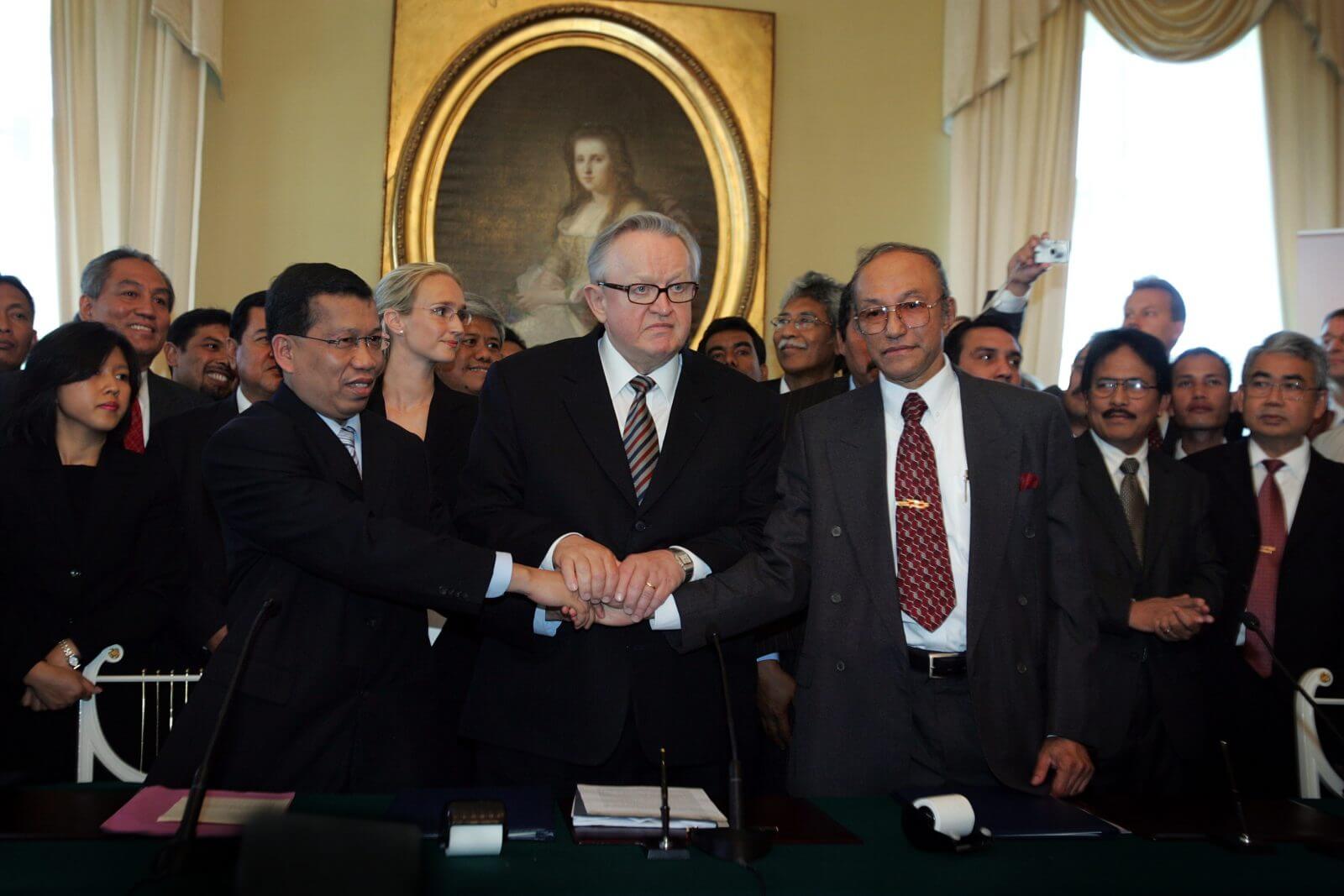
The Aceh peace accord was signed by the Minister of Justice of the Government of Indonesia Hamid Awalud and the leader of the delegation of the Free Aceh movement Malik Mahmud and was witnessed by President Ahtisaari. Photo: Jenni-Justiina Niemi.
2005: Aceh peace agreement
Ahtisaari and CMI acted as mediator in the peace talks between the Indonesian government and the Free Aceh Movement. After seven months of negotiations, the peace agreement signed in Helsinki ended nearly three decades of violence and gave the Aceh province special self-government. The Aceh Monitoring Mission (AMM), established under the Ahtisaari plan to oversee the peace process, worked in partnership with the EU and ASEAN member states to support the implementation of the peace process. The peace process has laid the foundations for positive economic developments in the province of Aceh. Poverty and unemployment in Aceh have fallen significantly.
2005–2008: Negotiations on the status of Kosovo
In late 2005, Ahtisaari was appointed as Special Envoy of the UN Secretary-General to lead negotiations on the status of Kosovo. Negotiations continued until March 2007, when Ahtisaari presented his plan for Kosovo’s future. Kosovo declared independence from Serbia in 2008.
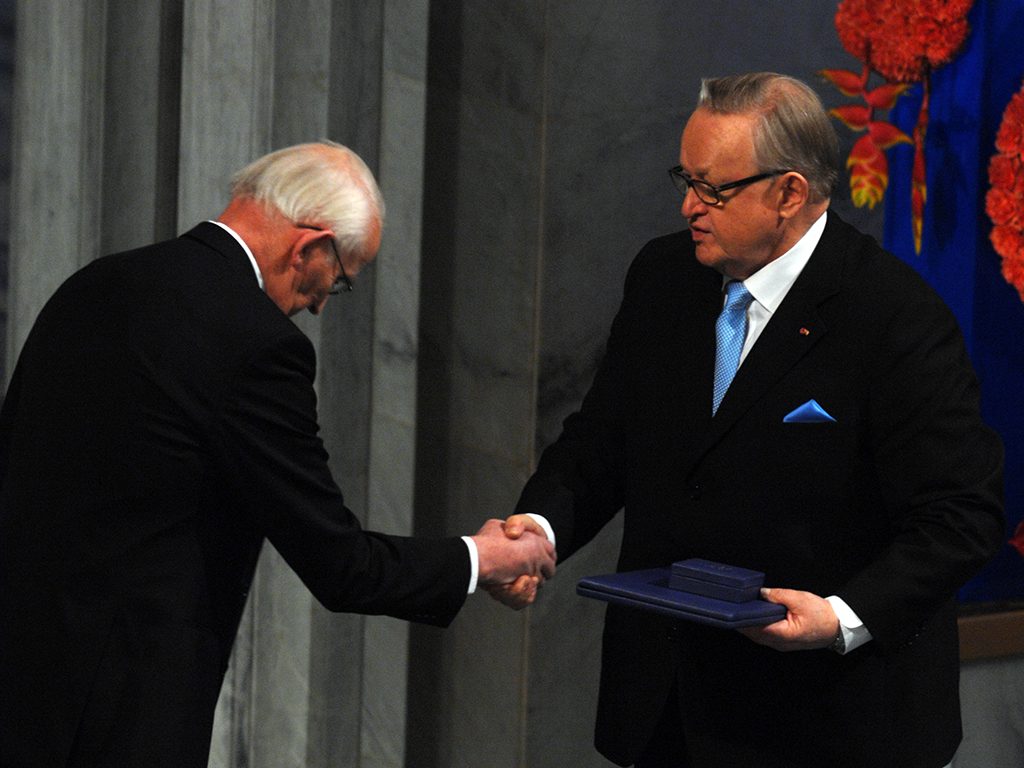
Martti Ahtisaari was awarded the Nobel Peace Prize in Oslo City Hall on December 10, 2008. Photo: Hannu Lindroos.
2008: Nobel Peace Prize
In December 2008, Ahtisaari became the first Finn to receive the Nobel Peace Prize for his “great efforts, on several continents and over more than three decades, to resolve international conflicts“. In his acceptance speech, he highlighted his idea of peace as a matter of determination (“Peace is a question of will”). Watch the acceptance speech here.
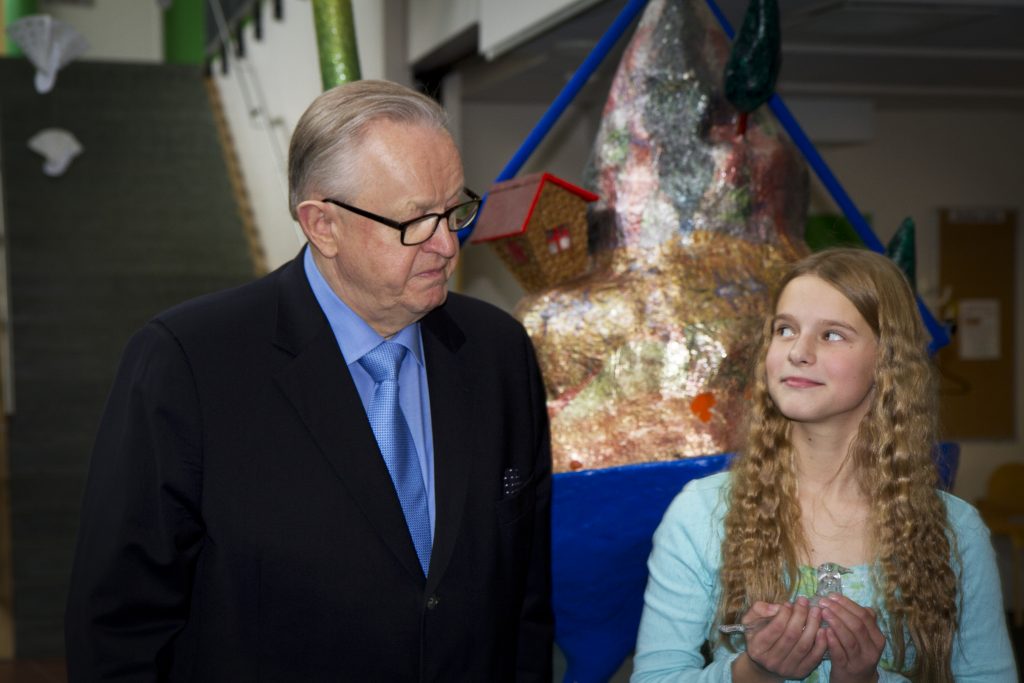
President Ahtisaari visits a school in Helsinki in 2012. Photo: Saila Huusko.
Ahtisaari’s legacy
Throughout his career, Martti Ahtisaari made a significant contribution to the development of international peace mediation. He chaired boards of many international organisations and foundations, including the International Crisis Group, the East-West Institute and Interpeace. He also co-founded the European Council on Foreign Relations and was active in The Elders.
He chaired his own peace mediation organisation, CMI – Martti Ahtisaari Peace Foundation, until 2017 when he reached the age of 80, and continued to be actively involved in its activities. The promotion of issues important to him – including continuity of dialogue, gender equality, and women’s and youth participation – remain central to CMI’s mission.