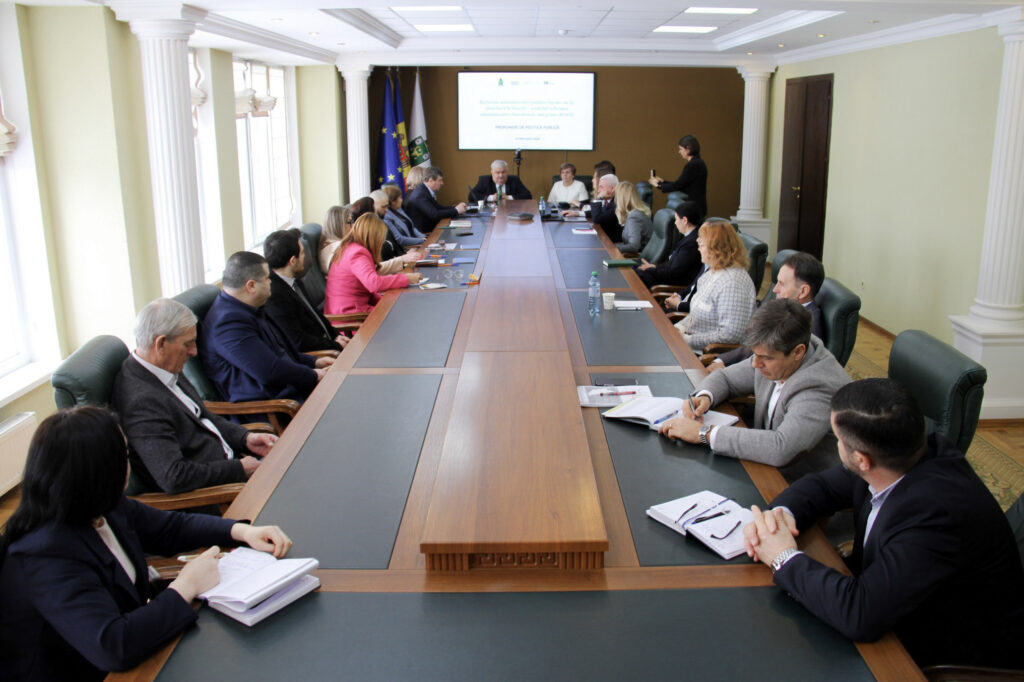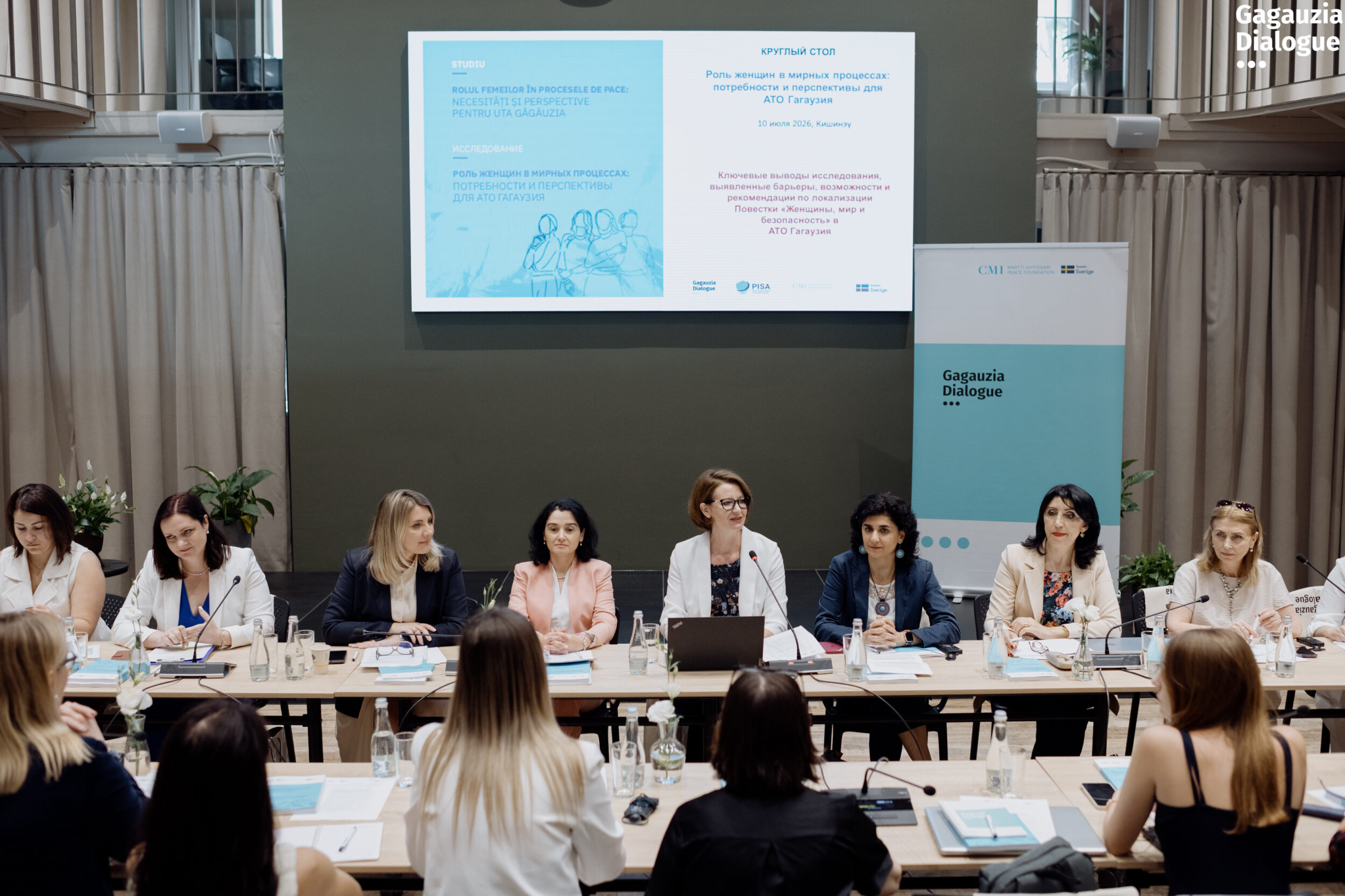
Women in the Autonomous Territorial Unit (ATU) of Gagauzia already play pivotal roles in sustaining dialogue, strengthening community resilience, and preventing conflict. However, their experience, perspectives and leadership remain insufficiently represented in formal dialogue, peacebuilding and decision-making mechanisms.
A new locally grounded study published by CMI and the Platform for Security and Defence Initiatives identifies the barriers behind this gap and demonstrates that strengthening women’s meaningful participation is essential for building sustainable peace and social cohesion in the region.
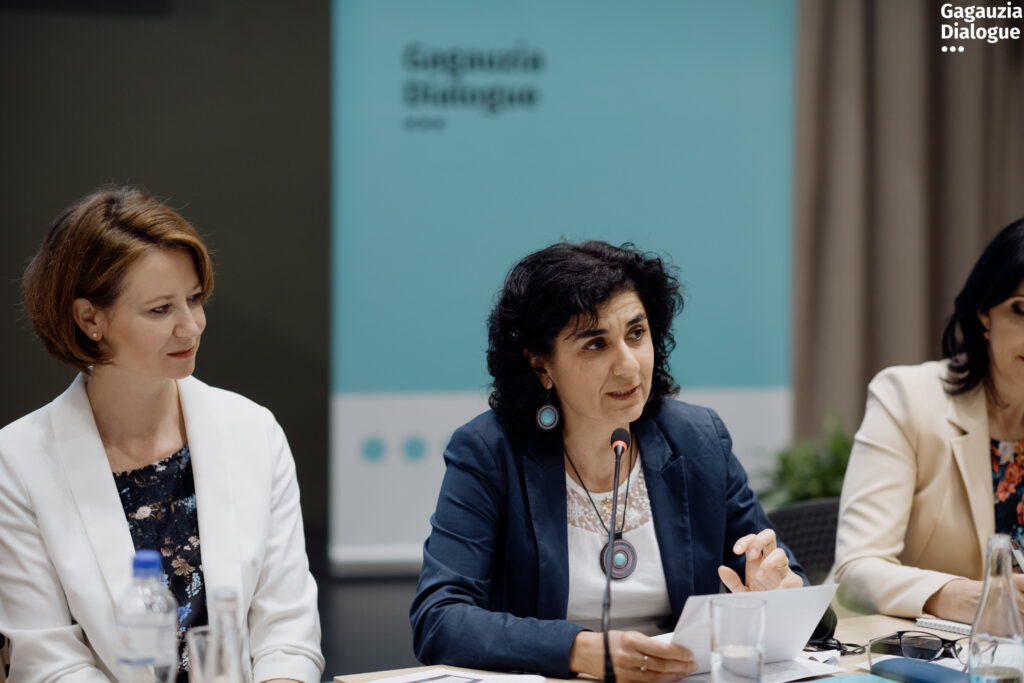
Marina Danoyan (centre), CMI, says the organisation strives to connect women leaders, organisations and movements with the spaces where decisions are actually made.
The study, ‘The Role of Women in Peace Processes: Needs and Prospects for ATU Gagauzia’, was presented on 10 July in Chisinau during a roundtable convening representatives of public institutions, international organisations, diplomatic missions, civil society, and experts on peace, security and gender equality.
The study’s added value lies in connecting the global Women, Peace and Security agenda with the lived realities of Gagauzia. Grounded in interviews, consultations with local stakeholders and analysis of the region’s social and political context, the study examines the opportunities and barriers affecting women’s participation in dialogue and peacebuilding.
The research shows that women already play prominent roles in education, public administration, civil society, the media, community initiatives and social support. However, their experience, perspectives and contributions remain insufficiently reflected in formal dialogue, peacebuilding and decision-making mechanisms.
“The study is relevant because it is rooted in the realities of Gagauzia,” said Natalia Djandjgava, Country Manager of CMI in Moldova. “Women should not be seen only as beneficiaries of peace, but as agents of peace who actively participate in dialogue, conflict prevention and the development of solutions. Peace built without the meaningful participation of women risks remaining incomplete.”
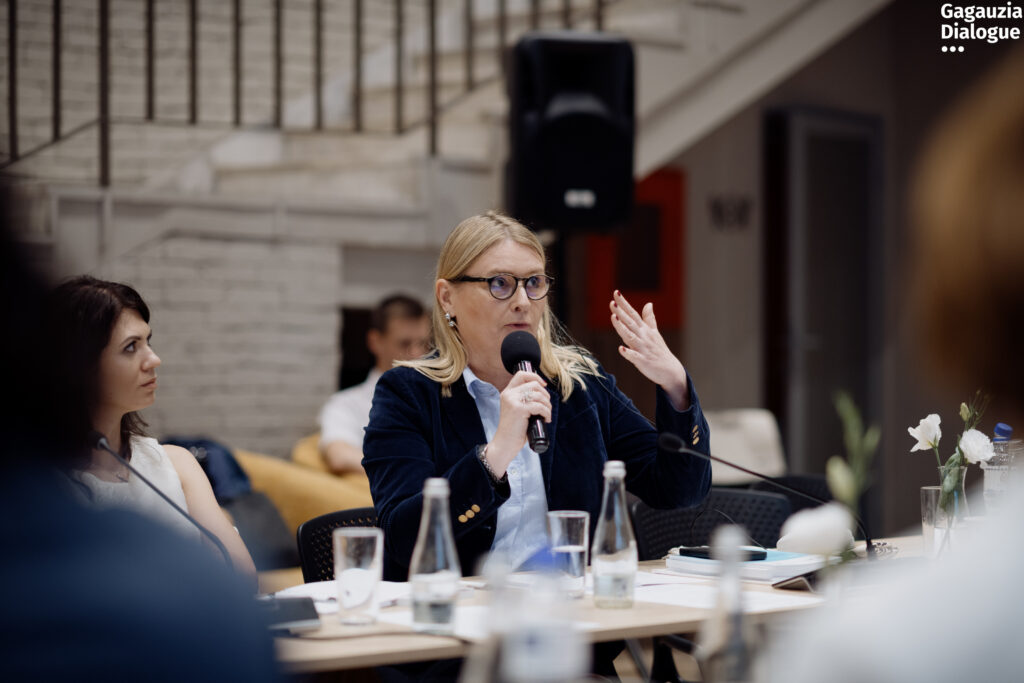
The study highlighted how women are under-represented in formal dialogue, peacebuilding and decision-making mechanisms.
For CMI, supporting women’s participation is a long-standing part of its peace mediation and conflict prevention work worldwide.
“At CMI, strengthening women’s political agency has long been a central element of our approach to conflict prevention and mediation,” said Marina Danoyan, Project Manager in CMI’s Women in Peacemaking team. “We strive not only to include women in peace processes but to connect women leaders, organisations and movements with the spaces where decisions are actually made.”
During the roundtable, participants explored how the Women, Peace and Security agenda can help strengthen trust between communities and institutions, support inclusive governance and create participatory mechanisms tailored to Gagauzia’s specific context. The event also showcased international experience alongside local perspectives, highlighting that sustainable peace requires collaboration among public authorities, civil society and local communities.
The study concludes that localising the Women, Peace and Security Agenda in Gagauzia is both a practical opportunity and a strategic necessity. By creating more inclusive dialogue processes and enabling women to contribute to decision-making, local institutions can strengthen conflict prevention efforts, reinforce social cohesion and build greater resilience to future challenges.
The study is intended not as the conclusion of this process, but as a foundation for sustained action. Its findings can support local and regional authorities, central public institutions, civil society, educational institutions, media actors and development partners in establishing regular dialogue mechanisms, strengthening women’s leadership, developing gender-responsive local policies and building more trusted channels of communication.
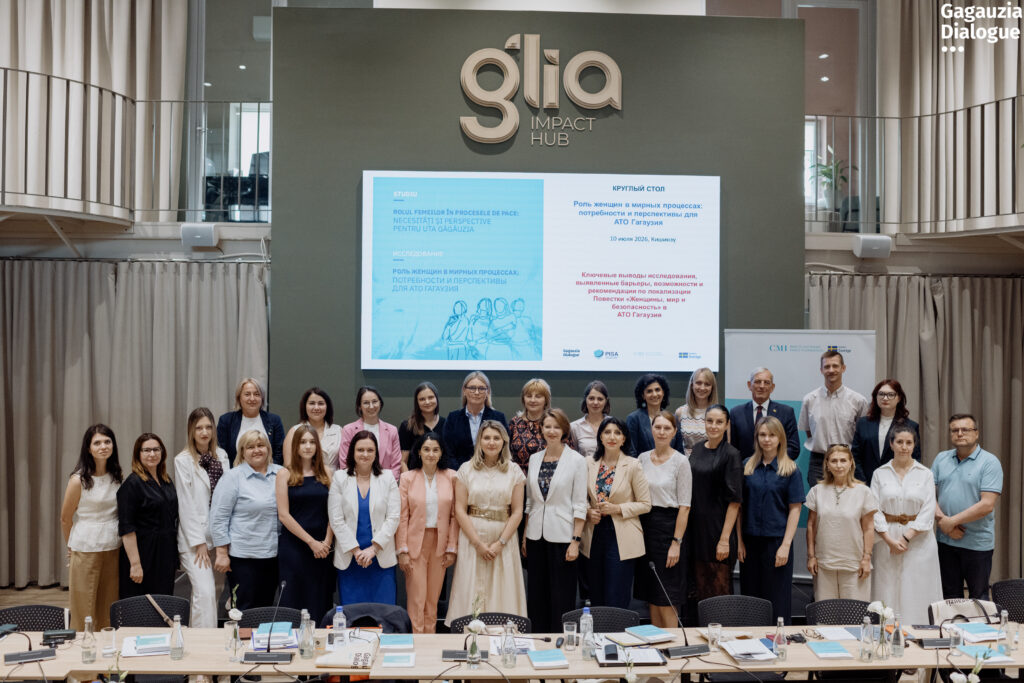
Supporting women’s participation is the foundation of CMI’s peace mediation and conflict prevention work worldwide.
The publication forms part of CMI’s broader work under the ‘Gagauzia Dialogue’ project whose objectives are to strengthen institutionalised dialogue, foster trust among stakeholders and support inclusive approaches to peacebuilding in Moldova.
Implemented with support from Sweden, the initiative brings together public authorities, civil society and local communities to promote inclusive dialogue, strengthen cooperation and reinforce social cohesion in Moldova.