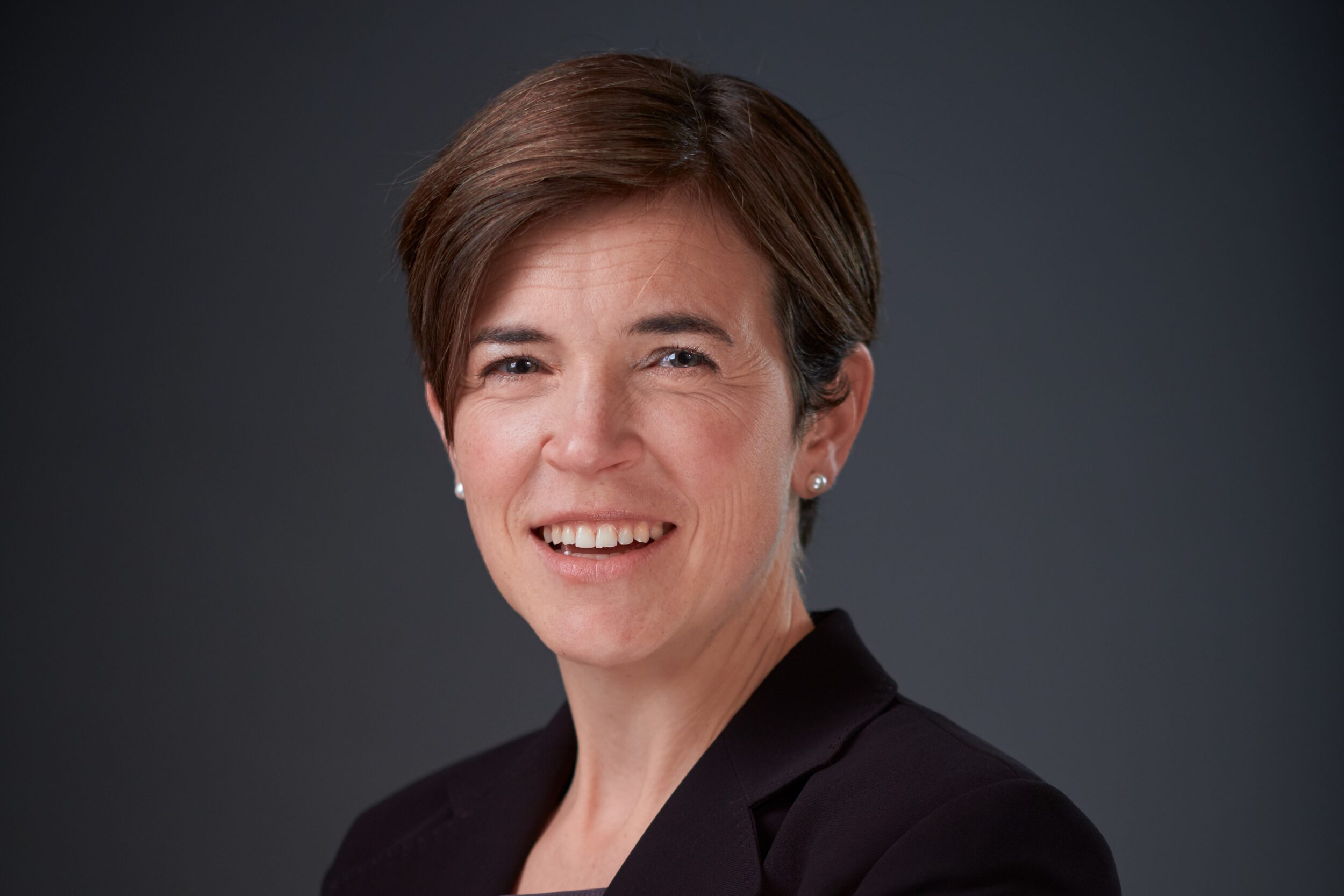
Professor Sarah Stroup joined CMI as its first Academic-in-Residence, bringing together scholarly research and mediation practice. During her residency in 2025–2026, she explored how private mediation actors establish legitimacy and present themselves as credible third parties in conflict settings. In this conversation, she reflects on her research findings, the evolving mediation landscape, and what she learned from working inside a mediation organisation.
What drew you to the Academic-in-Residence role at CMI, and what did you expect going in?
I have been studying non-governmental organisations for about 25 years and have always wanted to do research that speaks to both theoretical and policy questions. My interest in the practical side really shifted when I began building my own skills in conflict facilitation, conflict response, and mediation.
At Middlebury, I directed a conflict transformation collaborative, and through that I learned about the challenges of supporting people as a third party when they are dealing with community and personal conflicts. That experience made me very interested in digging more deeply into the world of mediation NGOs.
When I reached out to CMI, they reached back. It is always a challenge in academic–practitioner partnerships to find research questions that are meaningful to both sides, but early on we found projects that I am really excited to pursue – work that I think can inform both CMI and other mediation organisations.
How has it been working as an academic within a very practical organisation like CMI?
Going into the work, I was a little nervous that the organisation might be quite reserved in how people share their insights, given the sensitivity of the work and the level of access they have. And that discretion is real: CMI staff take very seriously their responsibilities as trusted third parties working with conflict actors.
At the same time, I found a wonderful group of incredibly warm people. I did not expect how informal things could feel at times, and I really appreciated the warmth, laughter, and openness in the office.
So, what stood out was really that combination: a deep sense of seriousness and discretion alongside a very human, welcoming, and thoughtful working environment.
Has anything particularly surprised you during your time at CMI?
I am not sure it was a surprise, but it has definitely been a challenge. Practitioners are constantly searching for effective tools to deal with a changing peacebuilding landscape, and that means they often ask questions about what the future holds; what should we do next.
As a researcher, I am most comfortable looking backward, working with empirical data and understanding what has already happened. I am on less firm ground when I am asked to predict the future or give forward-looking guidance.
So, the challenge has been to make sure that the research I am doing still offer insights that are useful for those forward-looking questions. It is about bridging that gap between careful analysis and practical relevance.
Looking backward, how would you describe the evolution of the peace mediation landscape over recent years and decades?
The post-Cold War period created enormous opportunities for private actors in global governance. Multilateral institutions were opening up, and there was a strong belief that civil society actors should have a place at the table. That was reinforced by Western states that had robust relationships with their own civil societies.
That landscape is now changing. Multilateralism is being rethought, and the role of state actors is growing rapidly in peace mediation. There is also a range of active middle powers, often with less of a tradition of strong civil society, who’s role in peace mediation as grown significantly in recent years. That shifts the space in which private mediation actors operate and may require them to rethink their strategies and structures.
At the same time, if we take a longer historical view, unofficial actors have always played a role in peacebuilding: whether religious leaders, former officials, or local figures. So, while the form may change, I think private mediation organisations can take heart in knowing there will always be space for discreet, facilitative engagement with conflict parties.
Your collaboration with CMI has been extensive, encompassing research on the political economy of private mediation actors, U.S. foreign policy, and most recently, your CMI Analysis on the legitimation of mediation actors. How would you explain your Analysis Paper and the idea of “legitimation” in peace mediation?
At its core, the paper is about a very simple but important question: why would conflict parties defer to a third party? Why would they see it as right or appropriate for that actor to be involved in their process? That is the question of legitimacy.
Legitimation, then, is the active process through which mediators construct that sense of legitimacy. It is about developing a narrative – who you are, how you work, and why others should want to work with you – and making that visible to potential partners.
Rather than asking conflict parties directly, I focus on how mediators present themselves. All third parties make claims about their expertise, their values, and their role. These claims are intentional; they are designed to show why they are a suitable partner in a conflict setting.
How did you gather evidence for your research on legitimation?
With a research assistant, I focused on the public-facing materials that mediators use to tell their story. For private mediation groups, that meant looking at websites, annual reports, and strategic plans. For states, we examined the websites of foreign ministries, white papers, and founding documents for mediation initiatives.
This approach is about putting ourselves in the shoes of a conflict party. If you were deciding whether to work with a mediator, you would likely search for information and try to understand who they are and how they operate.
To what extent do mediators control their own narrative?
There are many possible stories that an organisation could tell about itself, and mediators actively construct those narratives for functional reasons: to attract partners and demonstrate relevance.
Some elements are within their control, such as how they frame their expertise or whether they emphasise values like humility. Others are less controllable – for example, where they are based or who founded them. But even then, organisations make choices about how much to highlight those aspects.
In short, legitimation involves both structure and agency. Mediators cannot control everything about how they are perceived, but they do have significant influence over how they present themselves and what they choose to emphasise.
A part of your research examines the emergent powers in peacemaking. Why have states like Qatar, China, and Türkiye become more prominent mediators?
As states, these actors bring institutional authority, which can be very attractive to conflict parties seeking recognition. They also have access to substantial resources – military, economic, and logistical – which can facilitate negotiations in practical ways.
At the same time, when we look at private mediators, we see a strong emphasis on expertise and humility. Across many organisations, there is a consistent narrative of deep conflict knowledge and a commitment to serving the parties rather than advancing their own interests.
What is interesting is that these different strengths can be complementary. The key question is whether the interests and visions of state and private mediators align in a given context. Sometimes they will, and sometimes they will diverge. Managing that dynamic is a central challenge.
Do these state mediators present themselves differently in terms of their interests?
There is a lot of diversity among these states. For some, like Qatar, reducing conflict is clearly in their own interest because of their geographic and political position. In those cases, they can make a credible argument that peace benefits both them and the conflict parties.
For larger powers, there may be more explicit geostrategic interests at play, which can shape how they engage in mediation. So, it is important not to treat all state mediators as the same.
More broadly, I am interested in the role of authenticity. There is growing skepticism about hidden agendas, and I think being clear about one’s values and interests can actually build trust. In some cases, transparency, even when people disagree with the goals, can be more effective than presenting a neutral but less convincing position.
Most private mediation actors that emerged in the 1990s and early 2000s are in Europe. Could perceptions of Western states affect how private mediators are seen?
One idea that has stayed with me from dialogue facilitation is that the listener decides the meaning. Organisations may have a clear idea of what they are trying to communicate, but what matters is how that message is received.
Many Western private mediators try to distinguish themselves from states or multilateral institutions, but it is not clear that conflict parties always see that distinction. Those perceptions are shaped by broader political contexts and experiences.
So, it becomes very important to start from the perspective of the conflict parties themselves by asking what they find attractive or problematic. That helps ensure that the narratives mediators construct actually resonate with the audiences they are trying to reach.
What do you see as the most likely trajectory for the global system?
I think there are two possible trajectories that emerge from how we answer that question. One is a more pessimistic scenario: a multipolar and fragmented world where the space for liberal democracies and the civil society organisations that thrive in them becomes smaller.
The alternative is a more hopeful scenario. In that world, there are still real contests over interests and values, but those contests are less destructive. There is clearer communication and more reliance on nonviolent means of conflict resolution.
The difference between these futures is not whether conflict exists, but how it is managed and whether actors are willing to engage constructively despite their differences.
Read Sarah Stroup’s Analysis:
Constructing the Legitimacy of Mediators
Sarah Stroup
- Professor of Political Science at Middlebury College, USA
- Holds a PhD from University of California, Berkeley
- Her research explores international NGOs, humanitarian action, democracy promotion, and human rights
- Served as Academic-in-Residence at CMI – Martti Ahtisaari Peace Foundation in 2025–2026
- Was also a Visiting Senior Fellow at the Finnish Institute of International Affairs