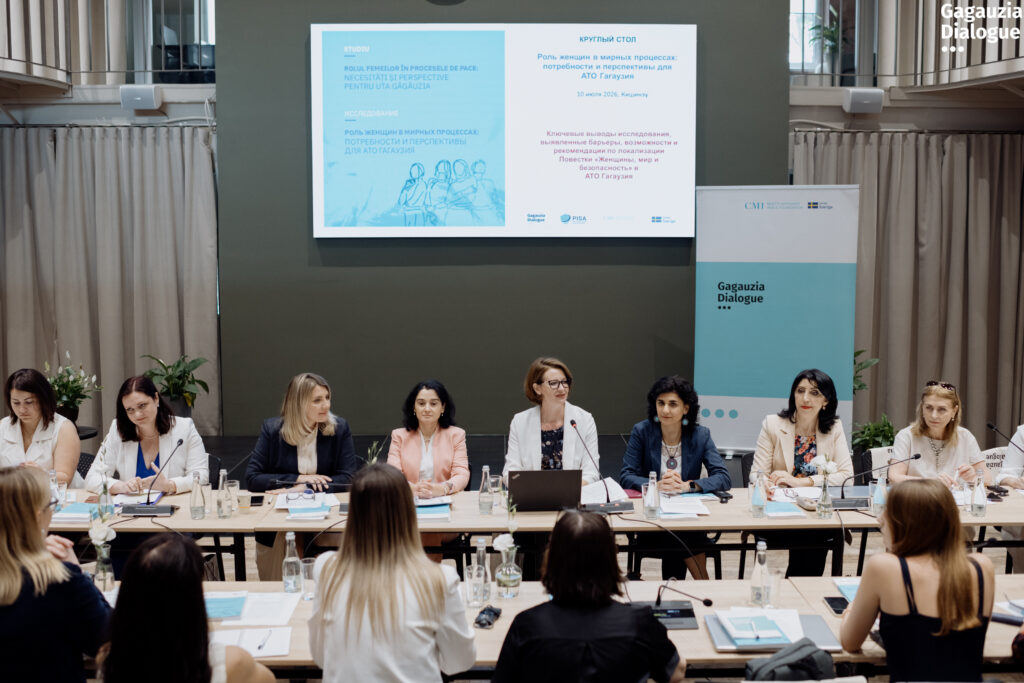
CMI and the School of Public Administration of the State University of Moldova recently led regional trainings and a public discussion aimed at strengthening understanding of multi-level governance.
The trainings held in December in Balti, Cahul, Comrat, and Chisinau were designed for public officials and future professionals to support ongoing decentralisation and administrative reform processes. While the February discussion was focused on the future of local public administration.
The training series, entitled ‘Administrative-territorial organisation and multi-level governance in the Republic of Moldova’ targeted local public servants, elected representatives, staff of decentralised public services, teachers, and master’s and doctoral students.
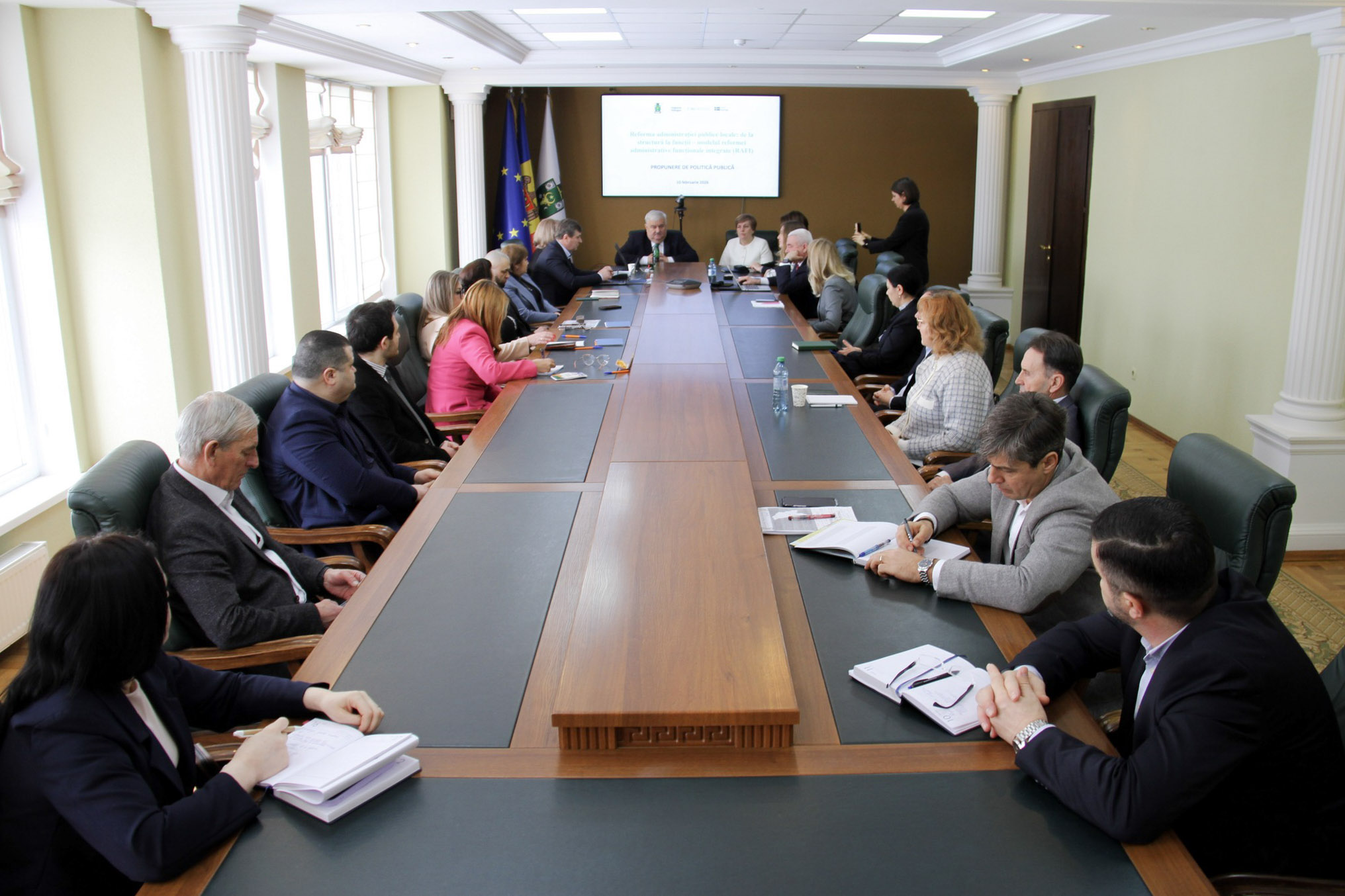
In February, CMI and the School of Public Administration (SPA) organised a far-reaching discussion on the future of local public administration. The roundtable, entitled ‘Local Public Administration Reform – the Integrated Functional Administrative Reform model’, brought together representatives from academia, public institutions, and civil society.
Supporting inclusive and effective governance
Since 2011, CMI has worked in Moldova to support peacebuilding and dialogue in complex political contexts, including between the central Government and the Gagauz Autonomy. This long-term objective is behind CMI’s work on strengthening governance institutions, intergovernmental dialogue, and administrative capacity. CMI recognises their importance in supporting stability and social cohesion.
The training sessions were designed to strengthen the capacity of public servants to implement administrative reforms and support multi-level governance in the context of European integration and the decentralisation of public services. The learning activities aimed to increase understanding of the mechanisms of public administration, the relationships between levels of government, and possible scenarios for the evolution of administrative-territorial reform.
In the discussions held February the focus was a public policy proposal for a modern, functionality-oriented approach to administrative reform. Its advocates say it is a key instrument for strengthening the sustainability of municipalities and improving the quality of public services. The event concluded with an exchange of views, the outcomes of which will be further analysed and integrated by the proposal authors into the public policy proposal before being shared with relevant stakeholders.
Building capacity through dialogue and exchange
The trainings combined theoretical inputs with facilitated discussions and experience-sharing between participants and trainers. Moderated by Sergiu Palihovici, Director of SPA, additional facilitation was provided by CMI experts during regional sessions, allowing discussions to be adapted to local and regional contexts.
During the final session in Chisinau, Oxana Paierele, program coordinator at the Embassy of Sweden in Chisinau emphasised the relevance of the topics covered and the importance of an in-depth analysis of the administrative-territorial reform, including the current situation and possible scenarios for its evolution.
Natalia Djandjgava, CMI’s country manager, praised the joint efforts to inform and train civil servants. She said it was important to understand state organisation, multi-level governance mechanisms, and relations between different levels of government, all while strengthening inter-institutional cooperation at the national level.
The training sessions organised in the regions included theoretical presentations, small group work, guided discussions, and exchange of experience between participants and trainers. They addressed topics essential for good governance and the development of local public administration.
In total, more than 100 local government officials strengthened their knowledge of local autonomy and multi-level governance. Participants highlighted the relevance of the trainings for addressing practical governance challenges and contributing constructively to reform processes.
The activities also helped identify future research and training priorities that will inform follow-up initiatives aimed at strengthening institutional resilience and cooperation between levels of government.
The activity was part of the actions planned in the partnership between CMI and USM/SPA established by the Memorandum of Understanding signed within the project ‘Supporting institutionalized and sustainable dialogue on Gagauz Autonomy’, implemented by CMI and funded by Sweden.