


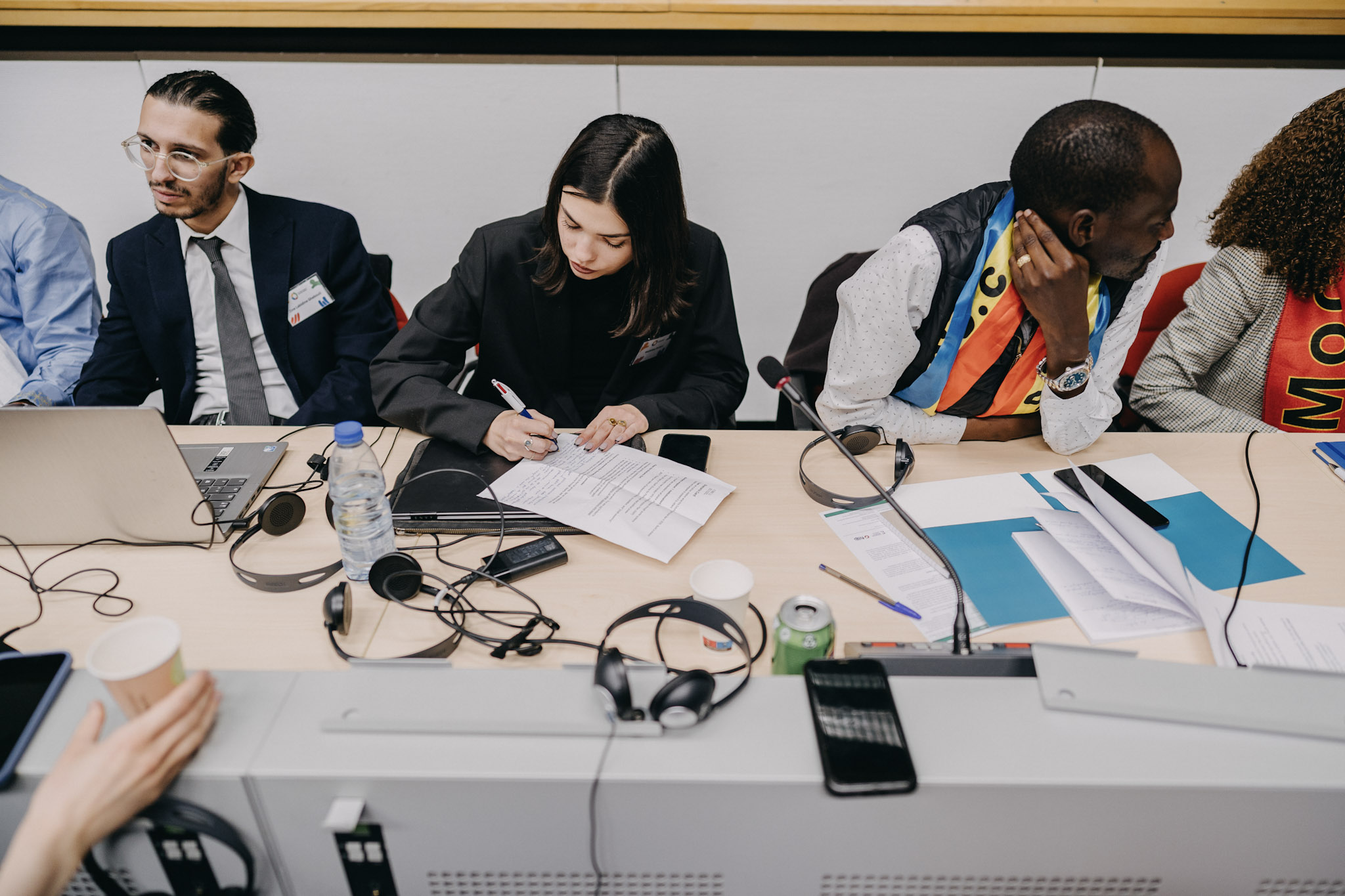
In November 2025, more than 120 young peacebuilders and partners – representing over 85 nationalities – met in Brussels for the second EU Youth, Peace and Security (YPS) Conference and Week. CMI’s two youth delegates, Tamara AL Hassanat and Edvard Grigoryan, give their personal reflections along with young Project Officer, Grayden Prince, from CMI’s Youth in Peacemaking team.
From 10–14 November 2025, Brussels hosted the second EU Youth, Peace and Security Conference and surrounding YPS week, marking ten years since the groundbreaking UN Security Council Resolution 2250 on Youth, Peace and Security.
EU institutions, Member States, young peacebuilders and partners met to co-shape future action on Youth, Peace and Security. They took stock of progress and challenges a decade on from Resolution 2250, with participants co-developing a “joint declaration” to capture shared priorities and proposals for collective action.
The event – co-organised by CMI – explored the legacy of UNSCR 2250: what has been learned, what is working, and how the agenda can evolve in a changing world.
Youth, peace and security is a strategic priority at CMI, and it has always been at the heart of the organisation’s work, ever since President Martti Ahtisaari founded CMI 25 years ago. At the heart of CMI’s ‘Youth in Peacemaking’ strategy commitment is recognising youth as politically relevant actors who have the capacity to create systemic change.
Below we hear from two CMI youth delegates present in Brussels, along with young Project Officer, Grayden Prince, from CMI’s ‘Youth in Peacemaking’ team. We asked what the event meant from them.
CMI delegate, Tamara Alhasanat, Researcher at the MENA Coalition on YPS
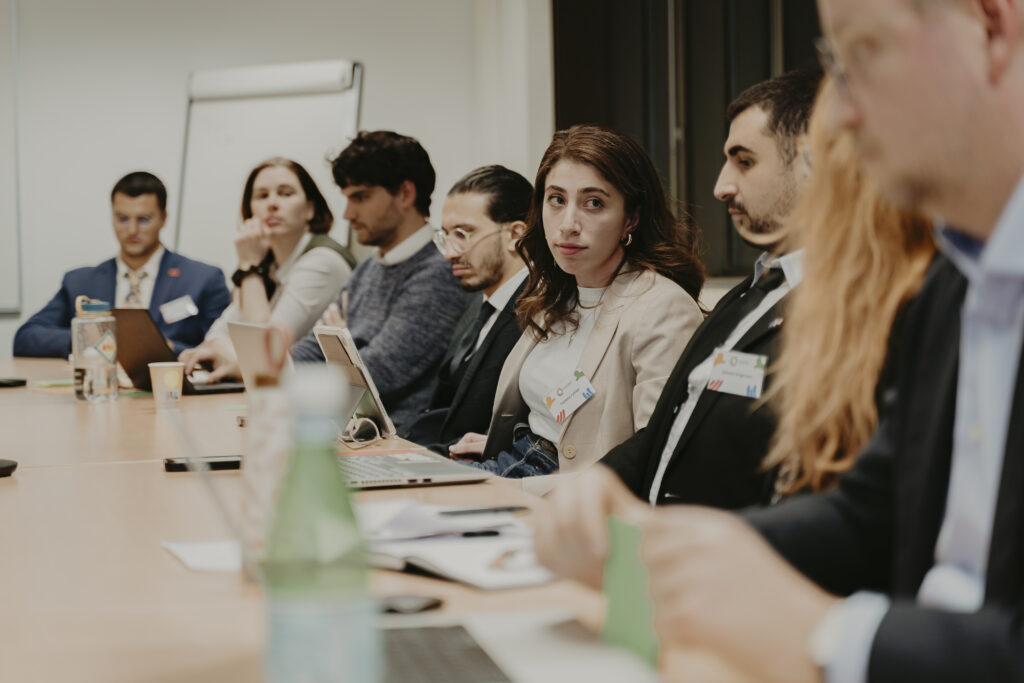
CMI youth delegate, Tamara Alhasanat (fourth from right), said that comparing realities was a highlight for her. Photo: CMI/Diana Takacsova.
“The roundtables I enjoyed most because we could exchange knowledge at a deeper level and compare each other’s realities.” | Tamara Alhasanat
“I left the YPS Week and Conference with a strong sense of how valuable it is when young peacebuilders meet in the same room and speak honestly about their experiences. The roundtables were the part I enjoyed most. They created a space where we could exchange knowledge at a deeper level, compare the realities we each work in, and build a more grounded awareness of one another’s contexts. What stood out for me is that many of us are eager to understand each other better and to approach regional struggles with more sensitivity. Yet it is equally clear that real gaps remain. We still lack the channels and regular communication needed to break the stereotypes we tend to carry about one another.
Drafting a joint declaration has its place, but for me the real impact came from those conversations around the table. Hearing how others navigate conflict, activism, and community work was eye-opening and reminded me how diverse the region’s challenges are. The roundtables made it possible to see where our efforts overlap and where our assumptions need to be unlearned. That kind of exchange is what strengthens the Youth, Peace, and Security agenda in practice, and it is the part of the week that will stay with me the most.“
CMI delegate, Edvard Grigoryan, Trainee at the Council of Europe and Co-Founder of Kectil Armenia
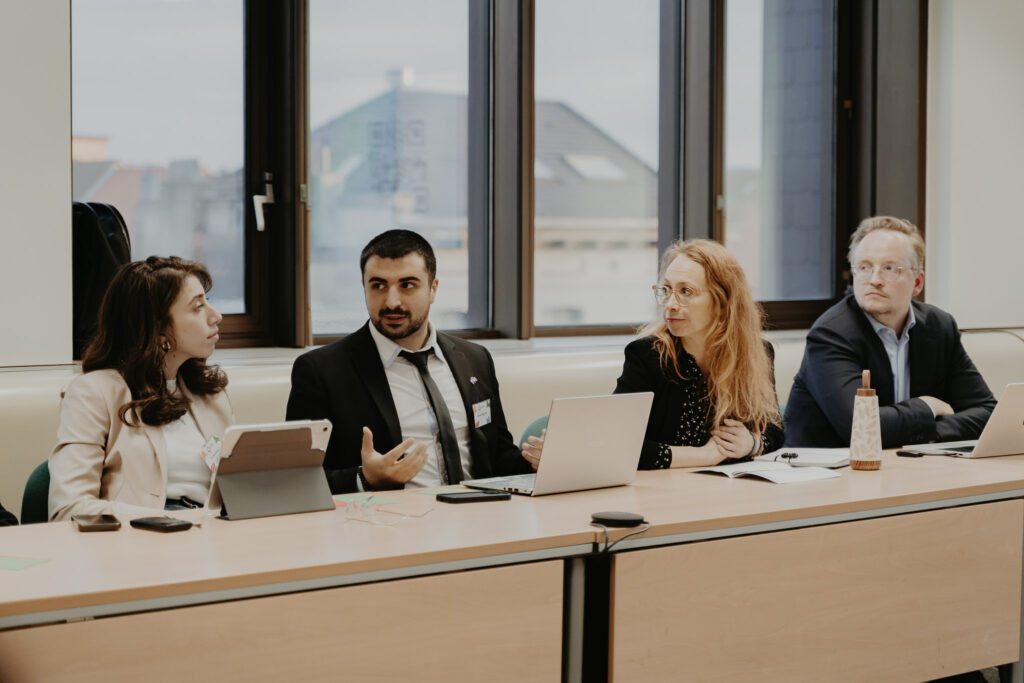
CMI youth delegate, Edvard Grigoryan (second from left), said that the YPS agenda needs to be in focus at local, national and international levels. Photo: CMI/Diana Takacsova.
“We created the kind of environment I want to see in every decision-making body: curious, accountable, and led by young people.” | Edvard Grigoryan
“When I received the first email for the conference outlining people from over 80 nationalities, I felt the start of something great. All YPS Week was organised so that youth were truly at the centre: we were the ones organizing, implementing, debating and deciding. We created, for a short but powerful time, the kind of environment I want to see in every decision-making body: curious, accountable, and led by young people who refuse to be only consulted but insist on partnership.
For me the most valuable part was the people, many of whom managed to become friends to me in a very short time. Their ideas, stories and emotions stay with me far longer than any agenda item. I left with a mosaic of perspectives from north to east and south to west: so diverse, so unique, and so inspiring. The event mattered not only because it commemorated the YPS resolution, but because it helped us co-learn, co-shape, and build the connections and resources we need to mainstream the YPS agenda at local, national and international levels. After the conference I feel we are a step closer to youth being equal partners in decision-making: not guests at the table, but architects of the policies that affect our future.“
CMI Project Officer, Grayden Prince, Youth in Peacemaking
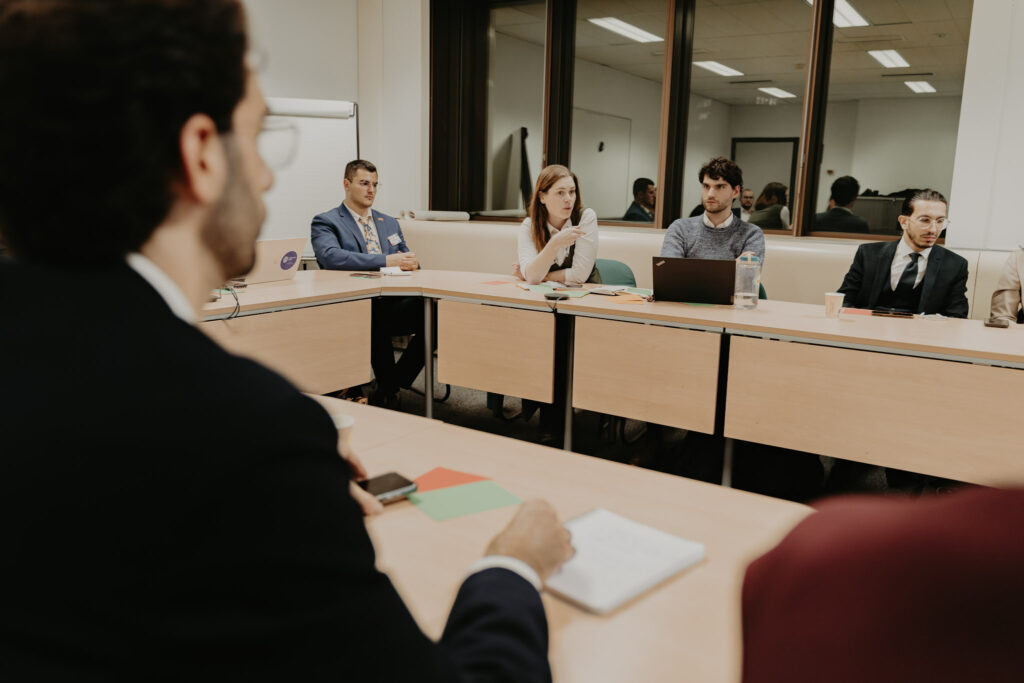
CMI Project Officer, Grayden Prince (second from right), said the event gave him hope despite uncertain times for peacemakers. Photo: CMI/Diana Takacsova.
“This week gave me immense hope in youth at a time when the landscape for peace actors is changing and uncertain.” | Grayden Prince
“A major success of the second EU YPS Conference was the diversity of its participants and the exchange of knowledge. Youth and partners represented more than 85 nationalities, and we heard what it means to be a young person trying to create a more peaceful future. We were able to work towards common understandings and build solidarity around unique and similar challenges faced by youth across the world.
Throughout the week, you could feel the energy in the room, with passion, motivation, experience, and emotion behind each of the participants. The topics we covered were broad-ranging: financing for youth peace initiatives; implementation and localisation of National Action Plans (NAPs); building alliances and partnerships with institutions; and best practices from multilateral, regional, national and sub-national actors.
For me, the value of this conference lies in the participants themselves. When exchanging with passionate young people who are working to build peace in challenging contexts and circumstances, we built networks and relationships which I hope will endure. The week showed me the power of solidarity and the power of coming together to craft peace, and the power of demanding it.
We all see the changing, and often uncertain, landscape that we are currently dealing with as peace actors, and this week gave me immense hope and inspiration in youth’s ability to act as active agents of peace, no matter the circumstances.“

