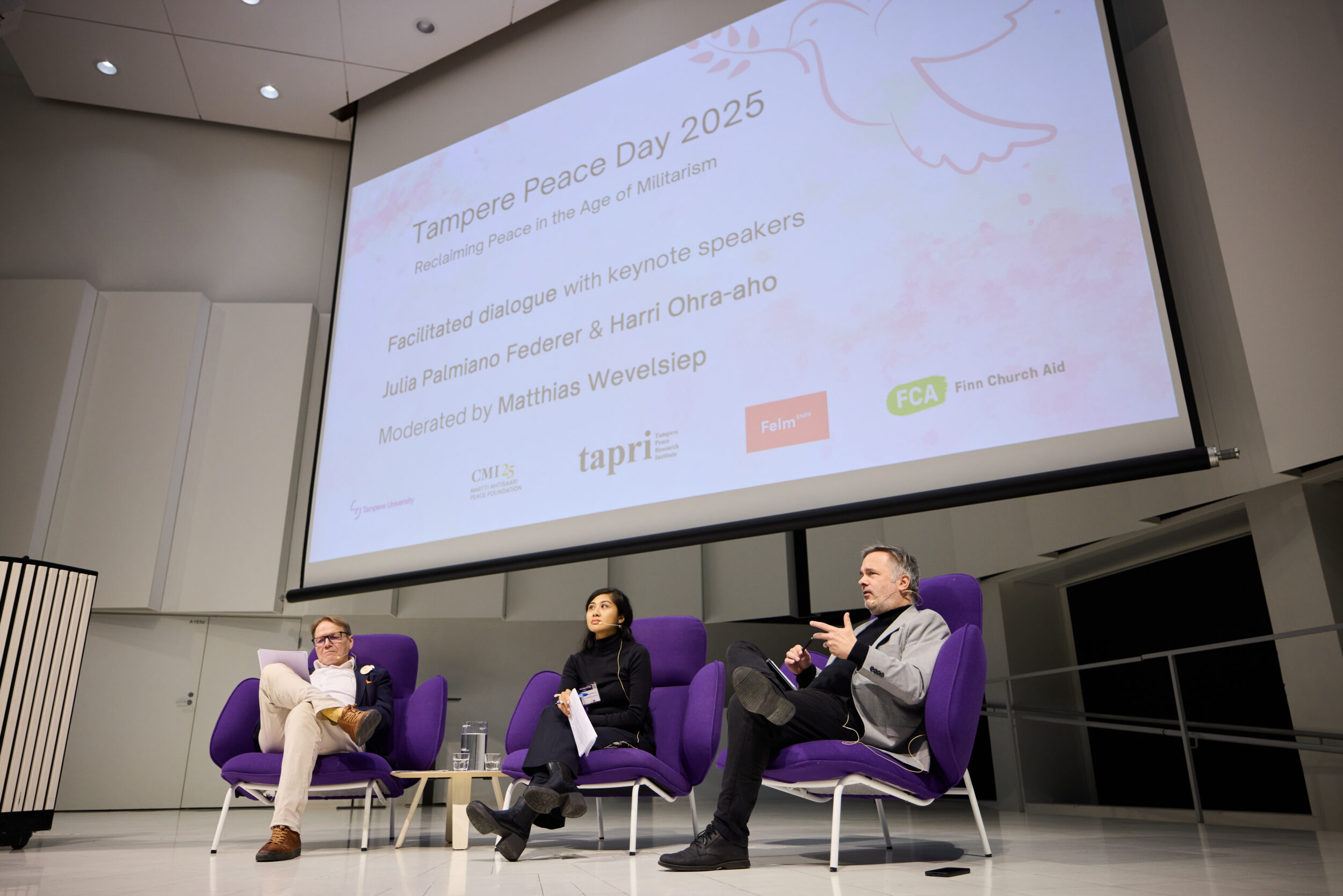
Tampere Peace Day returned for the third time on 27 November 2025, gathering researchers and practitioners in Finland to reflect on what it means to build peace in an era marked by militarisation, shrinking civic space, and increasingly transactional global politics.
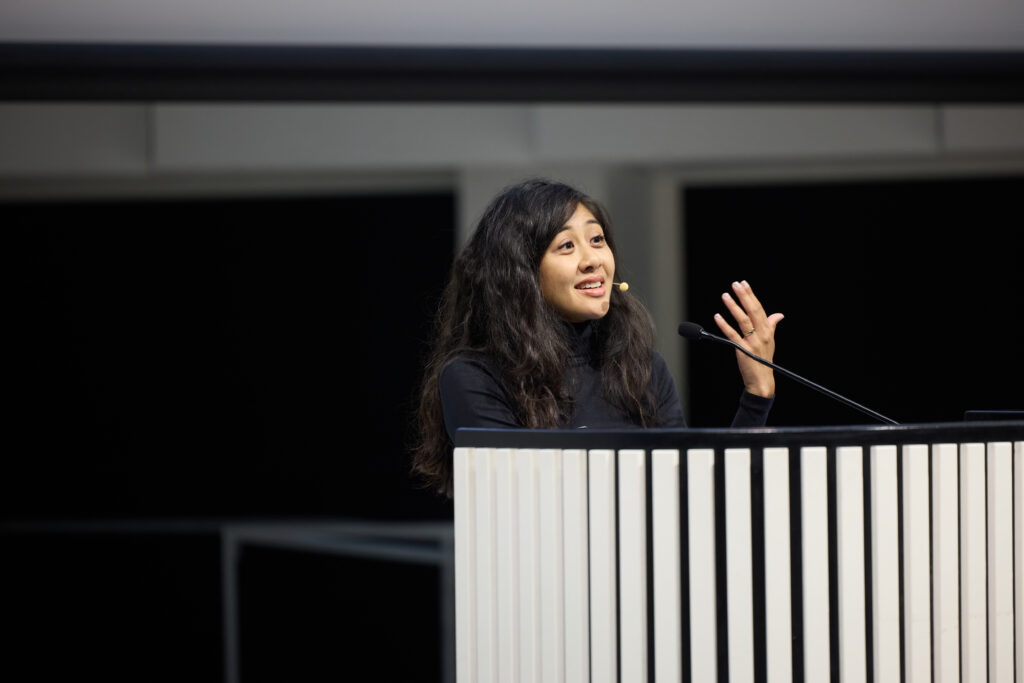
‘Peace, Power, and Polycrisis: Lessons in Critical Hope’ by Julia Palmiano Federer, Senior Researcher at the Center for Security Studies at ETH Zürich. Photo: Marjaana Malkamäki.
In her keynote, Julia Palmiano Federer, Senior Researcher at the Center for Security Studies at ETH Zürich, reflected on the intersection of today’s political and environmental crises and the need for critical hope. She called for a rethink of the meaning of peace and a revisiting of fundamental rights amid what she described as “tech-oligarchy militarism.”
Harri Ohra-aho, Major General (Ret.) and Senior Advisor at CMI – Martti Ahtisaari Peace Foundation, followed with an analysis of how peace processes are shifting from shared responsibility to short-term transactional arrangements.
Outlining three layers of peacemaking: sub-national, national and global, he warned that rising militarisation and private military actors are constricting the space for diplomacy. Hope and structure must coexist, because hope without systems is fragile, and systems without hope are empty, he argued.
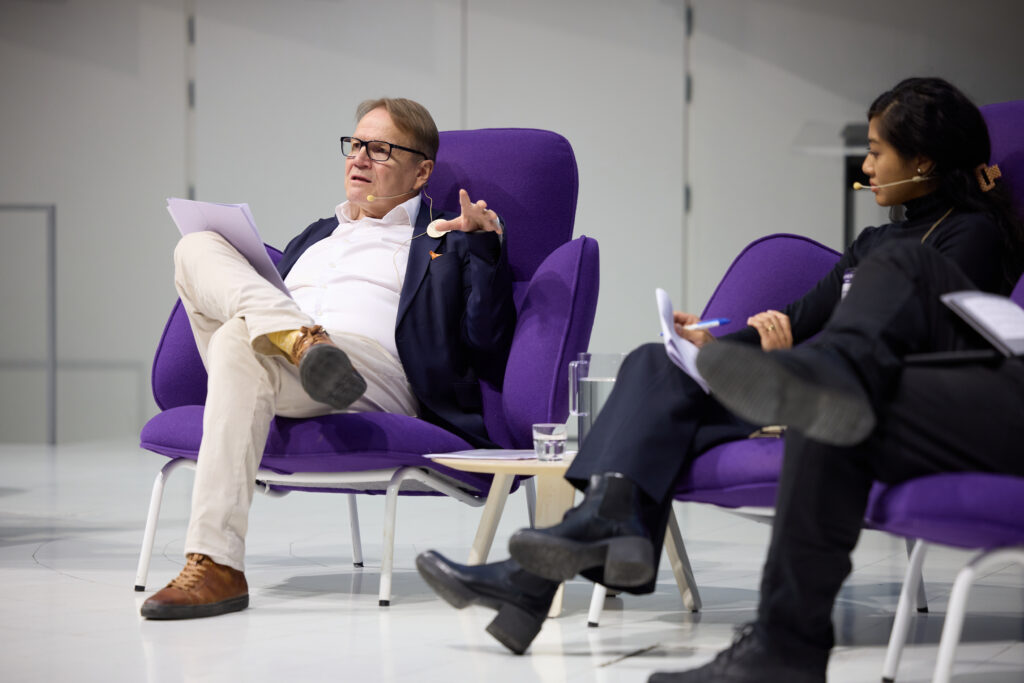
Harri Ohra-aho, Major General (Ret.) and Senior Advisor at CMI, analysed how peace processes are shifting to short-term transactional arrangements. Photo: Marjaana Malkamäki.
Four roundtables: reinforcing humanitarianism and peacebuilding to the culture of preparedness in the Nordics
‘Reinforcing humanitarianism and peacebuilding in a shrinking’ space examined how both sectors can better support one another despite politicisation, access restrictions and tight resources. The roundtable, facilitated by Professor Sarah Stroup, Academic in Residence at CMI – Martti Ahtisaari Peace Foundation and Visiting Senior Fellow at the Finnish Institute of International Affairs, encouraged participants to pinpoint where humanitarian and peacebuilding agendas can reinforce one another despite politicisation, access constraints and dwindling resources.
The roundtable began with expert contributions from Tobias Denskus (Malmö University), Felicity Gray (Nonviolent Peaceforce), Riina Isotalo (Felm) and Sarah Schiffling (HUMLOG Institute) who highlighted shared challenges around localisation and donor mistrust, as well as the obstacles created by sector-specific jargon and stereotypes.
Building on their insights, participants worked in small groups to identify practical questions. How to safeguard the independence of local actors; remain critical and honest about the risks of localisation; and bridge divides between generations, researchers, practitioners, and humanitarian and peacebuilding professionals.
The session, prepared by CMI, FCA and Felm, became a space to test new forms of cross-sector engagement at a moment when both fields face heightened external pressures.
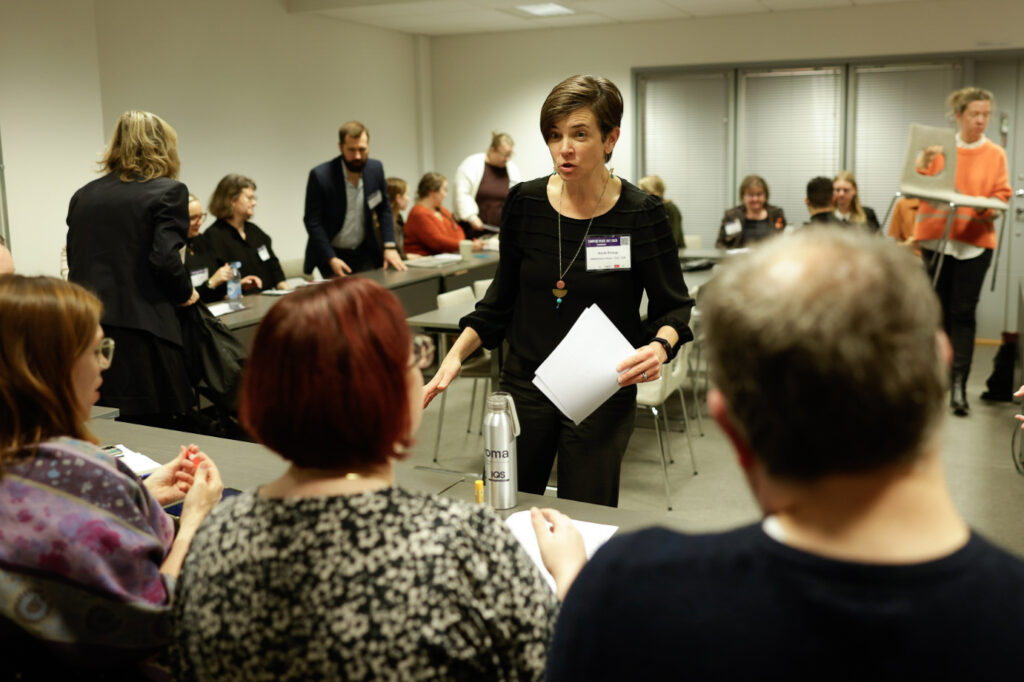
Professor Sarah Stroup, Academic in Residence at CMI and Visiting Senior Fellow at the Finnish Institute of International Affairs, facilitated a discussion on humanitarianism and peacebuilding. Photo: Marjaana Malkamäki.
In a parallel roundtable discussion, ‘Rethinking practices and agencies of peace mediation within a fragmented world’, speakers analysed how mediation norms are shifting as states reassert themselves and unconventional actors take on greater roles. Drawing on cases such as Ukraine and Gaza, the discussion explored what types of peace these emerging approaches produce.
Another roundtable, ‘Culture of preparedness and militarization in the Nordics’, explored how war preparedness increasingly shapes everyday life in Nordic societies. Participants questioned the assumed boundary between war and peace and considered how these subtle forms of militarisation affect resilience and the ability to imagine alternative futures.
In the fourth roundtable session, ‘Peace Education in Practice: Learning for a Non-Violent World’, participants discussed how creative, educational and non-violent methods can strengthen peacebuilding despite polarisation and growing militarist pressures.
Tampere Peace Day 2025 was organised by the Tampere Peace Research Institute (TAPRI), CMI – Martti Ahtisaari Peace Foundation, Finn Church Aid (FCA) and the Finnish Evangelical Lutheran Mission (Felm).