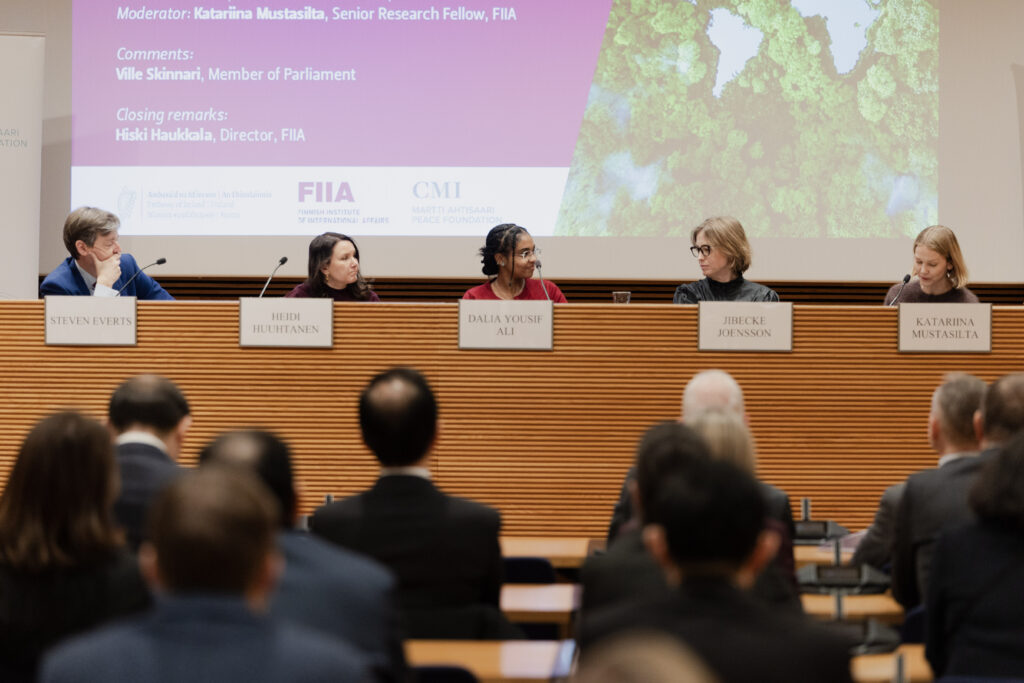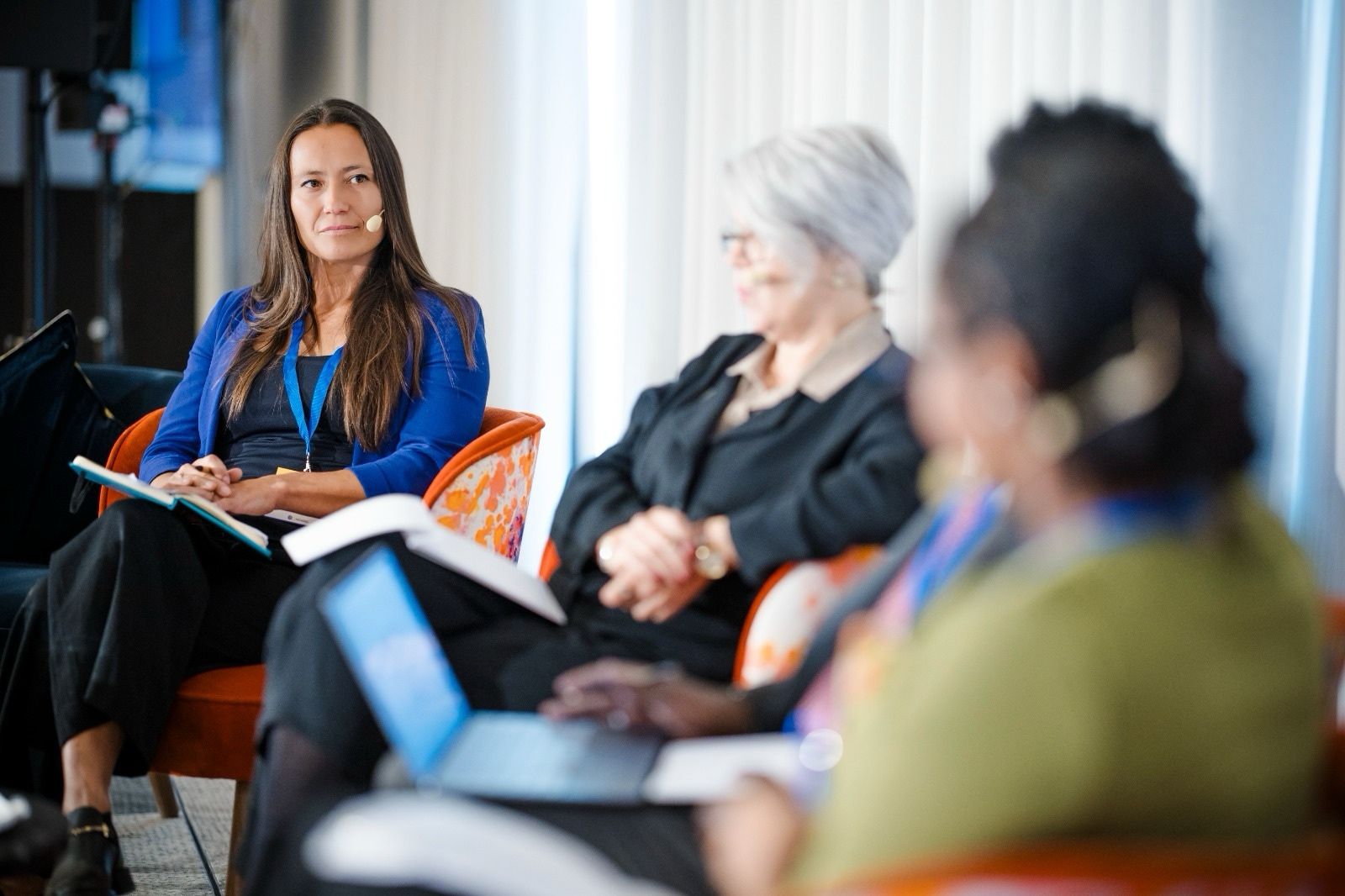
The seventh EU Community of Practice on Peace Mediation saw CMI reinforce its long-standing collaboration with the EU through panels on Sudan, Ukraine, and partnerships for peace. Deputy CEO Hanna Klinge also presented recommendations directly to EU High Representative for Foreign Affairs and Security Policy and VP of the European Commission Kaja Kallas during a civil society dialogue.
From 27–28 October 2025, CMI played an active part in the seventh EU Community of Practice on Peace Mediation (CoP) in Brussels, Belgium.
Under this year’s theme ‘Securing Peace: Opportunities for Peace Mediation in a Changing Landscape’, the EU’s flagship event on mediation and peace processes convened over 200 experts, policymakers and civil society representatives to exchange knowledge and strengthen mediation practice.
It was an opportunity for CMI to contribute to what is a valuable forum for reflection and exchange among practitioners: mediators, peacemakers, and leaders from the EU and its institutions.
A statement of intent
The EU Community of Practice on Peace Mediation represents a clear statement about the importance of the partnership between the EU and civil society, which is pivotal to the EU’s global peacemaking role. With the EU championing cooperation with civil society both at home and abroad, CMI’s message for the two-day meeting was clear: keep investing in mediation and dialogue and supporting frameworks, while encouraging partners to do the same.
The EU can strengthen its role as a global peacemaker by investing in inclusive approaches, when others do not. Inclusive peacemaking enhances the legitimacy of peace processes and strengthens local ownership and buy-in for peace agreements. This has been a consistent message from CMI’s stakeholders reflecting on recent peace processes.
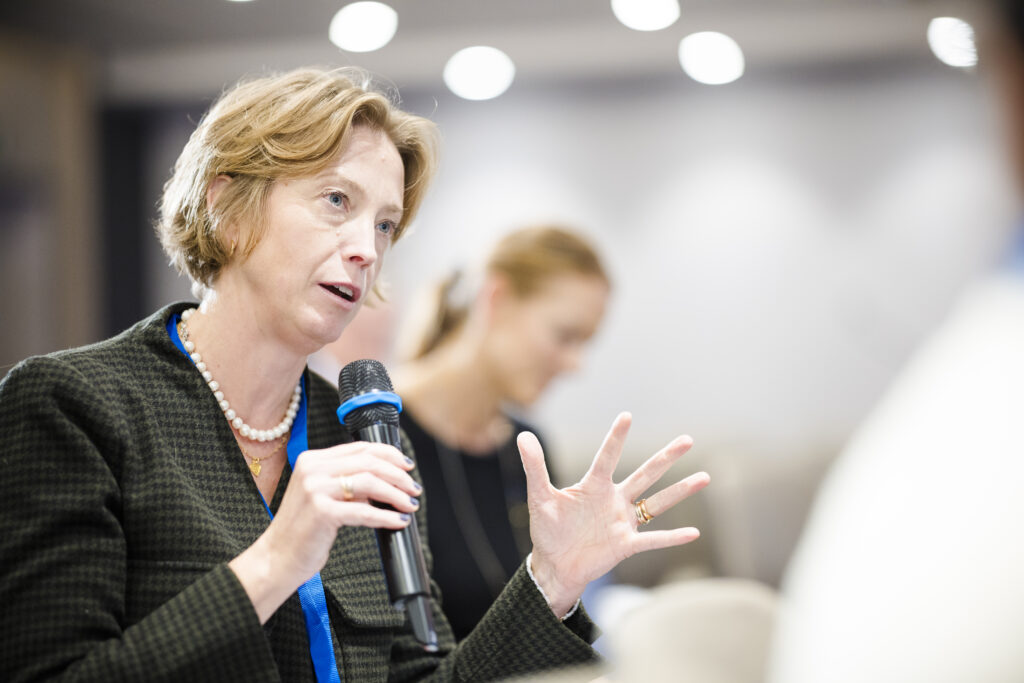
Jibecke Joensson is CMI’s Head of EU/UN Affairs. She discussed ‘Building Partnerships to Secure Peace: Learning from the EU-UN experience’.
CMI commitment
As a member of the Steering Group, CMI continues to contribute to the development of the community’s shared mediation practice, and there was a strong CMI presence in Brussels during the two-day event.
Hanna Klinge, CMI Deputy CEO, provided reflections at the end of the first day alongside other Steering Committee members Michael Keating, Executive Director, European Institute of Peace; Jonathan Cohen, Executive Director, Conciliation Resources; and Mariyum Amjad, EU CoP Youth Advisor from HIVE, Pakistan.
CMI also organised two panels. One entitled, ‘Voices of the Future: Youth, Mediation, and Collective Strategies for Peace in Sudan’ and the other, ‘Fostering Sustainable Peace in Ukraine: The Role of Global and European Actors’.
Sudan panel
Reflecting on CMI’s Sudan panel in the role of moderator, CMI Senior Manager Sylvia Thompson said that the panel highlighted “the need to enhance complementarity between actors, processes and levels, while underlining the importance of a Sudanese-led political process to ensure legitimacy and inclusivity.”
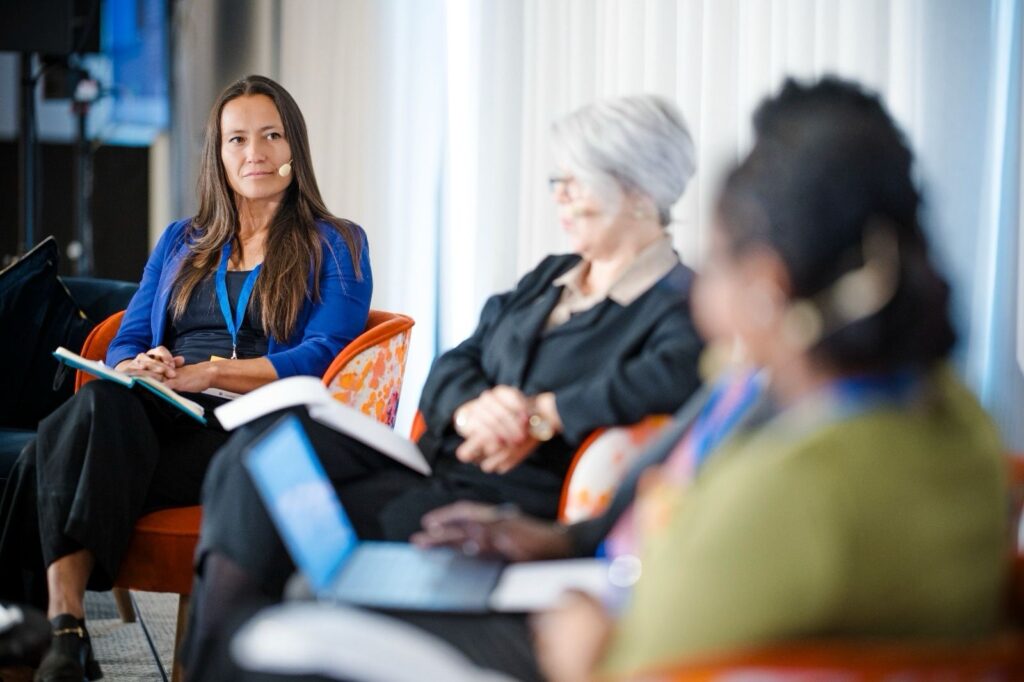
CMI’s Sylvia Thompson moderates the panel, ‘Voices of the Future: Youth, Mediation, and Collective Strategies for Peace in Sudan’.
The debate centred on the transformative role youth play in shaping political processes and humanitarian responses. Panellists also stressed that causes such as diversity, equal citizenship, and equitable resource distribution must be considered along with lessons from past peace efforts.
She added: “Discussions addressed the shift from comprehensive peace agreements to more fragmented, transactional mediation efforts, and how partial agreements and ceasefires still provide important entry points for inclusive political processes and sustainable peace.”
Sylvia was joined by panellists, Annette Weber, EU Special Representative Horn of Africa; Mohamed Ibn Chambas, African Union High Representative for Silencing the Guns; Dalia Ali Yousif, Sudanese Youth Dialogue; and Bakry Eljack Elmedni, Spokesperson for the Civil and Democratic Alliance, Somoud.
Fostering Sustainable Peace in Ukraine
CMI’s second panel, ‘Fostering Sustainable Peace in Ukraine: The Role of Global and European Actors’, saw former Minister for Foreign Affairs of Ukraine, Pavlo Klimkin in the moderator’s chair.
He was joined by panellists, Cosmin Dobran, Director, Peace, Partnerships and Crisis Management, European External Action Service; Leonardo Abrantes, Head of Peace and Security Directorate, Brazil Ministry of Foreign Affairs; Salman Shaikh, Founder and CEO, Shaikh Group; and Olha Aivazovska, Chair of the Board, Civil Network OPORA.
Mikko Patokallio, Senior Manager for Ukraine at CMI, commented on the organisation’s work in Ukraine, and particularly the Enhancing Ukrainian Global Partnerships project, which aims to strengthen Ukraine’s international partnerships and foster both Ukrainian and global dialogue.
During the panel discussion, speakers highlighted the role of Europe and non-western countries in rebuilding and ensuring long-term stability in Ukraine, including the importance of EU membership. Ukraine remains a committed European partner, despite complex political and legal environments in Washington and Brussels.
Speakers also underlined that European support will continue for Ukraine, with work being undertaken to explain to international audiences why Ukraine’s security is essential to Europe’s own stability, especially amid multiple global conflicts. There needs to, however, be a clear and credible European perspective for Ukraine.
The panel emphasised that accountability must remain a priority and individuals and decision-makers should be held responsible for their actions. The point was made that for peace to be sustainable, a new security architecture in Europe is key to address not only how to end the war but also why it began in the first place.
Building partnerships, repairing relationships
Jibecke Joensson, CMI’s Head of EU/UN Affairs, was a panellist on ‘Building Partnerships to Secure Peace: Learning from the EU-UN experience’, organised by the European Peacebuilding Liaison Office.
The conversation focused on the importance of the strong partnership between the EU and the UN, which is based on complementarity, trust and the shared values of multilateralism and respect for human rights. Speakers highlighted that the partnership must be informed by grass-roots voices and the expertise each body brings to the table, with civil society playing a vital role.
The panel also explored challenges, opportunities and operational added values of mediation partnerships, and identified scalable and replicable approaches. Panellists focused on how the EU, the UN and civil society could ensure that high-level transactional mediation is complemented by sustainable long-term engagements.
Denis Matveev, CMI Senior Advisor, contributed as a speaker and moderator in: ‘Relationship Repair Shop: How Peace Mediation Can Benefit from Couple’s Therapy Insights’ and ‘Contribution of Ukrainian Civil Society to Minsk Ceasefire Implementation (2014–2021)’ respectively.
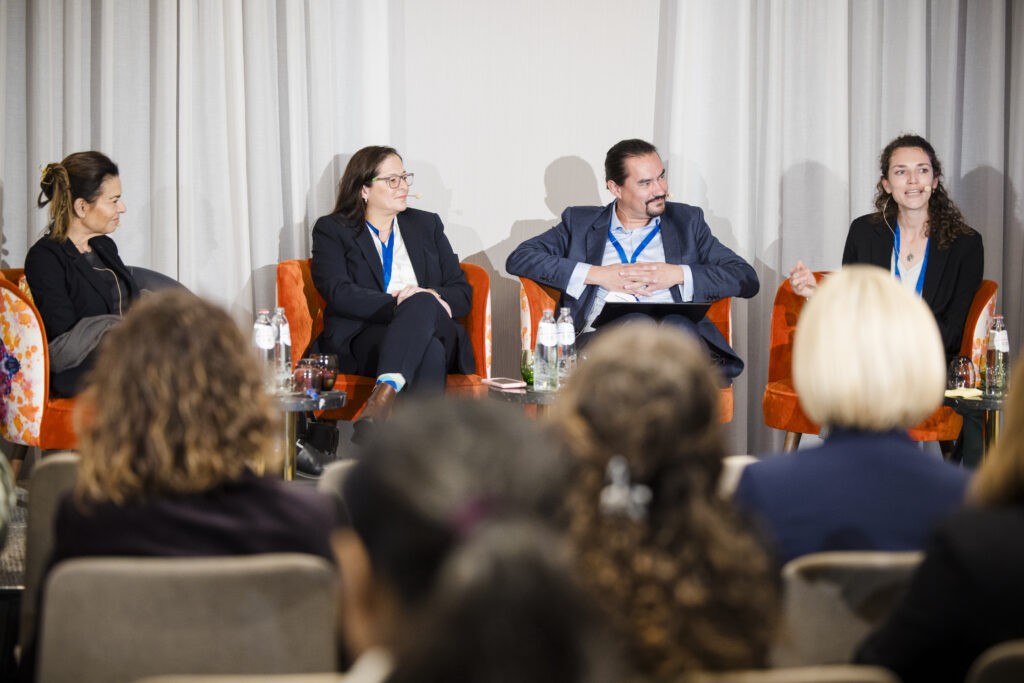
Denis Matveev of CMI was a speaker and moderator in two panels.
The former session, organised by the Centre for Humanitarian Dialogue, explored how managing emotional triggers, power dynamics, entrenched positions, and grievance narratives can enhance peace mediation in today’s conflict landscape. Real cases where traditional mediation approaches reached their limits were presented by CMI’s Matveev, who is an experienced mediator, and by former Colombian peace negotiator Juanita Millan Hernandez.
The latter session, organised by the Mediation and Dialogue Research Centre (Ukraine), presented a study linking the work of Ukrainian human rights NGOs with implementation of the ceasefire that resulted from the Minsk Agreements. While the political and security aspects of the accords remained unimplemented, meaningful progress in humanitarian and human security issues owed a lot to civil society.
Meeting with Kaja Kallas
On the sidelines of the EU Community of Practice on Peace Mediation, Kaja Kallas – High Representative for Foreign Affairs and Security Policy and Vice-President of the European Commission – convened the first so-called Implementation Dialogue with civil society, receiving recommendations from 24 civil society members on how to collectively “secure peace”.
CMI’s Hanna Klinge was invited to present recommendations at the meeting. In addition to highlighting opportunities for the EU, she made the point that in an era of dealmaking, there is space for the EU to step in and connect the short to the long term – “the minilateral to the multilateral” – and turn quick deals into durable peace processes.
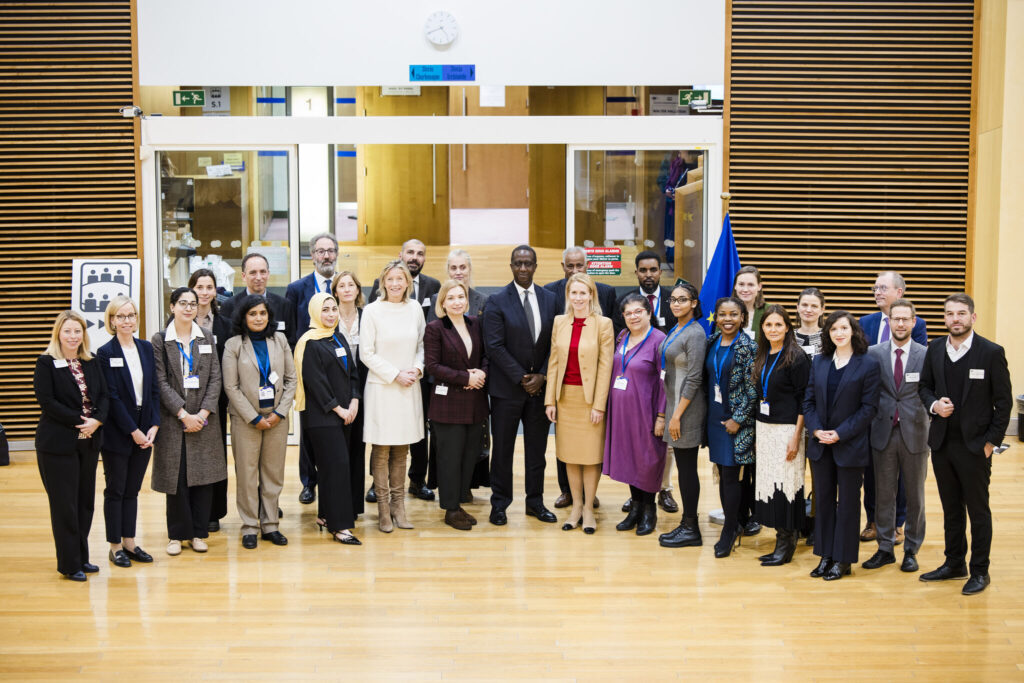
CMI’s Hanna Klinge and 24 other civil society representatives discuss how to “secure peace” with Kaja Kallas, High Representative for Foreign Affairs and Security Policy and Vice-President of the European Commission.
“The EU can bring its uniquely comprehensive set of tools and instruments, together with its Member States and partners like the ones present here today, to support peace mediation and long-term political solutions,” said Klinge. “In doing so, the EU can turn dealmaking into peacemaking and firmly secure its role as a credible global actor in peace and security.”
In her concluding remarks, Kaja Kallas emphasised the EU’s strengthened commitment to global peace, underlining the important role of civil society as a vital partner for the EU, providing expertise and perspectives that help advance peace and security.
The 2024 EU Community of Practice on Peace Mediation highlights the importance of partnerships