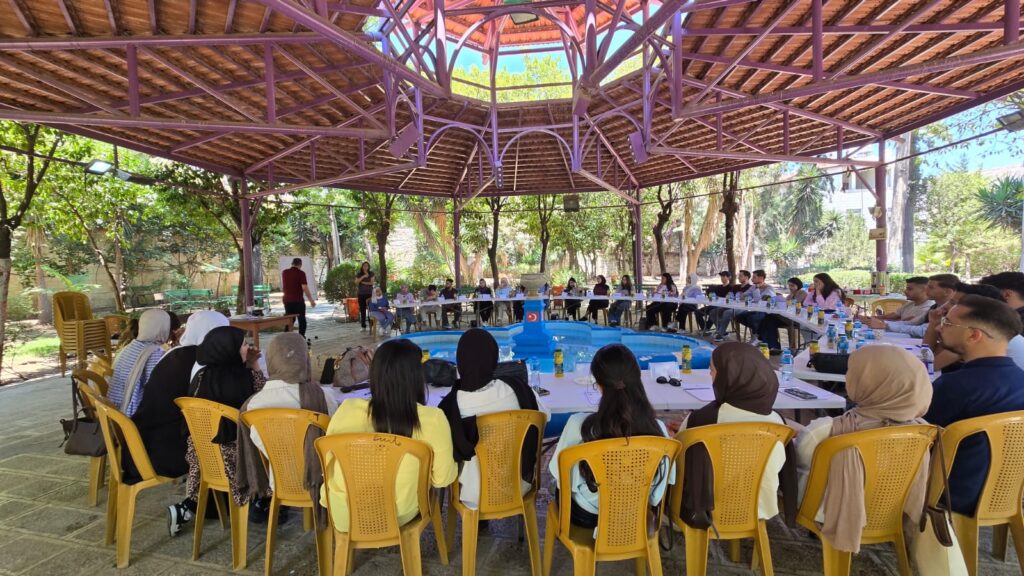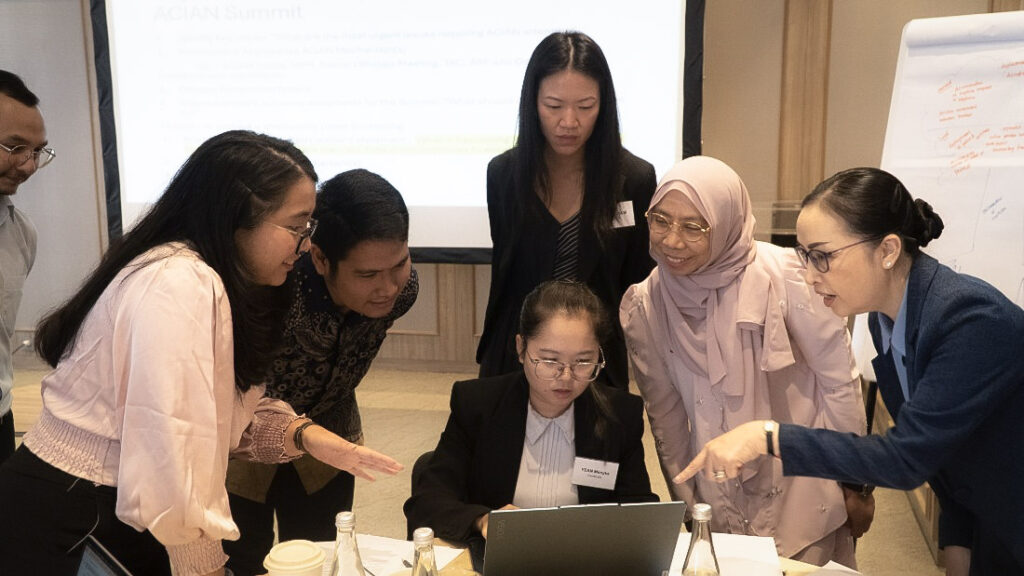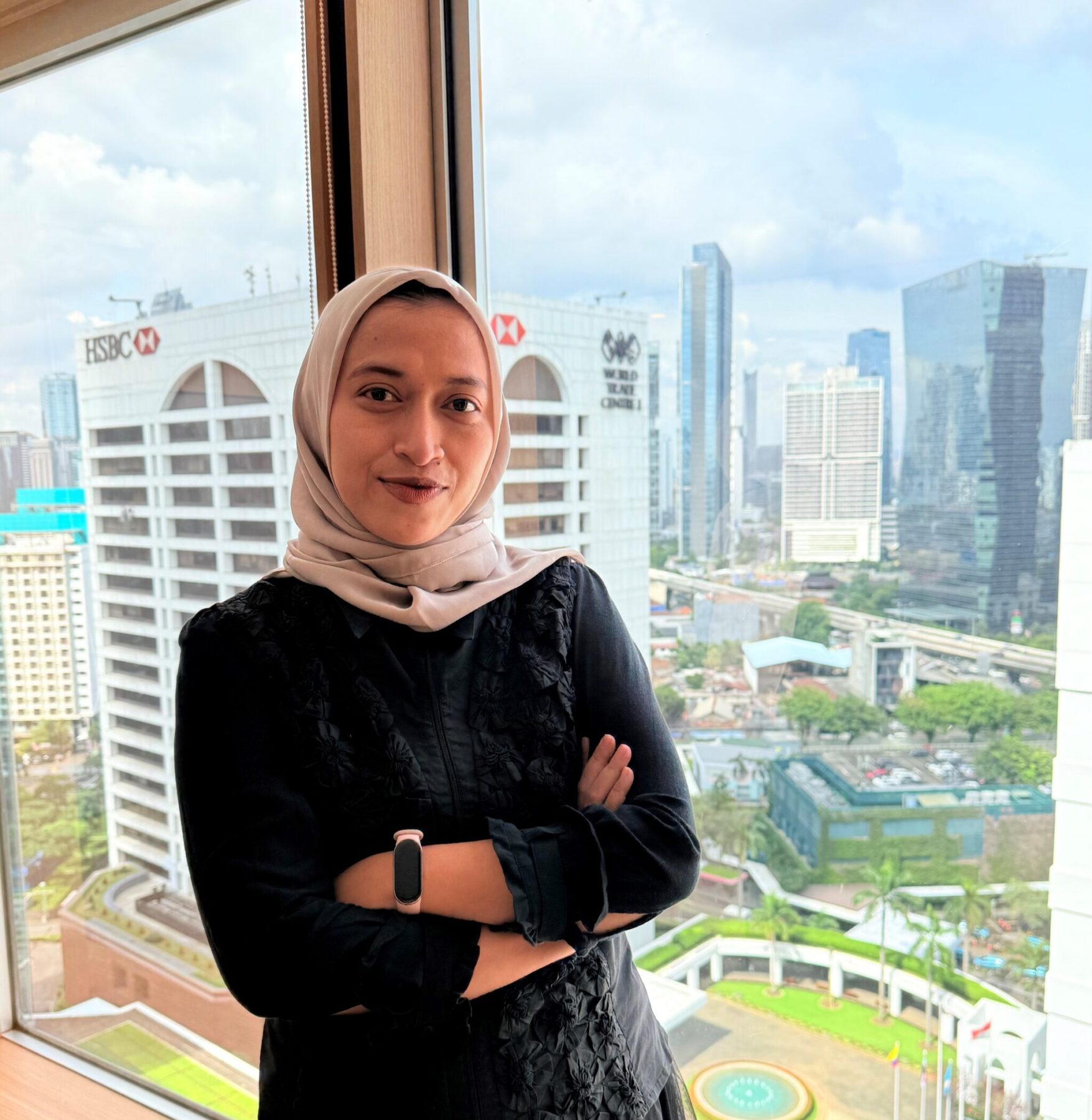
On the sidelines of CMI’s Martti Ahtisaari Legacy Seminar in Jakarta, we spoke with Fatimah Zahrah, Regional Coordinator at the ASEAN Youth Forum and a dedicated advocate for youth engagement across Southeast Asia. Zahrah raised an urgent message in Jakarta: young people are shaping the future of peace, and it’s time institutions recognised that.
As the largest generation in history, young people now make up more than a third of ASEAN’s population. Yet despite their numbers and engagement, they are often left out of regional decision-making processes, including in matters of peace and security. Through her work at the ASEAN Youth Forum (AYF), Fatimah Zahrah is pushing to change that.
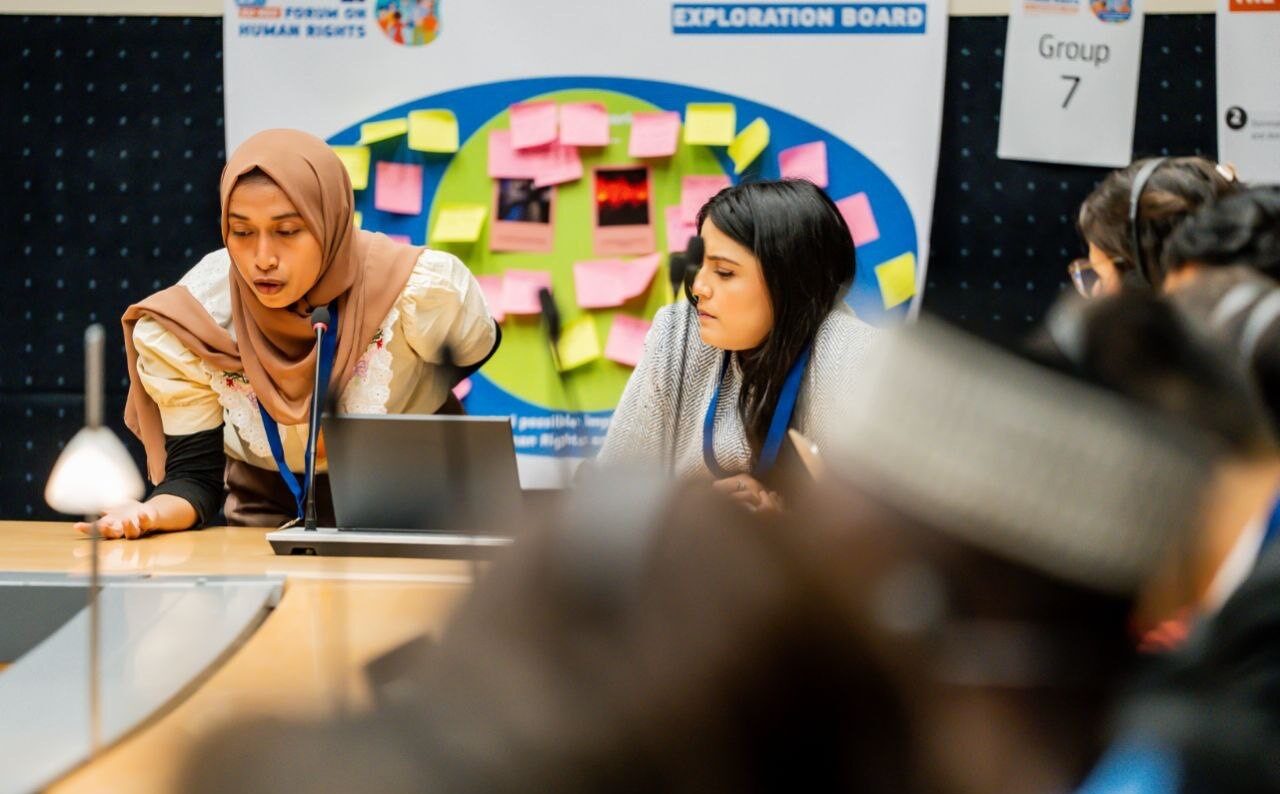
Fatimah Zahrah represented the AYF at the 25th EU-NGO Human Rights Forum. Image: Daphne Matthys
Founded in 2009, the AYF began as an annual gathering of youth actors across Southeast Asia. In 2019, it transitioned into a more structured organisation, and a year later, it established a Secretariat in Jakarta – just steps away from the ASEAN headquarters.
“We are an independent civil society organisation that works collaboratively with many partners,” Zahrah explains. “These include some ASEAN bodies such as the ASEAN Secretariat where we cooperate in the fields of education, youth and sport. We are engaging and building relationships with them.”
ASEAN
- ASEAN (Association of Southeast Asian Nations) was founded in 1967 to promote regional cooperation and stability.
- It includes 10 member states across Southeast Asia.
- The organisation focuses on political-security, economic, and socio-cultural cooperation.
- ASEAN operates through consensus, non-interference and respects the sovereignty of its members. (Source: ASEAN)
Though AYF is not part of the formal ASEAN structure, its role has become increasingly important. The Forum connects young people and youth organisations in all 10 ASEAN countries, plus Timor-Leste – slated to become a full member later this year – and acts as a bridge between grassroots voices and regional policy actors.
“Our aim is to create safe and inclusive spaces for young people to connect,” Zahrah says. “A second aim is to become a bridger between different parties within the region and internationally.”
This work, Zahrah explains, has led to growing collaboration with ASEAN bodies, including the ASEAN Secretariat, the ASEAN Intergovernmental Commission on Human Rights, and the ASEAN Institute for Peace and Reconciliation.
“There is no peace without justice”
For Zahrah, the connection between youth activism and peacebuilding is clear: peace cannot exist in the absence of justice and human rights.
“Many youth-led movements are rooted in calls for democracy and civil rights,” she says. “The Milk Tea Alliance, for example, connects youth activists across countries. . . It shows how digitally connected we are, and how we can mobilise transnationally.”
There’s often this belief that young people lack competence.
Social media plays a key role in building this awareness and connection. “Today, we get political awareness from social media, and young people are quite involved in issues they find important. Digital platforms allow us to amplify our voices and reach across borders. But they’re also vulnerable to restrictions,” she warns.
As governments tighten regulations on digital spaces, Zahrah says AYF is focusing more on digital safety and strategy. “We have to think carefully about how we raise our voices online because there is no guarantee of safety anymore.”
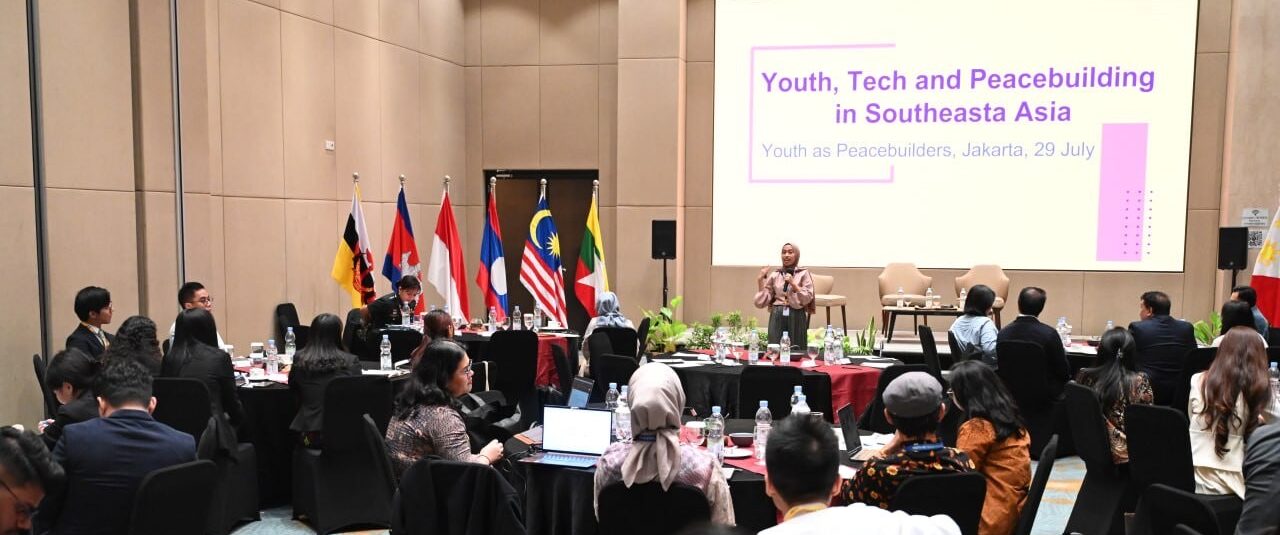
Technology was one of the themes discussed in the ASEAN-IPR Workshop on Youth as Peacebuilders, AYF being one of the facilitators.
Youth must be involved in all stages
Despite their engagement, young people across Southeast Asia still face barriers to participating in formal policy processes. Two of the most persistent, Zahrah explains, are “ageism” and “lack of trust”.
“There’s often this belief that young people lack competence. It’s not always explicit,” she says. “And without trust, youth are left unsure of how or where they can meaningfully engage.”
This often leads to “tokenism”, where youth are invited to events but excluded from real decision-making. “There are some events or discussions, for example in ASEAN, where issues regarding young people are at the center of discussion, but youth are only invited as participants, not as speakers,” Zahrah says.
She believes that the solution is deeper involvement at every stage. The next level is to co-design activities and initiatives together with the youth network. And to go further: involve young people not only in design but also in implementation and evaluation.
“They should be involved in all stages of the process.”
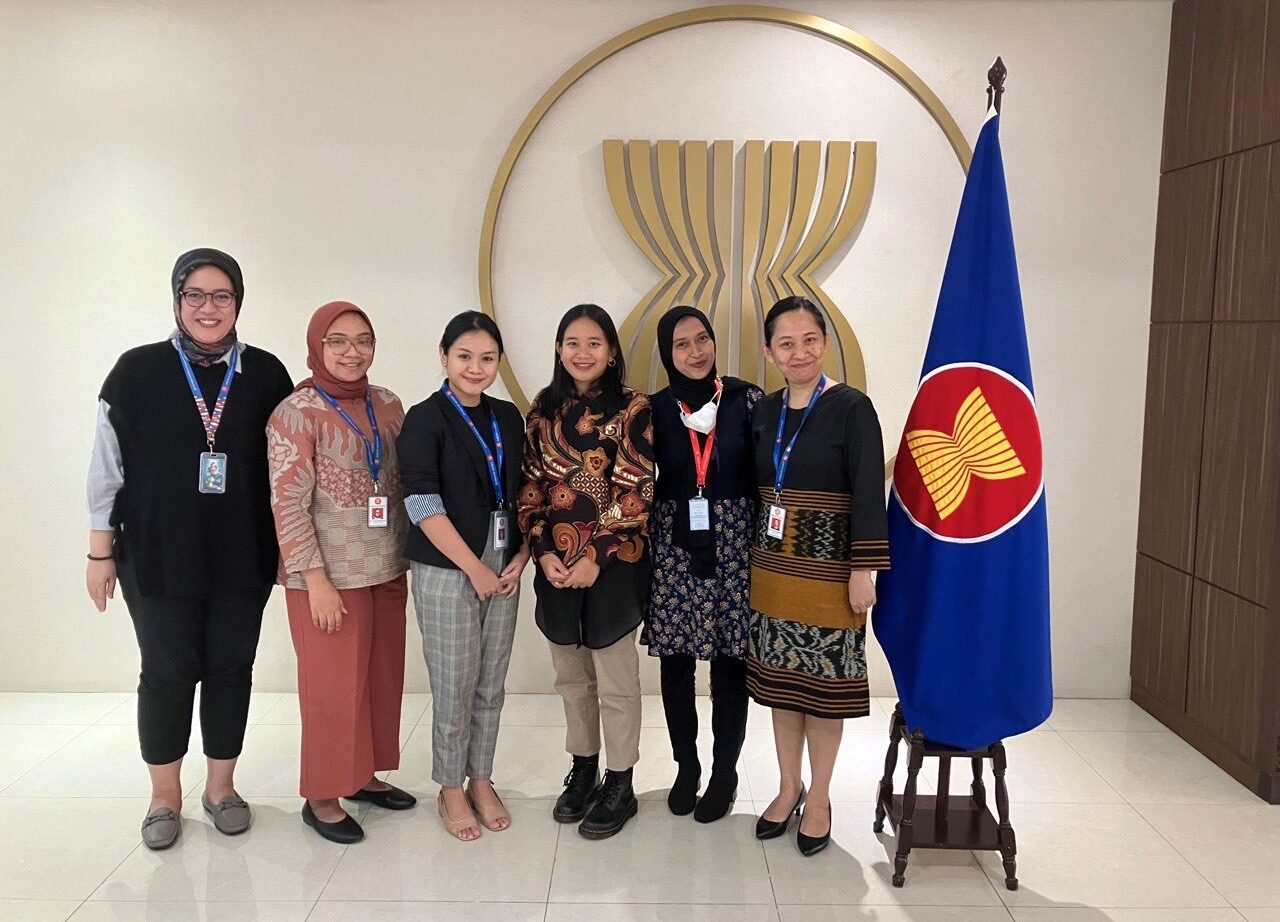
ASEAN Youth Forum visiting the ASEAN Secretariat on Education, Youth and Sports.
Connecting the grassroots to policy
In recent years, AYF has taken steps in bridging the gap between grassroots voices and regional institutions. Zahrah says that one key example was their participation in a regional consultation for the ASEAN Intergovernmental Commission on Human Rights, which contributed to a new declaration on climate and environmental rights.
“During this process, the Commission consulted the youth network, including marginalised – for example youth from religious minorities and the LGBTIQ+ community,” Zahrah says. “This way we really managed to bridge the voices of young people from diverse backgrounds to influence important policy work.”
It’s a model Zahrah hopes to replicate: building bridges between the realities of communities and regional policy processes.
Regional identity: a work in progress
When asked whether young people in ASEAN feel a sense of regional belonging, Zahrah reflected that it’s something still in the making.
“In my experience we have to continuously create and uphold our identity. Otherwise, many young people do not necessarily see the relevance of ASEAN and regional connectivity.”
But she believes personal connection is key.
“Not everyone necessarily understands what ASEAN is, but we do understand how we share our personal stories and our struggles, and also the culture we have. We can somehow relate with food as well as the similarities and differences of our cultures.”
“In short, the personal is what can connect us as a region.”
Towards more inclusive regional peacebuilding
For Zahrah, meaningful inclusion begins with political will. But it doesn’t end there.
“Too often, youth are treated as a single identity,” she says. “But the youth community is incredibly diverse. If you want to be inclusive, you have to consider different spatial and safety needs, linguistic barriers, and the realities of marginalised groups.”
Whether online or on the ground, Zahrah’s message is clear: youth must be seen not just as future leaders, but as present-day partners in shaping peace, policy, and progress.
“Youth are already doing the work,” she says. “Now it’s time to give them the space and the trust they deserve.”