



Regional leadership and the role of youth in peace efforts were at the centre of the seventh Martti Ahtisaari Legacy Seminar that took place in Jakarta, Indonesia. The regionally-focused event brought together leaders, seasoned diplomats and young experts to discuss the future of peace mediation in Southeast Asia. CMI organised the seminar in partnership with the Foreign Policy Community of Indonesia (FPCI) and the Embassy of Finland in Indonesia.
Framed by President Martti Ahtisaari’s legacy and deep personal connection to the region through his involvement in the Aceh peace process, the seminar highlighted the enduring value of regional leadership and approaches to peace mediation. It is now two decades since the signing of the Aceh Peace Agreement in 2005 in Helsinki. The seminar also underlined the critical need to move beyond tokenism and truly engage the younger generations in the work for peace, both regionally and globally.
“At a time when trust in global institutions is eroding, gatherings like this offer a crucial space to rebuild faith in diplomacy,” said Janne Taalas, CEO of CMI. “With its long tradition of regional peacemaking, Southeast Asia – including Indonesia, a place of importance to President Ahtisaari – offers valuable lessons for navigating today’s shifting global landscape.”
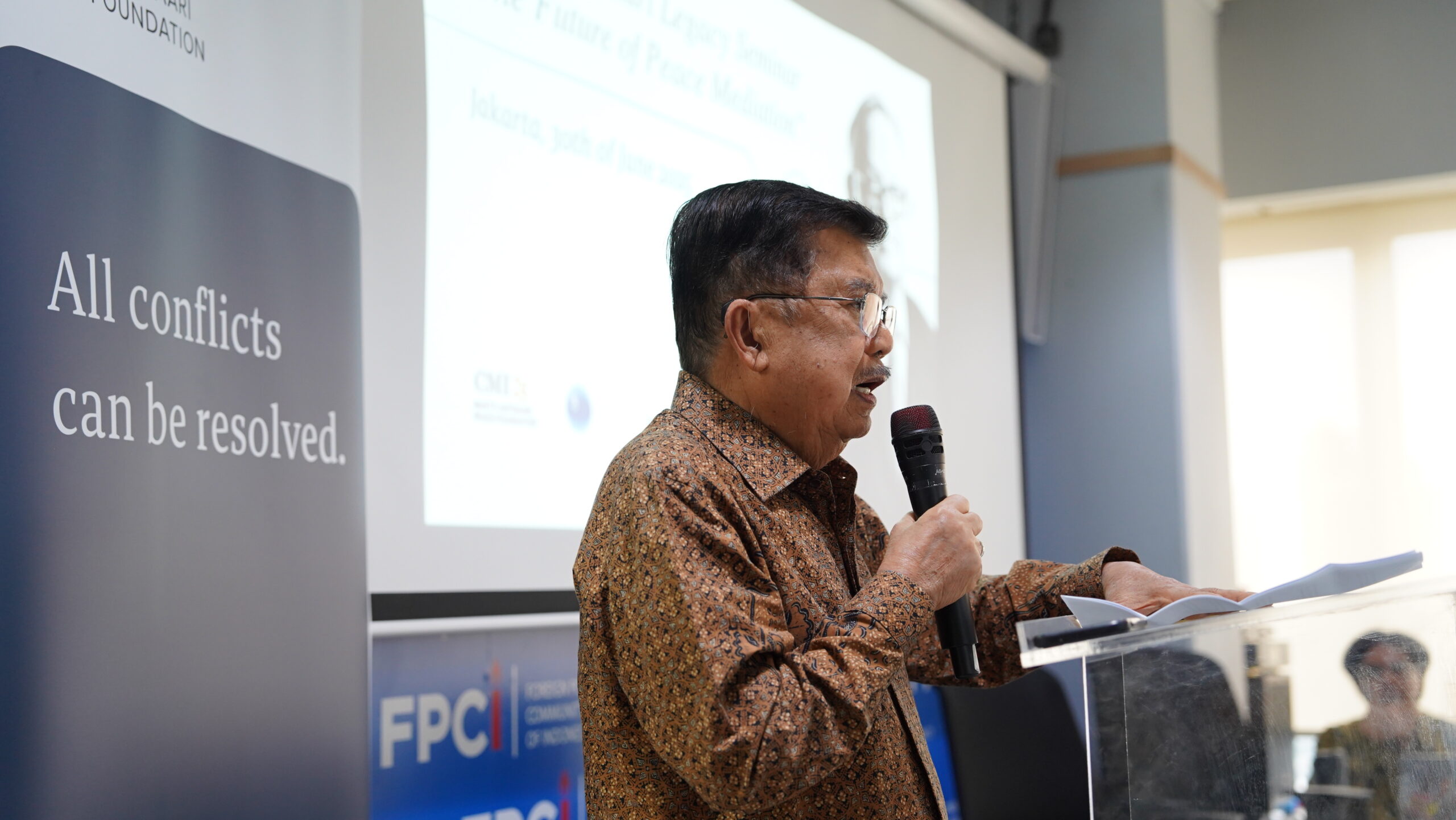
Jusuf Kalla was the keynote speaker of the seminar. He served as the 10th and 12th Vice President of Indonesia.
In his keynote speech, Jusuf Kalla, former Vice President of the Republic of Indonesia, reflected on the resolution of the Aceh conflict as a blueprint for effective mediation. He explained that the conflict in Aceh was a vertical one, between the community and the government, and described how the peace process began by carefully studying the personalities involved, the historical context, and even family ties within the region. This thorough and highly contextualised approach, he noted, ultimately contributed to the successful mediation of the conflict.
Kalla also highlighted the role of both ASEAN and the EU in backing up peaceful resolutions, particularly their significant contributions to the Aceh Monitoring Mission (AMM) established to observe the implementation of the peace agreement.
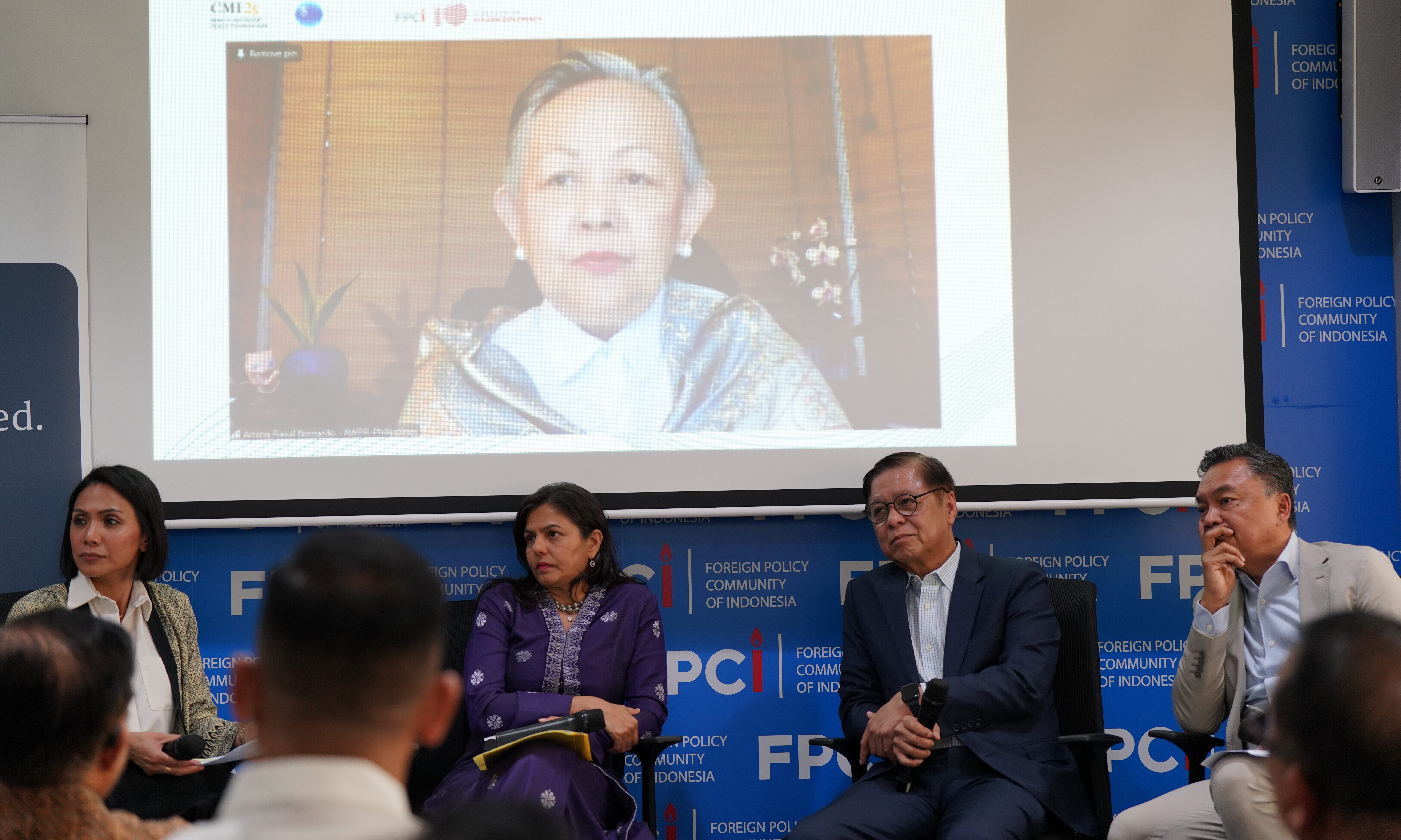
The high-level panel explored how regional partnerships can provide sustainable solutions to complex conflicts. From left to right: Andini Effendi (moderator); Dato’ Astanah Abdul Aziz; Sihasak Phuangketkeow; and Dino Patti Djalal. Amina Rasul-Bernardo, on the screen, took part remotely.
Lasting peace requires inclusion and effective institutions
The seminar’s opening panel, moderated by independent journalist Andini Effendi, explored how regional and cross-regional partnerships can offer locally tailored, sustainable solutions to today’s complex conflicts. Panellists emphasised Southeast Asia’s strong tradition in peace mediation and conflict prevention, underlining the need for legitimacy and accountability to meet the demands of an increasingly volatile global environment.
Dato’ Astanah Abdul Aziz, Deputy Secretary-General of ASEAN for ASEAN Political-Security Community, highlighted that ASEAN’s success stems from the region’s vast diversity, crediting ASEAN with open-mindedness towards difference and mutual respect. She noted that many regional issues are rooted in long-standing tensions that require careful handling, especially given ASEAN’s need to maintain balance among its members.
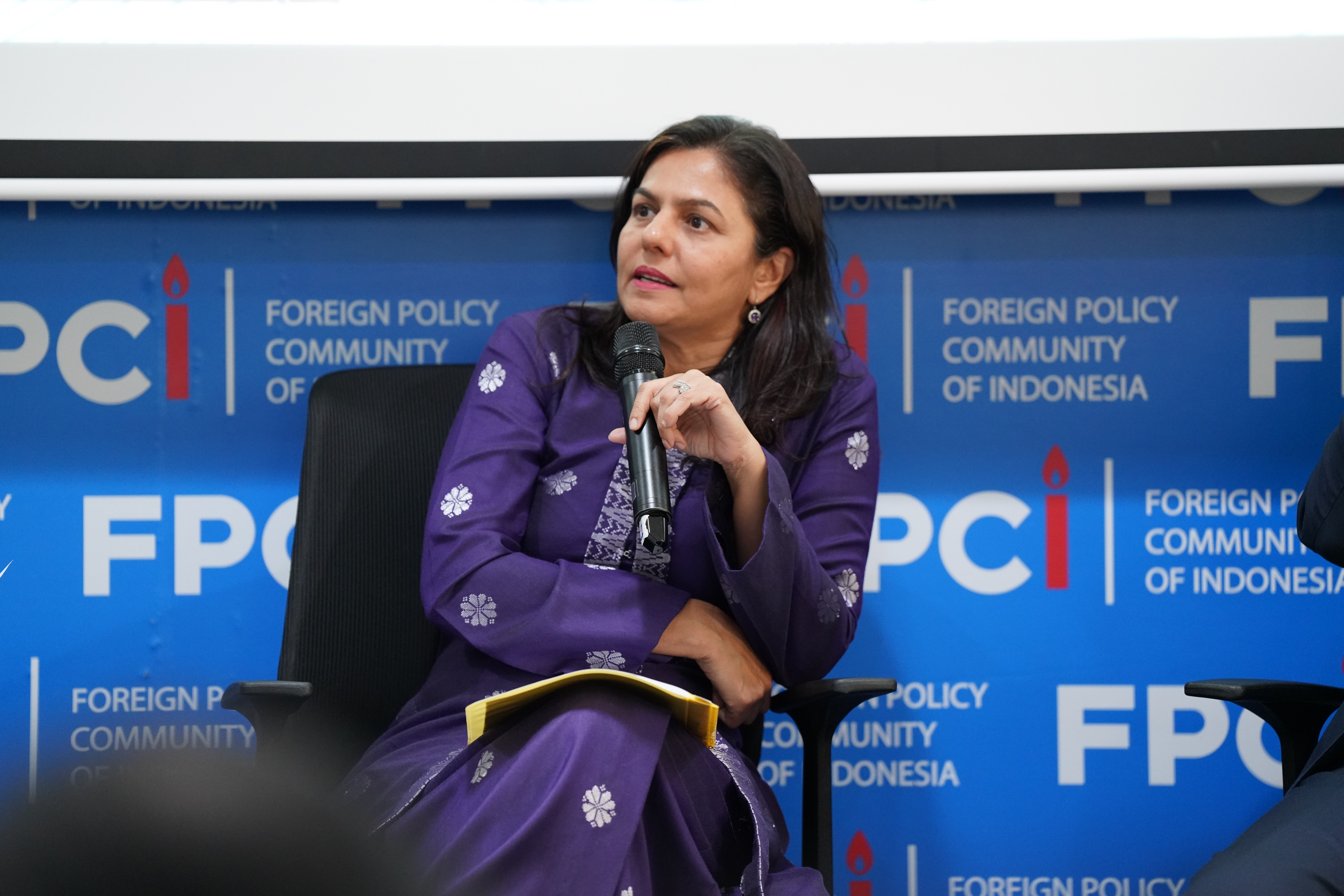
Dato’ Astanah Abdul Aziz, Deputy Secretary-General of ASEAN, spoke about the benefits of the region’s vast diversity.
Former Vice Minister for Foreign Affairs of the Kingdom of Thailand, Sihasak Phuangketkeow, pointed out that conflicts like that in Myanmar reveal ASEAN’s limited institutional capacity to address internal disputes. He noted that the principle of non-interference is often used to justify inaction. To respond more effectively, he called for stronger institutional arrangements and a shift in mindset within ASEAN. Furthermore, Phuangketkeow emphasised that each conflict requires an understanding of the root causes and thereby a tailored approach that combines peacemaking, peacekeeping, peacebuilding, reconciliation, and that the so-called Track II diplomacy, meaning informal negotiations, can provide needed flexibility.
Amina Rasul-Bernardo, President of the Philippine Center for Islam and Democracy, shared insights from the Mindanao peace process. She stressed that inclusion, especially of women, youth, and religious leaders, as well as external support, are foundational to sustainable peace. Rasul-Bernardo reaffirmed that peace is a matter of national interest and emphasised that it must go beyond formal leader-to-leader or state-to-state agreements and involve grassroots actors for truly effective implementation. She credited ASEAN’s work in supporting the Women, Peace and Security agenda, with one such example being the establishment of the ASEAN Women for Peace Registry (AWPR).
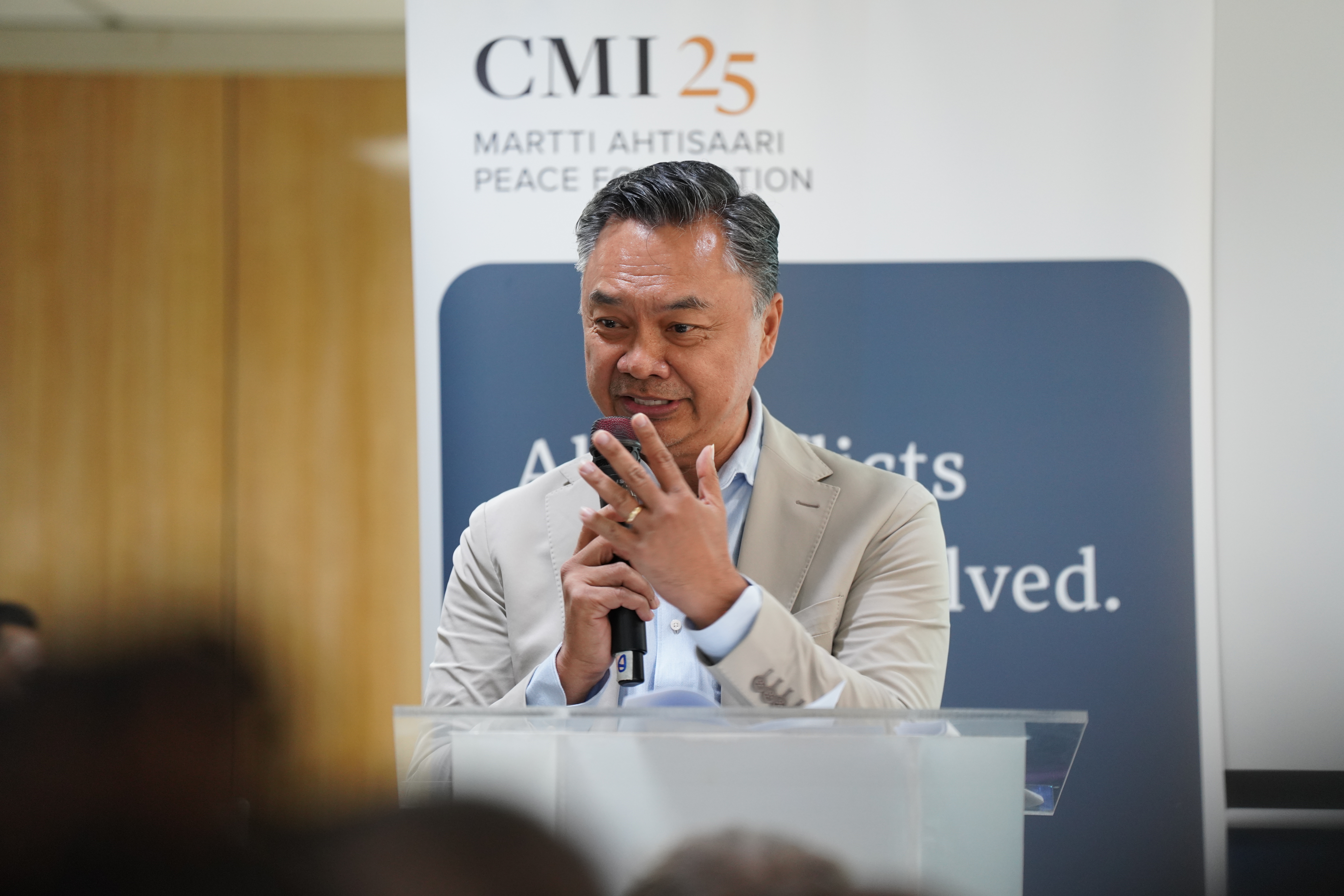
FPCI’s Founder and Chairman Dino Patti Djalal said that consistency and long-term planning are essential for effective peacemaking.
Reflecting on experiences from East Timor and Aceh, Dino Patti Djalal, Founder and Chairman of the Foreign Policy Community Indonesia (FPCI), emphasised that execution is the most critical aspect of any agreement. Patti Djalal spoke about the current global climate and drew a parallel with current events in the Middle East, noting the lack of follow-through after ceasefire announcements. Additionally, he stressed the importance of consistency and planning in any serious peacemaking effort and highlighted that lasting impact requires a stable, trusted team that engages over time, rather than ad-hoc interventions.
Youth bring legitimacy and help build bridges in peace efforts
The second panel, moderated by Alex Virtanen, CMI’s Head of Asia, highlighted the role of youth in peace and security in Southeast Asia. With young people making up around a third of ASEAN’s population, the discussion addressed how to move beyond symbolic participation and meaningfully involve youth in peace processes.
The panellists were I Gusti Agung Wesaka Puja, Executive Director of ASEAN Institute for Peace and Reconciliation (AIPR), Izzah Khairina Ibrahim, Analyst at the Institute of Strategic and International Studies (ISIS) Malaysia, Fatimah Zahrah, Regional Coordinator, ASEAN Youth Forum, and Muhammad Waffaa Kharisma, Researcher at the Centre for Strategic and International Studies (CSIS) Jakarta.
The conversation began by addressing the future of peacemaking, the need to create more space for dialogue and the notion of peace in Southeast Asia. Izzah Khairina Ibrahim from ISIS Malaysia spoke about the challenges the region faces in addressing conflicts. She noted that the term ‘stability’ is often associated more with economics and development than with peace. Due to the region’s commitments to sovereignty, consensus and non-interference, issues related to peace and conflict are often compartmentalised, with action typically taken only when national interests – such as trade and security – are directly affected.
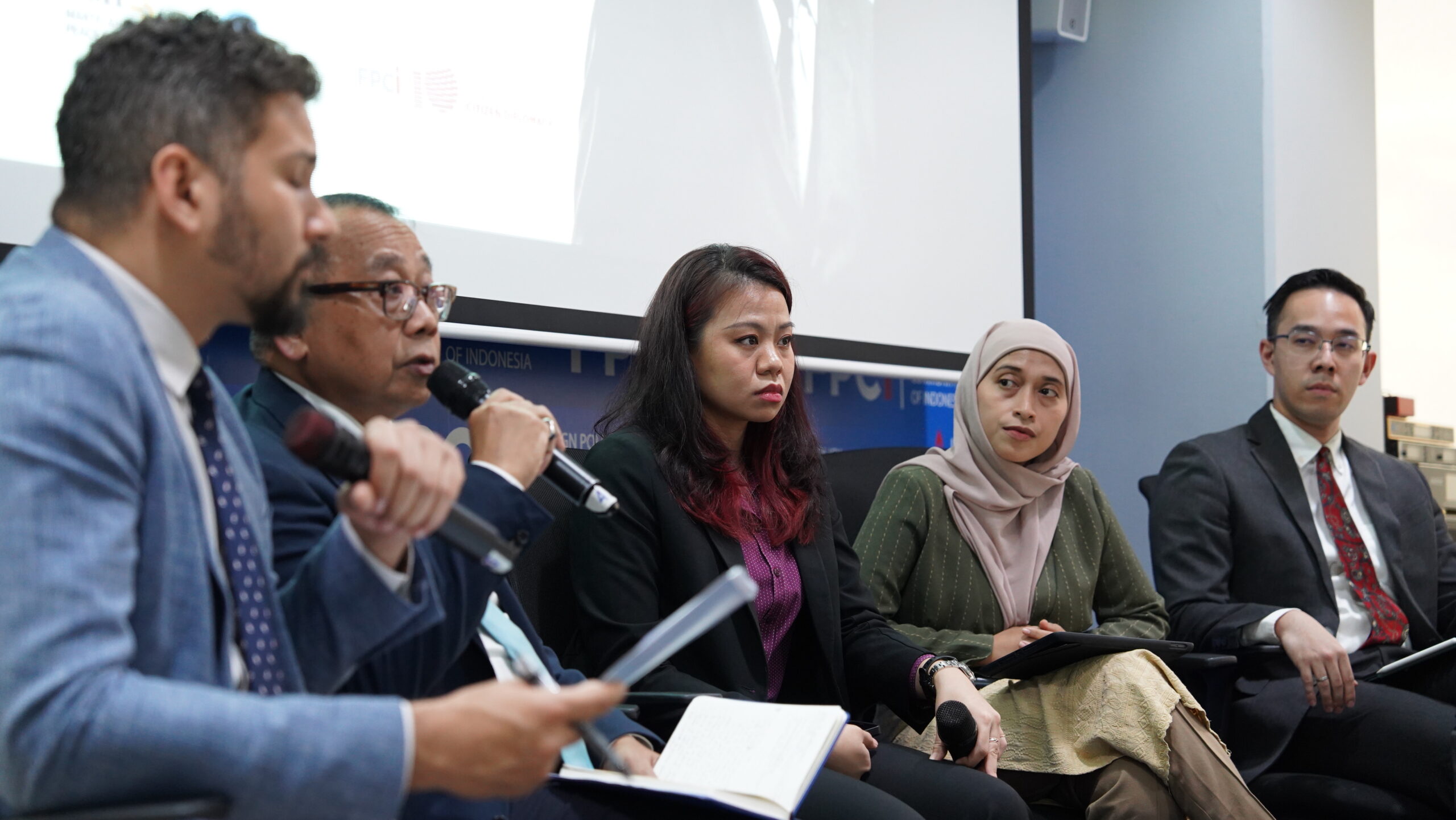
From left to right: Alex Virtanen (moderator); I Gusti Agung Wesaka Puja; Izzah Khairina Ibrahim; Fatimah Zahrah; and Muhammad Waffaa Kharisma.
In the ensuing exchange, there were discussions on the need to flag brewing crises early on and act upon them through empowered mechanisms, and how in some instances a ‘coalition of the willing’, or selected member states, may need to act when it is difficult to move as a bloc in its entirety.
The panellists identified youth as essential actors whose power is that they can build bridge between different parties. One reason suggested was their relative lack of political baggage. More importantly, the discussion also reaffirmed that meaningful youth engagement requires sustained involvement and safe spaces. The Youth, Peace and Security (YPS) agenda was highlighted as important, though currently only one ASEAN member has adopted a national action plan. To advance this, the panel urged concrete implementation efforts and stressed youth’s unique ability to channel grassroots perspectives into policymaking. It was also suggested that youth are more inclined to work across national boundaries, which holds promise for the future of peacemaking in the region.
In his closing remarks, Pekka Kaihilahti, Ambassador of Finland to Indonesia, reflected on his home country’s journey from being one of the first recipients of UNICEF aid in the mid-20th century to becoming a significant donor and peace actor today. He stressed that reconciliation is a long-term process and that societies should engage more openly in discussions around peace mediation.
You can watch a recording of the event through this link (event starts with opening remarks at around 13:25).

