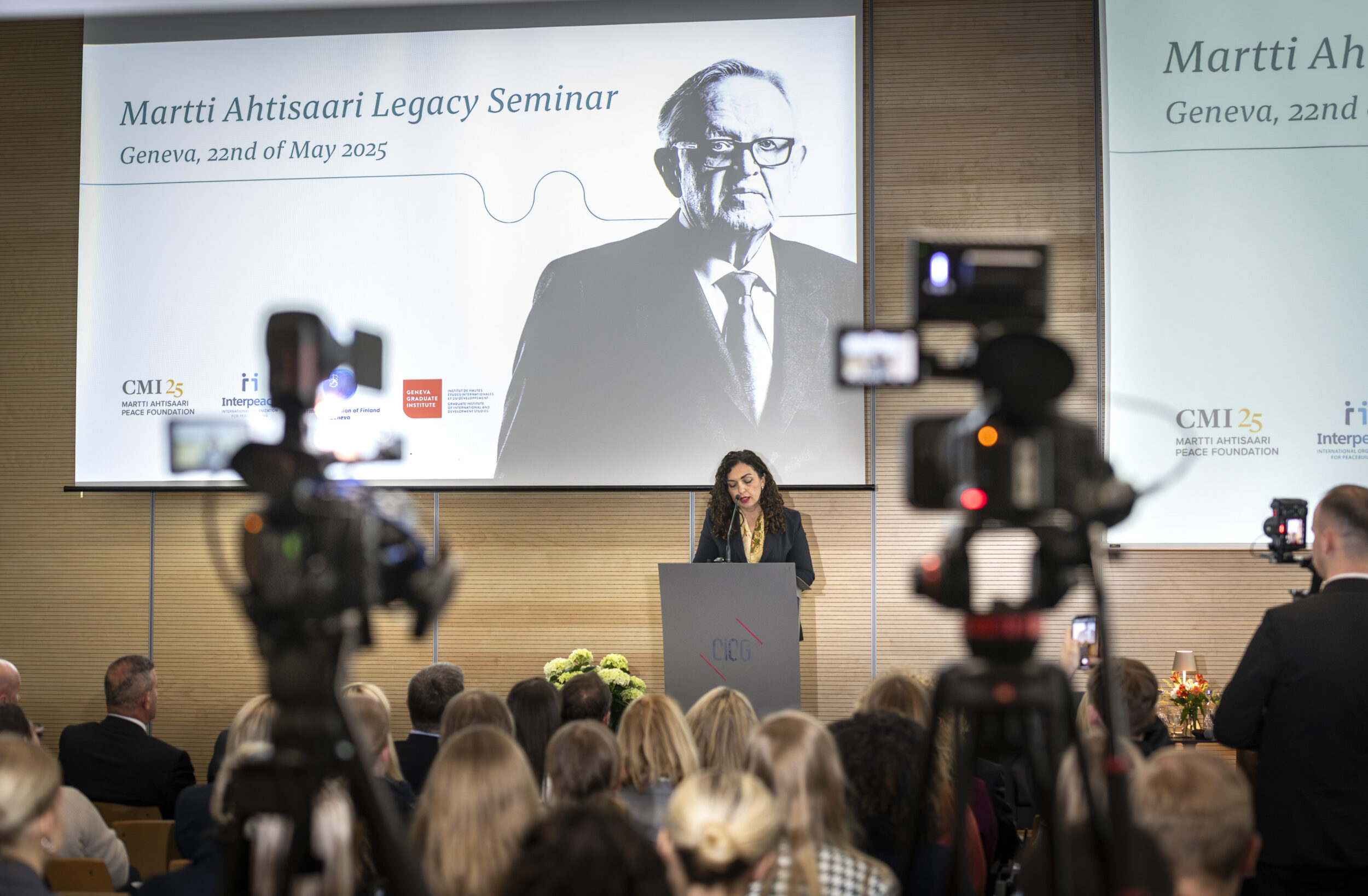
The Geneva edition of CMI’s Martti Ahtisaari Legacy Seminars on 22 May convened global leaders and experts for a timely dialogue on the evolving landscape of peace mediation and humanitarian diplomacy, framed by reflections on the living legacy of Nobel Peace Prize Laureate and former President of Finland Martti Ahtisaari. The seminar was headlined by Vjosa Osmani Sadriu, President of Kosovo, who addressed the enduring significance of Ahtisaari’s principles in informing effective and inclusive international mediation.
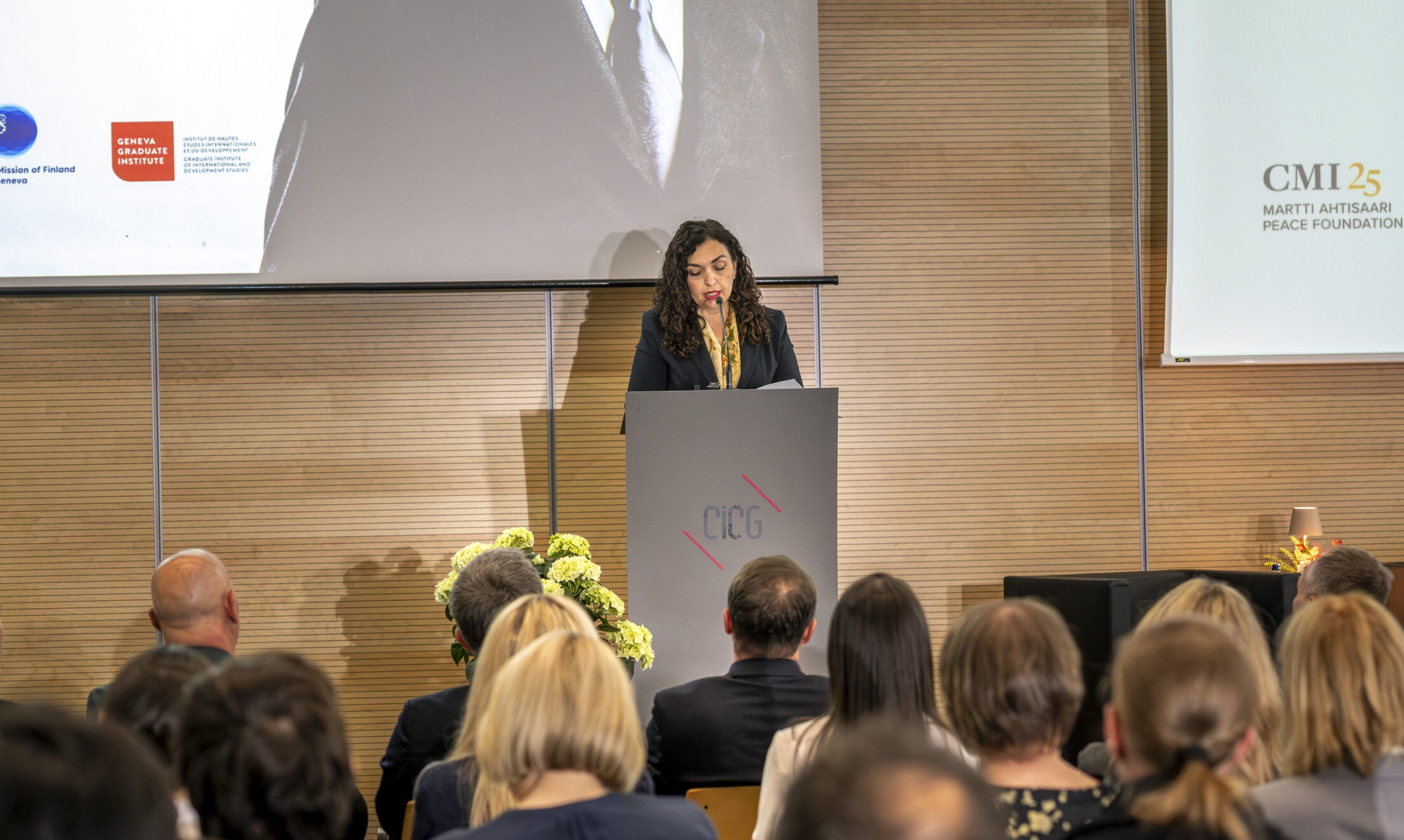
The President of Kosovo, Dr. Vjosa Osmani Sadriu, headlined the seminar as the keynote speaker. Photo: Olivier Chamard Photography.
Co-organised by CMI – Martti Ahtisaari Peace Foundation, Interpeace, the Permanent Mission of Finland in Geneva, and the Geneva Graduate Institute, the sixth Legacy Seminar brought together diplomats, civil society, students and practitioners to discuss the enduring impact of President Martti Ahtisaari’s work for peace.
Reflecting on President Ahtisaari’s life and legacy, the Seminar’s keynote speaker, President of Kosovo Dr. Vjosa Osmani Sadriu underlined Ahtisaari’s own background as a refugee which gave him a profound understanding of the human suffering caused by war. She emphasised that Ahtisaari viewed peace not merely as an ideal but a necessity, echoing Ahtisaari’s conviction that peace must be pursued with both vision and determination.
In her speech, President Osmani Sadriu described Ahtisaari as a leader guided by a clear, unwavering objective, yet marked by a flexible and pragmatic approach to strategy. The President further highlighted how the dignity with which Ahtisaari spoke, and the firm guidance of his moral compass, earned him a strong voice at the world’s most significant tables. Osmani Sadriu stated that Ahtisaari’s legacy lives not only in the treaties, but in the lived reality of an independent Kosovo.
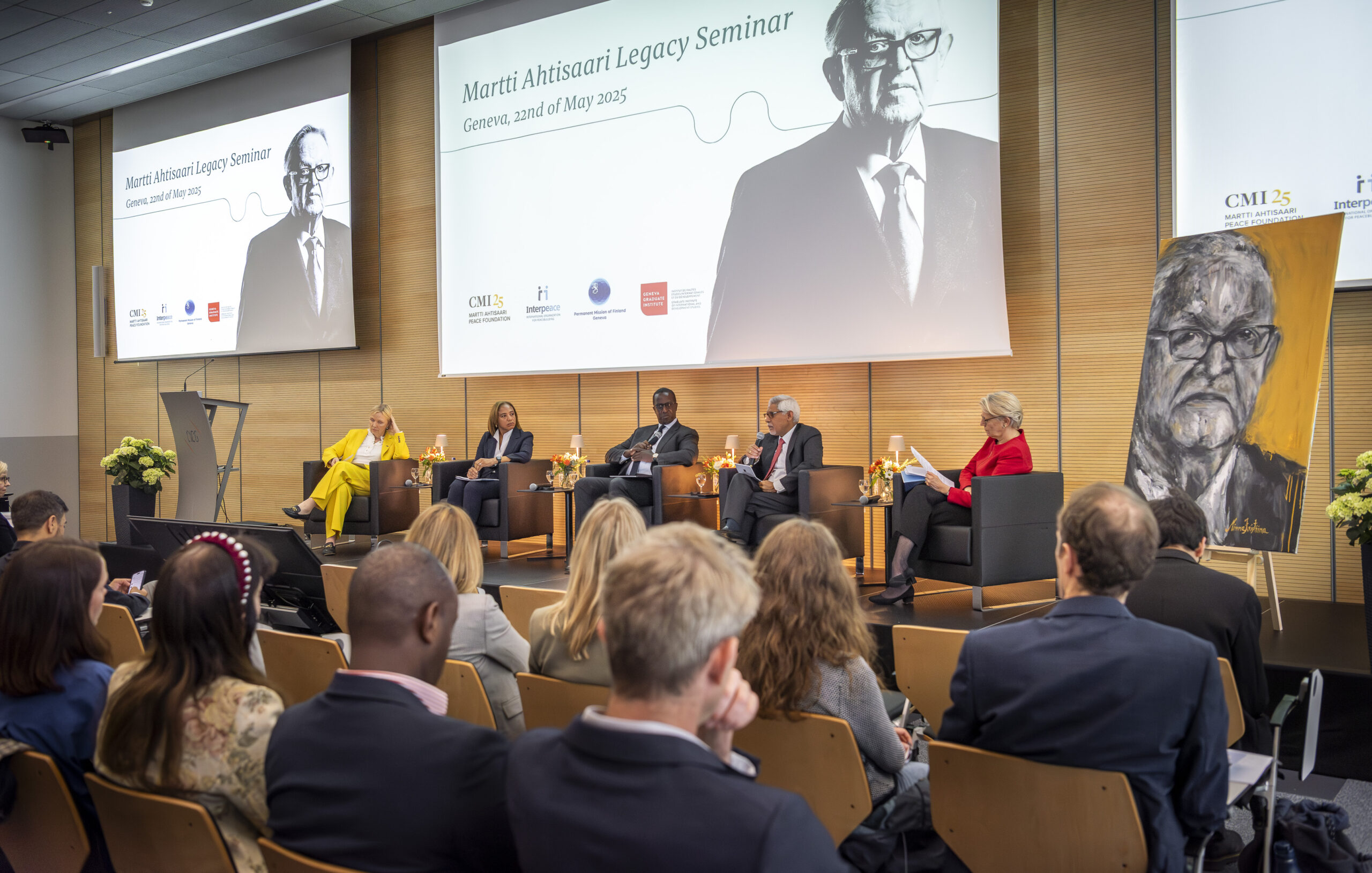
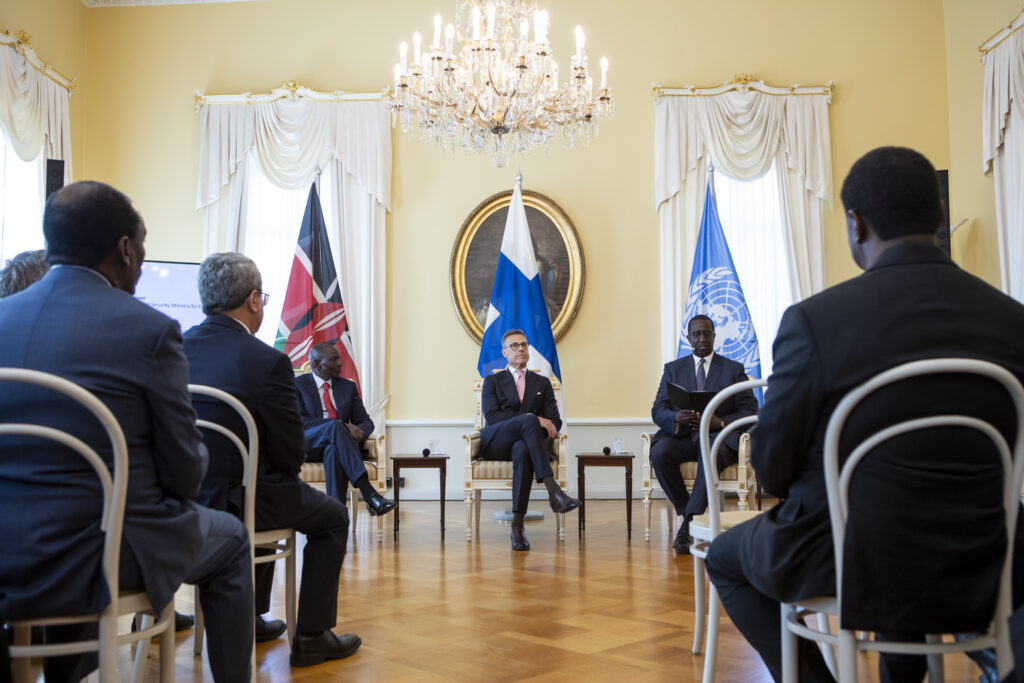
The high-level panel included (from left to right) Heidi Schroderus-Fox, Permanent Representative of Finland in Geneva; Michelle Gyles-McDonnough, UN ASG and Executive Director of UNITAR; Itonde Kakoma, President and CEO of Interpeace (moderator); Jagan Chapagain, Secretary General and CEO of the IFRC; and Corinne Momal-Vanian, Executive Director of the Kofi Annan Foundation. Photo: Olivier Chamard Photography.
The high-level panel, moderated by Itonde Kakoma, President and CEO of Interpeace, turned the spotlight on the changing dynamics of peace mediation and humanitarian diplomacy. The discussion stressed the need for more equitable partnerships and strengthened investment in peace, while also calling for, in the spirit of President Ahtisaari, the need to reclaim the narrative that peace is possible and war is not inevitable.
The conversation also challenged traditional notions of diplomacy by reinforcing that what matters most is who is at the table, not where peace is negotiated, be it in Beijing, New Delhi, Brasília, or the Vatican. What counts is the inclusivity of the process and the sustainability of the outcome.
Michelle Gyles-McDonnough, UN Assistant Secretary-General and the Executive Director of UNITAR, spoke about the necessity of grounding global commitments in the lived experiences of people. Drawing on the legacy of President Ahtisaari and other leaders who have left a remarkable legacy in the field, she reminded that peace must be understood holistically. It is not enough to regard peace solely as the absence of conflict, but as the presence and reinforcement of dignity, health, education, respect for culture, and human well-being.
In his remarks, IFRC Secretary General and CEO Jagan Chapagain stressed the importance of applying international humanitarian law consistently, regardless of political alliances. He pointed out the troubling double standards that emerge when breaches by adversaries are condemned loudly, while equivalent actions by allies are met with silence or tacit approval. Chapagain reminded the audience of the need for principled humanitarianism that does not shift based on convenience or political interests.
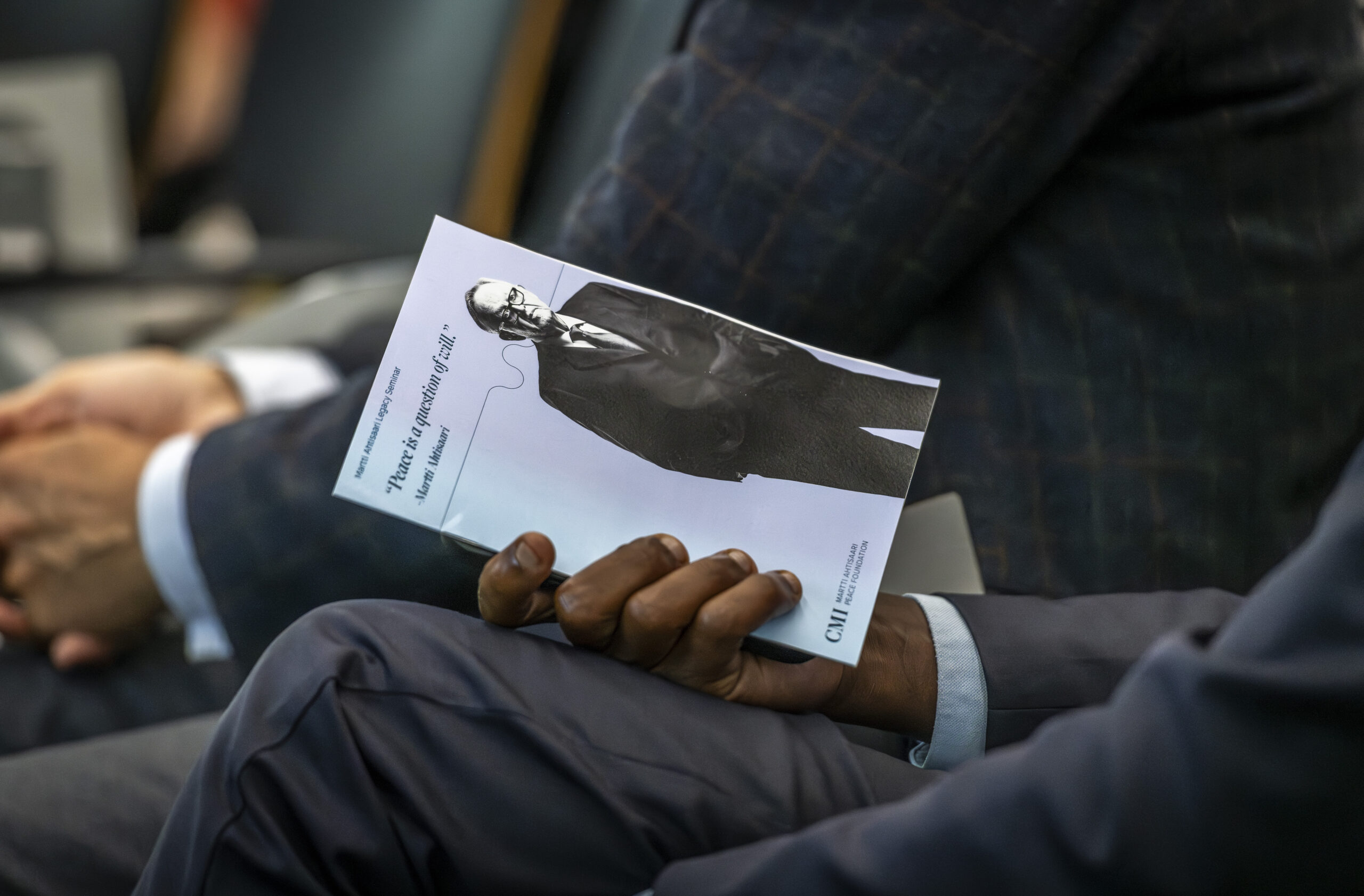
Photo: Olivier Chamard Photography
Corinne Momal-Vanian, Executive Director of the Kofi Annan Foundation, highlighted the critical need for sustained investment in peace infrastructure, including both international and local civil society organisations as well as multilateral institutions. Momal-Vanian acknowledged the challenge of persuading donors to commit to investing in peace. In addition, she stressed the importance of reaffirming that peace is not only possible but effective, emphasising that peacemaking efforts contribute directly to lasting security.
In response to a question from the audience, Heidi Schroderus-Fox, Ambassador and Permanent Representative of Finland in Geneva, spoke to the constructive role that small states can play in the UN system, particularly in the context of the UN reform. She described the ability of smaller nations like Finland to act as honest brokers; accustomed to listening to diverse perspectives and collaborating closely with others rather than pushing immediate demands. This, the Ambassador noted, enables smaller states to foster consensus and build bridges across divides.
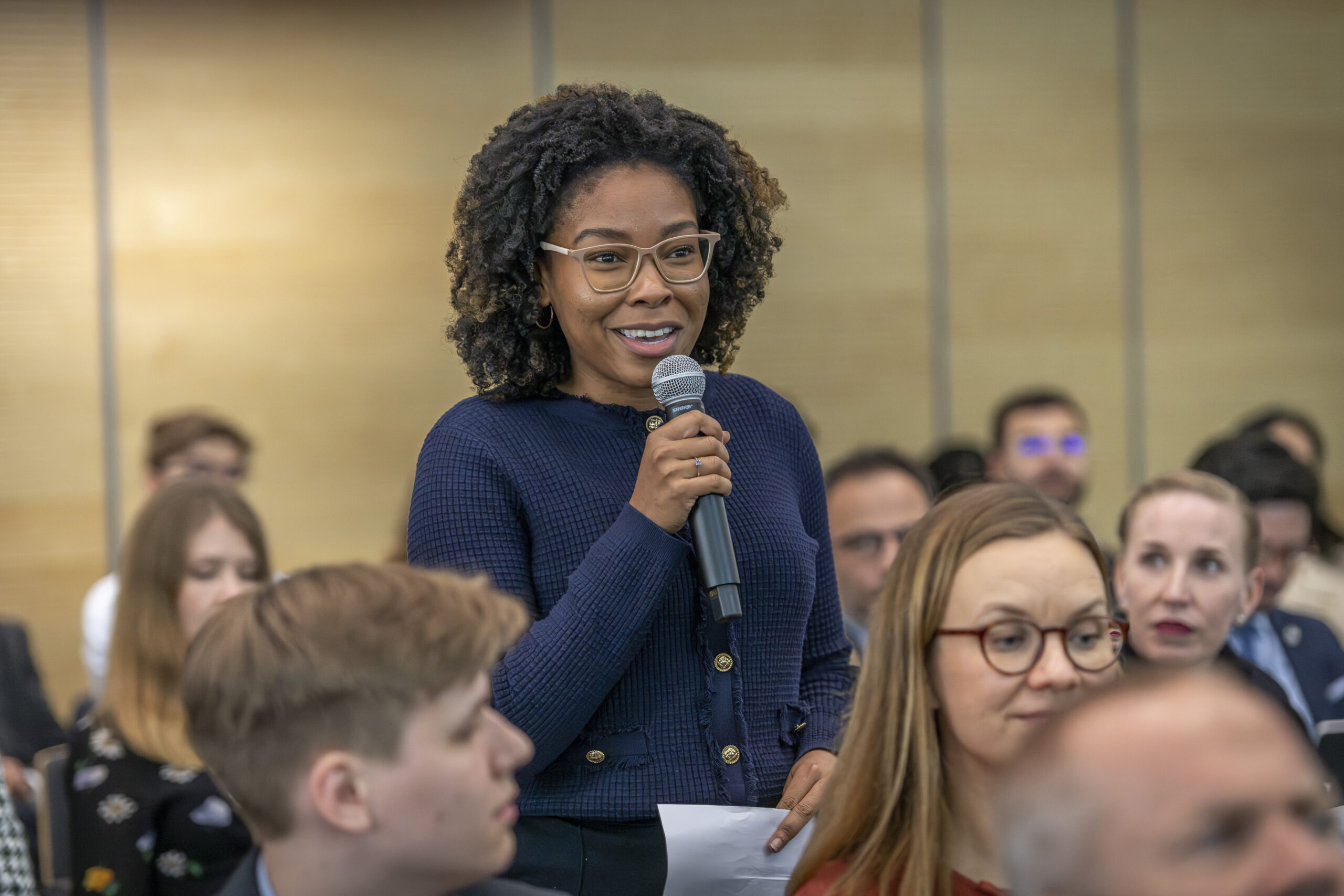
Participants from the audience, including the WHO’s Project Coordinator Kershia Cavele, joined the conversation and brought enriching perspectives to the dialogue. Photo: Olivier Chamard Photography.
The discussions concluded with a recognition of the critical need for inclusive multilateralism, adherence to universal principles, and a steadfast respect for human rights. Prathit Singh, a student at the Geneva Graduate Institute, stated in his closing remarks that “at a time like this, multilateralism brings legitimacy and strength to peace efforts”.
Throughout his career, President Ahtisaari remained a strong advocate for multilateral cooperation. He saw the UN as an essential platform for advancing peace, justice, and human dignity. As Janne Taalas, CEO of CMI, said in his remarks: “President Ahtisaari believed deeply in the multilateral system, not despite its imperfections, but because he understood its unique potential. He was deeply committed to the UN and the values it upholds. Even when critical of its inefficiencies, he did not lose faith.”
Watch the keynote speech of the President of Kosovo here: Yesterday’s speech of President Osmani in Geneva at the high-level event dedicated to the life and work of President Martti Ahtisaari