Asia is a geographically vast and culturally diverse region, whose economic and political prominence on the global stage continues to grow.
While the region is witnessing rapid economic and societal change, parts of the region remain affected by conflicts marked by complex societal and political dynamics. CMI’s engagement in the region is shaped by this diversity and context-specific conditions.
In much of Asia, CMI operates in contexts where formal political and transition processes are constrained or evolving. For instance, in Afghanistan, international engagement continues to focus on pragmatic approaches centred primarily on humanitarian needs, basic stability, and technical forms of dialogue.
In Myanmar, regional and international actors, particularly within ASEAN, continue to engage in efforts in response to the country’s ongoing political and humanitarian crisis, reflecting a commitment to seeking pathways towards de-escalation and inclusive approaches.
Within these environments, CMI has been able to deepen and expand its work with national actors and to enhance connections with regional and international networks. This has enabled continued support for conflict-sensitive initiatives and dialogue-oriented approaches adapted to local and regional realities.
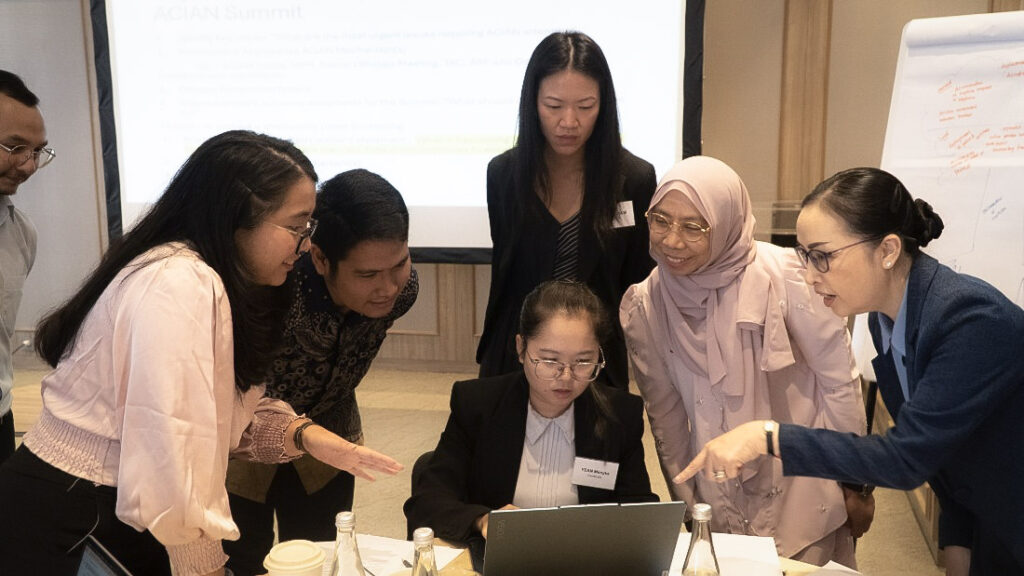
In recent years, CMI has accelerated its work on peacemaking policies and capacities in the broader region. Firstly, CMI has increasingly made its expertise available to ASEAN, whose role in shaping regional responses to conflict is continuously evolving. Secondly, as China’s role has expanded in mediation diplomacy, CMI has engaged with Chinese experts and officials. We have contributed to shared learning, policy reflection and a deeper understanding of perspectives and approaches to mediation.