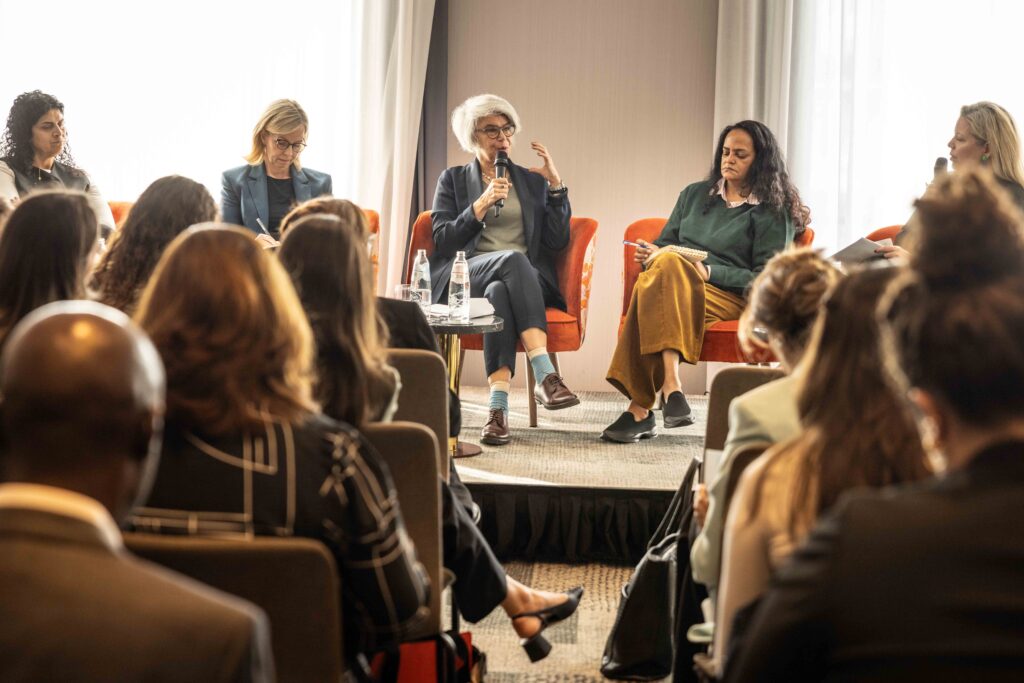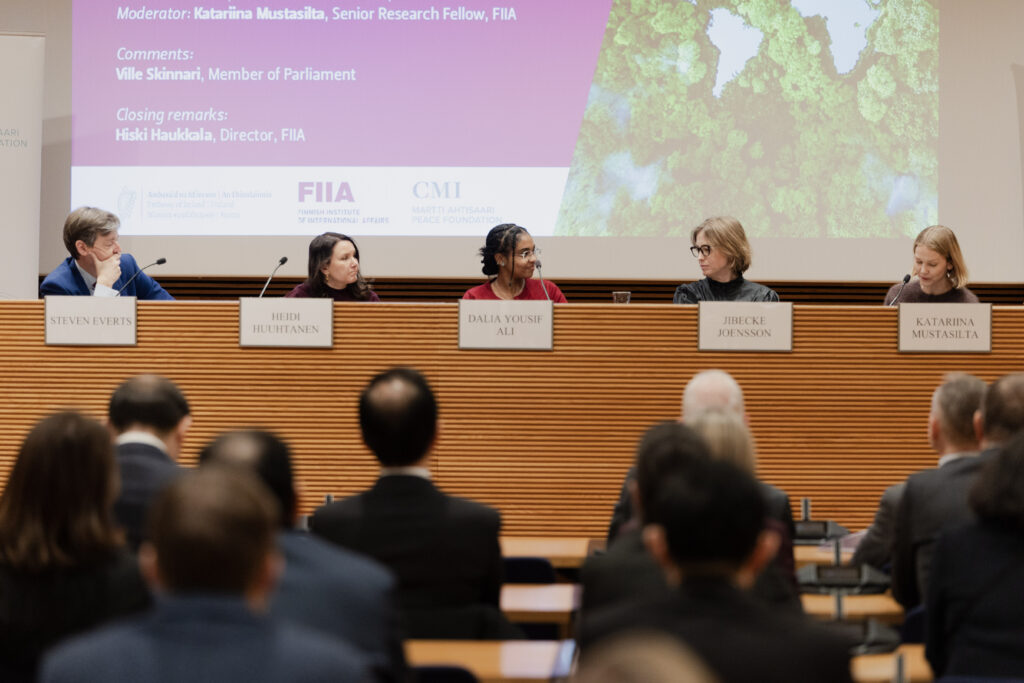
The legacy of President Martti Ahtisaari remains a lasting testament for Europe’s role as a peace project. In the Brussels edition of the Legacy Seminar Series, organized by the CMI – Martti Ahtisaari Peace Foundation in collaboration with the European Parliament, and the Permanent Representations of Ireland and Finland to the European Union, the Nobel Peace Prize Laureate’s life work became the foundation for urgent discussions on the future of European peacebuilding. CMI’s Project Assistant Roosa Rahikka writes in her travel diary that, amidst geopolitical shifts, democratic backsliding, and ongoing conflict, the event was both a tribute and a call to action to invest in peace.

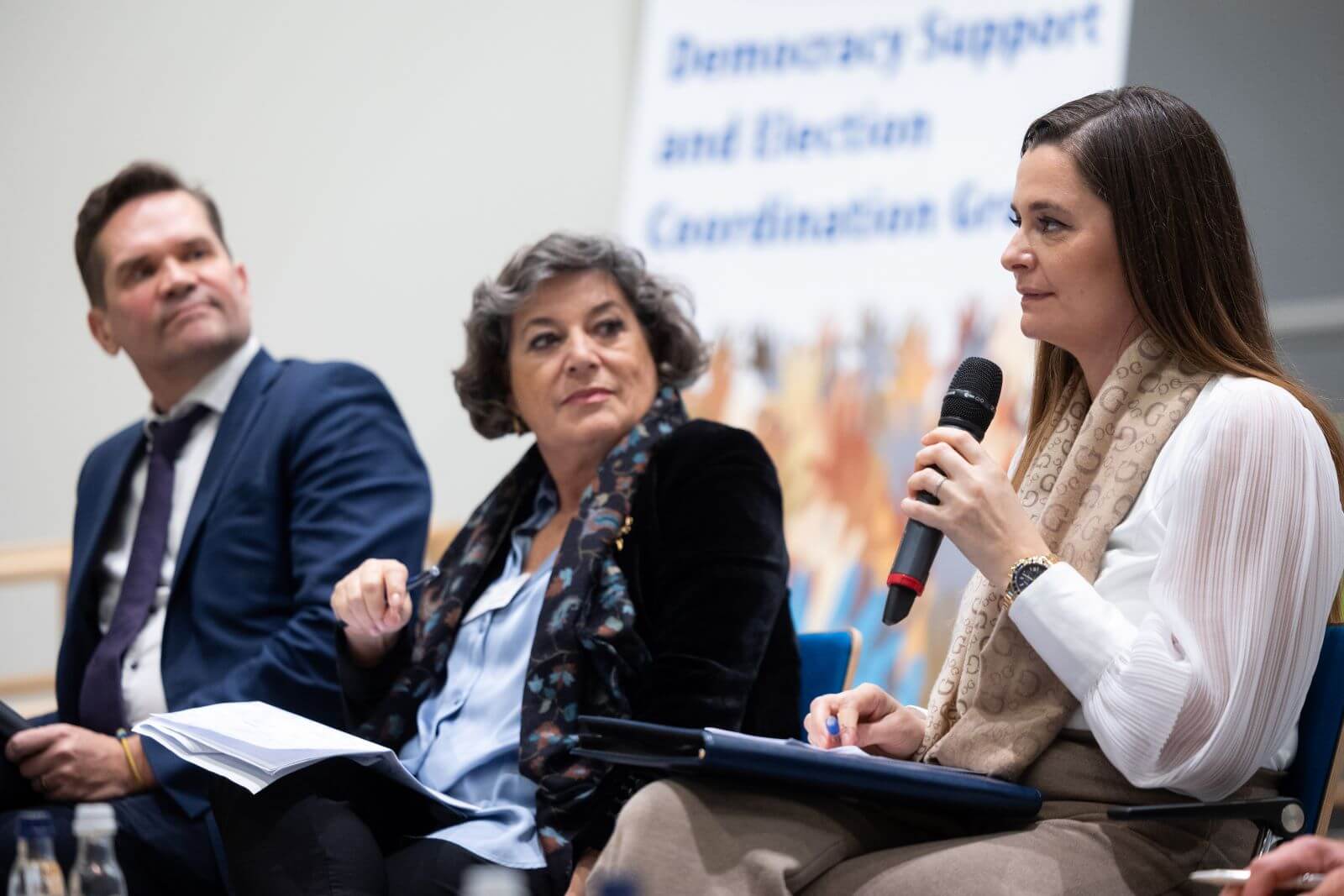
Edita Velić (right), alumna of EP’s Young Political Leaders Programme, highlighted the sustained effort required for maintaining peace. Velić discussed Ahtisaari’s legacy with former MEP Ana Gomes and MEP Mika Aaltola.
Through the Martti Ahtisaari Legacy Seminars, CMI aims to spark dialogue on the future of peacemaking in a context where the space for discussing peace has narrowed. Held on 2 December 2024 in the library of the European Parliament, the Brussels seminar brought together a diverse group of participants, including Members of the European Parliament, seasoned diplomats who had worked together with President Ahtisaari, and young leaders and peacebuilders. Following the European elections earlier in the year, the seminar underscored the need for Europe to place peace at the centre of its agenda. With a new European Parliament and College of Commissioners in place, the gathering sought to reignite the EU’s peace mission, reflecting on how the Union can preserve and expand its legacy as a Nobel Peace Prize-winning project, echoing President Ahtisaari’s conviction that the most important task of the EU is to build peace.
Lessons from Ahtisaari’s approach
President Ahtisaari’s foundational belief that “all conflicts can be resolved through dialogue” echoed throughout the discussions. His pragmatic, determined, yet empathetic approach to conflict resolution was invoked by speakers, who emphasized the necessity of engaging even the most challenging actors in negotiations. Former Finnish Foreign Minister and MP Pekka Haavisto remarked that President Ahtisaari’s courage and persistence serve as a model for leaders navigating today’s fraught international landscape. In an era of increased geopolitical polarization, rising authoritarianism and intensifying conflicts, such lessons resonate with renewed urgency.
The seminar also highlighted the human dimension of peacebuilding, a cornerstone of President Ahtisaari’s approach. His remarkable ability to listen, empathize, and understand diverse perspectives was celebrated as a model for contemporary leaders. This spirit of curiosity and openness, participants noted, is essential for fostering trust and finding common ground in divided societies. Ana Gomes, former Portuguese diplomat and MEP, reminded the audience of the challenges inherent in peacemaking, describing it as “painful and persistent work” that requires patience, resilience, and an unwavering commitment to justice.
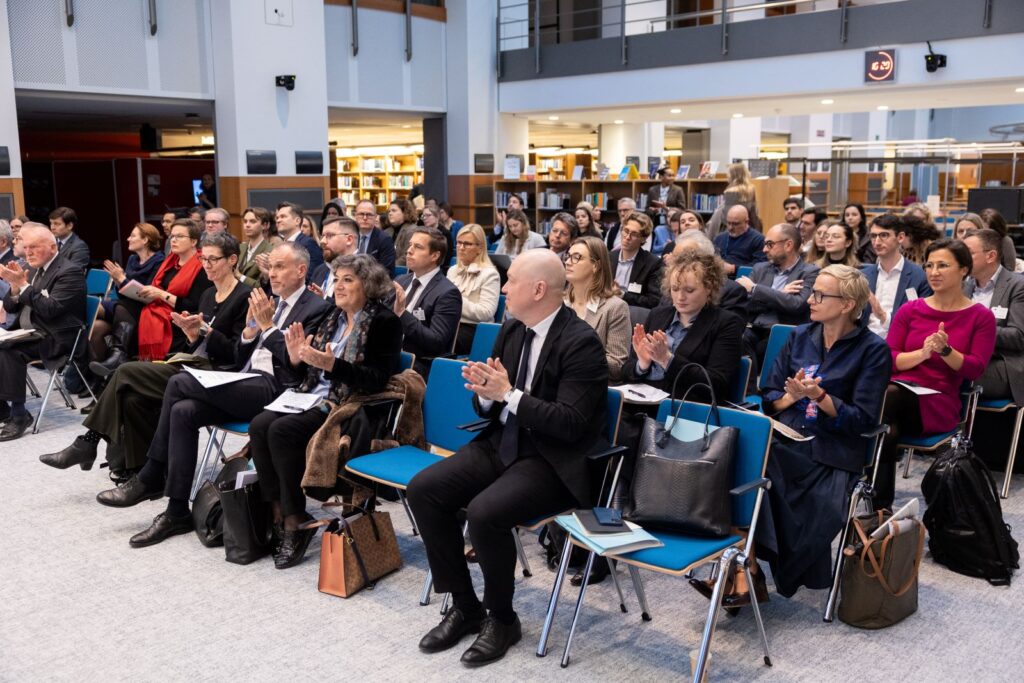
The seminar brought together a diverse group of participants, including Members of the European Parliament, seasoned diplomats who had worked together with President Ahtisaari, and young leaders and peacebuilders.
Balancing peacebuilding and hard security
Central to the seminar was the examination of the EU’s dual identity as both a peacebuilder and a security actor. While recent crises have compelled the Union to invest heavily in defense and hard security, participants warned against neglecting the softer, long-term tools of peacemaking. Dialogue, mediation, and reconciliation, they argued, must not be overshadowed by militarized approaches.
Joëlle Jenny, UK Ambassador to Denmark, cautioned that sustainable peace requires addressing root causes of conflict, not merely responding to immediate threats. This perspective was reinforced by voices like Edita Velić, alumna of EP’s Young Political Leaders Programme, who highlighted the sustained work the maintenance of peace takes.
The EU’s enlargement policy was framed as both a challenge and an opportunity. Enlargement, participants noted, has historically been one of the EU’s most effective peacebuilding tools, fostering stability and democratization in aspirant countries. Yet recent trends, driven by fears of external threats rather than a commitment to mutual prosperity, risk undermining its transformative potential. Erwan Fouéré, Senior Research Fellow at CEPS, lamented the bureaucratic and political barriers stalling enlargement, emphasizing the need for a reinvigorated approach that prioritizes reconciliation and long-term stability.
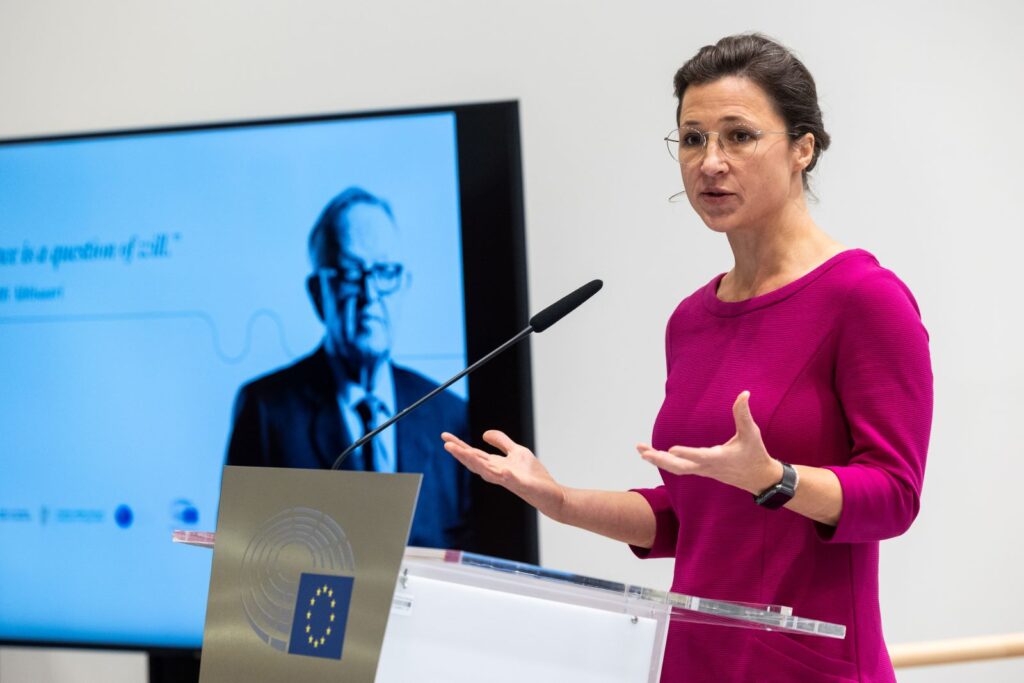
MEP Hannah Neumann emphasized that peace requires vision to pursue alternatives to conflict, a defense of the rules-based international order, and a commitment to the long journey from peace agreements to lasting reconciliation.
A way forward for Europe
Speakers also reflected on the EU’s evolving role as a peace actor in the wake of its Nobel Peace Prize in 2012. A decade later, the balance between upholding democratic values and responding to pressing security concerns has grown increasingly precarious. European Parliament Member Thijs Reuten called for renewed investment in the Union’s core principles of democracy, human rights, and dialogue, warning that Europe’s identity as a peace project depends on its ability to remain true to these values. President Ahtisaari’s vision, he argued, offers a roadmap for navigating this complex terrain. MEP Mika Aaltola highlighted the EU’s unique position to lead global peace efforts by uniting strategic foresight with its foundational principles of dialogue and diplomacy.
As the event concluded, MEP Hannah Neumann emphasized that peace requires both will, as emphasized by President Ahtisaari, but also vision to pursue alternatives to conflict, a steadfast defense of the rules-based international order, and a commitment to the long, non-military journey from peace agreements to lasting reconciliation.
The seminar’s discussions underscored the need for the EU to reassert its role as a global peace actor by investing in dialogue, supporting democratic resilience, and using enlargement as a tool for reconciliation. The speakers emphasized the urgent need for greater and more sustained funding for peace efforts. For the EU, it is a smart, long-term investment that will pay for itself and benefit us all.
The legacy of President Martti Ahtisaari is not merely historical; it is a call to action for Europe today. The seminar’s participants left with a clear message: the path to peace begins with the will to talk—and the courage to listen. At a time when the EU faces unprecedented internal and external pressures, rediscovering this legacy is both a moral imperative and a strategic necessity.
Text: Roosa Rahikka/CMI
Photos: Alexis Haulot/EU