From Finland to Armenia and Palestine, young people encounter polarisation in different forms. Yet across these contexts, similar questions emerge about trust, belonging, participation and the spaces available for dialogue. These themes were at the heart of CMI’s webinar that brought together young voices to reflect on how divisions shape their societies and what role young people can play in addressing them.
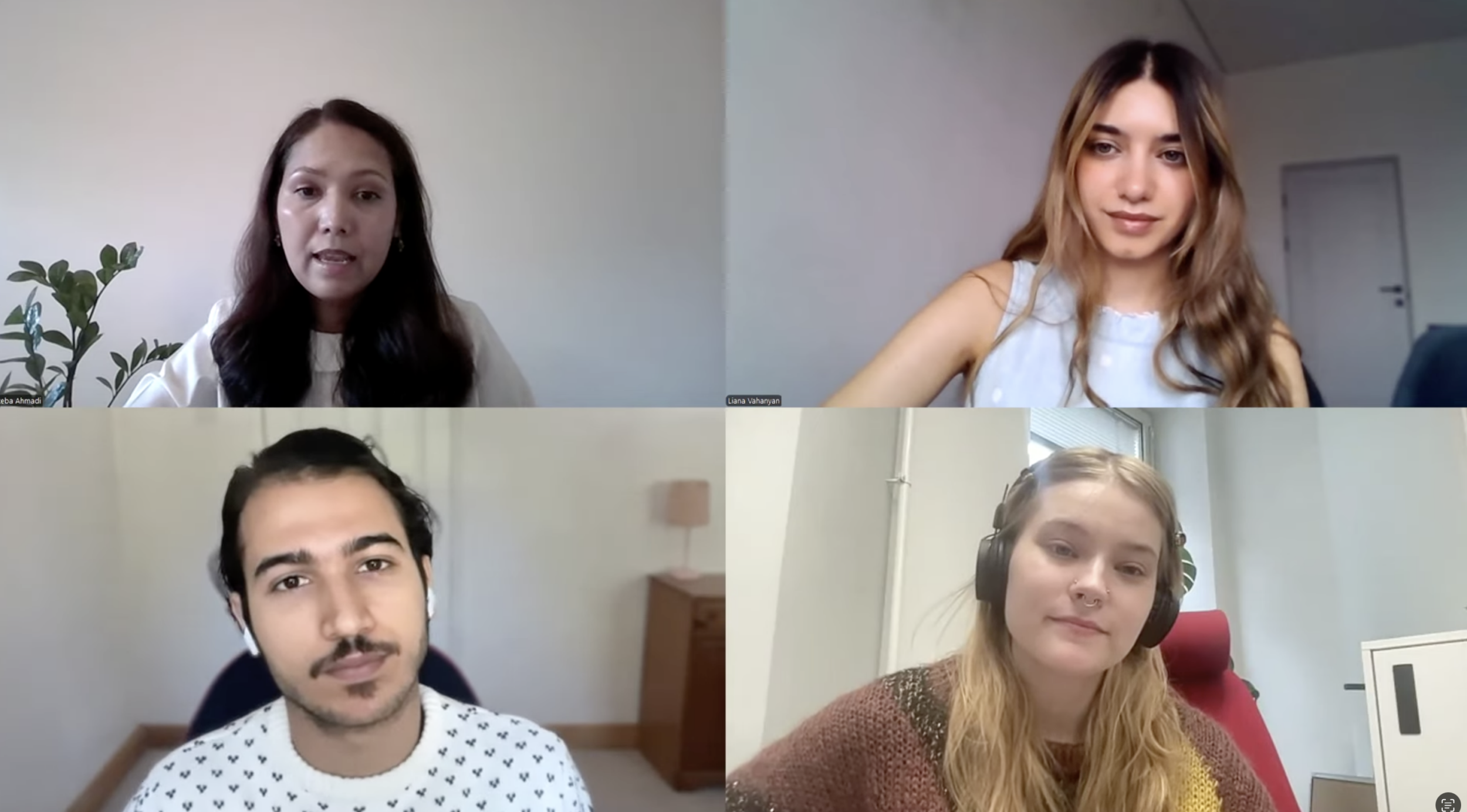
The webinar, organised as part of the annual Youth Peace Week Finland’s programme, explored how polarisation affects young people in everyday life and how they navigate increasingly divided social and political environments. The discussion featured youth worker and peacebuilder Liana Vahanyan from Armenia, communications professional and researcher Atta Khaled from Palestine, and Finnish youth activist Heta Uhtio. The conversation was moderated by CMI’s Project Officer Shekeba Ahmadi and can be watched through a recording.
Opening the event, Johanna Poutanen, Head of Inclusion and Digital Innovation at CMI, noted that disagreement is a normal and necessary part of democratic societies. The challenge emerges when differences harden into divisions, making it increasingly difficult for people to listen to one another and address shared problems together.
Polarisation takes different forms but often produces similar effects
While the manifestations of polarisation varied across the three contexts discussed, the panellists described many of the same consequences: growing mistrust, reduced willingness to engage across differences and a sense of exclusion from decision-making.
Drawing on the Palestinian context, Atta Khaled highlighted how political divisions are intertwined with structural realities. Restrictions on movement, unequal access to resources and fragmented living conditions shape how young people participate in society and interact with one another. These divisions are not abstract political debates but realities that influence education, employment, mobility and civic engagement.
Division is not an abstract political debate. It determines who can physically enter the room.
At the same time, he pointed to the impact of political exclusion. Without trusted spaces for discussion and meaningful opportunities to influence decisions, disagreement can easily turn into labelling and mistrust. Young people may withdraw from public engagement altogether or embrace increasingly rigid positions that provide certainty in uncertain circumstances.
In Finland, Heta Uhtio reflected on growing political divisions among young people and their impact on public discourse. While polarisation can mobilise people around shared concerns and drive collective action, it can also make dialogue more difficult and deepen divisions between groups. Factors such as belonging, economic security and trust in institutions all influence whether young people feel empowered to participate or pushed to the sidelines.
Speaking from the Armenian context, Liana Vahanyan described polarisation as a layered phenomenon shaped by political loyalties, geopolitical orientations and attitudes towards displaced communities. She observed that divisions are often less visible than they appear at first glance, with underlying mistrust persisting even when people seem united around common goals.
Social media can both deepen and bridge divides
The discussion also explored how social media can both deepen and bridge divides. While digital platforms often amplify polarisation by rewarding emotionally charged content and reducing complex issues to simplistic narratives, they can also create valuable opportunities for dialogue and connection across physical and social barriers. The speakers stressed that technology itself is neither inherently polarising nor depolarising. Rather, its impact depends on how digital spaces are designed, governed and used, and on young people’s ability to navigate online information critically.
Young people are not only affected by polarisation
Despite the challenges discussed, the webinar underscored the importance of youth agency.
Throughout the conversation, the panellists rejected the idea that young people are simply passive recipients of polarisation. Across different contexts, young people are organising, building communities, creating spaces for dialogue and challenging the divisions around them.
While the drivers of polarisation differ from one society to another, the discussion highlighted several common ingredients for overcoming division: meaningful participation, trust, inclusion and opportunities for genuine engagement across differences. Creating and protecting such spaces remains essential for strengthening social cohesion and enabling young people to help shape more peaceful and inclusive futures.
Watch a recording of the webinar here.
Youth as CMI’s strategic focus area
CMI has identified Youth in Peacemaking as one of its strategic focus areas. CMI places strong emphasis on strengthening young people’s civic and political agency and enabling their meaningful participation in conflict prevention and resolution. Our work with youth also includes engaging young experts and peacebuilders to ensure their perspectives are reflected in peacemaking discussions and processes. You can read more about our work with youth here.