Digital technologies are reshaping conflict and peace processes, with significant implications for the Women, Peace and Security (WPS) agenda. Against this backdrop, we convened a webinar bringing together experts to discuss whether AI can make peace mediation more inclusive and to explore the opportunities and risks of digital technologies for the WPS agenda, and what this means in practice for how mediation processes are designed and facilitated. The webinar also marked the launch of the new Practical Guidance Note for Mediators on Digital Inclusion.
New digital technologies are often framed in binary terms: either as transformative solutions for peace processes, or as risks that will inevitably undermine them. But their impact depends on how they are designed, governed, and used. The real test is whose participation they enable and whose they leave out. For CMI, the starting point is always the needs of the community and how digital approaches fit within real political processes – the driver should not be the technology itself, but what it allows us to do and for what purpose.
When used effectively, technology can help peace mediation by broadening participation, strengthening the ways mediators listen and make sense of diverse inputs, and connecting different levels of a process. At the same time, digital engagement may change how access, power, and risks are distributed. Issues such as exclusion, bias, surveillance, and misuse are real – and they tend to affect women and marginalised groups most acutely. As often observed, inclusion in peace processes does not happen by default; it is the result of deliberate choices.
Practical Guidance Note for Mediators on Digital Inclusion
In recent years, the role of digital technologies in mediation has become ever more important, and we have now published practical guidance to outline the key principles and functions of digital inclusion, with a focus on how mediators can apply these in real process design. The publication also outlines risks and ways to mitigate them, together with examples of use cases.
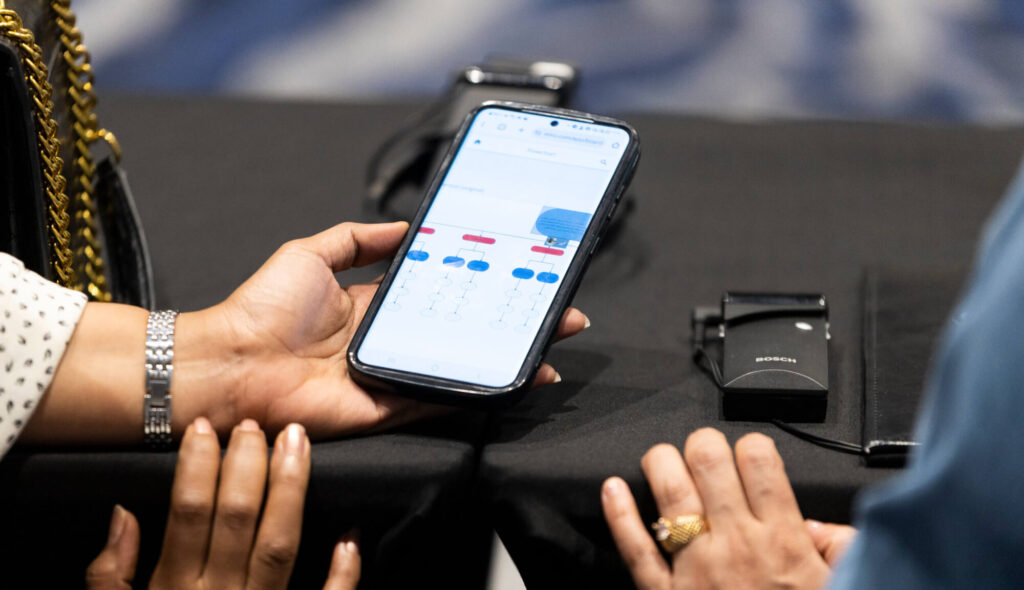
Digital inclusion in mediation refers to the strategic use of digital technologies to enable and expand meaningful participation of diverse stakeholders in peace processes. It requires not just access to technology, but the capacity to engage substantively and at all stages in shaping peace outcomes. By expanding who can contribute – from conflict-affected communities to diaspora groups, from women in restrictive contexts to youth movements – digital inclusion helps build more legitimate, sustainable, and just peace. Photo: CMI/ Maria Hossain Santto
The Guidance Note is part of a longstanding partnership between the United Nations Department of Political and Peacebuilding Affairs (UN DPPA), CMI, the Peace Research Institute of Oslo (PRIO), and the governments of Finland and Norway. Together we have co-convened the UN High-Level Seminar on Gender and Inclusive Mediation Strategies for more than a decade, supporting mediators and policymakers to apply concrete approaches to inclusive peace process design.
Explore our Guidance Notes on developing gender‑inclusive mediation strategies here.
Webinar on digital technologies in inclusive peace mediation
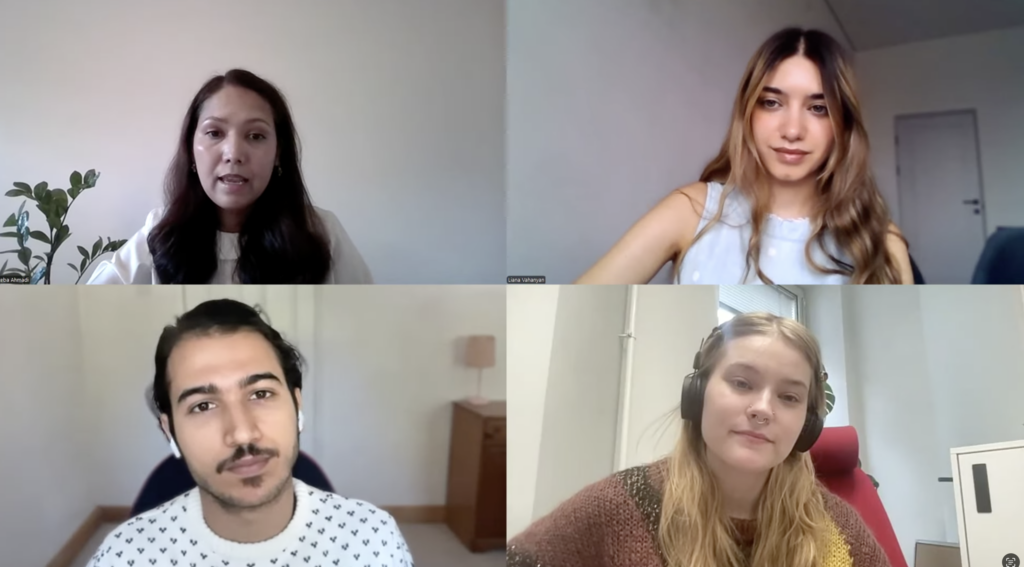
To launch the Practical Guidance Note, CMI, UN DPPA, and PRIO organised a webinar to explore how digital technologies, including AI, can both enable and constrain inclusive peace mediation, with a particular focus on gender-responsive approaches. The discussion brought together three expert panellists:
- Georgette Gagnon, Officer-in-Charge and Deputy Special Representative of the Secretary-General (Political), UN Assistance Mission in Afghanistan, UNAMA
- Ani Papyan, peacebuilding practitioner from Armenia, and
- Reem Abbas, feminist activist, researcher, and writer from Sudan.
Drawing on their extensive experience across regions, the panellists shared practical insights and examples from Afghanistan, Armenia, and Sudan.
Additionally, we heard commentary from Kristoffer Lidén, Senior Researcher at PRIO, and Silva Armani, Political Affairs Officer in the Innovation Cell of the Policy and Mediation Division at UN DPPA. The webinar was opened by CMI’s CEO Janne Taalas and closing remarks were delivered by Eiko Ikegaya, Chief of Mediation Support and Innovation, Policy and Mediation Division, UN DPPA.
The webinar discussions highlighted that digital approaches are a valuable addition to other forms of engagement in peace processes. When applied appropriately, they can help broaden participation by bringing in a wider range of stakeholders, either through digital engagement or the use of digital data. Participants explored the many opportunities these tools offer, particularly in contexts where inclusion has traditionally been limited due to access barriers, space constraints, or a tendency to restrict participation to those already connected to political processes.
A key takeaway from the discussion was that digital approaches are most effective when they complement – not replace – face-to-face engagement and are embedded in broader political strategies.
The discussions emphasised that digital tools can lower barriers to participation, amplify local priorities, and strengthen networks among women stakeholders, especially where conflict dynamics, geography, or security concerns limit physical engagement. At the same time, careful design is essential. Digital approaches must reflect lived realities on the ground, including access limitations, security risks, and cultural and social contexts, to ensure engagement is meaningful, safe, and inclusive without reinforcing existing inequalities.
The webinar also underscored that there is no one size fits all approach. Each context requires deliberate and tailored process design, alongside a clear assessment of challenges and risks, such as political and security concerns, ethical considerations, and the threats posed by mis and disinformation, which can directly shape trust and legitimacy in peace processes.