At a time of heightened global instability and unpredictable geopolitical changes, CMI – Martti Ahtisaari Peace Foundation, the Finnish Institute of International Affairs (FIIA), and the Embassy of Ireland in Finland organised a seminar to explore the role of peacemaking in a world characterised by increasing multipolarity and great power rivalry.
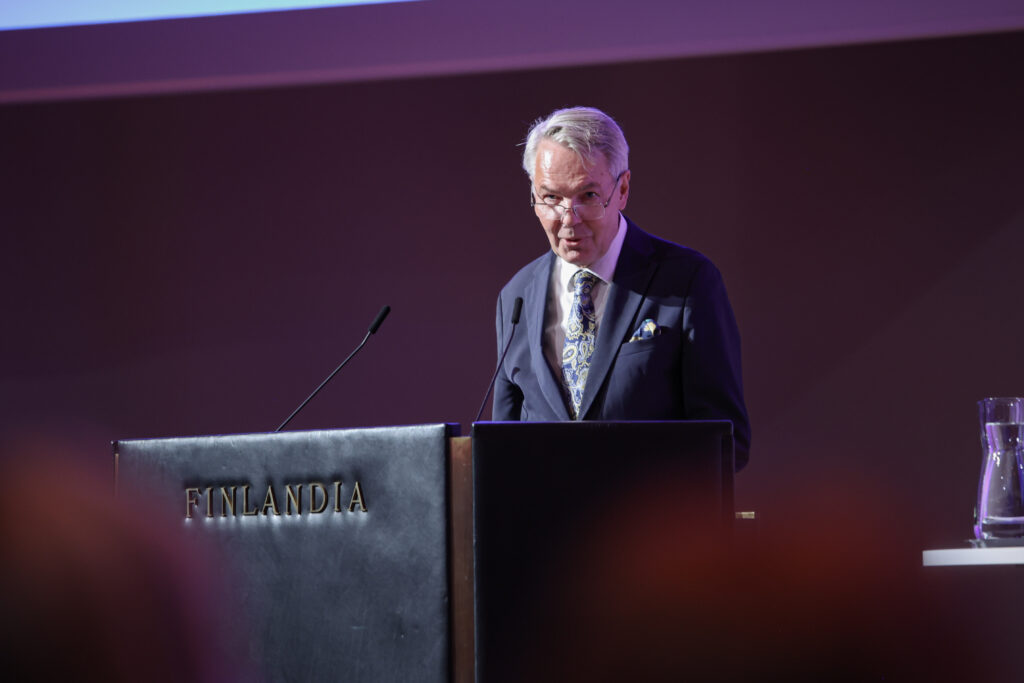
“Who would have thought, just a year ago, that we would find ourselves where we are today? The developments in the first two months of 2026 alone have been breathtaking in the realm of peace and conflict,” said CMI’s Chair of the Board Marko Ahtisaari when he opened the event.
These troubling times underline how the fundamentals matter, Ahtisaari emphasised. “Peacemaking must remain grounded in core principles: inclusivity, local ownership and respect for international norms.”
The Ambassador of Ireland to Finland, Paul Sherlock, presented Ireland’s candidacy for the UN Human Rights Council and stressed a commitment to inclusion, dignity, and protecting marginalised groups. Drawing on Ireland’s own history, he argued that peace efforts require a holistic approach in which human rights must remain central, not peripheral, to international peace and security.
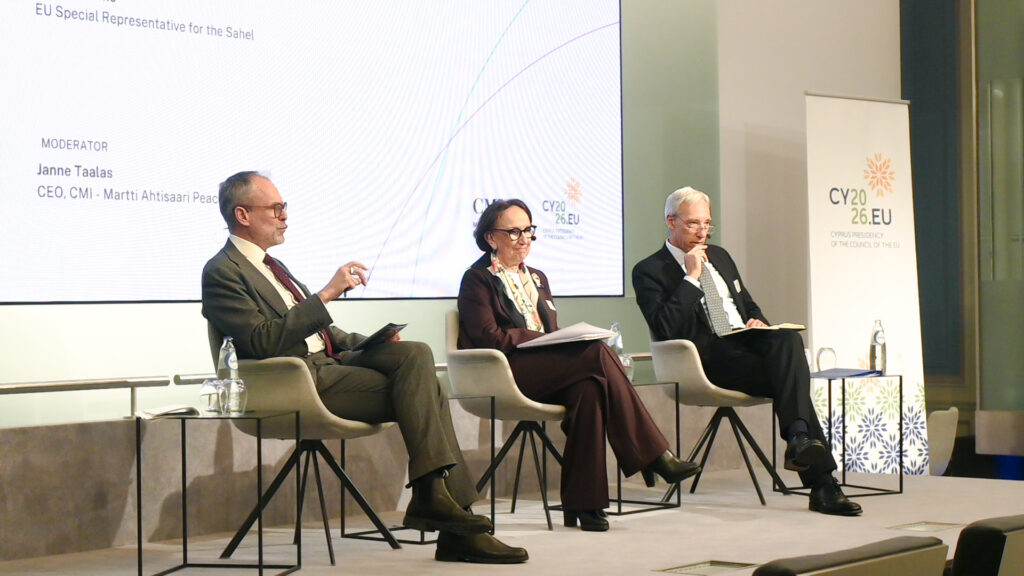
The more conflictual world places mediation and peacemaking on the geopolitical frontline, said CMI’s CEO Janne Taalas. Peace has become part of a power play. Taalas drew from CMI’s newly published Insight, which outlines four priorities for mediation, among them increasing the understanding of economic interdependence and role of business and bridging the gap between elite deal-making and the wider societies.
Read more:
Peace as a Power Play – Mediation in an Era of Disorder
CMI CEO Janne Taalas and Advisor Paula Olavinsilta argue that the seismic changes we are witnessing in international relations have profound consequences for peacemaking.
Everts: EU must pursue peace while adapting to a harsher geopolitical reality
Europe stands at a crossroads as great-power rivalries intensify, seeking to maintain its relevance on the global stage.
Steven Everts, Director of the EU Institute for Security Studies (EUISS), argued that the search for peace can no longer be separated from geopolitics. He described today’s environment as a “harder world” marked by blunt power politics and declining effectiveness of global institutions.
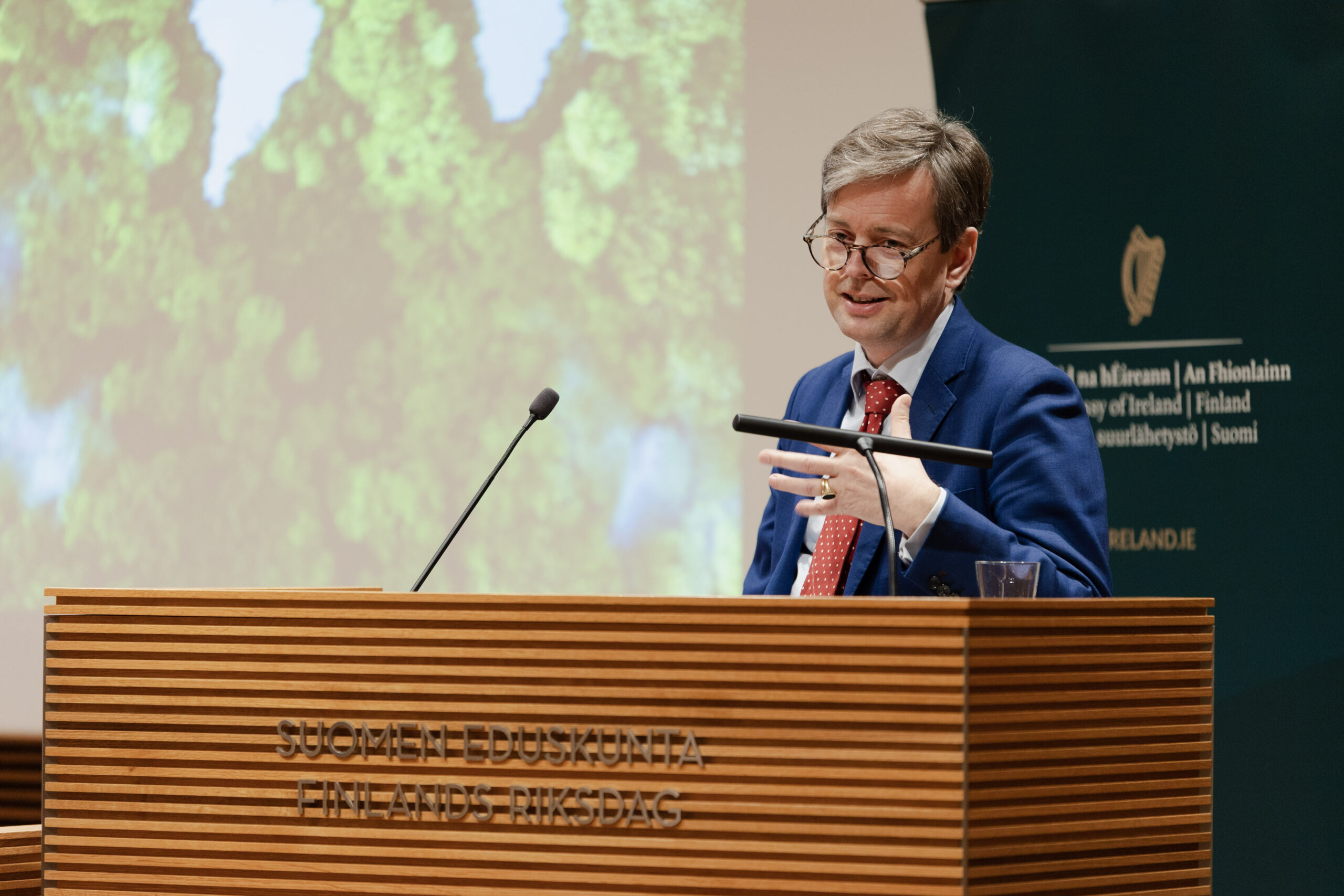
Steven Everts highlighted the need for Europe to balance defence spending with improved capacity in peacemaking. Photo: Peter Seenan / CMI
While the commitment to the rules-based international order remains a familiar refrain in Europe, Everts said that institutions like the UN are struggling to shape outcomes in crises from Gaza and Ukraine to Sudan. Simultaneously, major global phenomena like emerging technologies increasingly operate without shared rules. Everts stressed that these shifts are not shaped by political leaders alone; rather they are driven by deeper structural changes.
Russia’s war against Ukraine, China’s use of economic leverage, and the changing nature of the United States’ engagement illustrate a return of power politics, which forces Europe to adapt through increased defence spending.
The key challenge for Europe, he said, is not choosing between hard and soft power but combining them effectively: “If Europe simply imitates the traditional great powers, it loses what makes it distinctive. At the same time, if we refuse to adapt, we become irrelevant.”
Rivalry and elite deals challenge traditional peacemaking
Following the keynote, the panel of experts delved into the nature of peace processes in an era of great-power rivalry. Similar patterns of change were identified in many conflicts worldwide.
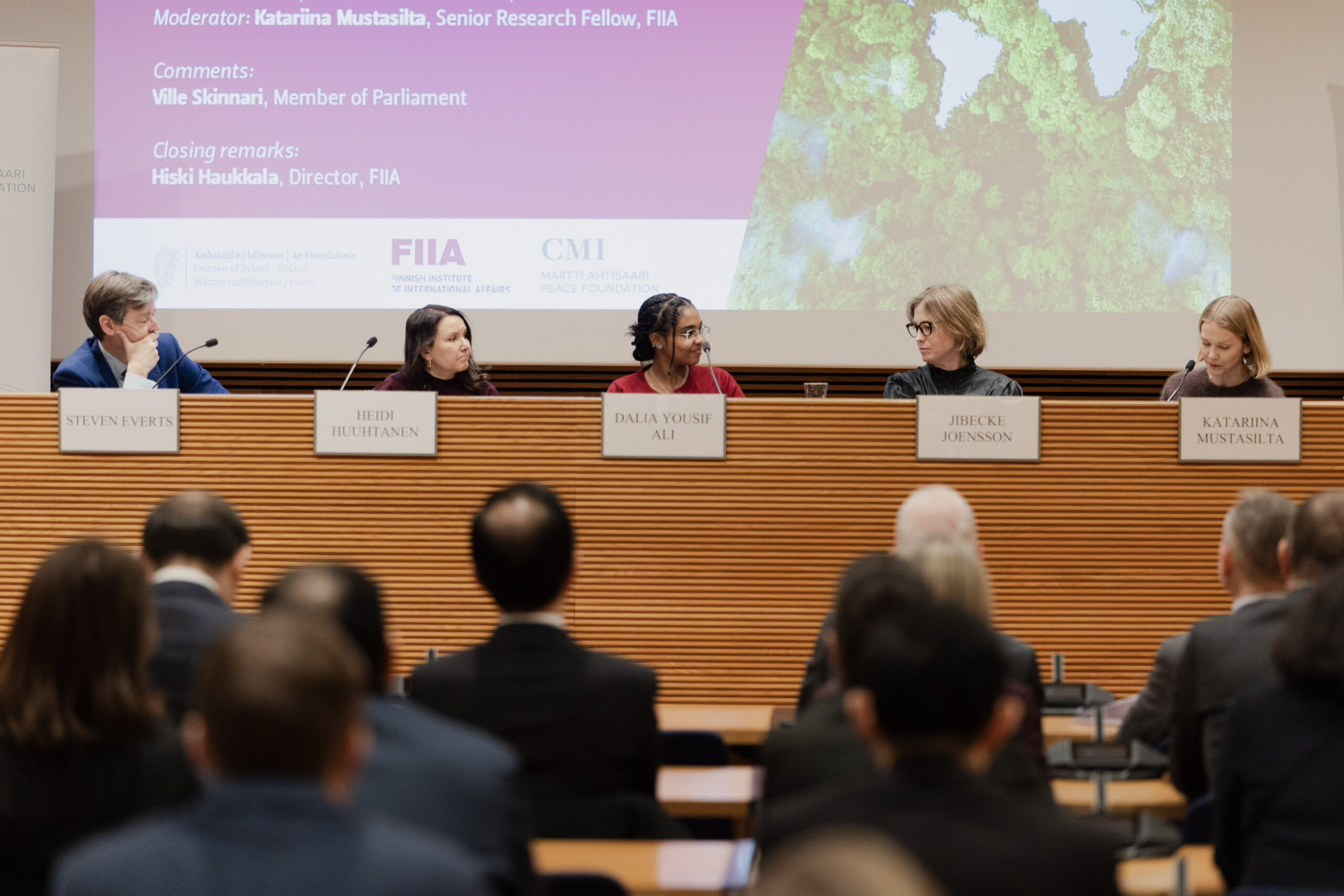
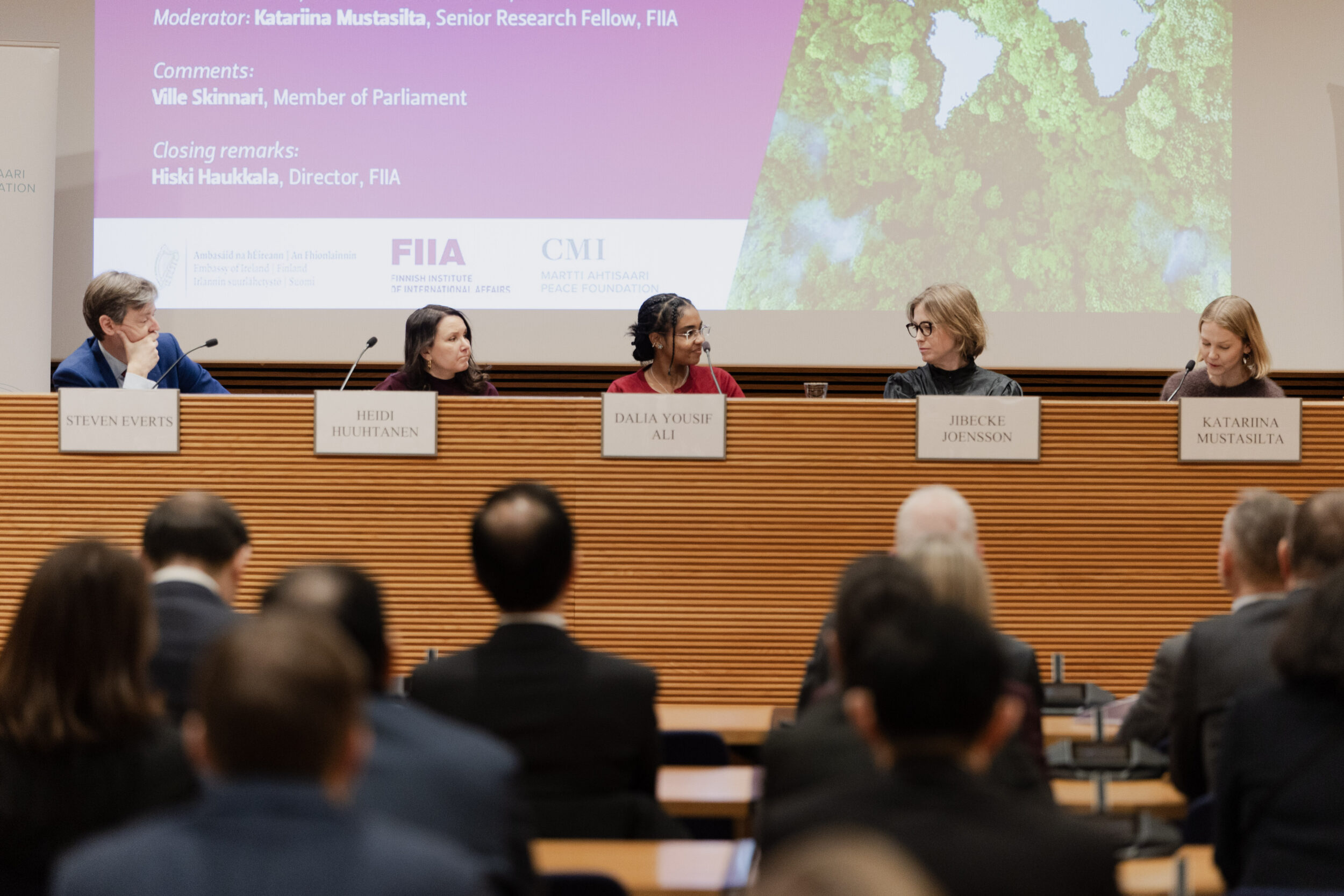
The panelists were Steven Everts, Heidi Huuhtanen, Dalia Yousif Ali, and Jibecke Joensson. The discussion was moderated by FIIA’s Katariina Mustasilta. Photo: Peter Seenan / CMI
Heidi Huuhtanen, Senior Research Fellow at FIIA, analysed the changing role of the United States in the international arena. According to her, the newly established Board of Peace demonstrates a shift away from multilateralism and a U.S. departure from the traditional frameworks of conflict resolution on which a shared understanding with Europe was previously based.
Even though seemingly comprehensive, Huuhtanen said, the Board of Peace’s Gaza plan does not adequately address the root causes in the conflict, including identity, national ownership, and Palestinian statehood.
Similar problems related to citizens’ ownership are visible in the internationalised civil war in Sudan. Dalia Yousif Ali, Doctoral Candidate at the TUM School of Technology and Social Science, and Representative of the Sudanese Youth Forum, defined three levels of change currently shaping the conflict.
First, she noted that geopolitical fragmentation and miscoordination in mediation have weakened accountability and reduced the reinforcement of peace efforts. At the same time, digitalisation of conflict has intensified, with social media fuelling polarisation. Finally, she emphasised that elite-driven, transactional bargaining in peacemaking continues to leave ordinary people with little say in shaping Sudan’s future.
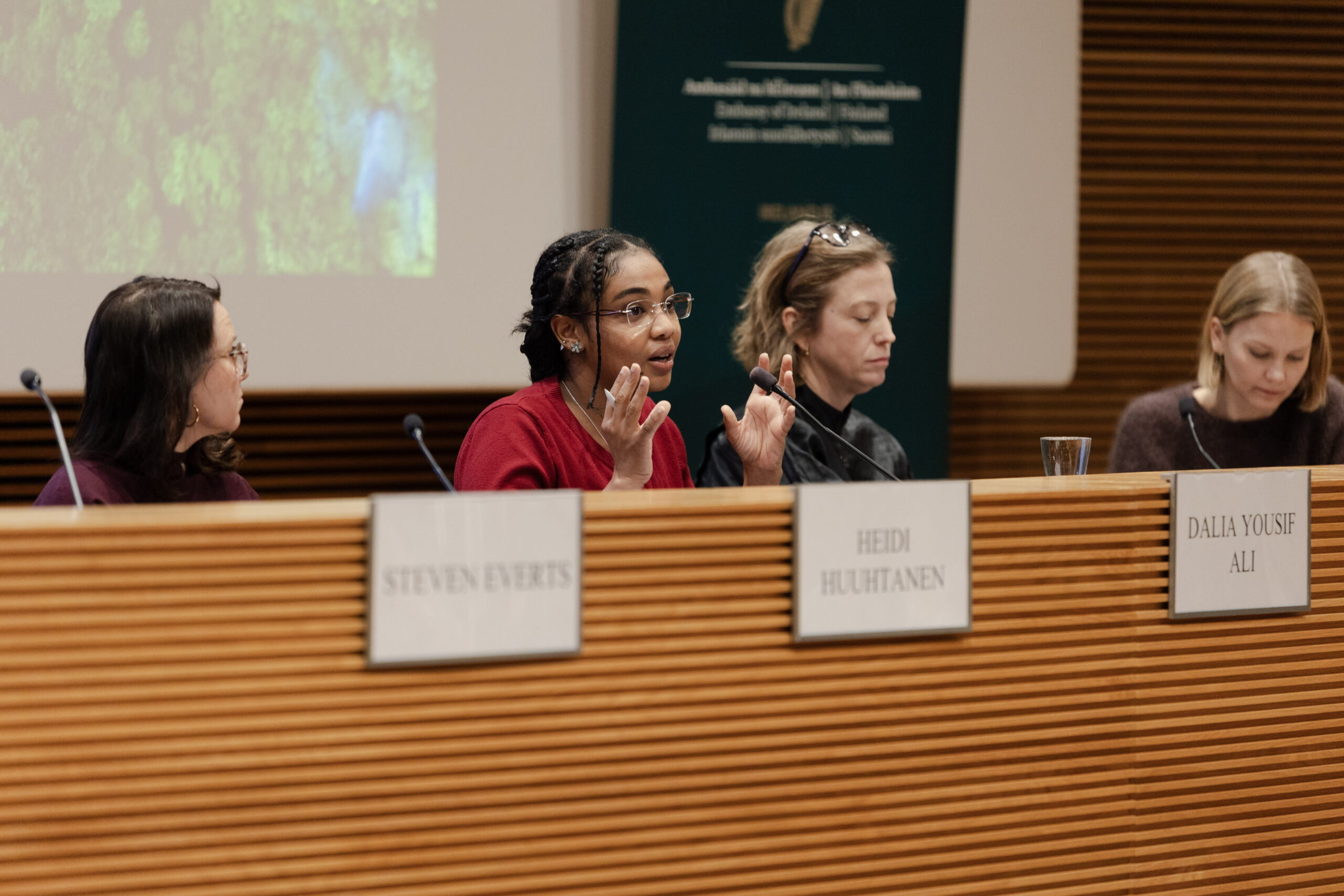
Dalia Yousif Ali said that wide-spread disinformation campaigns accelerate polarisation in Sudan. Photo: Peter Seenan / CMI
CMI’s Head of Multilateral Affairs and Peacemaking Policy, Jibecke Joensson, said that while the formal structures try their best to adjust, informal peacemaking actors play a key role in supporting and even facilitating the transition and adaption to a new era. She stressed that broad engagement with both formal and informal actors is essential to the sustainability of peace efforts, and thus also for CMI and our work in different regions.
In contexts like Sudan and Ukraine, CMI connects civil society, local communities, and political actors to inform negotiations and strengthen social cohesion. This work lays the ground for future agreements, Joensson said. CMI also helps turn short-term breakthroughs and dealmaking, such as in Armenia-Azerbaijan, into lasting peace dividends, and maintains informal dialogue when formal processes stall, as seen in Moldova.
In his commentary, Ville Skinnari, Member of the Parliament, emphasised the role of soft power as part of comprehensive security in the long run. He noted that soft power increases the resilience of the Finnish society and hence should not be underestimated. Hiski Haukkala, Director of FIIA, closed the event by affirming that “not only war, but also peace, can be seen as an instrument of statecraft.”
The recording of the event is available below.