On 3 December, as part of CMI – Martti Ahtisaari Peace Foundation’s 25th anniversary, Finlandia Hall hosted CMI x Finnish Tech: Innovating for Peace, a seminar bringing together peace practitioners, technologists, policymakers, and researchers. During the seminar, we reflected on how technology, and artificial intelligence in particular, can support peacemaking in a world where conflicts are increasingly digital, fast-moving, and shaped by narratives and algorithms.
Opening the event, Johanna Poutanen, Head of Inclusion and Digital Innovation at CMI, set the frame for the afternoon by noting that contemporary conflicts “move faster, spread digitally, cross borders, and often unfold through narratives and networks that did not exist a decade ago.” Artificial intelligence, she stressed, is already shaping political debates, misinformation, elections, and trust between communities. If conflict has transformed, peacemaking tools must evolve as well.
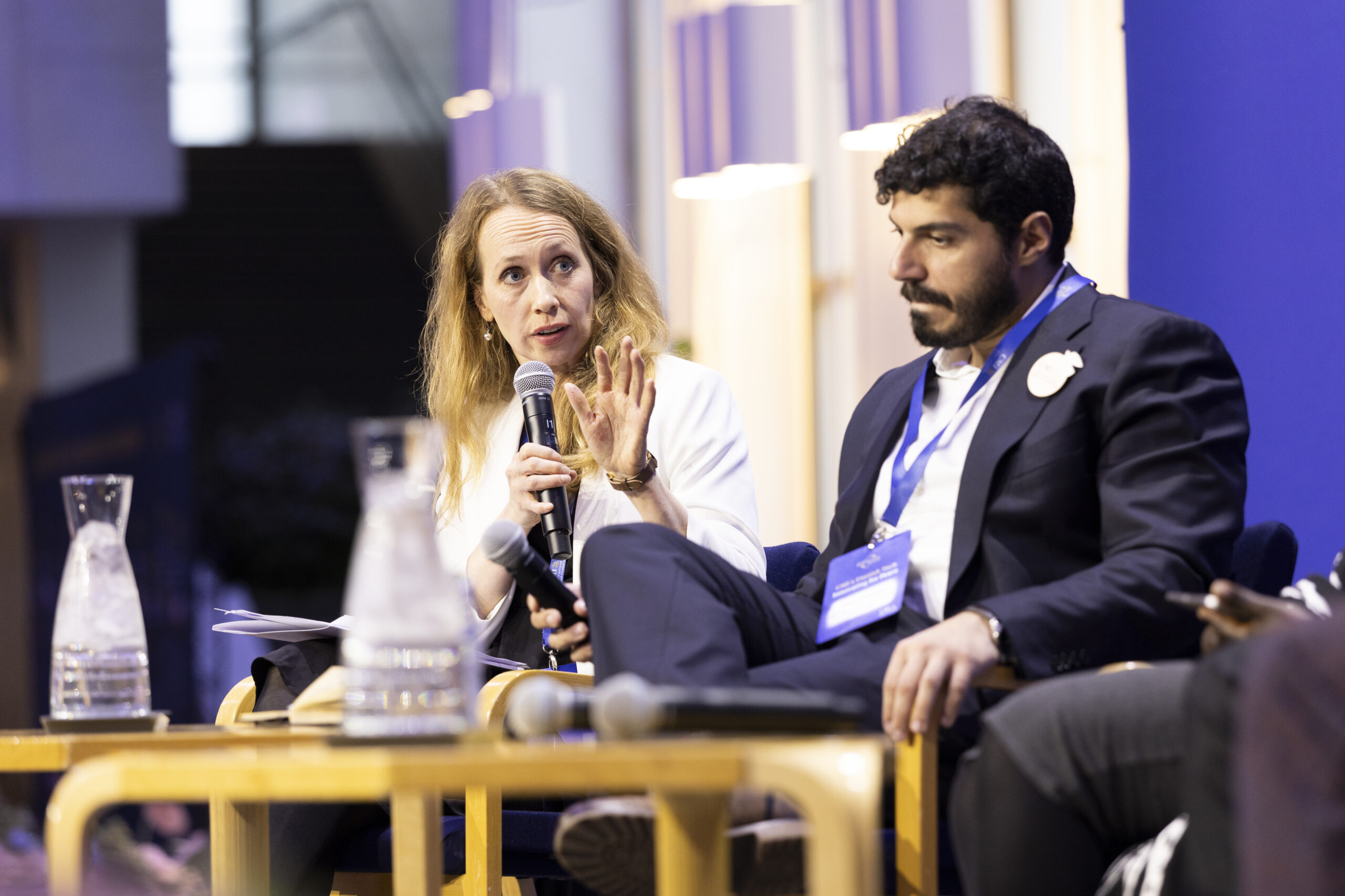
Johanna Poutanen, Head of Inclusion and Digital Innovation at CMI, emphasised that as conflict transforms, peacemaking tools must also evolve. Photo: Maria Hossain Santto / CMI
AI’s emerging potential for more open and inclusive peace processes
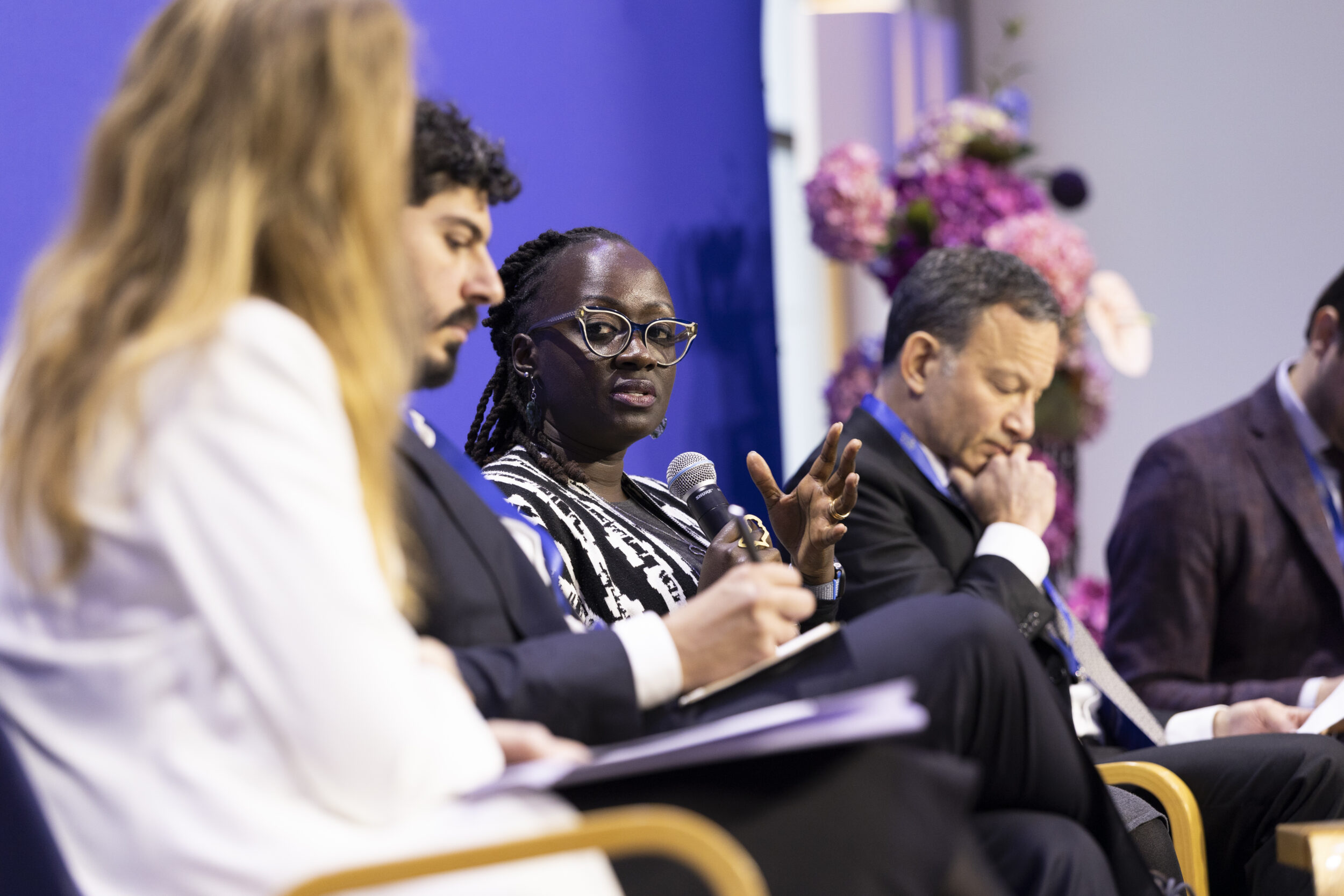
The first panel made clear that this evolution cannot be purely technical. Angela Oduor Lungati, Executive Director of Ushahidi, described open-source peace as a values-based practice rooted in collaboration and transparency. Drawing on Ushahidi’s origins during Kenya’s 2007–2008 post-election violence, she explained how open platforms enabled people confined to their homes to share lived experiences, strengthen accountability, and reduce the risk of renewed violence. For her, peacebuilding technology must work in the open, allowing others to learn from it and build upon it.
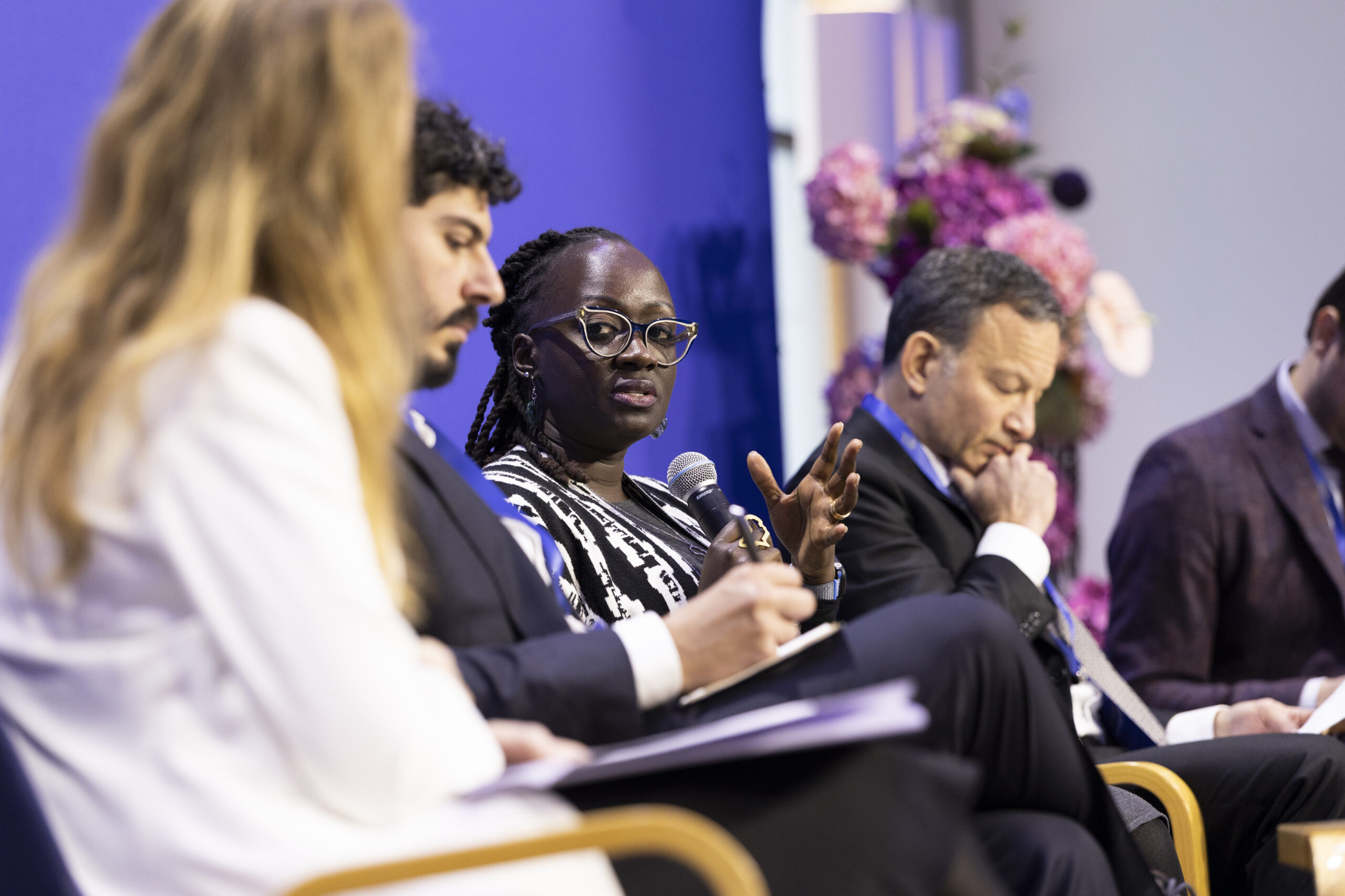
For Ushadidi’s Angela Oduor Lungati, technology for peace must allow others to build upon it. Photo: Maria Hossain Santto / CMI
Trust emerged as a recurring theme. Adam Schumacher, Program Director for Talk to the City at the AI Objectives Institute, argued that AI itself is not the threat; the risk lies in how it is designed and used. Emphasising transparency about how data is collected, used, and discarded, he pointed to a CMI-supported consultation in Yemen where an AI-enabled survey of youth achieved a 94% response rate. The example illustrated how participatory AI tools can strengthen voices even in highly constrained environments when trust is designed into the process.
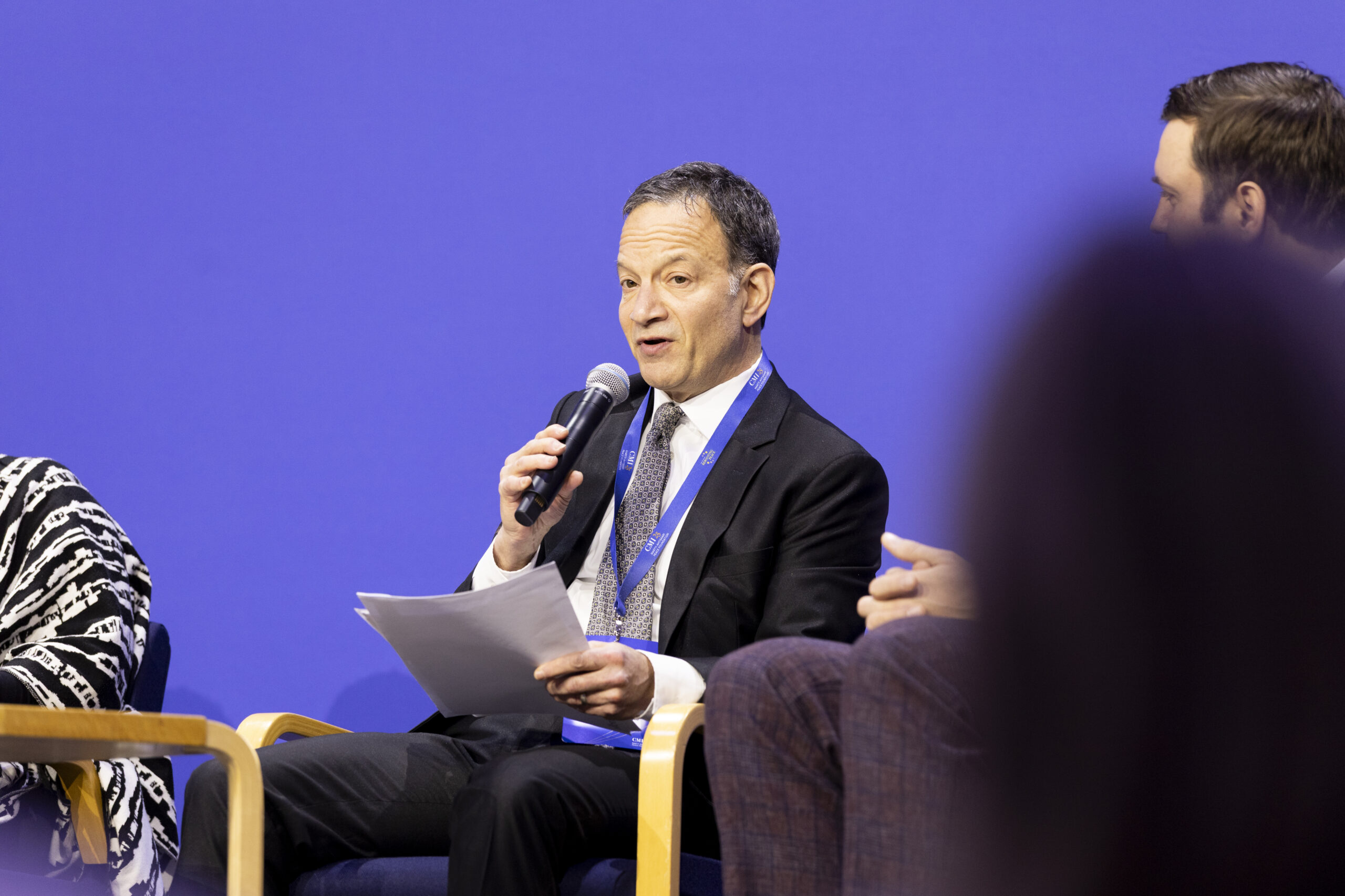
Adam Schumacher, Program Director at the AI Objectives Institute. Photo: Maria Hossain Santto / CMI
From the perspective of peace practice, Hayk Toroyan, Advisor at CMI, highlighted how digital tools can counter the narrowness of elite-driven peace processes. Too often, he noted, negotiations are shaped by actors in capitals who speak the same language and share similar perspectives. AI-assisted mapping of concerns from border and marginalized communities can help rebalance this dynamic, but only if used as an aid rather than a substitute. AI, he cautioned, cannot grasp conflict sensitivities or the lived nuances of every context.
This balance was echoed by Martin Wählisch, Associate Professor at the University of Birmingham and CMI Senior Advisor, who reflected on the contrast between secrecy in warfare and transparency in peace. While technology has long been embraced on the military side, peacebuilders have often been hesitant. What is changing, he argued, is the accessibility of AI itself: tools can now be built and adapted by non-engineers, lowering the barrier for peace actors to shape technology rather than merely receive it. At the same time, he warned against cycles of technological hype, reminding the audience that there is no “press here for peace” button.
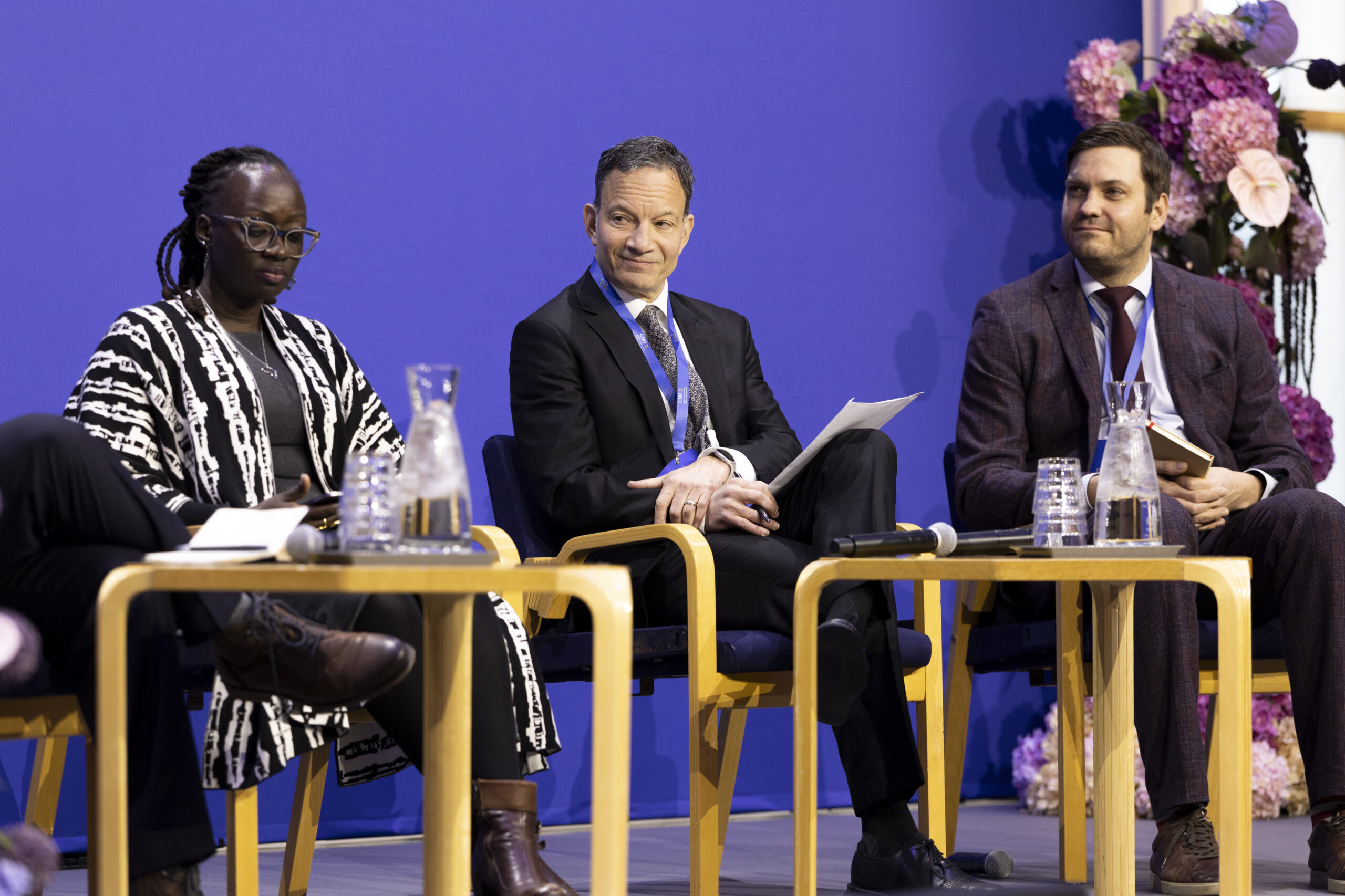
Angela Oduor Lungati, Adam Schumacher and Martin Wählisch. Photo: Maria Hossain Santto / CMI
A concrete illustration of responsible application followed in a short presentation by Felix Kufus, Advisor for Digital Peacemaking and Emerging Technologies at CMI. He shared how CMI combined a WhatsApp-based chatbot with an AI sensemaking tool to engage youth from seven Yemeni political parties in a vision-building process. Participants responded using voice messages in Yemeni Arabic, producing rich qualitative input. AI helped structure the data and surface patterns of consensus and disagreement, while human mediators retained oversight. As Felix underlined, mediation remains an inherently human profession, but AI can help peace practitioners handle complexity at scale.
Read more about the use of AI-powered digital tools in Yemen here.
Peaceful outcomes require shared responsibility and clear rules on the use of technology
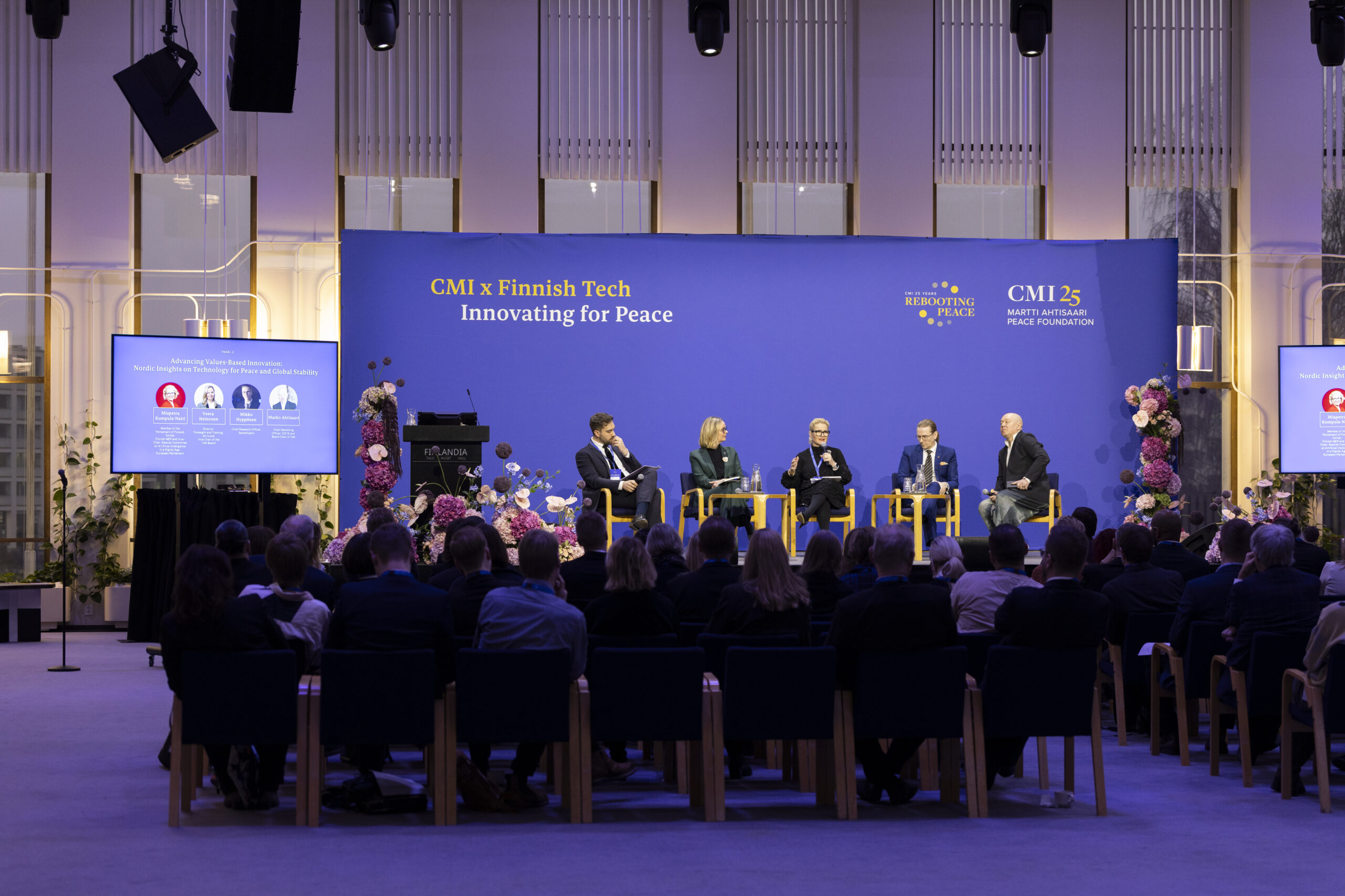
The second panel examined Nordic values in technology development for peace. Photo: Maria Hossain Santto / CMI
The second panel shifted the discussion from tools to values, incentives, and governance choices. Moderated by Michele Giovanardi, Programme Officer for Digital Peacemaking at CMI, the panel brought together perspectives from policy, foresight, cybersecurity, and industry to examine whether Nordic and European values can meaningfully influence global technology development for peace.
Miapetra Kumpula-Natri, Member of the Finnish Parliament and former Vice-Chair of the European Parliament’s Special Committee on Artificial Intelligence, anchored her intervention in the principle of equality. Drawing on her experience shaping European AI policy, she argued that values-based regulation should not be framed as a brake on innovation, but as a way of steering it toward societal benefit. Without deliberate attention to equality – in access to skills, data literacy, and economic opportunity – AI risks reproducing existing power imbalances rather than strengthening democratic resilience.
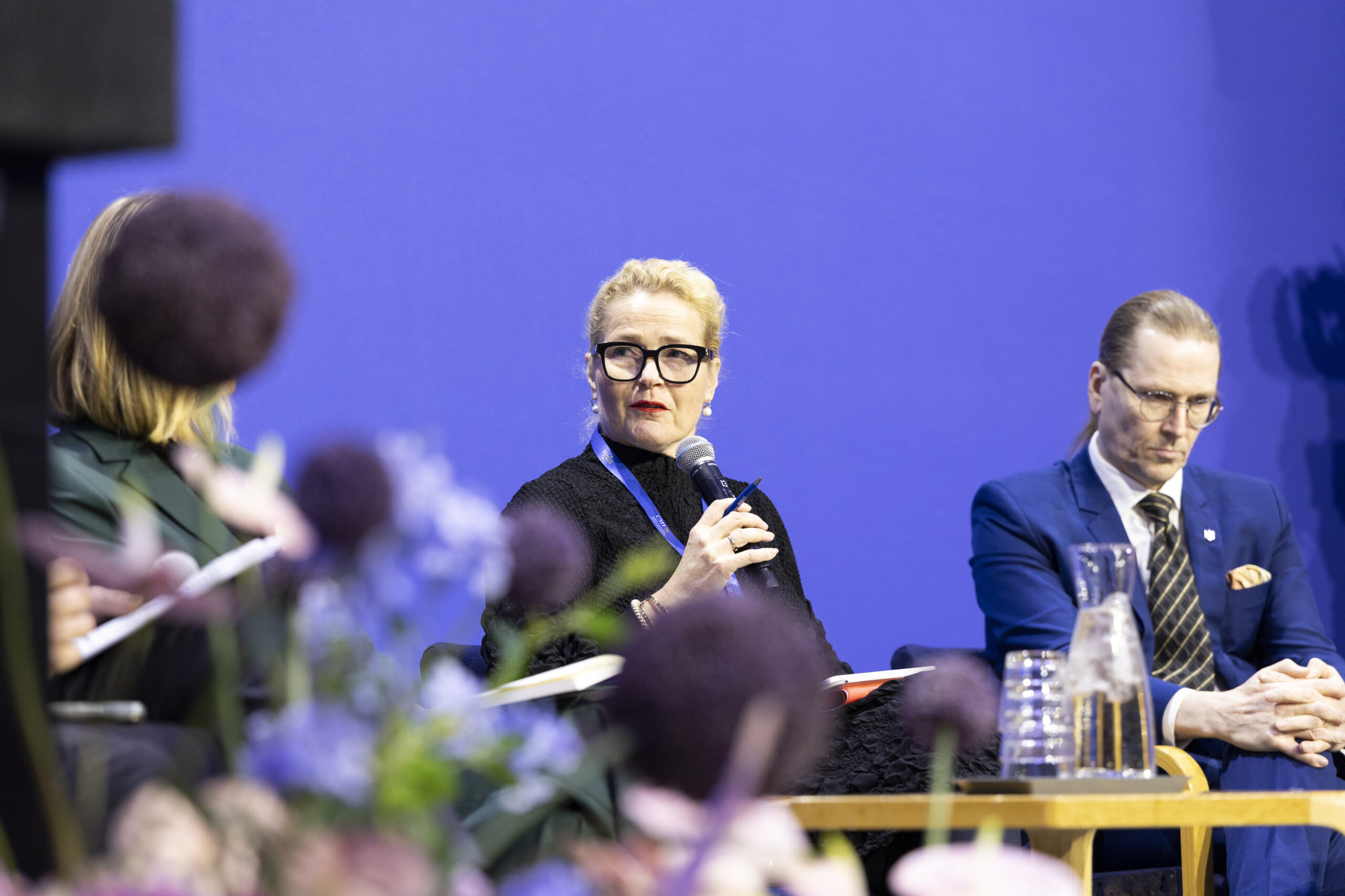
Miapetra Kumpula-Natri, Member of the Finnish Parliament, brought first-hand experience in EU regulation to the discussion. Photo: Maria Hossain Santto / CMI
From a futures and governance perspective, Veera Heinonen, Director of Foresight and Training at Sitra and Vice Chair of the CMI Board, focused on trust as a design challenge. Reflecting on Finland’s experience with participatory digital dialogues, she argued that trust increases when people can see how systems work and have real opportunities to question and influence them. Open-source civic technologies, she noted, make public values visible and actionable, and can even serve as grounding material for the development of future public-sector AI systems.
Mikko Hyppönen, Chief Research Officer at Sensofusion, brought a cybersecurity lens to the discussion, warning against uncritical adoption of increasingly complex technologies. As he put it plainly, “If it’s smart, it’s vulnerable.” As societies become as dependent on digital systems as they are on electricity, he argued, peace actors must take digital resilience seriously. Trust, in his view, must be paired with what he described as “healthy mistrust”.
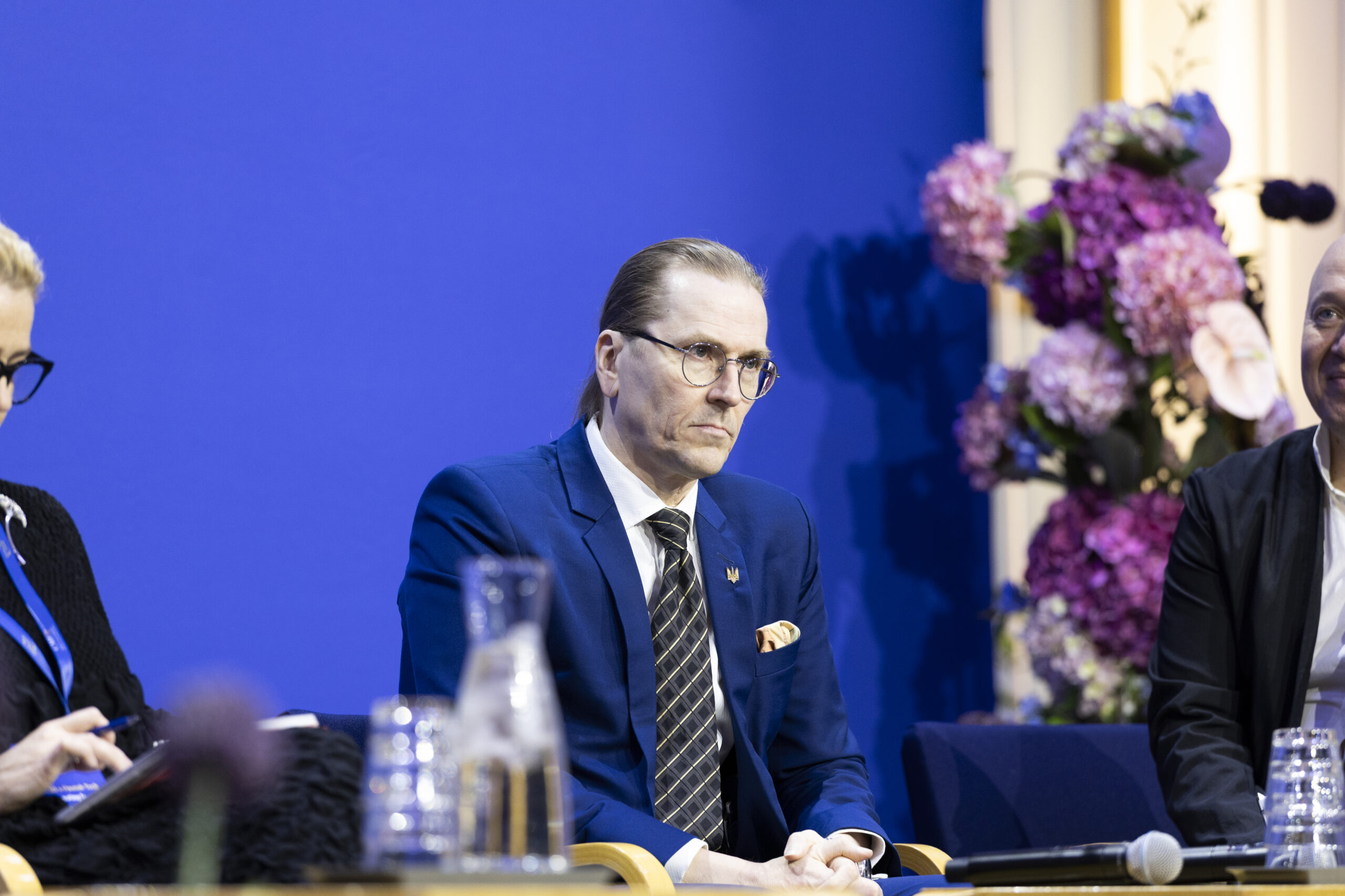
Mikko Hyppönen viewed “healthy mistrust” important in cybersecurity. Photo: Maria Hossain Santto / CMI
Speaking both as a technology leader and as Board Chair of CMI, Marko Ahtisaari reflected on the relationship between innovation, incentives, and responsibility. He cautioned against models that create new dependencies for peace actors, arguing instead for approaches that strengthen communities and institutions over the long term. Technology for peace, he suggested, must be governed in ways that support trust, shared ownership, and social cohesion rather than concentrating power or extracting value from fragile contexts.
“Businesses and peacemakers both want stable societies.”
The question of incentives came sharply into focus when live results from the Pol.is dialogue running alongside the panel where presented. One finding stood out clearly: a strong consensus in the room that technology companies should work with peace organisations even without clear profit incentives. Invite to respond to this signal from the audience, Marko Ahtisaari addressed the assumption that PeaceTech collaboration fails because of misaligned motivations:
“The fundamental mismatch isn’t about motive: businesses and peacemakers both want stable societies. The real cost lies in the time it takes to build and maintain the relationship. If we can make this easier, almost automatic, collaboration between the tech and peace ecosystems can finally move forward.”
CMI committed to using technology for inclusive peacemaking
In his closing remarks, Janne Taalas, CEO of CMI, reaffirmed the organisation’s commitment to advancing digital peacemaking and to using technology to make dialogues more inclusive. He also pointed to Finland’s unique position at the intersection of trust, governance, and innovation:
“We want to create a shared space where Finnish tech and global peacemaking can innovate side by side. Finland has the capacity and actors to become the centre for AI for peace.”
What became clear during the seminar is that technology is already shaping the landscape of conflict and peace alike. The task ahead is not whether to use AI in peacemaking, but how deliberately, collaboratively, and responsibly it is shaped, and by whom.
Watch the recording of the seminar
If you want to revisit the seminar in more detail, you can find a recording of it below.