CMI’s local coordinator Ashot Sargsyan reflects on his experiences from the Martti Ahtisaari Legacy Seminar in New York this April. Speaking from his personal experience as a refugee, he reaffirms: “As peacebuilders, we must do our best to ensure that people don’t have to leave their homelands so they can remain with dignity, peace, and hope. But first, people must believe that peace is possible.”
When our CEO Janne Taalas announced the opportunity to serve as a Rapporteur for the upcoming Legacy Seminars, I said out loud: “I want New York.” When my name was drawn, I wasn’t surprised. I just smiled and thought, “Lost enough… now it was time to receive.” For a child from a beautiful yet conflict-torn region, this city had once been a dream.
It was a rainy morning in New York. I woke up early to feel the rhythm and the vibe of the streets before the day began. The sun was hidden behind the clouds, but it was there, guiding us quietly toward something special. Each of us carries a sun within. Sometimes it hides behind clouds of doubt or fear, but it’s always there. We just need to clear the glass and let it shine. It is a process.
That is the essence of the Martti Ahtisaari Legacy Seminars: to stir hope, restore optimism, and remind us that peace is not only possible but necessary. As President Ahtisaari once said, “The only people who can make peace are the parties to the conflict. There are no excuses for conflicts to become eternal.”
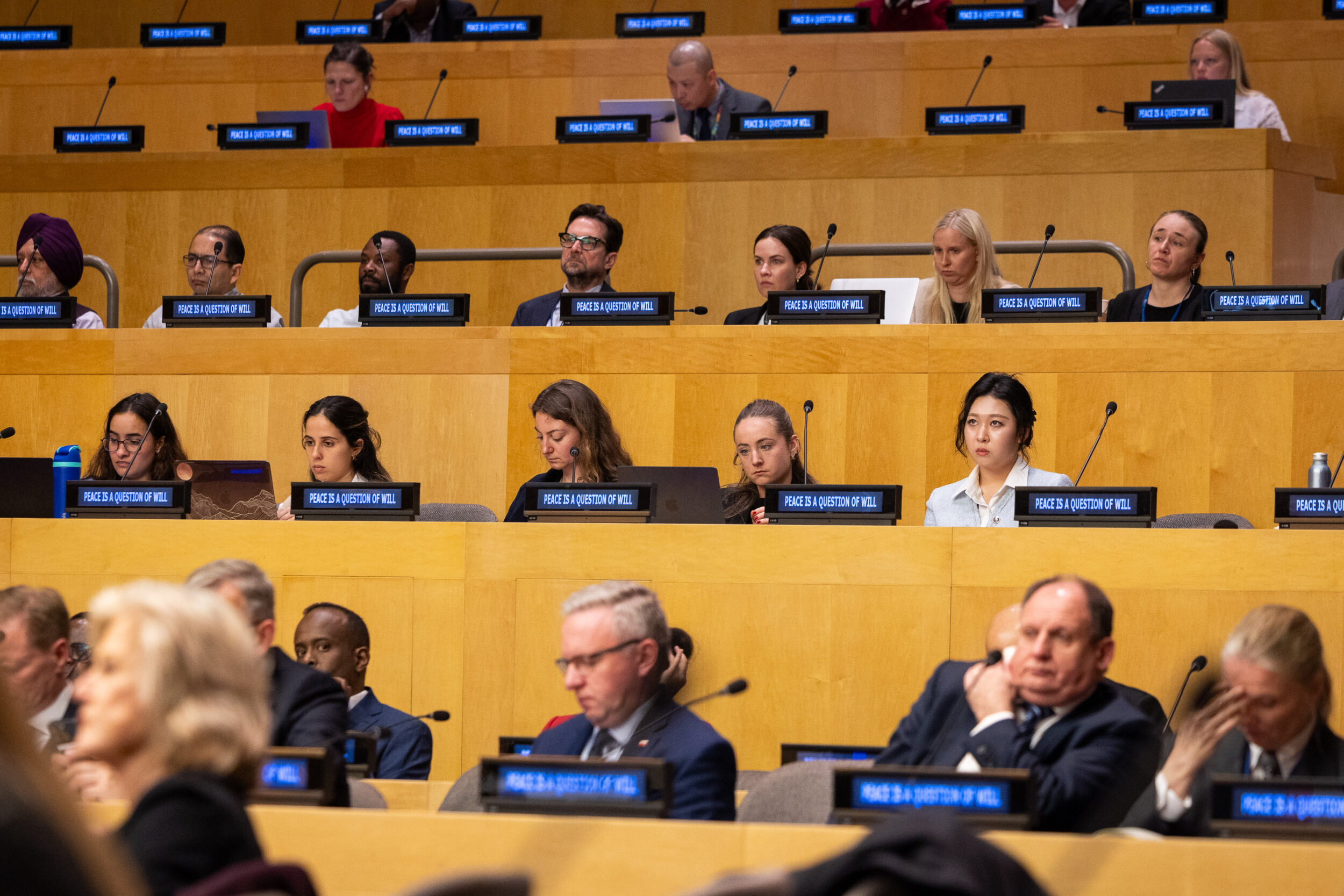
On April 3, we walked together, united by our belief in what we do, toward the UN Headquarters, where over 170 people gathered to honor President Ahtisaari’s legacy and to ask, quietly and boldly: What do we carry forward now?
Being part of CMI means more than working in peace mediation. I think it is believing, with deep sincerity, that what we do matters for people and for the future. I am part of the legacy. Through my journey with CMI, I transitioned from being shaped by conflict to becoming a mediator committed to fostering dialogue, empathy, and mutual understanding.
Opening the Seminar: A Living Legacy Begins
From the start, it felt like a call to renew shared responsibility for peace.
Our Deputy CEO Hanna Klinge explained that each city in the Legacy Seminar series was chosen for a reason, and New York carried special weight. It was here that President Ahtisaari served as Under-Secretary-General and shaped his career as a true multilateralist. “This is not just about celebrating his legacy,” she said, “but about asking how it lives on in the world we face now.”
Janne Taalas, our CEO, followed with a reminder that multilateralism is under pressure. Institutions are weakening, diplomacy is shrinking, and transactional politics is on the rise. He highlighted three guiding principles from Ahtisaari’s legacy: parties own the conflict and only they can make peace; everyone must be respected and all relevant actors included and peacemaking is a team effort. He stressed the vital role of civil society and CMI’s cooperation with the UN Peacebuilding Support Office. “Even as the playing field changes, we must keep our eyes on the ball.”
Elizabeth Spehar, UN Assistant Secretary-General for Peacebuilding Support, echoed that call, describing Ahtisaari as a global force for peace. In today’s fractured world, she urged us not to abandon multilateralism but to renew it through youth leadership, women’s voices, and locally rooted peacemaking — which CMI has championed for decades.
Living Legacy in a Fragmented World
One of the most meaningful moments was interviewing former Finnish Prime Minister Sanna Marin and former Colombian President Juan Manuel Santos. Meeting Sanna Marin was a personal milestone. I had long admired her vision, courage, and values. She inspires many young people, including me. Thanking her personally felt important.
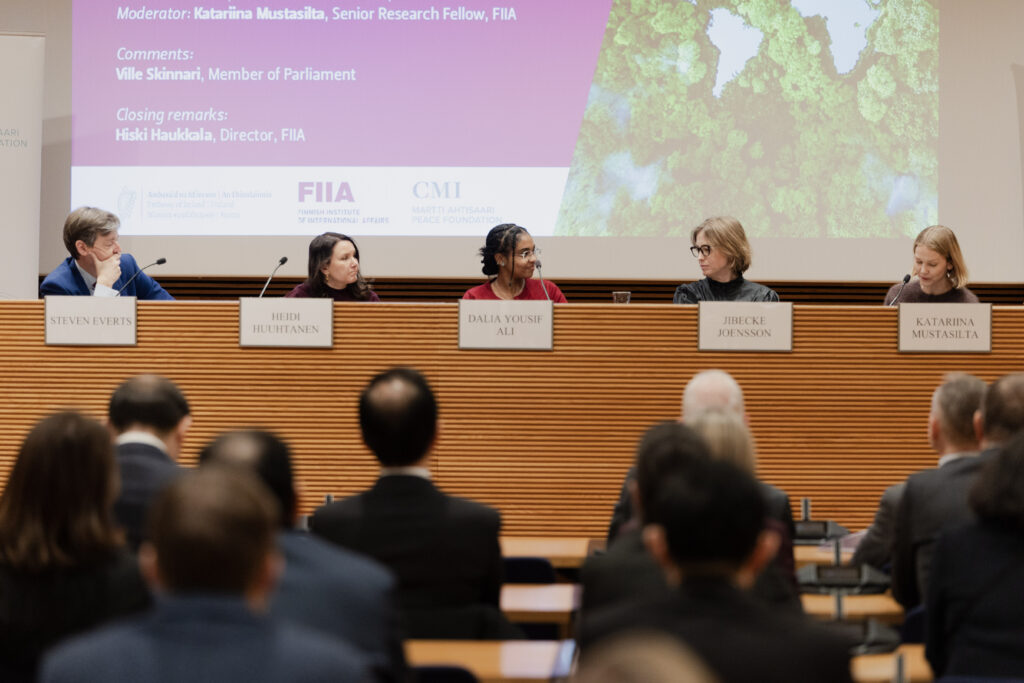
The keynote and cooperation panel, moderated by Comfort Ero, President and CEO of the International Crisis Group, and my colleague Jibecke Jönsson, Head of UN and EU Affairs at CMI, became dialogues across generations, continents, and crises. President Santos reflected on Colombia’s peace process and the importance of national ownership supported by quiet international legitimacy. He stressed how every process needs carrots and sticks but also trust, especially between those once divided.
Former Prime Minister Marin took the discussion deeper into conflict resolution, asking, what kind of peace will it be? Will it be just? Will it last? She warned of a world slipping back into spheres of influence, where small nations are sidelined and strongmen redraw rules. She urged that we must not surrender to cynicism but give people hope that a better world is still possible.
Ambassador Martin Kimani, President and CEO at The Africa Center in New York, reminded us that peacebuilding isn’t about restoring the past but reimagining the future, especially with and for youth. Rina Amiri echoed this through her work with Afghan women: engagement must be principled, strategic, and centered on those most affected. Dr. Crocker, drawing from his years with Ahtisaari, shared a peacemaker’s manual: stay clear, be inclusive, know the spoilers, and hold on to your principles.
Closing Thought
The final voices of the seminar brought clarity and challenge. Richard Gowan, UN Director of International Crisis Group, recalled President Ahtisaari’s belief that engagement is essential, even with those we disagree with. He saw that we are at a moment that demands the kind of drive and resilience the Finns call sisu (loosely translated as determination and guts).
Finland’s Permanent Representative to the UN, Ambassador Elina Kalkku, speaking with quiet reverence, asked whether our principles are strong enough to make progress irreversible or if we are slipping backward. Drawing from her years working alongside President Ahtisaari, she shared reflections not as nostalgia but as guidance for the future. His leadership combined calm authority with deep fairness. He focused on what truly mattered, took thoughtful risks, and believed peace must offer more than war. He valued creative thinking, inclusive teamwork, and the power of optimism, often paired with a warm laugh and a sense of humanity that never left him.
Ambassador Kalkku closed with a call to shared responsibility and urged that we must make together the UN fit for purpose and strengthen multilateralism. No one else will do it for us. Later, Ambassador Neville Gertze, Permanent Representative of the Republic of Namibia to the United Nations, honored Ahtisaari’s role in Namibia’s independence, his principled leadership, and human touch. He noted that Martti Ahtisaari’s legacy lives not only in our history books but also in the next generation, some children even named Martti and Ahtisaari.
I learned a lot from this event. As I write this diary, I feel a new sense of hope, grounded in responsibility. A better future is possible, but it won’t happen on its own. Each of us must do our part. As a refugee, like a bird without a tree to rest on, I carry the truth of President Ahtisaari’s words: “No one leaves their own home unless they have to.”
As peacebuilders, we must do our best to ensure that people don’t have to leave their homelands so they can remain with dignity, peace, and hope. But first, people must believe that peace is possible. They need to see peace not only as the absence of war but as the presence of opportunity, safety, freedom, and belonging.
I wish more leaders, and all of us, could carry forward the Finnish spirit: the calm pragmatism to face hard truths, and the quiet optimism to believe that peace is always worth working for.
Peace is not an ideal but a necessary investment in our future; it is a question of will.
Kyllä se siitä!
Writer: Ashot Sargsyan, Local Coordinator at CMI