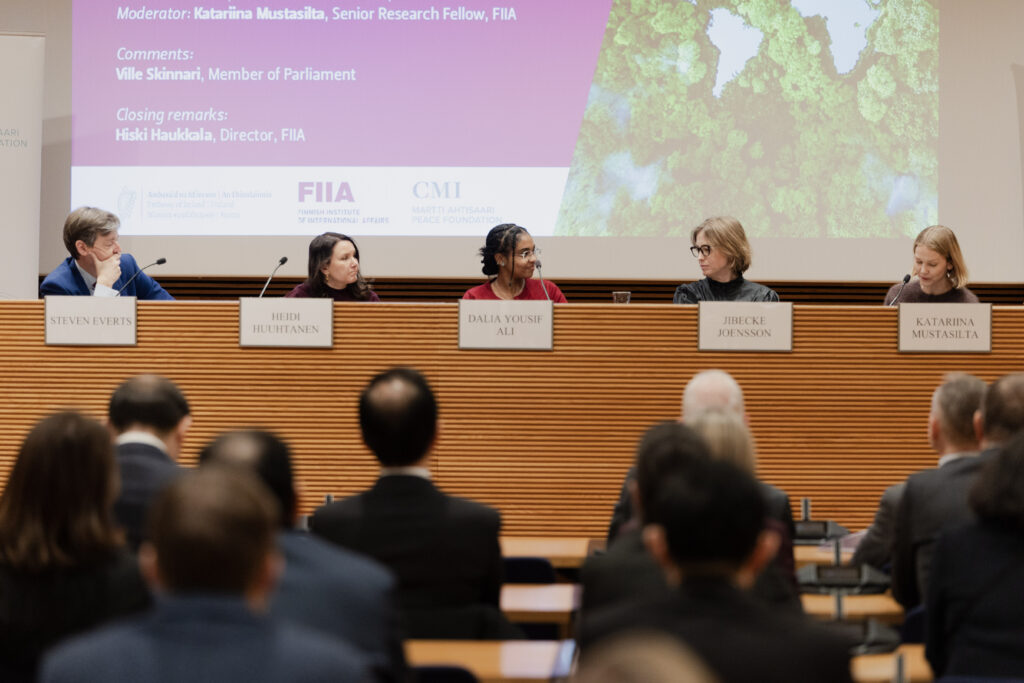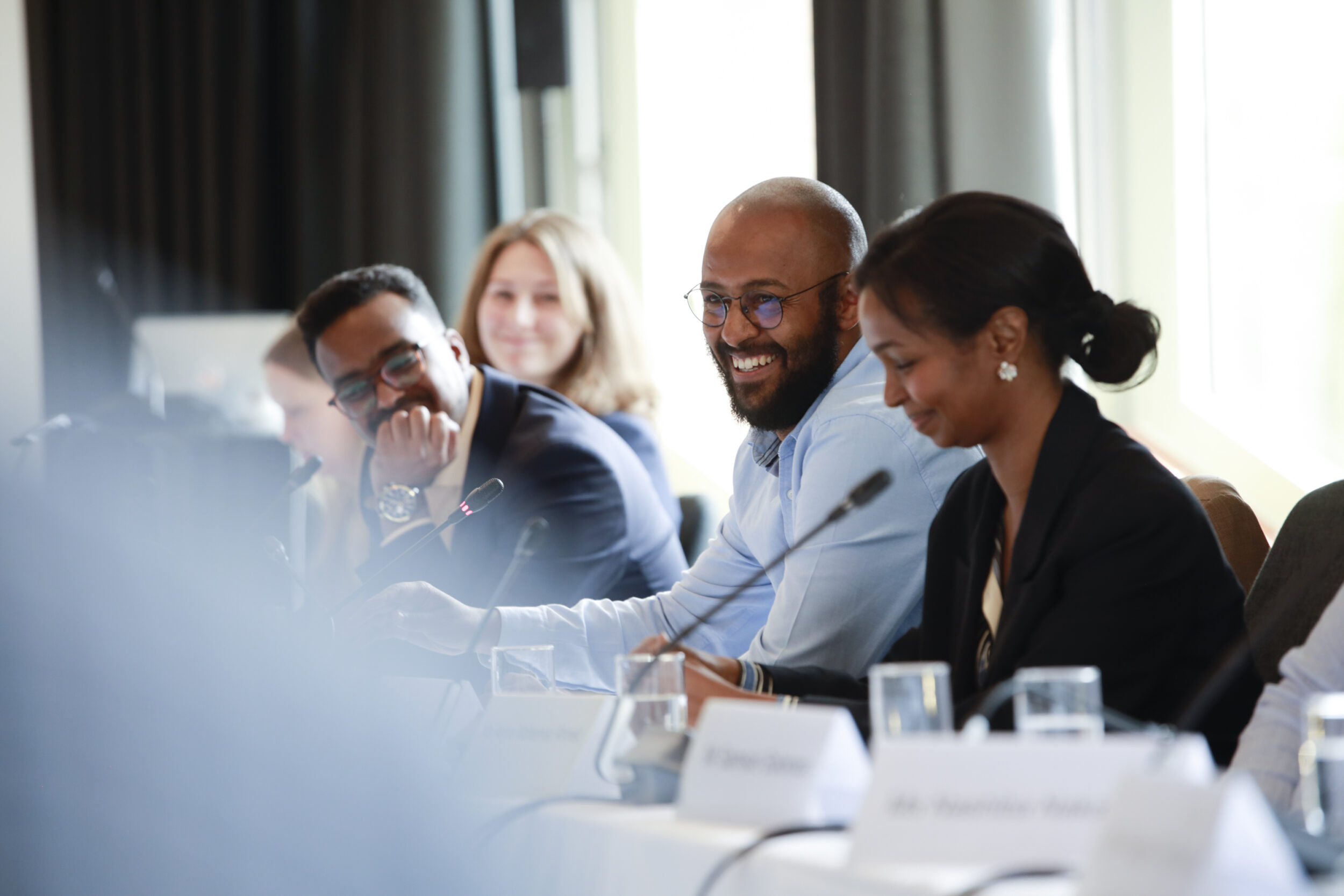
CMI has launched a new initiative to engage the next generation in the Horn of Africa in discussions about the region’s future. In the first workshop, young political, civic, and business actors visited Helsinki to discuss the region’s challenges and opportunities. The initiative contributes to CMI’s work in the region supporting peace and stability through dialogue.
The Horn of Africa: a CMI priority
The Horn of Africa encompasses Djibouti, Eritrea, Ethiopia, Kenya, Somalia, South Sudan, Sudan, and Uganda, and with the Red Sea it represents a core focal point for CMI. In the region, CMI supports informal dialogue among key actors. It focuses on building trust, creating shared understanding of common challenges, and contributing to more informed policymaking. “The promotion of peace and security through dialogue is at the heart of what we do,” says Tiina Kukkamaa-Bah, Head of CMI’s Sub-Saharan Africa programme.
The Horn faces multiple interconnected challenges: ongoing conflict, political instability and the threat of extremism, combined with economic fragility, climate shocks, heavy debt and reliance on foreign aid. It is also subject to competing geopolitical interests. However, the region is strategically significant: it is situated by the Red Sea on major trade routes and holds potential in renewable energy, agriculture, and digital innovation, say CMI experts. By improving political stability and strengthening investment in human capital, the Horn could achieve more sustainable and inclusive growth.
“Young people need to be more actively included in discussions about ongoing peace processes and the future of the region.” Tiina Kukkamaa-Bah
For political leaders, reforms are hampered by fragile governance and external interference, while civil society faces restricted space for participation. Businesses contend with infrastructure gaps and uncertain regulation. Citizens feel the effects sharply: through unemployment, displacement and resource pressures. Women and youth, who comprise most of the population, are especially affected by conflict and climate change. But at the same time, the future will be shaped by young and increasingly connected populations who expect both security and opportunities.
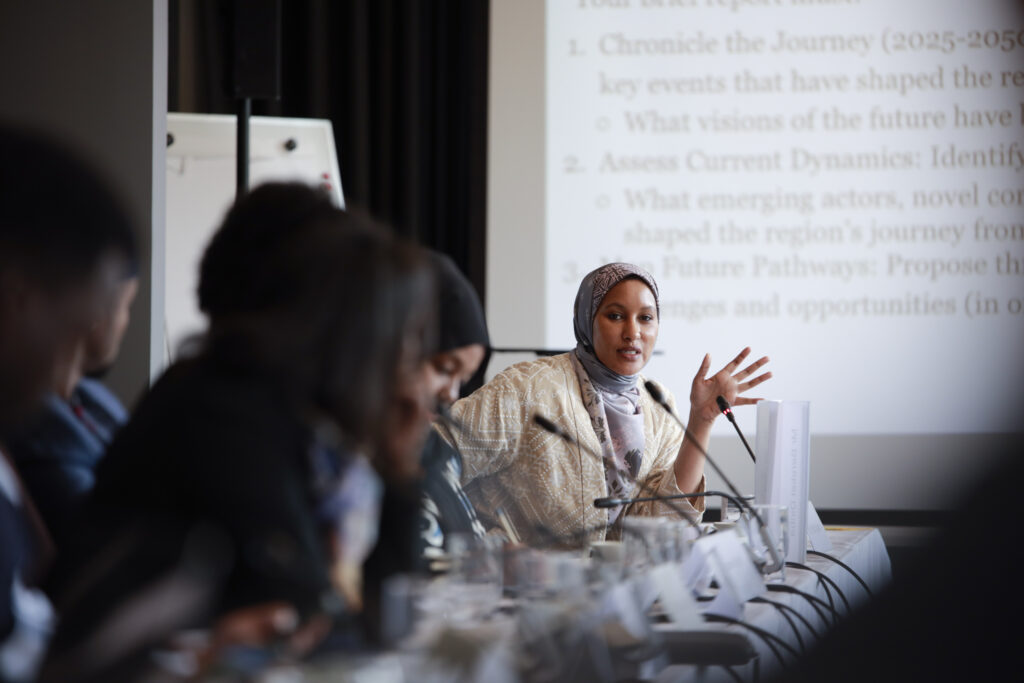
The workshop was a space for informal dialogue and networking for young people from the Horn of Africa. Photo: Maria Hossain Santto/CMI
Young people shaping the future
CMI’s Kukkamaa-Bah says that recent developments in countries such as Ethiopia, Kenya and Sudan “illustrate the potential of the next generation.” But, she adds, “young people need to be more actively included in discussions about ongoing peace processes as well as the future of the region.” In response to these dynamics and in line with its commitment to creating spaces for dialogue and connectivity, CMI has initiated a new stream of work that “brings together a group of bright minds representing the next generation of leaders of the Horn,” as Kukkamaa-Bah puts it.
CMI’s workshop in Helsinki, ‘The Horn of Africa in a Changing World – Shaping a Shared Future’ gathered participants from the countries of the Horn. Active in politics, civil society, business or research, Kukkamaa-Bah explains that the goal with the participants was to “discuss current challenges but also think more broadly about the desired future and how to get there.”
A workshop format laid the foundations for open dialogue, cross-learning and reflection and the programme combined informal discussions with foresight exercises designed to examine the past, present and future of the region. Participants addressed competing visions of the future and how to work towards desired outcomes. They also considered how history, present dynamics and images of the future shape the region, they identified common challenges and exchanged perspectives on opportunities.
“The promotion of peace and security through dialogue is at the heart of what we do in the Horn of Africa.” Tiina Kukkamaa-Bah
An important realisation, according to CMI experts, was that despite diverse backgrounds, participants shared a commitment to regional cooperation and to amplifying the role of the next generation in decision-making.
Voices of the next generation
CMI spoke to four participants during the event to gather their perspectives on the challenges and opportunities for the Horn. They reflected on the links between economic development and peace, the vital role of women and youth, the importance of leadership and regional cooperation, and potential of grassroots action. They argued that institutions need strengthening and civil society must be included in all processes. Youth opportunities are central to breaking cycles of instability, they said.
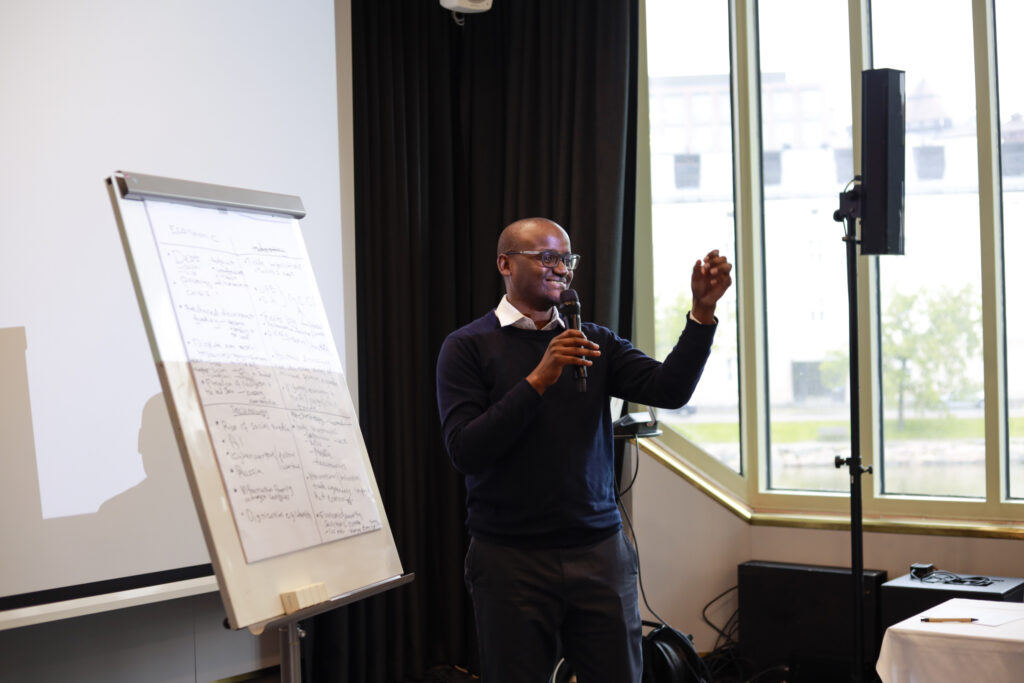
CMI spoke to Casper Sitemba who said that solutions must be “homegrown”. Photo: Maria Hossain Santto/CMI.
Sudanese researcher, Hamid Khalafallah, focused on grassroots organising in his assessment. He made the case that governments have failed their citizens and said civic movements are shaping regional transformation. Peace is the ability to live ordinary life without violence, Hamid said, while demilitarisation is the most urgent priority.
Somali Fadumo Abdi Ali emphasised gender and youth inclusion. She warned that women are particularly vulnerable to displacement and conflict and called for their active role in shaping governance and security.
Casper Sitemba, a Kenyan political analyst with the UN, pointed to the weaponisation of identity politics, authoritarian trends and external interference as major risks. For him, freedom in daily life is the definition of peace. He also said that solutions must be homegrown.
Filagot Tesfaye, an Ethiopian business leader in renewable energy, highlighted the link between job creation and peace. She said that regional trade and infrastructure projects can serve as peacebuilding tools, but these will need stronger local and regional institutions.
Challenges and opportunities for the Horn?
-

- Hamid Khalafallah
-

- Fadumo Abdi Ali
-

- Casper Sitemba
-

- Filagot Tesfaye
“We are moving towards a future that is more people-led, community-led and less state-led.” Hamid Khalafallah
Hamid Khalafallah, Sudan, Researcher at the University of Manchester
Researcher Hamid Khalafallah placed Sudan’s turmoil within the wider context of the Horn of Africa, emphasising how conflicts spill across borders and destabilise neighbouring states.
He said that regional cooperation is essential to shift the balance towards opportunity and away from risk, when looking at the future of the region: “The Horn of Africa is situated in a strategically significant geographical position. It comes with a lot of risks and a lot of opportunities. For the opportunities to outweigh the risks, we need regional cooperation.”
For Hamid, governments in the region have repeatedly failed their citizens, leaving communities to seek their own paths forward. “We are moving towards a future that is more people-led, community-led and less state-led. States in many ways have failed the people of the Horn of Africa for the past decades.”
He described civic space as “still limited”, but gradually widening, as people become more connected, aware of their rights and better able to organise. “Despite the space being narrow now, it’s widening because of the state’s weakness. But also, because people are getting connected, realising their rights and how they can organise.”
And what does peace mean to him? “Peace and security means being able to go back home, to exist and practice life’s simple daily activities in peace.”
“Women in the Horn of Africa are the most vulnerable in society.” Fadumo Abdi Ali
Fadumo Abdi Ali, Somalia, Director of the Women Forum
Fadumo described the Horn as a fragile region where conflict, climate shocks and food insecurity overlap, making women especially vulnerable. “The Horn of Africa also hosts the largest internally displaced population in Africa, impacted by conflict and climate change,” she said. “And that makes women in the Horn of Africa the most vulnerable in society.”
According to Fadumo, women and youth should not only be seen as victims but as drivers of transformation: “We are advocating for the integration of gender policies in peace and security policies, as well as economic inclusion of women. A ‘whole-of-society approach’ can ensure that no one is left behind.”
Fadumo also talked about the decisive role of young people, warning that neglecting their needs risks instability, while investing in their education and participation could deliver reform. “In Somalia, we say that if you give a knife to a young person, he will kill you. But if you give a pen, he will develop you.”
She said that regional cooperation was important and that societies need to look beyond narrow nationalism. Strong, inclusive institutions are essential to lasting peace, she argued, adding that reliance on individuals leaves societies exposed. “If our institutions have failed, our peace will also fail. Invest in institutions, because such structures trump one individual or one leader.”
“Solutions to the problems of the Horn need to be homegrown.” Casper Sitemba
Casper Sitemba, Kenya, UN Resident Coordinator’s Office
Casper from Kenya emphasised how past legacies, current driving forces and future pressures all intersect to shape the region. Regional disruption comes from conflicts he said: “Intra-country conflicts and inter-country conflicts are the largest risks to security in the Horn.”
For Casper, identity politics is frequently used by the powerful to stir up division, leaving societies in turmoil: “Identity is weaponised for power, and this exposes societies in the Horn a great deal,” he said.
Casper also warned of rising authoritarianism and the destabilising effects of external interference. For him, leadership has a decisive role in determining whether societies manage transitions peacefully or slide into deeper instability. He defined peace in practical terms, saying: “Peace and security means freedom. Freedom to move, freedom to interact, freedom to associate, freedom to worship.”
Looking ahead, he emphasised that solutions must be local and developed by people in the region who understand its complexity: “Solutions to the problems of the Horn are already somewhat there and they need to be homegrown.”
“Youth have been used as a tool for conflict and to sow division.” Filagot Tesfaye
Filagot Tesfaye, Managing Director of On Energy Consult and Trading PLC, Ethiopia
Business executive Filagot explained that although she comes from a business background, she sees a clear connection between economic development and peace. “In Helsinki, I have seen the relevance of economic activities, economic development. They are critical for the development of peace and security in the region.”

Ethiopian business leader, Filagot Tesfaye. Photo: Maria Hossain Santto/CMI.
She argued that youth unemployment fuels instability, with job creation essential for stability. “Youth have been used as a tool for conflict and to sow division. But if we create more jobs, the development sector, particularly the energy sector, has huge potential in the region.”
She pointed to renewable energy and regional infrastructure as tools to drive growth and reduce conflict. At the same time, she cautioned that economic development alone is not sufficient: “It’s not only business. Even if we have business, that’s not the only thing that can solve the problem. Peace and security is the critical thing.”
For her, stronger local and regional institutions are also important to align national interests, remove trade barriers, and make cooperation possible. “We must create our own institutions that consider the interest of everyone so that we can have aligned objectives.”
For more information about this initiative please contact Lisa Boström, Project Manager and Tiina Kukkamaa-Bah, Head, Sub-Saharan Africa.
Read more:
Navigating the storm: Towards common security in the Horn of Africa
CMI outlined in 2023 that the Horn risked fragmentation because of internal conflict and divisive external approaches. As an antidote, the region should build a culture of accommodation and collective management of regional security, the paper concluded.