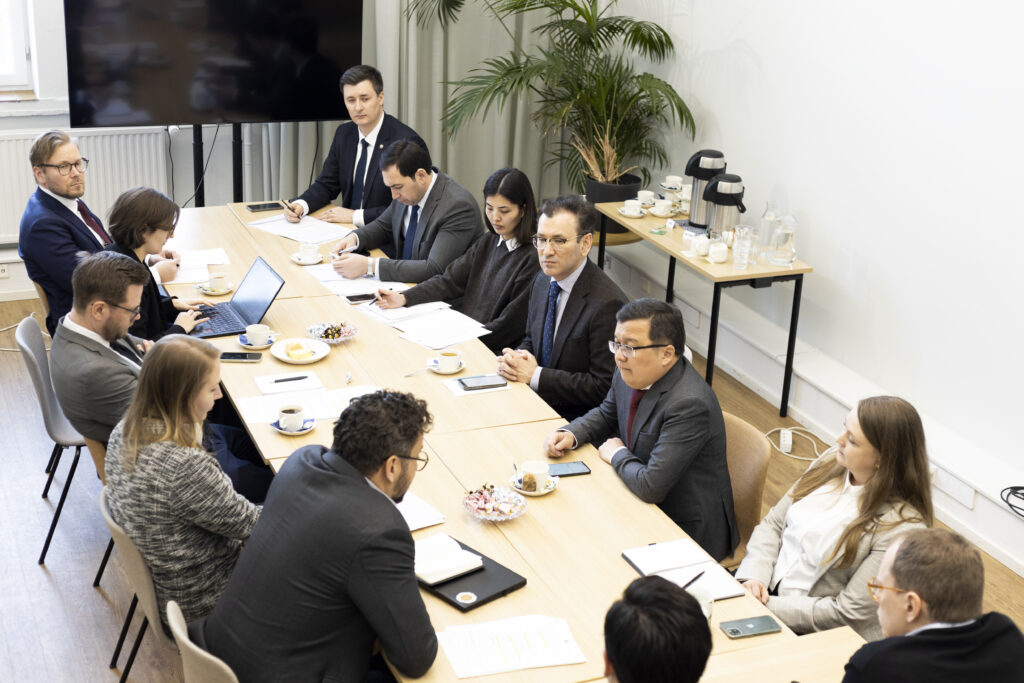
The CMI delegation arrived in Jakarta for the seventh edition of a global series honoring the life and legacy of President Martti Ahtisaari, whose role as the international mediator helped end the conflict in Aceh. The event was organized in partnership with the Embassy of Finland to Indonesia, and our Indonesian partner, the Foreign Policy Community of Indonesia (FPCI), led by Dr. Dino Patti Djalal.
As we entered the seminar hall, reflections on the current state of global affairs were hard to ignore. The rise in violent conflicts and unprecedented challenges to diplomacy and peace mediation were stark. Yet, President Ahtisaari’s role in facilitating the 2005 peace agreement between the Indonesian government and the Free Aceh Movement on August 15, 2005, stood out as a beacon of hope – a powerful reminder that a more peaceful future remains possible.
A legacy of listening and trust
President Ahtisaari’s character and principles as a peacemaker took shape with every speaker and panel that shared their insight. The keynote address by His Excellency Jusuf Kalla, Former Vice President of Indonesia, along with remarks from Dr. Dino Djalal, His Excellency Pekka Kaihilahti, Finland’s Ambassador to Indonesia, and the subsequent panel discussions spoke to the realities of our time, pillars and lessons from the mediation process and the role and qualities of a good mediator.
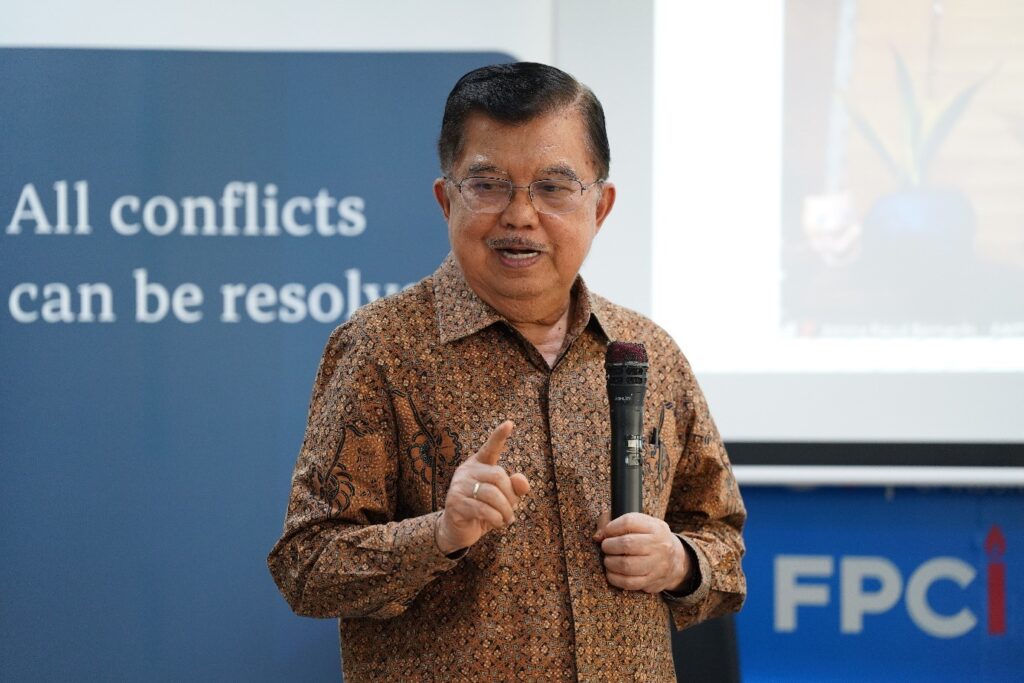
H.E Jusuf Kalla, Former Vice President of Indonesia
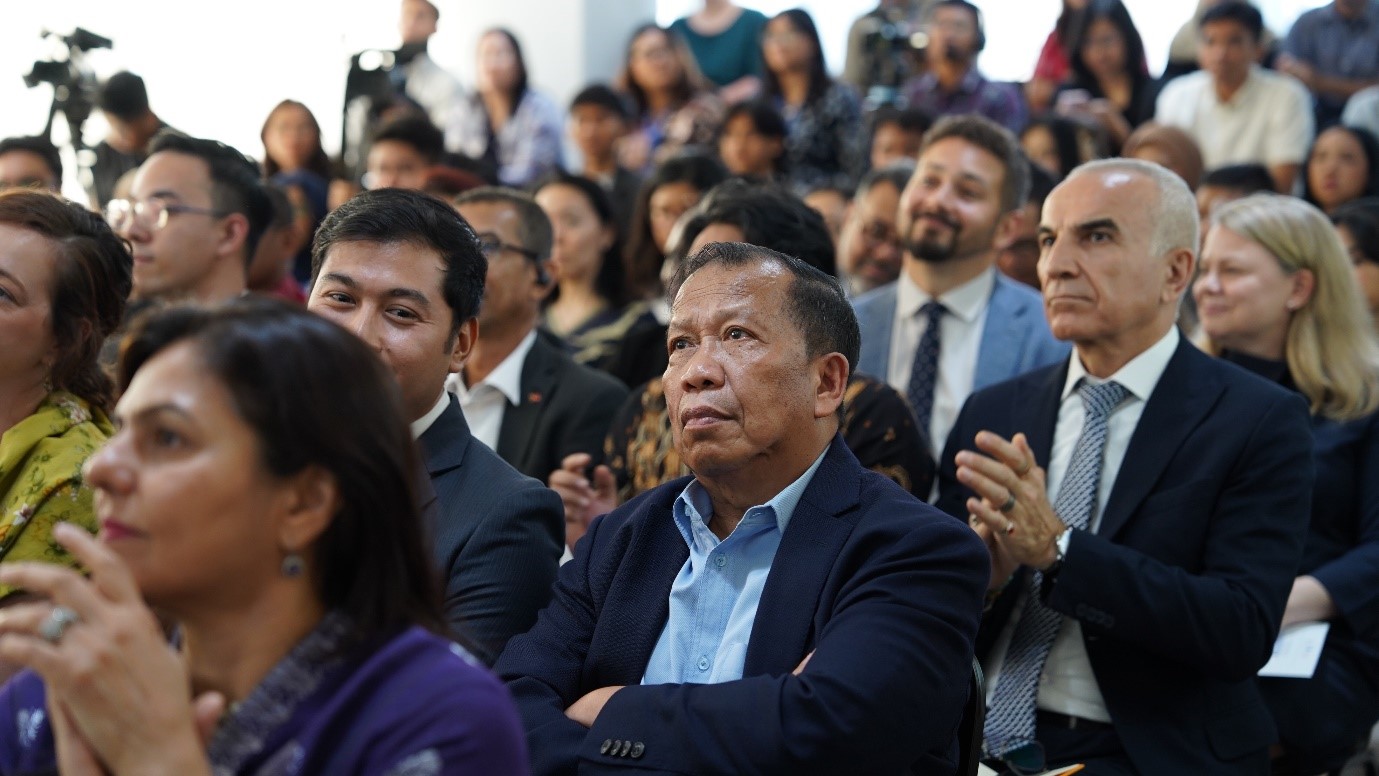
I watched Malik Mahmoud, the lead negotiator representing the Free Aceh Movement in the Aceh negotiations, listening and nodding as speakers described President Ahtisaari’s disciplined approach, underpinned by his principles of listening and talking to everyone. They outlined a consensual, structured, inclusive, respectful, and dignified peacemaking model. It was clear that these principles helped the conflicting parties express their grievances and paved the way for a meaningful and ultimately successful mediation process.
Throughout the day, I gathered more information about the Aceh peace process. Fundamentally, it was a slow-paced, trust and relationship-based approach backed by political willingness. In practice, the parties trusted President Ahtisaari, and he, in turn, leveraged that trust to facilitate structured negotiations, leveling the playing field where asymmetry was inevitable, to produce a result that was accepted and owned by all parties. It was emphasized that the devastating events of the 2004 Tsunami played a catalytic role in getting parties to the mediation table.
Listening in on Peacemaking today
The discussion on peacemaking today analyzed new developments shaping the nature of conflicts, such as increased geopolitical fragmentation, declining trust in multilateral frameworks, and the mounting strain on peace mediation efforts. I was reminded of the importance of timing, sequencing, and understanding the unique history, root causes, and political realities of each conflict. It was engaging to explore what, I believe, is a critical angle of peace mediation: preparing key external actors involved in conflict for mediation- especially as their ability to exert meaningful influence when necessary is vital for success.
Panelists acknowledged the decline of multilateral cooperation and issued a strong call to adapt and strengthen regional organizations and lean more on informal and flexible track two diplomacy, where formal mechanisms are either missing or limited. It was affirming to hear H.E. Sihasak Phuangketkeow, Former Vice Minister of Foreign Affairs of Thailand, underscore that true conflict reconciliation is based on inclusive dialogue and a willingness to address the factors fueling the conflict.

Guests at the Martti Ahtisaari legacy seminar in Jakarta, Indonesia. Centre focus: Hamid Awaluddin, Indonesian government chief negotiator during the Aceh peace process.
From the margins to the table: Youth perspectives on the future of peacemaking
Youth inclusion in peacemaking, and the challenges surrounding it, formed a central focus of the afternoon, culminating in a call to move youth participation in conflict resolution from the margins to the table. Speakers highlighted the often-symbolic nature of young people’s inclusion in peace efforts, which frequently occurs too late in a crisis. Fatimah Zahrah, Regional Coordinator of the ASEAN Youth Forum, also noted that even when youth action plans exist, they often encounter challenges in implementation, which reinforces a cycle of frustration and disengagement.
I appreciated the candid discussion on the difficult choices that states may at times make during a conflict. Particularly, the de-prioritization of peace efforts or delayed responses in favor of political or economic interests. This dynamic, combined with regional actors lacking the authority or mandate to respond quickly and decisively when conflicts arise, hinders timely action and limits the meaningful inclusion of youth.
Strengthening the role of young people not only as advocates but as active contributors to early response and decision-making should be viewed as a key component in building more inclusive and responsive peacemaking approaches for the future.
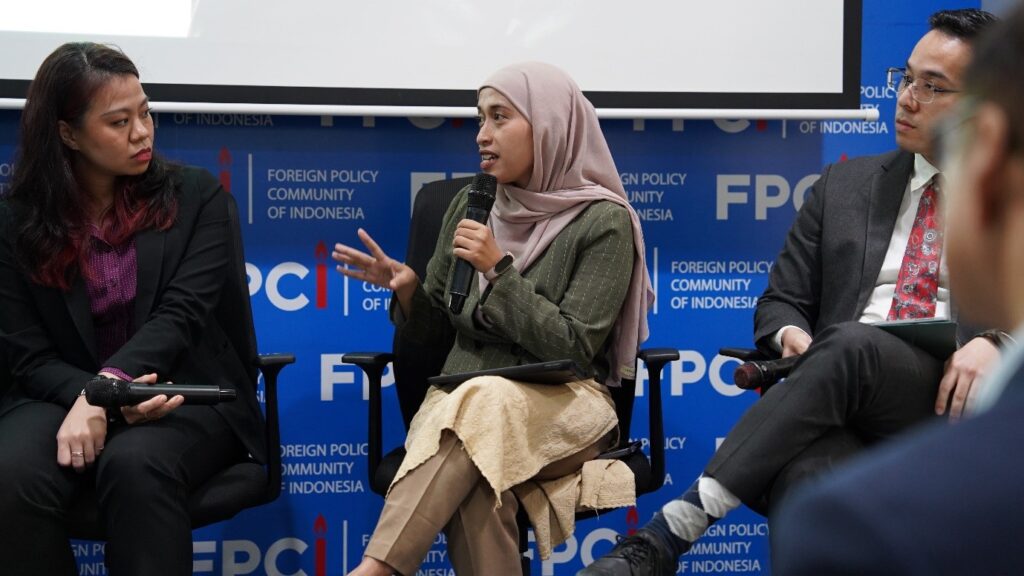
Left to right: Izzah Khairina Ibrahim, Fatima Zahrah and Muhammad Waffaa Kharisma.
A Lasting Message
As the event concluded, I was brought back to my thoughts, listening to the speakers: President Ahtisaari’s approach to peace mediation was not just about process; it was also about principles. His belief that dialogue, trust, inclusion, and respect can pave the way through even the most complex conflicts still holds true today.
In a world where mediation is increasingly strained, his legacy has left a lasting message: stay committed to peacemaking, moving forward, building trust, creating spaces for dialogue, and equipping all actors to engage meaningfully.
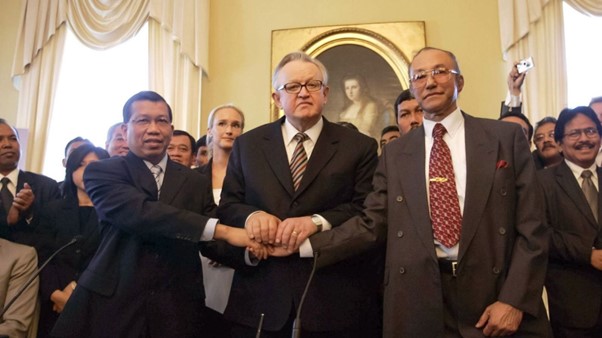
Left to right: Hamid Awaluddin, President Martti Ahtisaari and Malik Mahmoud at the signing of the Aceh peace agreement.

Project Assistant Njoki Githieya was the rapporteur at the Martti Ahtisaari Legacy Seminar in Jakarta.