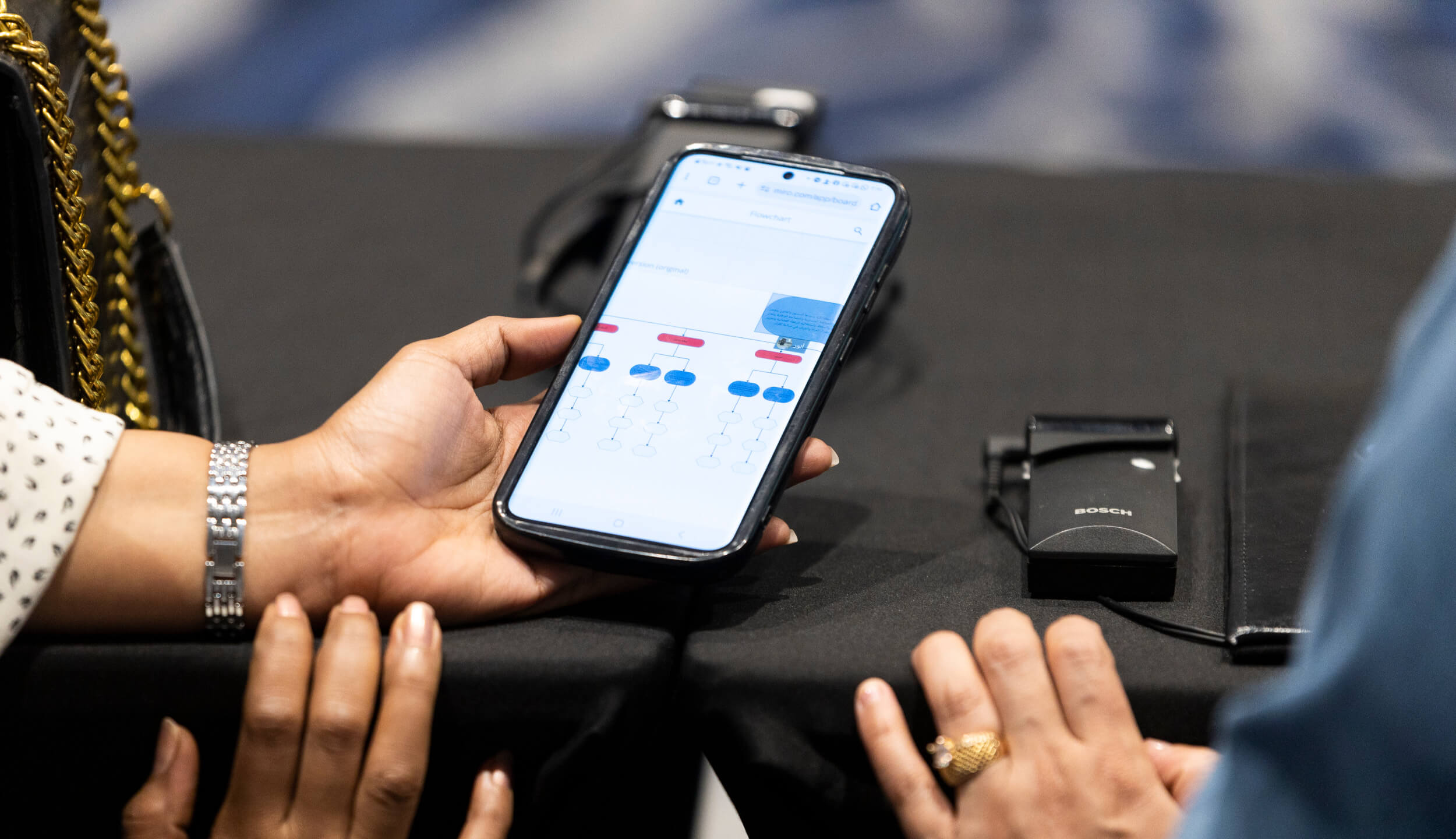
In Yemen, AI-powered digital tools have improved participation and inclusion, thereby enhancing peace processes.
Digital peacemaking is a strategic priority at CMI and we are making great efforts to integrate technological innovation with traditional peacemaking approaches. Peacemaking can be strengthened through the thoughtful application of technological tools, but we must of course remain mindful of the need to understand and mitigate potential risks.
In our work, we have seen that artificial intelligence (AI) can support inclusive dialogue in politically sensitive environments. This has been the case in Yemen, where AI-powered digital tools have improved participation and inclusion, thereby enhancing peace processes.
This article is based on a workshop held at the 2025 International Digital Security Forum in Vienna by CMI’s Michele Giovanardi, Programme Officer in Digital Peacemaking; and Felix Kufus, Advisor, Digital Peacemaking & Emerging Technologies.
The Yemen case formed the backbone for their workshop demonstrating how AI-powered tools have enhanced participation and inclusion in peace processes.
Specifically, it shows how CMI has used new technology in Yemen to:
- Analyse local perspectives;
- Broaden outreach to marginalised communities; and
- Complement in-person dialogue.
Yemen: The promise of AI-powered engagement in peace processes
The decade-long conflict in Yemen has fractured political participation and marginalised youth voices from peace processes. Youth are a critical demographic representing 69% of the population. Traditional dialogue approaches face significant barriers: security risks, geographical fragmentation, and limited infrastructure.
Below, we present innovative digital engagement methodology deployed in Yemen from January–March 2025 that overcame these barriers through AI-powered crisis computing.
CMI’s approach integrated two complementary technological solutions: a customised WhatsApp chatbot and an AI-powered qualitative analysis tool, which extracts key insights from a large volume of input and organises them into thematic clusters, highlighting the most relevant and contested issues.
The WhatsApp chatbot enabled accessible engagement across conflict lines. It featured multilingual support, interactive sequences, and voice message processing with OpenAI transcription/translation services. The methodology included 7 comprehensive survey questions alongside demographic profiling. Participants were able to submit detailed responses in Yemeni Arabic through voice messages; thereby enhancing authenticity and depth of engagement.
Participants across 18 governorates were engaged with a 94.53% completion rate of all survey questions. The respondents represented diverse political affiliations (eight parties/components), age groups, and genders (36.76% female participation). The T3C Sensemaking Tool (“Talk to the City”) utilised computational linguistic models to analyse these highly detailed and considerate responses, identifying key topics including views on political vision, obstacles to implementation, and opportunities for youth involvement. This provided actionable intelligence for mediators and policymakers supporting Yemen’s peace process.
This case demonstrates how AI-powered tools can operate effectively in crisis settings by:
- Bypassing physical security barriers through digital engagement;
- Processing multilingual qualitative data at scale;
- Identifying cross-cutting themes across political divides;
- Amplifying traditionally marginalised voices.
The methodology provides a replicable framework for crisis computing applications in conflict zones where traditional engagement is restricted or impossible. It has particular relevance for contexts requiring remote stakeholder consultation, sentiment analysis in fragmented societies, and inclusive dialogue processes in ongoing conflict settings.
Read more: How CMI aims to restore political agency among civilian actors in Yemen