The second annual Tampere Peace Day, hosted at the Tampere University and the historic Tampere City Hall—once the site of pivotal battles during Finland’s Civil War—invited participants to engage in critical conversations about the future of peace in December. This year’s theme, “(Re)Searching Peace,” brought together a group of researchers, practitioners, civil servants, politicians, and students to explore how peace research and practice can evolve to meet the pluralities of peace in the era of growing contestation.

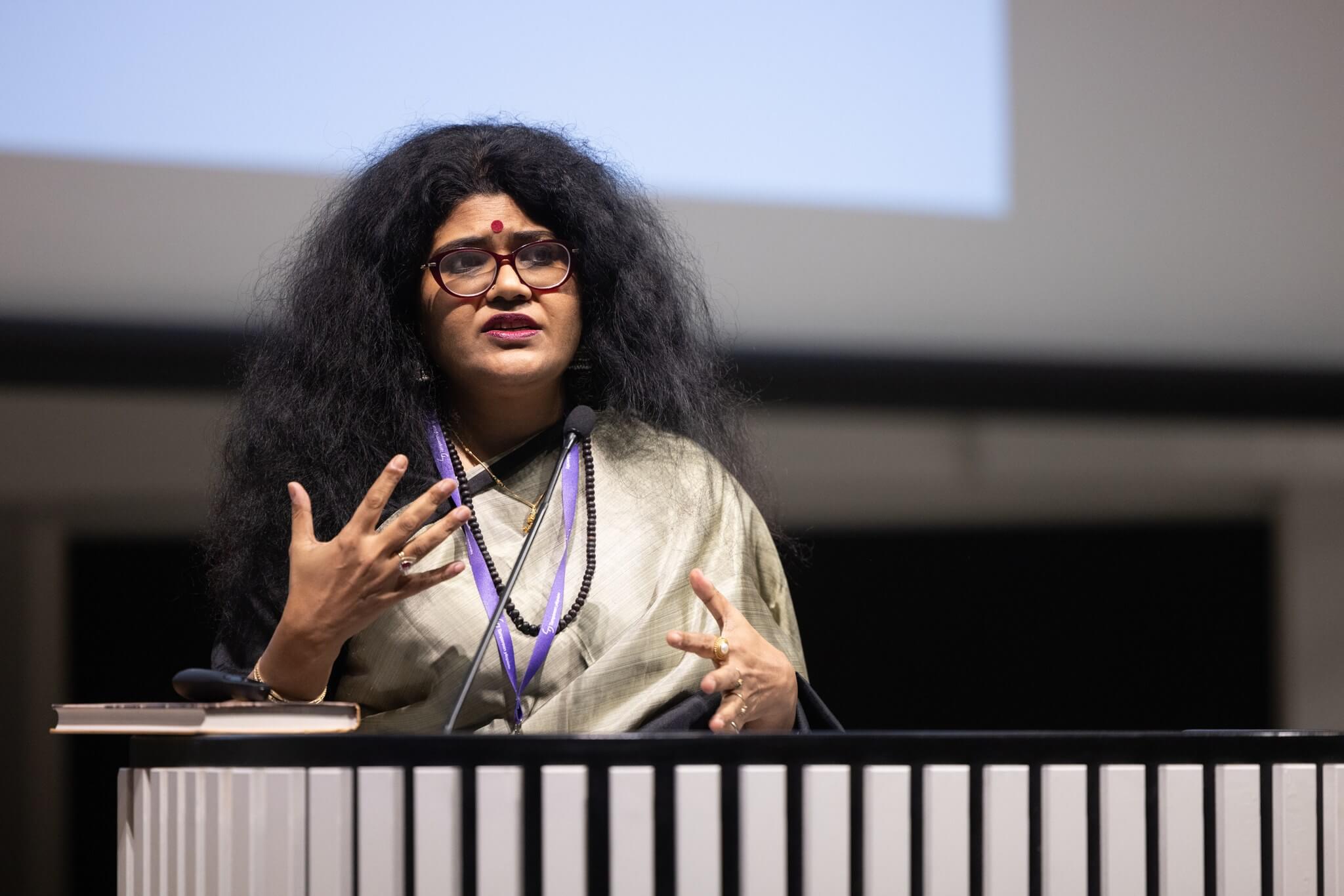
Swati Parashar, Professor in Peace and Development Studies at the School of Global Studies (SGS), University of Gothenburg, highlighted the “slow violence” of hunger and famine. Photos: Marjaana Malkamäki.
In her keynote address, Swati Parashar, Professor in Peace and Development Studies at the School of Global Studies (SGS), University of Gothenburg, emphasised that peace must be understood not only through the lens of geopolitical conflicts but also in the context of societal fractures. Drawing attention to the multiple forms of violence in society, Parashaar highlighted the “slow violence” of hunger and famine.
The first plenary session addressed the global shift in power dynamics, with the multilateral system struggling to keep up. Reaching consensus on key issues related to peace and security is becoming increasingly elusive, as Saana Keskitalo, Senior Manager at CMI – Martti Ahtisaari Peace Foundation pointed out. The growing polarisation and uncertainty are being felt at every level, from local communities to international institutions. Peacemaking is becoming more fragmented, moving away from the unified approach once anchored in the United Nations. According to Keskitalo, local conflicts are becoming more intertwined with complex regional and global forces, making coordination for mediation and dialogue more crucial—and more difficult—than ever.
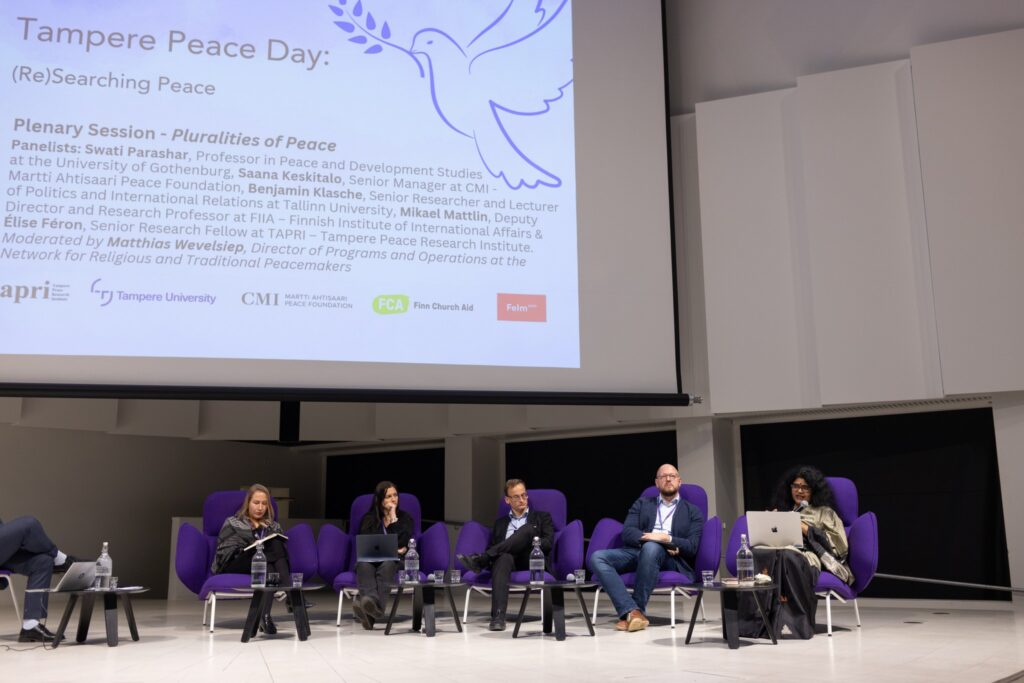
The first plenary session addressed the global shift in power dynamics, which makes reaching consensus on key issues related to peace and security increasingly difficult.
The session on feminist visions of peace focused on the central role of women in peacemaking, particularly in Palestine, Myanmar, and Iran. Panelists shared stories of strategic collective actions that have shaped societies in the face of adversity. The session also highlighted the challenges that the UN is facing, especially in implementing the Women, Peace, and Security agenda.
The transformative role of AI in conflict dynamics was discussed, with AI chatbots themselves also participating in the discussion. Key ethical concerns were raised, especially regarding autonomous weapons systems. The pace of AI development outstrips existing legislation. Experts also emphasised AI’s inherent reliance on the availability of data deepening power imbalances. Ultimately, while AI can be a valuable tool in peacemaking, the discussion underscored the need for stronger oversight to avoid and mitigate its harmful consequences.
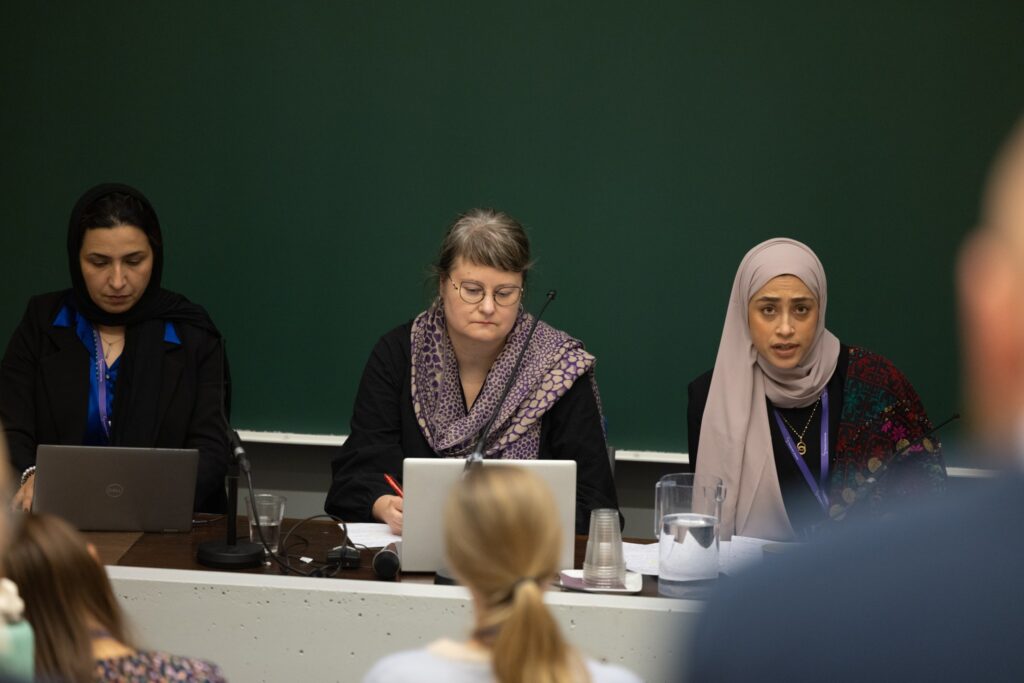
Doctoral Researcher Zahra Edalati, Specialist Katja Vauhkonen and Lawyer and Human Rights Activist Farah Selmi discussed feminist visions of peace.
In the panel dedicated to peace education, the panellists addressed current challenges within the existing educational frameworks including in South Africa, Finland, South Caucasus, Palestine and Uganda. The experts discussed how the educational frameworks could be changed to better meet the local needs and challenge some of the inherent power dynamics in order to move towards inclusive and justice-oriented approaches of peace education.
In the final plenary, speakers delved into the emerging agencies and practices of peace in an era marked by increasing contestation and polarisation. They examined the challenges facing contemporary peace mediation practices, highlighting the alarming statistics of 59 ongoing armed conflicts and the declining quality of peace agreements. Panelists also urged peace researchers to take bold, innovative steps in proposing peace initiatives.
Tampere Peace Day was organised by the Tampere Peace Research Institute (TAPRI), CMI – Martti Ahtisaari Peace Foundation, Finn Church Aid (FCA), and The Finnish Evangelical Lutheran Mission (FELM).