CMI – Martti Ahtisaari Peace Foundation is strongly committed to supporting the United Nations Global Compact and its Ten Principles in the areas of human rights, labor, environment, and anti-corruption. In this article, we report on actions and progress in these areas from October 2022 to September 2024. More detailed information can be found in this Communication on Engagement.
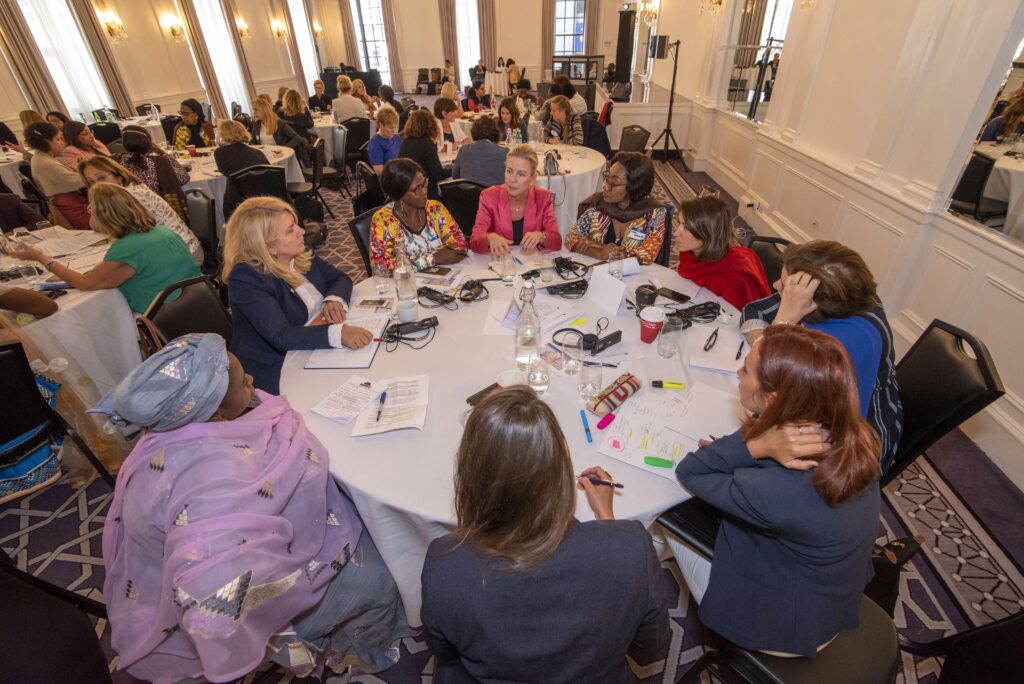
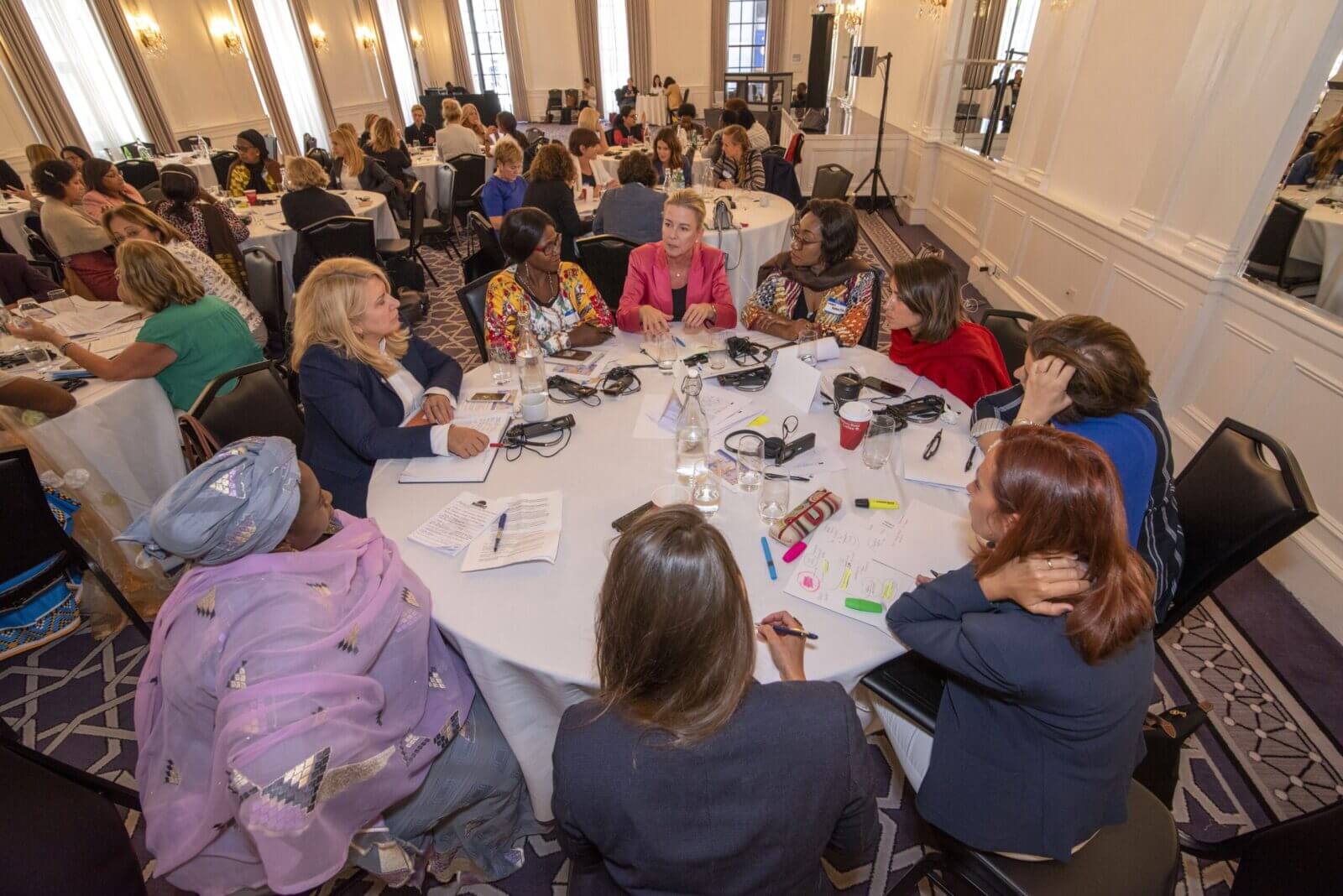
Meeting of the Global Alliance of Regional Women Mediators Networks in September 2019.
CMI’s commitment to the Global Compact reflects the organization’s alignment with the UN’s Sustainable Development Goals (SDGs), especially focusing on SDG 16 (peaceful and inclusive societies) and SDG 5 (gender equality).
Human rights
CMI’s Global Programme is founded on the notion of positive peace: it contributes to the fulfillment of human rights by working to reduce violence and enhance political participation. CMI’s internal capacities on human rights-based work are strengthened through, for instance, training and recruitment. Assessments of human rights and inequalities are integrated into the context and conflict analysis conducted in CMI’s projects. Similarly, the results of CMI’s work are assessed through a human rights lens at the wider program level, along with collecting lessons learned from CMI’s overall human rights-based approach.
During the reporting period, CMI conducted a baseline assessment on the human rights-based approach (HRBA). This provided useful information and ideas for enhancing the application of HRBA, and an institutional work plan was developed. Several trainings, piloting of strengthened HRBA and gender integration in project work, and peer learning initiatives were implemented.
Gender equality and women’s participation
Ensuring that all people, regardless of their gender, can equally contribute to and benefit from our work is an institutional priority for CMI. During the reporting period, CMI continued to actively advance the role of women in peacemaking, with particular focus on supporting women’s political agency as well as enhancing the policy and practice of gender-inclusive mediation.
CMI set a target for its Global Programme 2022–2025 to ensure the participation of at least 40% of either sex in CMI-organized events. The overall average of women participants in CMI-organized events increased from 47% in 2022 to 50% in 2023.
Labour
During the reporting period, CMI continued to enhance the well-being of its employees through training and capacity building based on the feedback received in employee well-being surveys. The emphasis was on improving resilience, psychosocial support, and supervisory and leadership capabilities within the organization. In addition, several SEAH (sexual exploitation, abuse, and harassment) policy-related actions were implemented, such as a whistleblowing channel and training.
According to the well-being surveys, both job satisfaction and stress levels have remained steady, with no significant variation. In the more comprehensive biannual staff well-being survey, a positive trend is evident from 2021 to 2023. CMI’s management continues to take actions to ensure that this positive trend continues.
Anti-corruption
CMI’s anti-corruption measures and internal practices ensure a high level of transparency and integrity in our operations. CMI has implemented a zero-tolerance policy for corruption, reinforced through mandatory staff training and the establishment of anonymous reporting channels. This strict adherence to ethical standards further strengthens CMI’s reputation as a trusted partner in peacemaking, capable of operating effectively even in highly corrupt environments. During the reporting period, CMI continued to integrate anti-corruption measures, especially as part of its programmatic risk management.
Environment
CMI is committed to enhancing climate resilience in conflict zones. The organization recognizes the intersection of climate change with peace and security, acknowledging that environmental factors often exacerbate existing tensions. While climate resilience is not CMI’s primary focus, it plays a crucial role in mediation efforts in regions where water and resource disputes fuel conflicts.
CMI continues to actively track its carbon footprint. Traveling is an essential part of CMI’s work, and the flight-based emissions make up the largest part of the foundation’s carbon footprint. During the reporting period, the organization’s CO2 emissions increased by 10% from 2022 to 2023 due to necessary international travel. An increase in emissions could be expected as the overall operational volume of CMI also grew from 2022 to 2023. The foundation is actively exploring sustainable solutions, including green office practices and revising its travel policies to mitigate emissions.