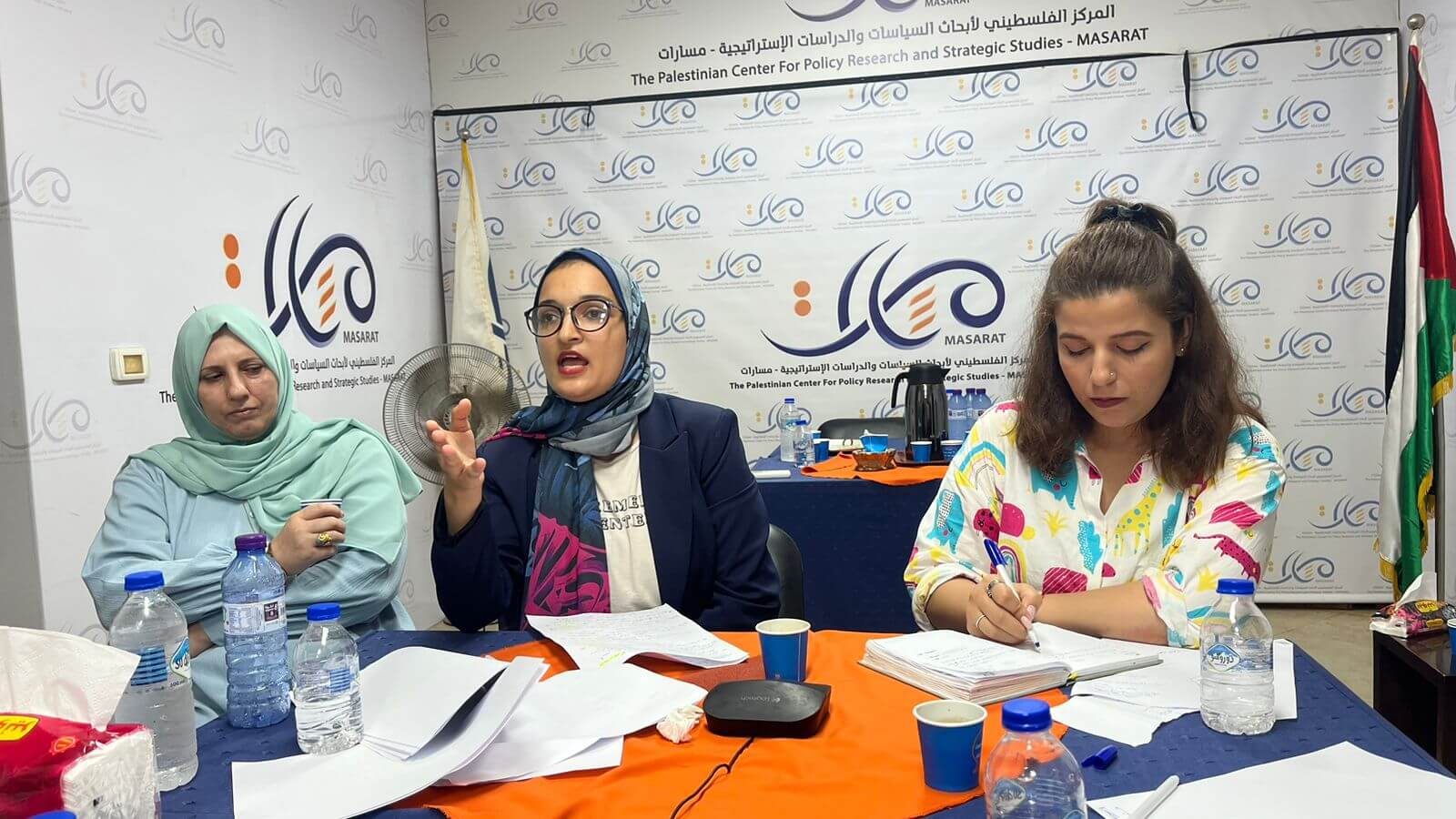
More efforts are needed to engage women in discussions about the future of Palestine. To advance this goal, CMI supported a series of digital consultations and organised local workshops in Gaza for politically active young women, as well as consultations with exiled women actors in Cairo in early 2024. Several common themes emerged from the views of young Palestinian women.
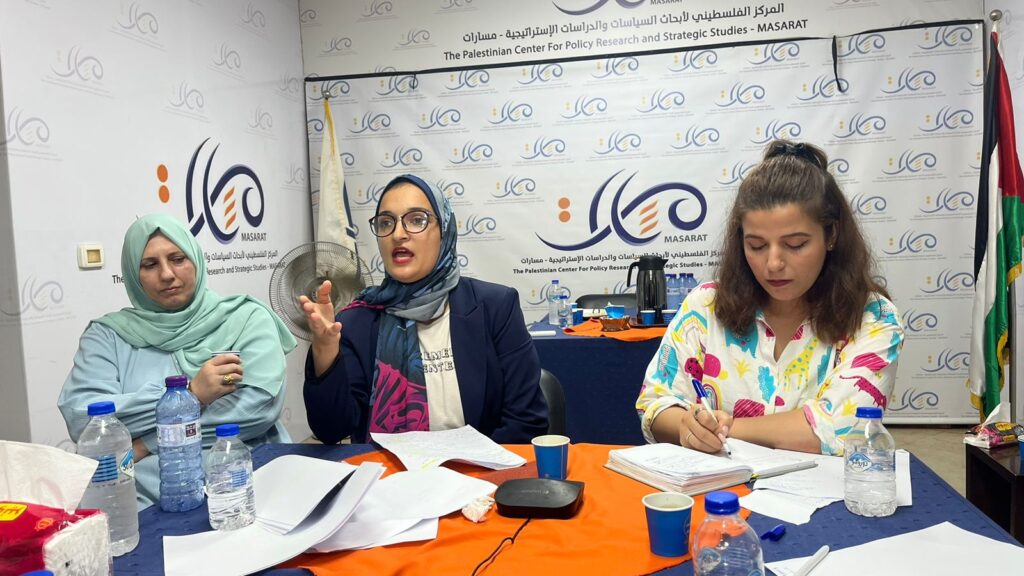
Young Palestinian women from Gaza in a workshop organised during CMI’s previous consultations in May 2023. Photo: Mahmoud Al Bourbar.
While emphasizing that long-term solutions, including political reforms, are necessary to overcome the current political impasse, many young women actors raise the possibility of forming a temporary consensus or technocratic government without elections to address the current situation. Many note that in medium term, elections are needed to support political reforms and ensure the legitimacy of political leadership in Palestine. However, there are also those who reject legitimacy of non-elected government and see organizing of elections as a priority.
In both Gaza and the West Bank, young women tend to be critical of the deployment of international troops in Gaza, showing an increased lack of trust towards international actors and their role – believing that they wouldn’t serve the interests of Gazans. Those who consider it more positively believe that an international force could create the conditions for the Palestinian Authority to regain control of the Gaza Strip.
CMI’s work in Palestine
CMI has been supporting dialogue on intra-Palestinian reconciliation since 2010. In recent years, this work has placed special emphasis on women’s political agency. The unique networks that bring together women from across the political spectrum and civil society, have been used to share information and coordinate joint action following the events of 7 October 2023 and the ensuing Gaza war.
Some young women in Gaza and the West Bank believe that internal strife in Gaza is unlikely, while others consider it imminent because the war has exacerbated divisions between Palestinians.
The consultations and workshop revealed that the war, with its immense tragedies, has presented women with new roles in society, potentially contributing to their political agency. These findings are particularly relevant in Gaza. The involvement of women in shaping Gaza’s reconstruction, youth participation and psychosocial support were highlighted as priorities moving forward.
Concerns were raised about a potential vacuum of youth leadership as a result of politically active young women and men leaving Gaza, as well as dwindling hopes for reaching peace and security. Despite frustration with the current situation, the disastrous conditions are seen as an opportunity for change, with the possibility of building a more representative political system.
As discussions on the future of Gaza have largely excluded women, young people, and Gazans in general, CMI continues to look for ways to support young women in Palestine. Further workshops and consultations on key priorities, including reconstruction, women’s political agency, and psychosocial support, will take place as the situation on the ground permits.